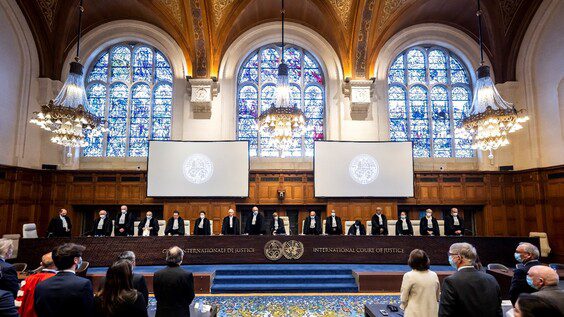
Venezuelan delegation present in The Hague at the start of the hearings at the International Court of Justice. Photograph: ICJ multimedia gallery.
Guacamaya, May 4, 2026. The territorial dispute over the Esequibo has returned to the center of the international agenda with the start of hearings at the International Court of Justice. While Guyana defends the validity of the 1899 arbitral award, Venezuela insists on a negotiated solution based on the 1966 Geneva Agreement and rejects the jurisdiction of the court.
The territorial controversy between Venezuela and Guyana over the Esequibo region has entered a new phase with the beginning of public hearings in The Hague, seat of the International Court of Justice. This process, which will last several days, seeks to examine the validity of the 1899 arbitral award, a cornerstone of a dispute that dates back to colonial times.
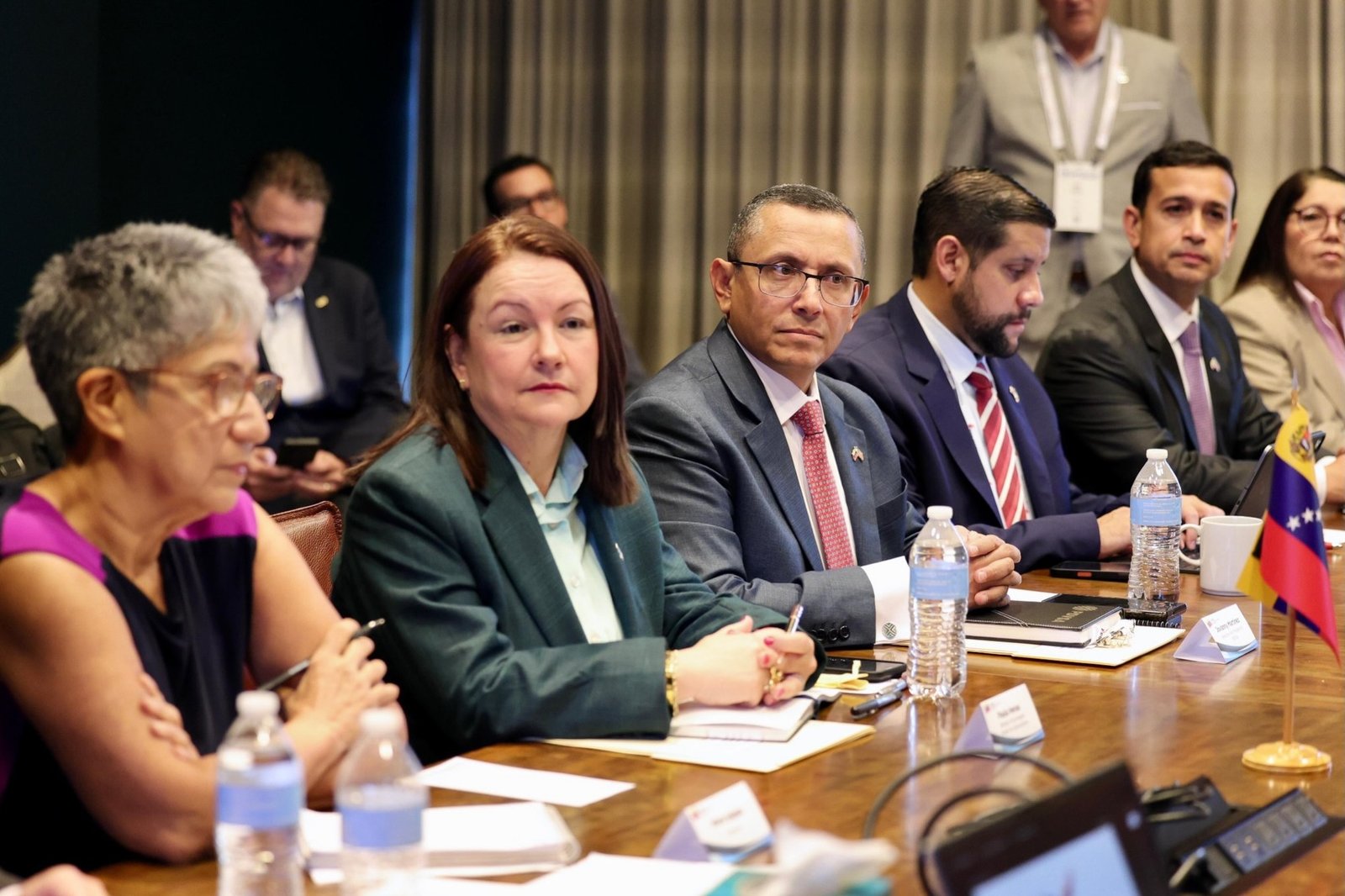
The Venezuelan delegation, led by Foreign Minister Yván Gil, has reiterated that the country appears before the Court under a “reservation of rights,” insisting that its participation does not imply recognition of the court’s jurisdiction. Caracas maintains that the dispute must be resolved exclusively through the 1966 Geneva Agreement, signed with the United Kingdom before Guyana’s independence, which establishes the search for a negotiated and mutually acceptable solution.
The Court’s schedule establishes that hearings will continue until May 11, with Venezuela scheduled to present its arguments next Wednesday.
It is important to recall that for Venezuela, the 1899 arbitral award—which fixed the border when Guyana was still a British colony—is null due to procedural irregularities. In contrast, Guyana defends the full legal validity and binding nature of that decision, which has underpinned its territorial sovereignty for more than a century.
The disputed region, known as Guayana Esequiba, covers around 160,000 square kilometers, equivalent to nearly two-thirds of Guyana’s territory. Rich in natural resources, its strategic importance has increased since major oil discoveries in 2015 by ExxonMobil, turning Guyana into one of the countries with the largest per capita oil reserves in the world.
For Georgetown, the case is existential in nature. Its Foreign Minister, Hugh Hilton Todd, warned the judges that any revision of the border would put more than 70% of Guyana’s sovereign territory at risk. This perception reinforces Guyana’s commitment to a definitive judicial resolution.
Venezuela, on the other hand, insists that the judicial route contradicts the spirit of the Geneva Agreement and represents a unilateral initiative by Guyana. Its strategy combines historical claims with a legal narrative centered on the nullity of the award and the need to resume direct negotiations.
The dispute, formally brought before the Court in 2018 after Guyana filed its application, has strained bilateral relations over the past decade and has become part of a broader geopolitical context in which energy resources and international positioning play a key role.
Beyond the outcome of the process, the Esequibo case raises fundamental questions about the mechanisms for resolving territorial disputes in contemporary international law: will the stability of inherited borders prevail, or the principle of revision based on subsequent agreements?
For now, The Hague once again becomes the stage where history, law, and geopolitics converge in a dispute that remains unresolved more than a century later.
Brief historical background
From the Venezuelan perspective, the Esequibo dispute dates back to the colonial period, when the territory was part of the Captaincy General of Venezuela established in 1777 under Spanish rule. After independence, Venezuela inherited these borders under the principle of uti possidetis juris, but in the 19th century the British Empire progressively expanded the border of then-British Guiana westward, which Caracas considers an irregular occupation.
The conflict culminated in the 1899 Paris arbitral award, which Venezuela formally rejected in 1962 at the United Nations, alleging serious procedural irregularities. This challenge led to the signing of the 1966 Geneva Agreement, which recognized the existence of the dispute and established the need for a negotiated solution.
Shortly afterward, in 1969, the Rupununi Rebellion broke out in the southern part of the disputed territory, an episode of tension in which local sectors attempted to secede from Guyana and which Georgetown linked to alleged Venezuelan support—an accusation Caracas rejected. This marked one of the most delicate moments in bilateral relations.
In subsequent decades, the dispute remained dormant under UN good offices mechanisms until 2015, when ExxonMobil’s major offshore oil discoveries reactivated tensions.
In 2018, Guyana brought the case before the International Court of Justice to validate the 1899 award, a move Venezuela considers unilateral and contrary to the Geneva Agreement. Today, Caracas maintains its historical claim over Guayana Esequiba—around 160,000 km²—insisting on the nullity of the award and the need for a negotiated solution.
Venezuela’s participation before the ICJ: evolution of its position
Venezuela’s relationship with the International Court of Justice has evolved significantly, marked more by tactical adjustments than by a change in its core position. In the initial phase—from Guyana’s filing in 2018 through the early proceedings—Caracas adopted a policy of non-appearance. During key stages such as jurisdiction hearings in 2020, Venezuela chose not to participate, arguing that the Court lacked jurisdiction.
However, this stance gradually shifted. Although Venezuela has never recognized the Court’s jurisdiction, it began participating in written proceedings, submitting memorials and legal arguments to defend its historical position. This reflected a pragmatic approach aimed at not leaving the legal field entirely to Guyana.
A political turning point emerged after the tensions of late 2023—including Venezuela’s consultative referendum on the Esequibo and provisional measures issued by the ICJ—and the escalation of diplomatic and military tensions during 2024–2025. In this context, Venezuela adopted a more visible engagement strategy.
By May 2026, Venezuela decided to attend oral hearings in The Hague, though under a carefully calibrated formula: participation without recognition. According to its official position, its presence aims to “present historical truth” to the international community without accepting the Court’s jurisdiction or its eventual ruling.
How the International Court of Justice works in territorial disputes
The International Court of Justice (ICJ), based in The Hague, is the principal judicial organ of the United Nations and is mandated to settle legal disputes between States. In cases such as Venezuela and Guyana, its functioning is based on a key principle: jurisdiction depends on state consent.
When a case is filed, the Court must first determine whether it has jurisdiction. It may rely on prior treaties, unilateral declarations, or accepted practice. Proceedings are divided into written submissions and oral hearings, followed by private deliberations and a final judgment.
In territorial disputes, the Court evaluates treaties, arbitral awards, effective control over territory, and principles of international law such as border stability. Its decisions are binding, but enforcement depends on states’ compliance and international pressure, as the Court has no direct coercive power.
A state’s participation does not necessarily imply recognition of jurisdiction; it may appear under a “reservation of rights.” The Court may still proceed and issue a judgment even if one party limits its participation.
Why the Esequibo matters
The Guayana Esequiba is not only rich in minerals but also one of the most strategically important regions in the Western Hemisphere. It contains significant deposits of gold, diamonds, bauxite, and iron, as part of the ancient Guiana Shield.
However, its global relevance increased dramatically after ExxonMobil’s offshore discoveries in 2015. The Stabroek Block alone holds more than 11 billion barrels of recoverable oil equivalent, with production expected to exceed 1.2 million barrels per day by the end of the decade. It also contains significant associated natural gas reserves.
Beyond energy and minerals, the region has emerging strategic value for space activities. Its proximity to the equator provides major advantages for rocket launches due to Earth’s rotational speed, reduced fuel requirements, and optimal conditions for geostationary satellites.
Its geographic features—low population density, access to the Atlantic Ocean, and vast open terrain—also make it a potential candidate for future spaceport development.
The need for a peaceful resolution: global and regional implications
The Esequibo dispute goes beyond bilateral relations and must be understood in a global context marked by conflicts such as the war in Ukraine and instability in the Middle East. In an increasingly fragmented international system, the case represents a critical test for international law and peaceful dispute resolution mechanisms such as the International Court of Justice and the 1966 Geneva Agreement.
The United States has a direct interest in regional stability. The presence of companies such as ExxonMobil and Chevron in Guyana’s offshore sector makes any escalation a potential economic and strategic risk. Washington supports Guyana’s territorial integrity but also seeks to avoid disruptions that could affect energy markets and investments.
For the Caribbean, the dispute carries significant implications for maritime security, trade routes, and regional cooperation. CARICOM has emphasized the importance of preserving peace and legal order.
Brazil also views the conflict strategically. As a regional power and neighbor to both countries, it seeks to prevent instability in its northern frontier and sees the Esequibo as relevant for broader Atlantic connectivity and regional integration.
Ultimately, a peaceful resolution is essential not only for Venezuela and Guyana, but also for Caribbean stability, hemispheric energy security, and geopolitical balance in Latin America. In a world shaped by multiple conflicts, the Esequibo could either become an example of diplomatic resolution—or another source of international instability.