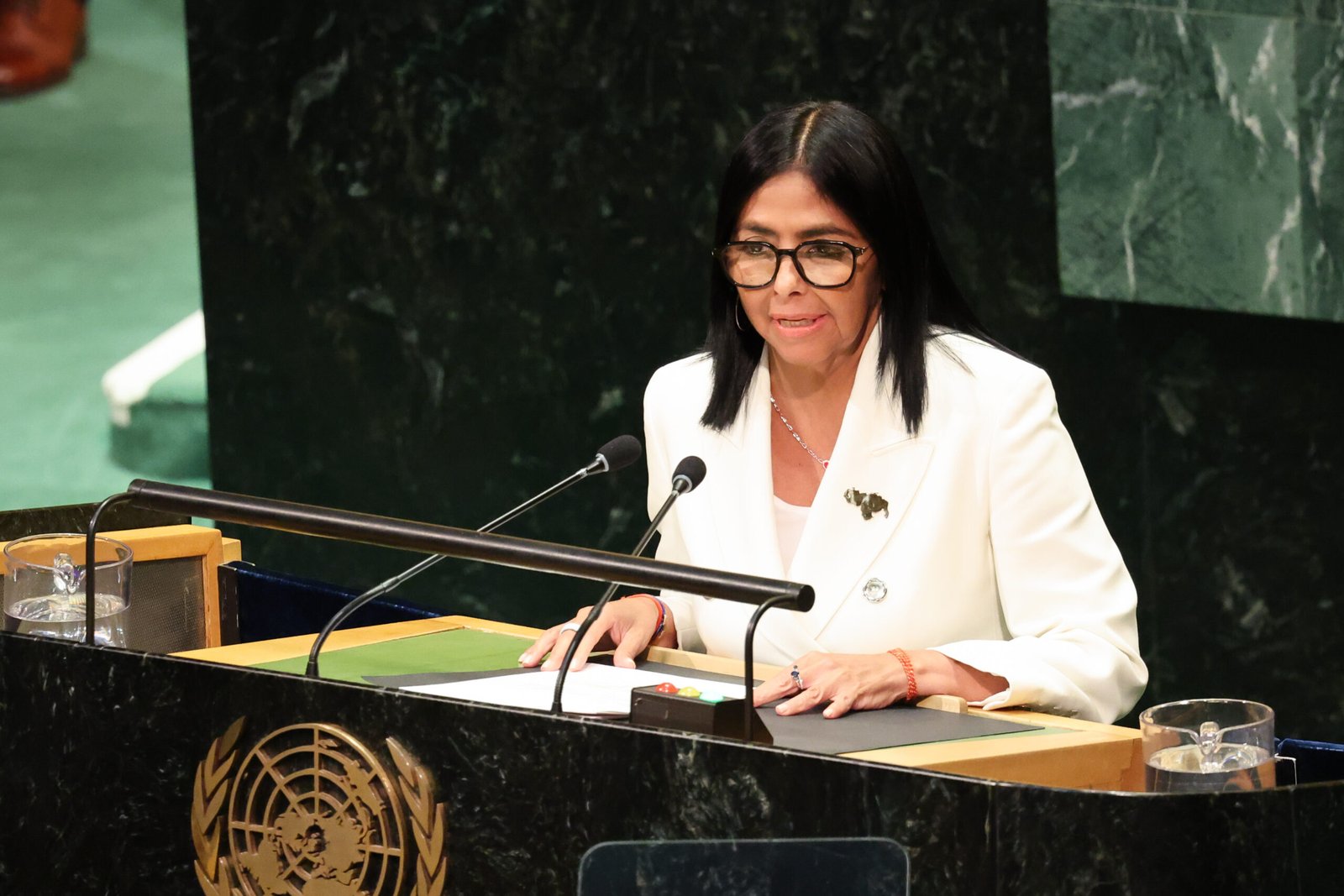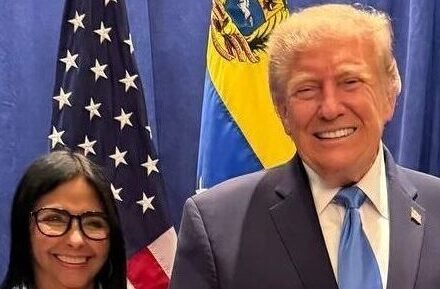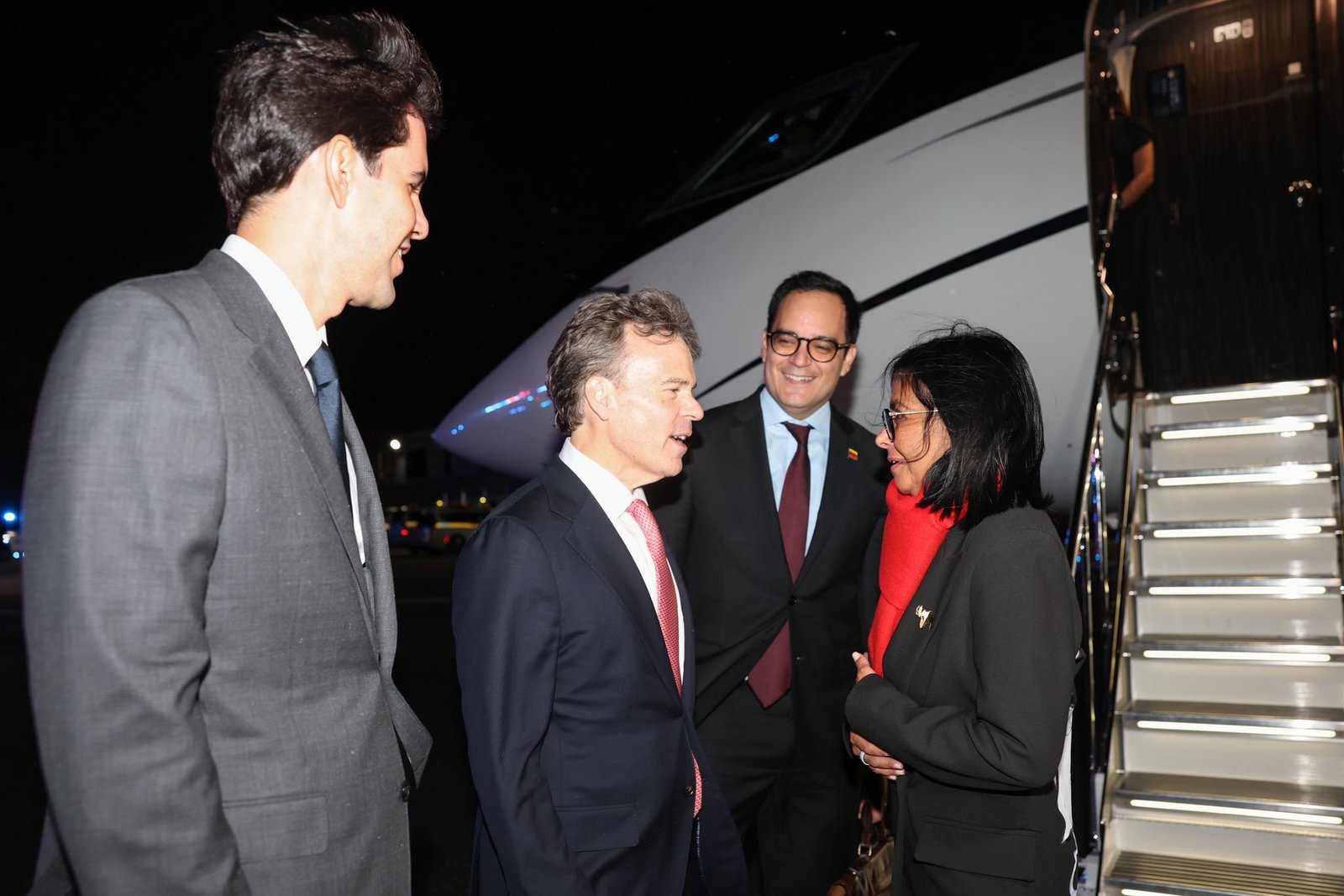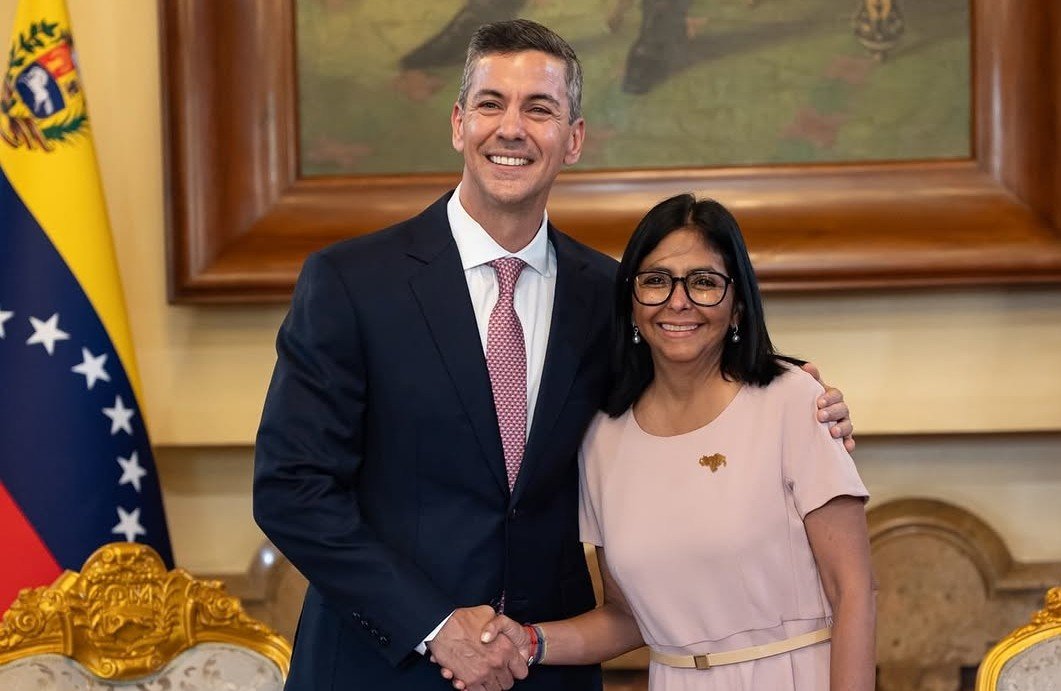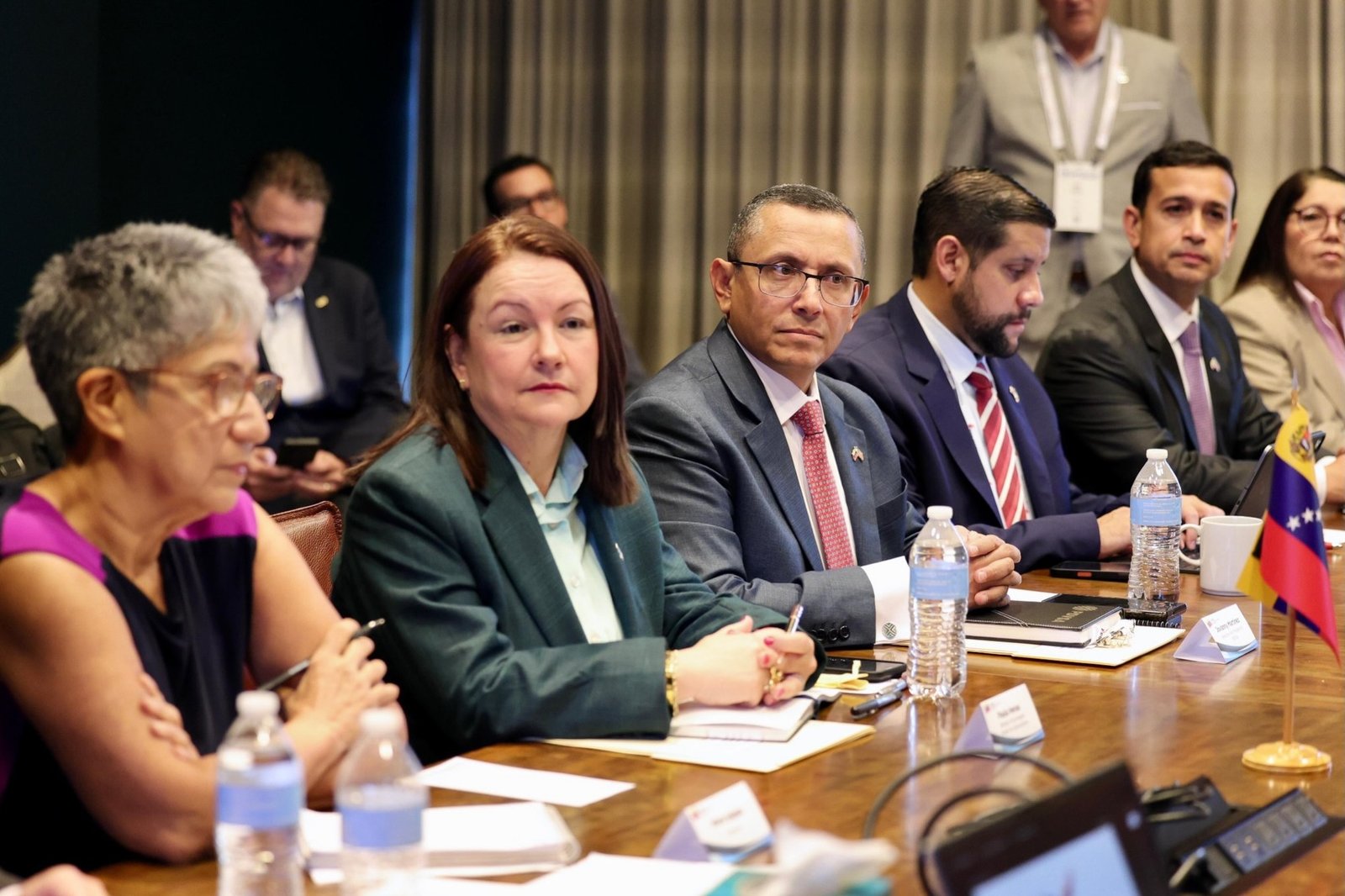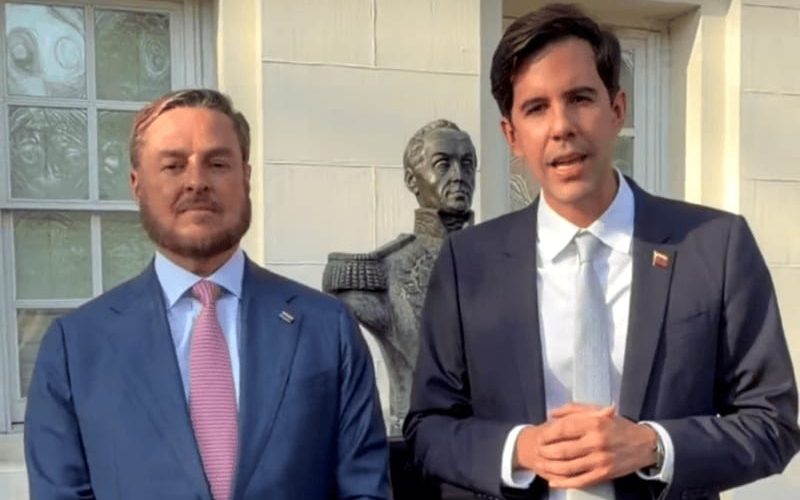
The mission, led by Venezuela’s Chargé d’Affaires Félix Plasencia and Vice Minister for Europe and North America Oliver Blanco, held initial meetings with officials from the State Department, including Deputy Secretary Christopher Landau. Photograph: screenshot from a video on Oliver Blanco’s X account.
Guacamaya, March 27, 2026. The visit of a delegation sent by Delcy Rodríguez to the U.S. capital does not occur in a vacuum: it coincides with signs of regulatory opening, the cautious return of international oil companies, and growing global energy pressures that are once again placing Caracas at the center of the geopolitical board.
Reopening diplomatic channels in a shifting energy context
To begin with, the arrival of a Venezuelan delegation in Washington marks a concrete attempt to reactivate formal communication channels with the administration of Donald Trump. The mission, led by Chargé d’Affaires Félix Plasencia and Vice Minister for Europe and North America Oliver Blanco, held initial meetings with officials from the State Department, including Deputy Secretary Christopher Landau.
In this regard, the stated objective—restoring Venezuela’s diplomatic presence in Washington and addressing consular matters—also responds to a broader need to rebuild trust amid a sanctions-driven environment that is beginning to show signs of flexibility. Indeed, these contacts come shortly after Washington introduced regulatory adjustments aimed at facilitating the participation of U.S. energy companies in Venezuela, suggesting that diplomatic and economic tracks are being reactivated in parallel.
For his part, Plasencia explained that Blanco was specifically tasked by President Rodríguez with overseeing the restoration of “diplomatic presence” in Washington and addressing “issues of concern to Venezuelan citizens.”
The delegation arrived in Washington two days after Rodríguez announced in Caracas that the trip would take place with the aim of strengthening bilateral relations.
Who Heads the Venezuelan Diplomatic Mission?
Félix Plasencia
Félix Plasencia is a career diplomat whose significance lies in his ability to adapt and maintain institutional continuity across different political cycles in Venezuela. He joined the foreign service in 1991 through a public competition, before the rise of Chavismo, and successfully remained within the diplomatic structure after the regime change, combining technical training with a low-profile political approach. His career includes high-level positions—such as foreign minister, ambassador to key countries, and negotiator in international processes—allowing him to accumulate experience in high-pressure and complex political contexts.
At the same time, his close relationship with Delcy Rodríguez—formed during their joint tenure at the Venezuelan embassy in London in the 1990s—positions him as a trusted operator within the core of power. In the current context of political reconfiguration and rapprochement with the United States, Plasencia emerges as a key figure, combining knowledge of the Western environment, negotiation experience under sanctions and external pressures, and significant internal credibility within Chavismo. This combination makes him a strategic actor for a stage of diplomatic thaw, where discretion, continuity, and the ability to rebuild channels are essential.
Oliver Blanco
Oliver Blanco is a Venezuelan official with training in international relations and a distinctive trajectory in the political and communications field. Blanco has spent much of his career in communications roles, notably serving as Director of Strategic Communications and Institutional Relations in the National Assembly during Henry Ramos Allup’s presidency. Unlike many traditional Chavista officials, his background includes participation in opposition organizations, giving a new dimension to his professional profile after his appointment as Vice Minister for Europe and North America by interim President Delcy Rodríguez, in an effort to open spaces for dialogue and political inclusion.
Blanco’s presence in the diplomatic mission visiting Washington underscores a strategic approach: bringing in voices perceived as less ideologically rigid and potentially more conciliatory to European and U.S. counterparts. His profile aims to facilitate the construction of more flexible communication channels and project an image of political openness to accompany efforts to restore diplomatic relations and attract energy investments. This dynamic is particularly relevant when negotiating complex matters such as the thaw with the U.S. and the potential reintegration of Venezuela’s oil sector in an international environment shaped by sanctions and global energy pressures.
Implications of Venezuela’s diplomatic presence in the United States
Before the break in relations in 2019, Venezuela maintained an active consular network in the United States, including its embassy in Washington and at least six consulates in key cities such as Houston, Miami, New York, Chicago, New Orleans, and San Francisco. These offices provided essential services to the Venezuelan community, including issuing and renewing passports, civil registrations, powers of attorney, and assistance to citizens in vulnerable situations. However, after the U.S. recognized Juan Guaidó, Nicolás Maduro’s government ordered the closure of the embassy and all consulates, abruptly leaving Venezuelans in the United States without formal consular services.
By 2026, the impact of this consular absence has become more critical due to the continued growth of the diaspora. It is estimated that around one million Venezuelans currently live in the United States, mainly concentrated in Florida and Texas, making this community one of the largest Venezuelan populations in the Americas outside Latin America. For years, a significant portion—over half a million according to some estimates—has lacked direct access to consular services, relying instead on third countries or informal solutions for basic procedures. In this context, the reopening of Venezuela’s diplomatic presence has not only political implications but also a direct impact on a large migrant population that requires regular assistance with documentation, protection, and legal services.
Diplomatic recognition is key to guaranteeing long-term investments.
It is worth recalling that OFAC issued General License 53 on March 24, 2026, authorizing transactions essential to the functioning of Venezuela’s diplomatic missions in the United States. This measure permits the payment of goods, services, and personal expenses for officials, in addition to enabling basic banking operations (accounts and credit) for the delegations. It covers the daily operations of embassies, consulates, and missions to international organizations located in the U.S. The license seeks to facilitate the payment of salaries, utility bills, facility maintenance, and personal expenses for employees and their family members. Additionally, U.S. banks are permitted to process transfers and open accounts for the missions.