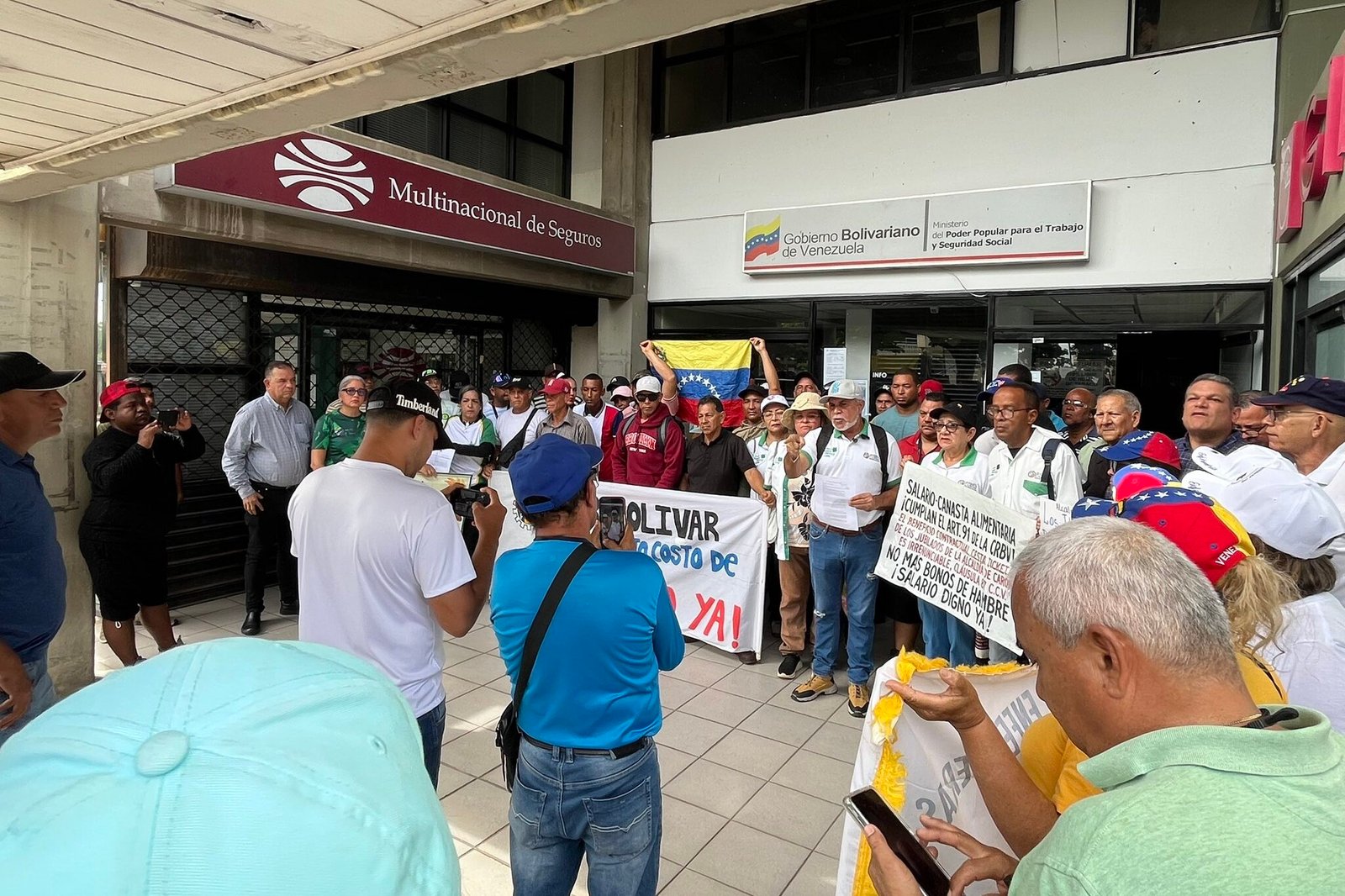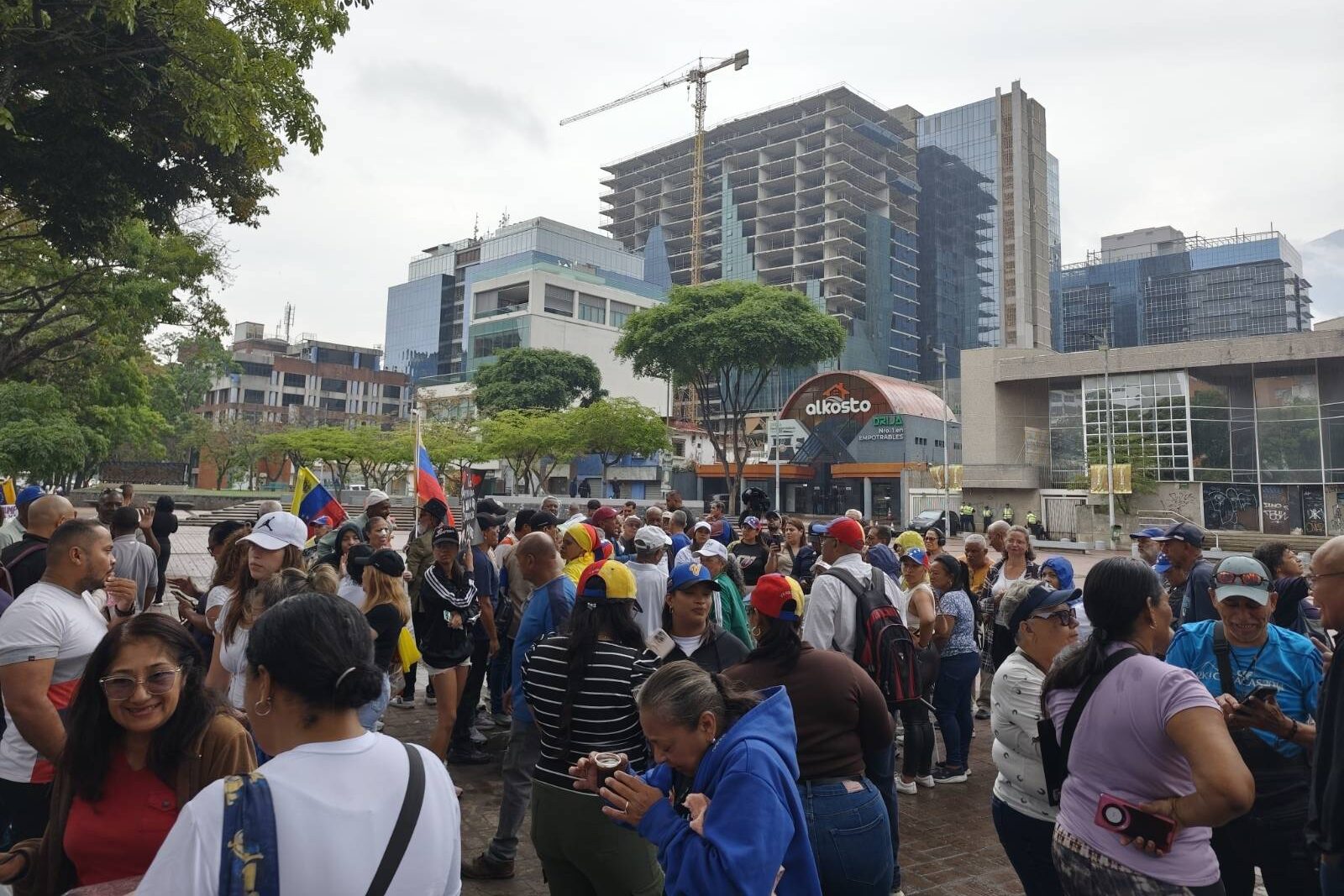
Venezuelan labor unions remain on alert as they await concrete salary increases, though skepticism persists due to previous unfulfilled announcements. Photography: Provea.
On April 16, Venezuelan workers and union leaders gathered at Plaza Alfredo Sadel in Caracas. As part of the demonstration, a small commission was sent to the U.S. Embassy to deliver a document listing demands such as fair wages, dignified pensions, and free elections.
This move reflects a strategic shift after weeks of state containment of labor protests. By redirecting pressure toward international actors—particularly in a political moment shaped by Washington—the unions sought greater visibility. The original plan for all protesters to march to the Embassy was abandoned due to anticipated blockades.
A delegation of union leaders, including Luisa Rada, Carlos Salazar, José Patines, Víctor Venegas, Rubén González, and Alexander Rodríguez, managed to reach the Embassy. They called for the unfreezing of U.S.-held funds to be allocated to salaries, pensions, universities, and hospitals.
The protest also carried political overtones, with chants urging the U.S. government to accelerate the “transition” and demanding urgent elections amid an economic crisis that keeps the legal minimum wage below $0.30 per month. The petition was received by the head of the Embassy’s Investigations Office rather than high-level diplomatic staff.
Although turnout was low and no senior officials engaged directly, union leaders vowed to continue pressing their demands. Spokesperson José Patines declared that workers would remain in the streets until constitutional salary rights are met.
Background: Blocked march to Miraflores and recent clashes
The April 16 action followed a national protest on April 9, when the National Union Coalition attempted to march to the Miraflores presidential palace to demand wage increases and the end of non-salary bonuses. Security forces blocked and dispersed the march with pepper spray, leaving several injured and some detained.
On April 15, unions and the Central University of Venezuela’s professors’ association (APUCV) held a demonstration outside the Supreme Court, demanding rulings on constitutional challenges related to salary adjustments. The day before, workers protested outside the Ministry of Labor, submitting a document criticizing current labor policies.
Delcy Rodríguez’s position and union demands
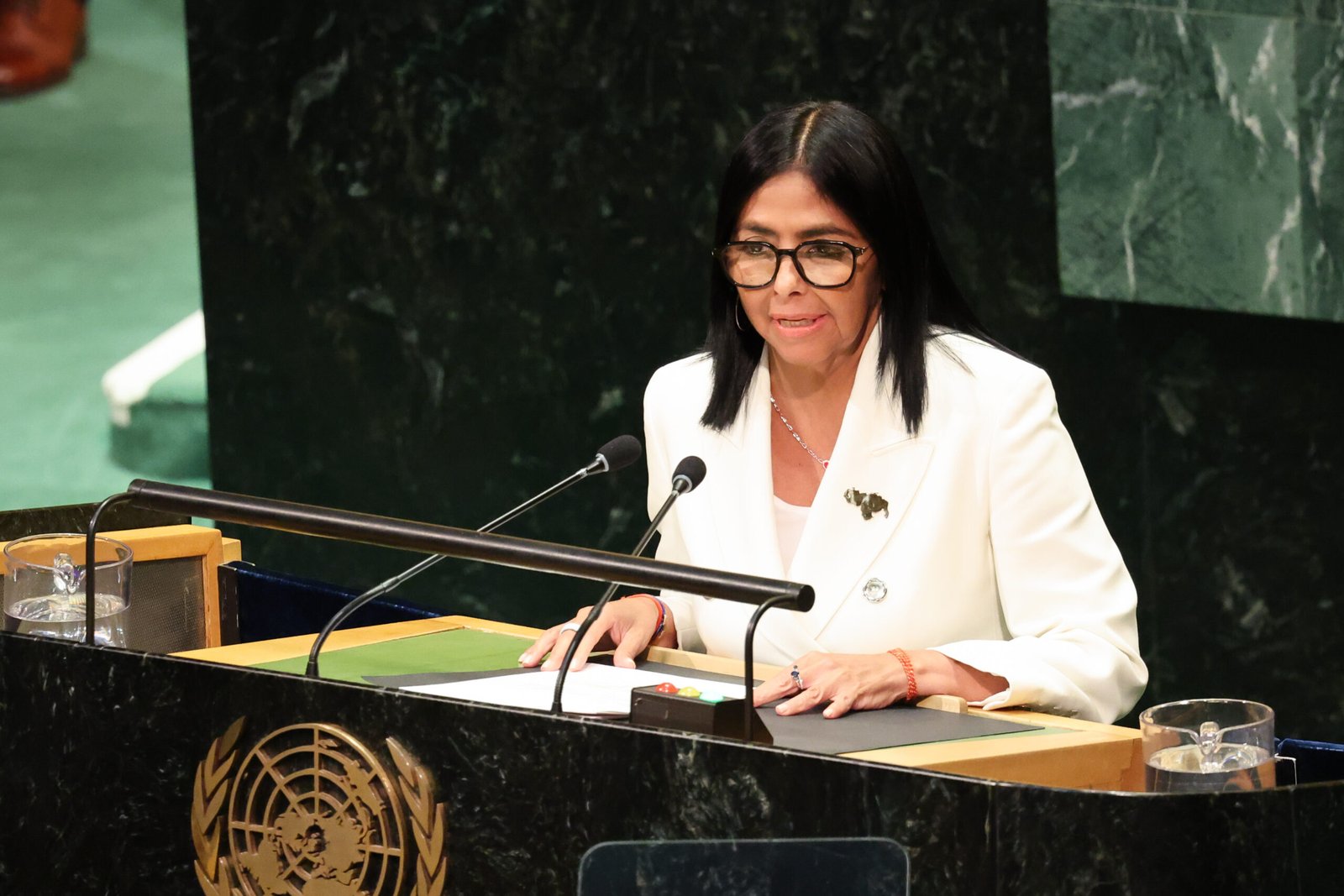
Interim president Delcy Rodríguez announced a “responsible salary increase” starting May 1, tied to oil and mining revenues, without specifying amounts or clarifying whether it would affect the minimum wage frozen since 2022. She also proposed labor reforms and a new tax model, signaling acknowledgment of past policy failures.
Unions rejected the announcement as vague and reiterated demands for wages of up to $600 per month—aligned with the basic food basket—along with dignified pensions, constitutional guarantees, immediate elections, amnesty for detained protesters, and the release of frozen funds.
What comes next
The shift toward international pressure stems from the perception of the United States as a key actor in the interim government following Nicolás Maduro’s capture and Delcy Rodríguez’s swearing-in. Unions seek clarity on the U.S.-announced “transition” and greater visibility for their demands.
Mobilizations are expected to intensify ahead of May 1, with a major gathering planned for April 24 at the Central University of Venezuela to unite social sectors against inflation and worsening living conditions. Despite macroeconomic changes driven by eased sanctions and new trade agreements, Venezuelans have yet to feel meaningful improvements.