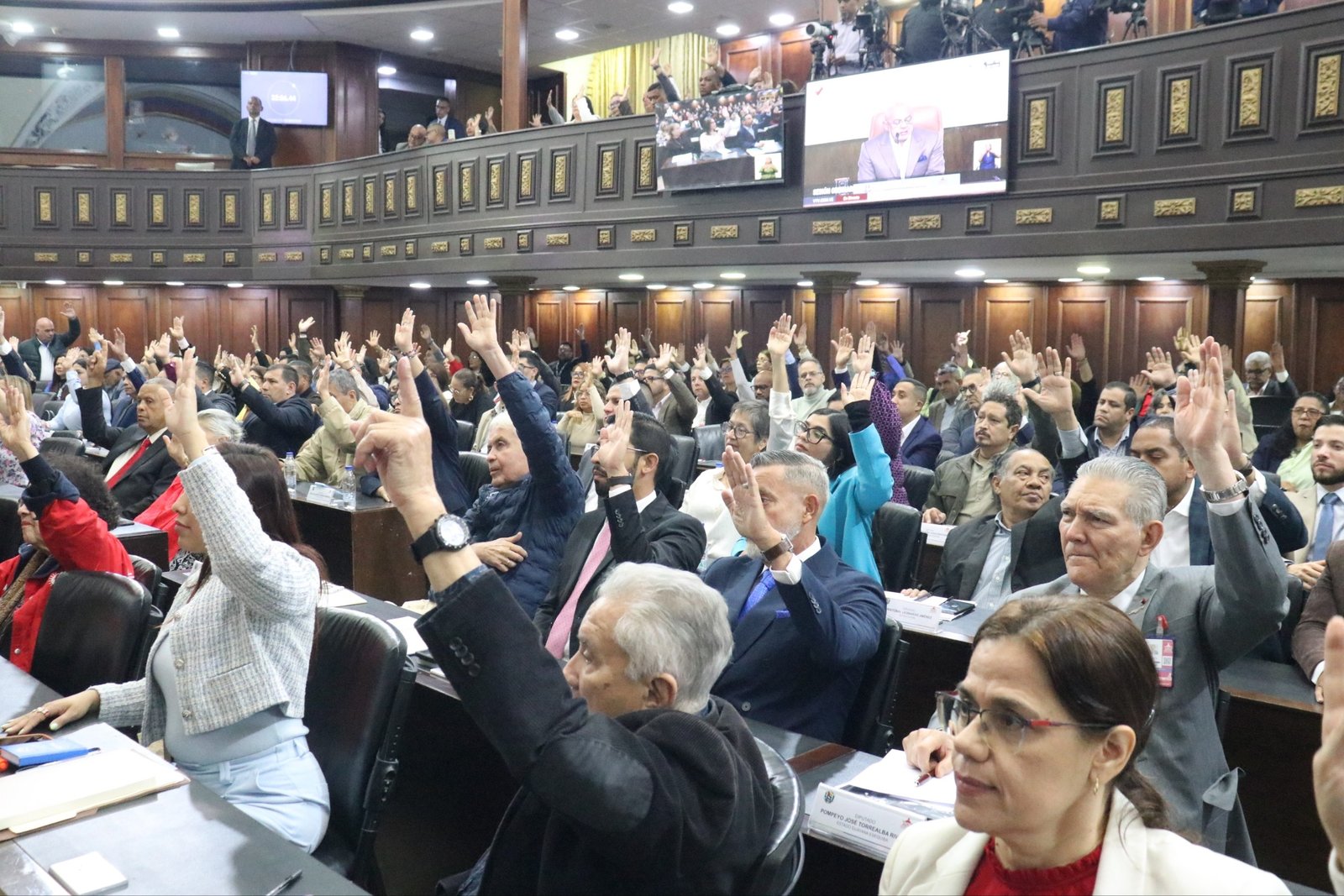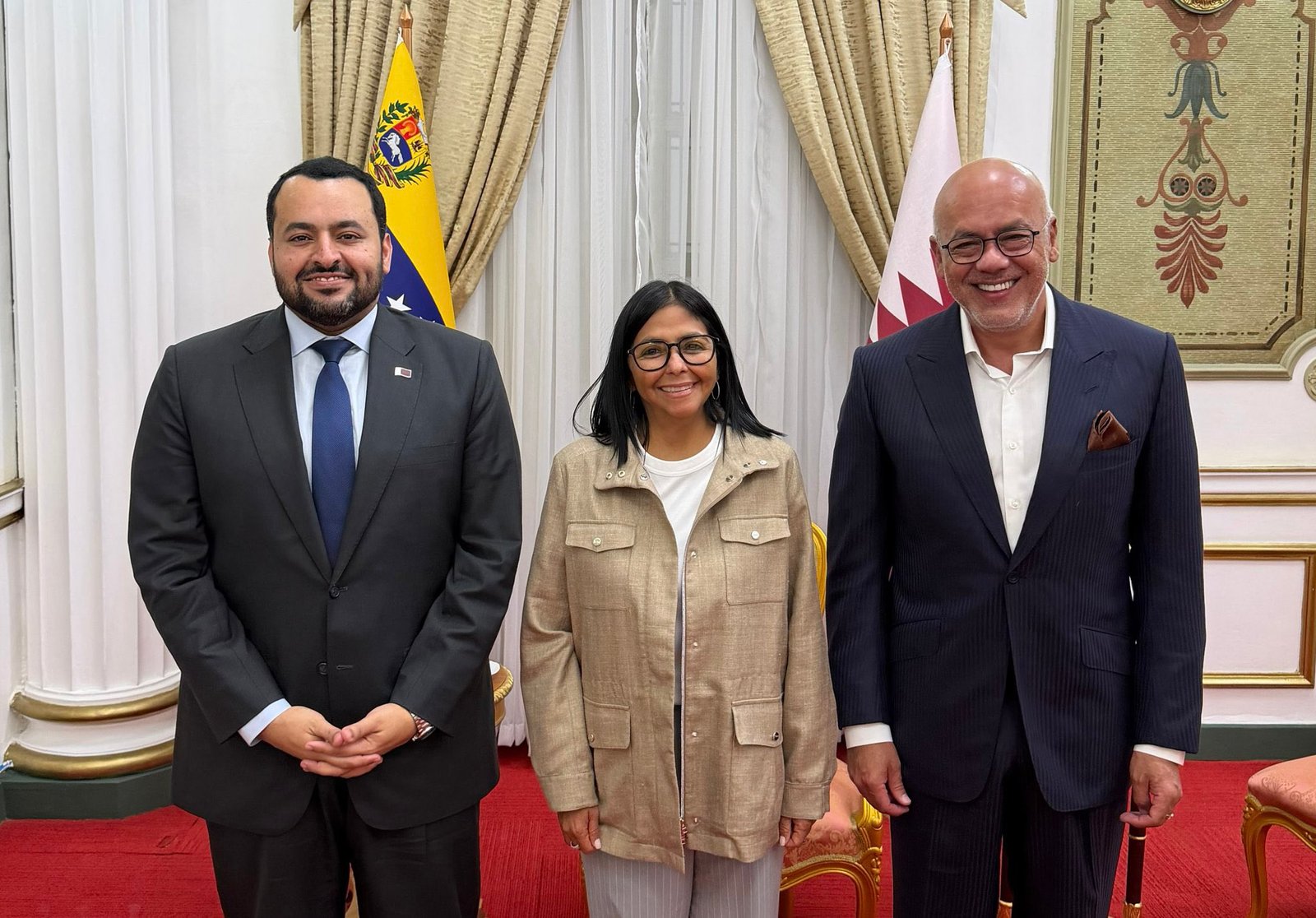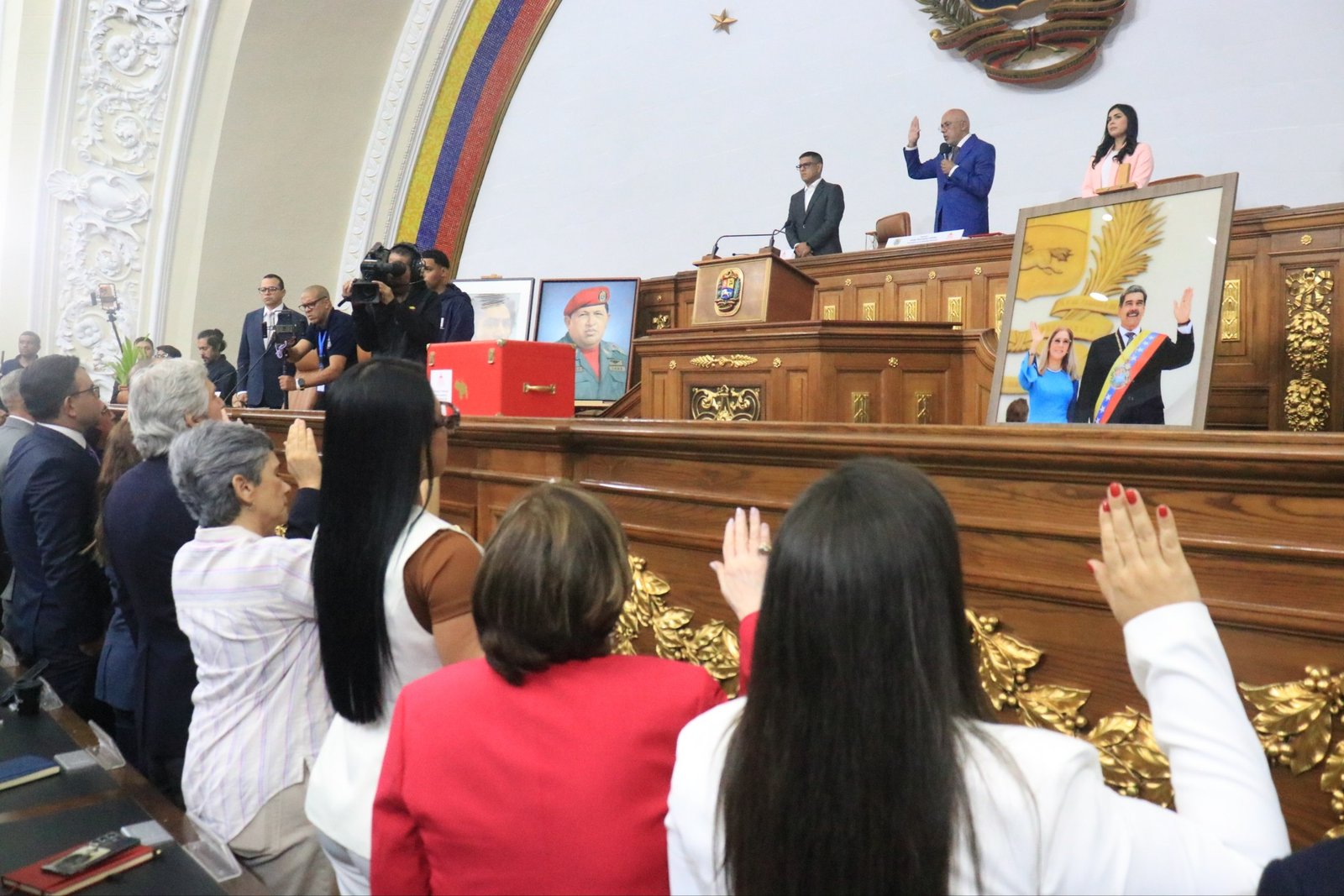
This final selection, characterized by plurality and gender parity with a female predominance, seeks to guarantee transparency and democratic participation in the justice system. | Photograph: National Assembly website.
Guacamaya, October 23, 2026. The plenary of the National Assembly unanimously approved the designation and swore in the 12 civil society representatives who will make up the Judicial Nominations Committee. The body, a product of negotiations between the Government delegations and the AN’s Delegated Commission, has the responsibility of conducting the process for the renewal of the Supreme Court of Justice (TSJ).
With the swearing-in carried out by the president of the Legislative Branch, Jorge Rodríguez, the Committee was formally constituted with a total of 23 members: the 11 deputies of the Preliminary Commission and the dozen selected citizens. The civil group was chosen after the evaluation of 127 initial applications, reduced to 85 after a filter of interviews and review of merits.
Profiles of the 12 Citizens and Balance of Forces
The analysis of the profiles and public records reveals a diverse composition among the 12 citizen representatives, among whom coexist academic, medical, union and human rights sectors with figures of institutional ties:
- Rosmely del Valle Flores Parras: Bachelor’s degree in Administration, social communicator and lawyer. She is an activist in the disability and neurodivergence sector, linked to the Blue Movement and nominated by women’s organizations of Miranda. According to records analyzed by the NGO Transparencia Venezuela, she worked at the Ministry of Communes since 2006, was part of the National Assembly payroll between 2023 and 2025 and was part of the Electoral Nominations Committee in 2023, configuring a profile associated with the ruling party.
- Clara Inés Casanova de Valecillos: Lawyer specializing in criminal sciences, criminalistics and procedural law. She is a member of the board of the Federation of Bar Associations of Venezuela —the organization that nominated her— and has served as litigation attorney before the Constitutional Chamber of the TSJ, with no reported partisan militancy.
- María Luisa Chacón de Aldana: Psychiatrist, UCV graduate, PhD in Psychology and professor. Since 2017 she has served as head of the Psychiatry Service of the Vargas Hospital of Caracas and is vice president of the Venezuelan Foundation for the Advancement of Health Psychology (Funvepssa). She was proposed by the Venezuelan Psychiatry Association and has no registered political affiliation.
- Nancy Clara Castro de Varvaro: Lawyer specializing in criminal and criminological sciences and banking law. She was a prosecutor of the Public Ministry in judicial disciplinary matters, judge and professor at the Andrés Bello Catholic University (UCAB) between 2009 and 2023. Her nomination was supported by the UCAB, with no identified partisan affiliation.
- Mairim Girlens Ruíz Ramos: Lawyer specializing in labor law, civil procedure and municipal management. She applied on her own initiative. However, she has a career in the State as executing judge of measures in Delta Amacuro (2004), head of review at the First Notary of Vargas and judge for the protection of children and adolescents in Caracas.
- Yrma del Valle Pazos Grau: Lawyer specializing in teacher training and criminal sciences, nominated on her own initiative and with no record of political militancy.
- Raquel Yadxani Sánchez Carrero: Lawyer and master’s degree in Legal Sciences. She was nominated by the NGO Foro Penal, an organization in which she serves as coordinator in Táchira state, leading the defense of persons detained for political reasons and victims of repression.
- Anthony Gerard Pérez Negrón: Lawyer graduated from the UCV, specialist in procedural law and criminal sciences, master’s degree in terrorism and corruption, and doctor in constitutional procedural law. He was a criminal judge and university professor, nominated by the Legión Ucevista group. Transparencia Venezuela points to ties with the ruling party, highlighting his entry in 2018 to the payroll of the Executive Directorate of the Judiciary (DEM) and his participation in events of state institutions.
- Mauro Manuel Herrera Gutiérrez: Cardiologist and hemodynamicist physician, specialist in intensive medicine, head of the Cardiology Service of the Vargas Hospital and of the San Román Urological Center. Nominated by the San Román Urological Medical Society, he repeats in this responsibility after being part of the committee designated in May 2026 in the process that was suspended.
- Juan Domingo Alfonzo Paradisi: Lawyer specializing in Administrative Law, doctor in Law, managing partner of the firm Torres, Plaz & Araujo and professor at the UCV and UCAB. Nominated by the Venezuelan Association of Administrative Law (AVDA), with no partisan affiliation.
- Guillermo Tell Aveledo Coll: Political scientist, doctor in Political Sciences and dean of the Faculty of Legal and Political Studies of the Metropolitan University (Unimet). Nominated on his own initiative. Although he has no militancy of his own, he was an alternate member of the opposition National Primary Commission 2023 and is the son of Ramón Guillermo Aveledo, former executive secretary of the Democratic Unity Roundtable (MUD).
- Guillermo José Guzmán Mirabal: Historian and lawyer, doctor in History from the UCAB, associate professor at that university, master’s degree from Boston University and founder of the Red Historia Venezuela. He is nominated on his own initiative with no partisan ties.
What Is the Political Affiliation Within the Citizen Group?
Transparencia Venezuela identified 2 citizens with ties to the ruling party or State institutions: Rosmely Flores (former AN and Ministry of Communes payroll) and Anthony Pérez Negrón (linked to the Executive Directorate of the Judiciary).
In an independent investigation, 2 other people have held state positions: Nancy Castro de Várvaro (former prosecutor before and after 1999) and Mairim Ruiz Ramos (former judge in Delta Amacuro, Vargas and Caracas since 2004).
On the other hand, 2 profiles linked to opposition causes stand out, such as Guillermo Tell Aveledo (dean at the Unimet and former member of the National Primary Commission in 2023) and Raquel Sánchez (Foro Penal Táchira coordinator). The remaining 6 members of the list are made up of jurists or physicians with union careers, mostly nominated on their own initiative or by the organizations they represent.
Although it cannot be determined how the internal political force is balanced, in the global map of the 23 members of the Committee, only 11 of them (8 citizens and 3 opposition deputies) have no previous relationship with the ruling party or State political entities.
Meanwhile, the remaining group is made up of 8 ruling-party deputies (members of the Preliminary Commission) and 4 citizens with previous ties in the State, although a direct link with the ruling party cannot be asserted.
The Roadmap and Waiting Time to Renew the TSJ
After the swearing-in, the immediate task of the Judicial Nominations Committee is to designate its own Board of Directors, which is estimated to be headed by some member of civil society, and subsequently open the call to fill the 32 magistratures of the Supreme Court of Justice, in the Constitutional, Criminal, Civil, Political-Administrative, Social and Electoral chambers.
As for the waiting time, estimates by journalist specializing in electoral matters Eugenio Martínez, on his account on the social network X, indicate that the complete process of evaluation and designation of the 32 magistrates could take approximately between 66 and 82 continuous days from the swearing-in of the Judicial Nominations Committee.
The Credentials Review Council: The Technical Counterweight
A differentiating element in this process is the action of the Credentials and Requirements Review Council, a body conceived last September 25 at the Dialogue Table to act as an additional “technical shield” to the Judicial Nominations Committee.
This council is composed of seven jurists of recognized trajectory, four identified as having an independent profile (Rogelio Pérez Perdomo, Belén Ramírez Landaeta, María Bernardoni de Govea and Bernardo Pulido Márquez) and three with backgrounds in judicial or administrative management during the ruling party (Silio Sánchez Zerpa, Deyanira Nieves Bastidas and Federico Fuenmayor Gallo).
Its exclusive mandate is to design a public evaluation scale and work in parallel with the Nominations Committee to certify that candidates comply with the requirements of suitability, moral solvency and academic merit demanded by the Constitution.
To raise the requirement, the NGO Acceso a la Justicia proposed a public 100-point scale, whose proposal establishes up to 24 points for ethical-professional trajectory and 76 points for recognized competence, in addition to minimum requirements of sole nationality and zero militancy that generate automatic disqualification in case of non-compliance. Likewise, a penalty of -20 pts is contemplated for disciplinary sanctions or indications in human rights reports.
The citizen gaze will be fixed on each phase of the process. The legitimacy of the future judicial authorities will depend on the rigor and transparency with which the Judicial Nominations Committee and the Review Council apply these technical suitability filters over political biases.