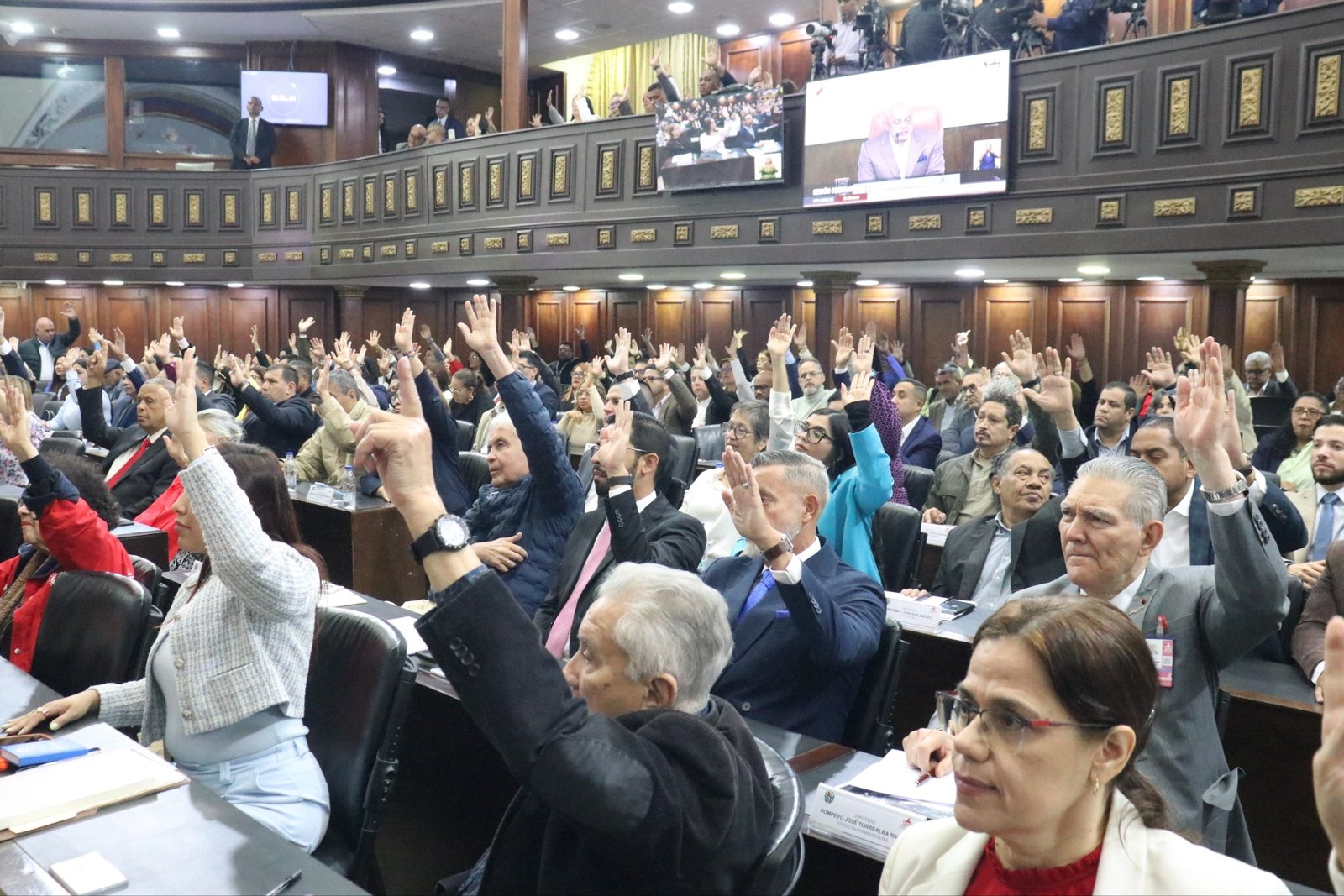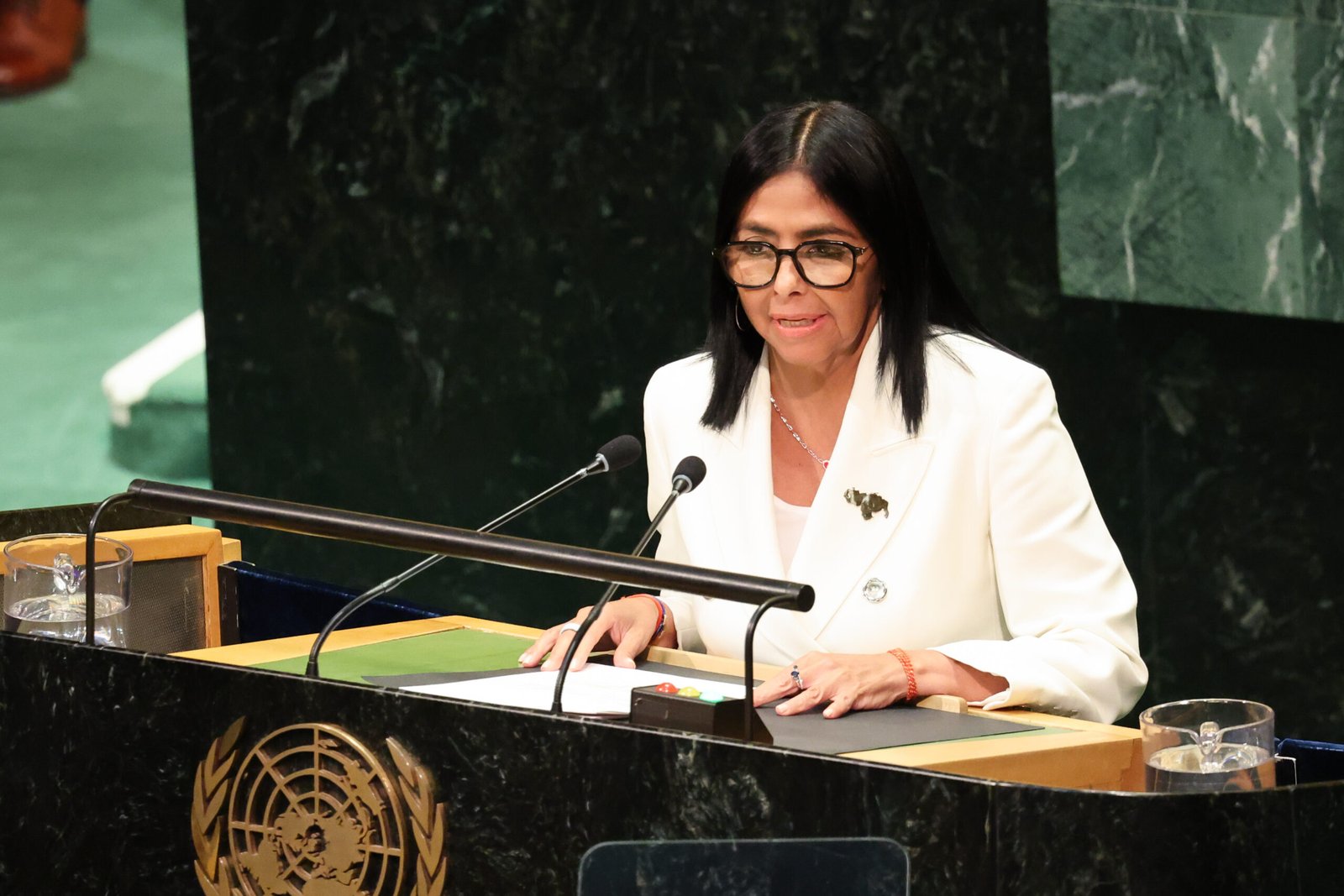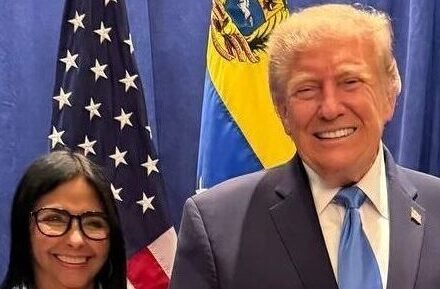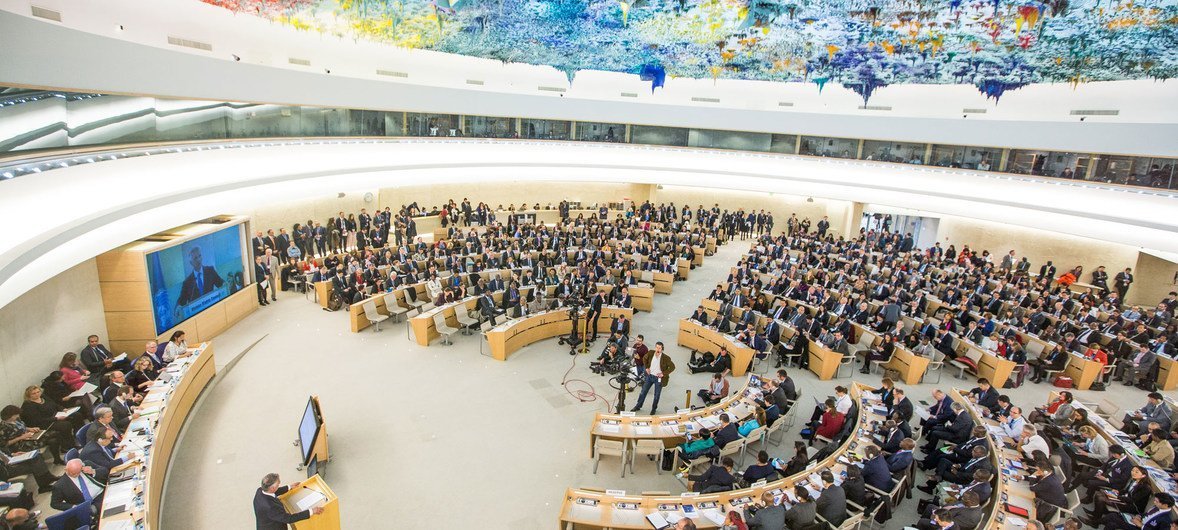
The HRC approved the continuation of the mechanism with 25 votes in favor, 5 against and 17 abstentions, despite Caracas’s rejection. The decision comes weeks after the Mission itself warned that the State’s repressive apparatus remains intact after January’s political change. Photo: UN.
Guacamaya, October 8, 2026. International human rights monitoring in the country will remain active for at least two more years thanks to the renewal of the Independent International Fact-Finding Mission on Venezuela.
On October 6, 2026, during its 63rd session, the United Nations Human Rights Council approved extending until 2028 the mandate of the Mission, as well as that of the Office of the UN High Commissioner for Human Rights (OHCHR) in the country.
The text, identified as A/HRC/63/L.18, obtained 25 votes in favor, 5 against and 17 abstentions. Although it was not unanimous, it achieved the greatest support since the creation of the Mission.
Who voted what?
The group of countries that promoted the initiative was led by Chile, Argentina, Canada, Ecuador, Guatemala, Paraguay and Uruguay, and received support from several democracies in Western Europe, Latin America and Asia. Among them are Colombia, the Dominican Republic, the United States, the United Kingdom, Spain, France, Germany, Switzerland and Japan, in addition to States from other regions such as Côte d’Ivoire, Cyprus, Czechia, the Netherlands, Korea and Slovenia. The five rejections came from China, Cuba, Vietnam, Egypt and Burundi.
Among the abstentions, those of Brazil and Bolivia stand out. The Brazilian delegation acknowledged “recent advances” in the Venezuelan situation, but considered that the draft was one-sided, unbalanced and excessively condemnatory and prescriptive, and that a resolution with that tone would help neither improve conditions in the country nor promote dialogue.
Bolivia’s position is striking because of the contrast with the country’s political direction. Rodrigo Paz’s government has distanced itself from Chavismo, and yet its delegation did not support a resolution backed by, among others, the United States, Argentina, Chile and Paraguay. The abstention also represents a shift from 2022, when, according to press reports at the time, Bolivia spoke out against extending the commission under the Luis Arce administration.
What does the resolution say and how does Caracas respond?
The text acknowledges recent advances, including the release from prison of people detained for political reasons and the restoration of relations between Venezuela and OHCHR, but it maintains concern over grave violations and abuses that continue. It also urges the Venezuelan government to restore the rule of law through substantive, good-faith negotiations on electoral and judicial reforms, something that can be interpreted as implicit support for the negotiation process opened between the Executive and the National Assembly elected in 2015. It asks the Mission to present reports at the autumn sessions of 2027 and 2028.
The Venezuelan delegation rejected the renewal. It maintained that the mechanism operates without the State’s consent, questioned the objectivity and methodology of its reports, and argued that the time had come to move toward its closure and to prioritize technical cooperation with the Office of the High Commissioner and universal mechanisms. The Mission, for its part, argued before the Council that changes on the ground make independent monitoring to guarantee accountability even more necessary.
What the Mission said before the Council
The renewal came just two and a half weeks after the Mission’s president, Sofía Macher, presented the annual report to the plenary on September 18. The document covers the period between September 1, 2025 and August 31, 2026, a period split in two by the United States military intervention of January 3, which led to the capture of Nicolás Maduro and which the Mission described as contrary to international law.
Macher explained that, between September and December 2025, violations continued at a scale and with patterns consistent with those already documented. Since January, by contrast, the interim government introduced changes in the cabinet, the military high command and the composition of the Supreme Court, moderated political discourse and opened a process of releases from prison that, since late February, has been sustained by a new Amnesty Law.
The Mission detected since late January a significant drop in long-term arbitrary detentions and enforced disappearances, and acknowledged that those changes have real effects on many families.
But the president warned of concrete limits. The names of those released have not been disclosed, so the figure remains uncertain; the Mission estimates that between 800 and 1,000 people left prison in that period.
Even so, it documented at least 17 new arbitrary detentions in the first eight months of the year, along with an increase in short arrests used as a form of intimidation, and recalled that, according to NGOs, between 379 and 500 people remain detained for political reasons.
Torture, she added, remains endemic in several facilities, particularly the maximum-security prison El Rodeo I and Fuerte Guaicaipuro, and the Mission recorded methods it had not previously documented.
The report’s central conclusion is that there is insufficient evidence of a genuine and sustainable break with Maduro’s government or with its patterns of repression. According to Macher, the structure of the repressive apparatus “has remained completely intact.” She explained this with five features: the same legal scaffolding, the absence of reform in the police, security and intelligence bodies, the lack of accountability, restrictions on civil organizations, media and parties, and surveillance and social control over the population. Perhaps the most eloquent sign, she said, is that those responsible for repression remain present in the civil and military hierarchy.
As an example of the fragility of the opening, the president cited two events from the previous day: the announcement of the formal restoration of access to digital platforms, within the framework of political dialogue, and the five-hour detention of opposition former mayor Javier Oropeza, who had returned to the country three days earlier after an exile that began in 2024. He was released after citizen protests.
The statement accompanying the presentation summarized the idea in a phrase from Macher: the reduction of some of the most severe forms of repression is significant, but “in no way constitutes a transformation of the system that made them possible.”
One of the two session documents accompanying the report is devoted to the armed civilian groups known as colectivos. The Mission has reasonable grounds to believe that they support repression with surveillance and target-marking tasks, and that they participate in controlling protests and in selective acts of political persecution, in a climate of almost total impunity. Their daily presence in neighborhoods also allows them to intervene in the distribution of food, fuel, services and social benefits, and to mediate conflicts through coercion.
Among the links with the State, the Mission documented public backing from senior authorities, access to resources and financing, the incorporation of members of these groups into public institutions and security forces, and the express or implicit delegation of public-order and social-control functions.
The press release adds that there are reasonable grounds to believe that the government regularly supplied them with weapons, ammunition, motorcycles, telephones and radio equipment. The colectivos are not formal State bodies, Macher specified, but certain conduct by their members is attributable to the State, and the State must prevent, investigate, punish and provide reparation.
Macher closed her intervention with a message directed at the authorities: Venezuela today has the opportunity for real change, but that requires reforming the institutions and laws linked to the political repression of the last decade, that perpetrators of grave violations be held accountable before justice, and that victims be recognized and provided reparation.
The faces of the Mission
The mission is composed of and led by two key names worth knowing in detail: Peruvian Sofía Macher and Canadian Alex Neve.
Macher, the Mission’s president, is a sociologist and human rights defender with more than three decades of experience in transitional justice, reparations and gender perspective. She holds a doctorate and a master’s degree in Sociology and Gender Studies from the Pontifical Catholic University of Peru.
In her country, she was part of the Truth and Reconciliation Commission, which investigated violence from the internal armed conflict, and presided over the Reparations Council, the body responsible for designing and administering the victims’ registry and reparation programs. She has advised truth commissions and UN mechanisms, worked with the Organization of American States, UNDP and UN Women, and held leadership positions in truth commissions linked to Libya, Yemen, Colombia and the Solomon Islands.
The president of the Human Rights Council appointed her president of the Mission on April 20, 2026, replacing Portuguese jurist Marta Valiñas, whose mandate had ended at the beginning of the year.
Alex Neve is a lawyer specializing in human rights and refugees, and was secretary general of Amnesty International Canada between 2000 and 2020. He has participated in more than forty investigative missions, inside and outside his country, and practiced as a refugee lawyer both in private practice and in a community legal clinic. He served on Canada’s Immigration and Refugee Board and taught at Osgoode Hall Law School.
Today he is a visiting and adjunct professor of international human rights law at the universities of Ottawa and Dalhousie, and a senior researcher at the Ottawa Graduate School of Public and International Affairs. He holds a law degree from Dalhousie, a master’s in International Human Rights Law from the University of Essex, and is an Officer of the Order of Canada. In 2025 he delivered the CBC Massey Lectures, titled “Renewing Human Rights in a Fractured World.” He joined the Mission in December 2025.
How does the Mission work and what is its mandate?
The Mission is not a court or a body with sanctioning power. It is an independent investigative body created by the Human Rights Council on September 27, 2019, through resolution 42/25, initially for one year, to assess alleged violations committed since 2014. Its members are experts appointed by the Council presidency who act in their individual capacity, do not represent any State and report to the Council itself, before which they present reports in interactive dialogues.
Its original mandate covers four areas: extrajudicial executions, enforced disappearances, arbitrary detentions and torture and other cruel, inhuman or degrading treatment. To attribute facts, the Mission applies the standard of “reasonable grounds to believe,” lower than that required in a criminal proceeding, and evaluates what occurred in light of international human rights law, international criminal law and Venezuela’s own legal guarantees.
Its work consists of gathering and preserving evidence, identifying patterns and structures and, where appropriate, naming alleged perpetrators, so that this documentation can serve future national or international proceedings.
After the establishment of the Mission on Venezuela in September 2019, in 2024 the extension tasked it with paying special attention to the situation before, during and after the 2024 presidential elections and to violence by the so-called “colectivos.”
Now, in October 2026, the Mission is renewed again for another two years. According to the Mission’s own presentation, each cycle relies on interviews with victims and witnesses, analysis of documents and receipt of information from civil society organizations, and respects the right of rectification of persons mentioned in its reports. A good part of that work is done without presence in Venezuelan territory.
The 2026 reports
This year’s cycle produced three documents. The first was on August 17, 2026, with the Annual Report to the Council (A/HRC/63/57), covering the period from September 2025 to August 2026.
The second, on September 15, 2026, was titled “The armed civilian groups known as ‘colectivos’ and their links with the State,” a session document examining their role in repression.
The third was produced on September 17, 2026, titled “The continuity of the State’s repressive apparatus,” a session document that analyzes what has and has not changed since January 3.
What does the renewal mean?
For Venezuelan and international human rights organizations, including Amnesty International, Human Rights Watch and Provea, the extension maintains a channel to document violations, preserve evidence and accompany victims while the country undergoes political transformations whose solidity is disputed. Several media outlets reported that the result of 25 votes was the greatest support recorded since the creation of the Mission.
The paradox left by the vote is clear: the mechanism continues because, according to its own assessment, the structures it investigates have not been dismantled, and Caracas insists it is no longer needed. The answer will be measured in the 2027 and 2028 reports.