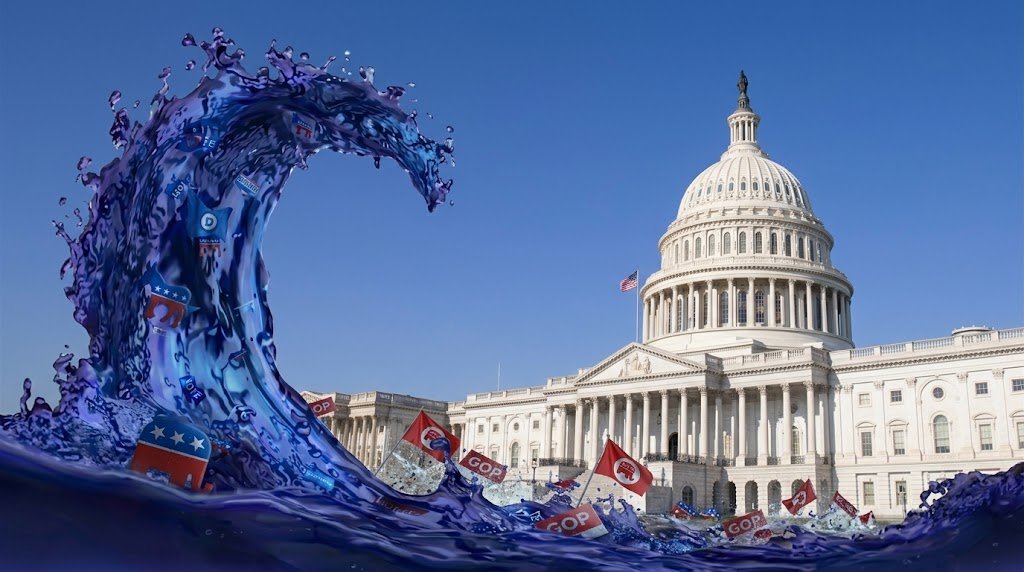
Voters came out to reject Trump’s management, and Democratic candidates triumphed even in states not considered competitive. Image: Guacamaya.
Guacmaya, November 4, 2026. Midterm elections are usually difficult for American presidents: they have lost 19 out of 21 times since 1946.
But on this occasion, the Democrats have swept even in districts they had not won for decades or that were not even considered competitive.
While the count is finishing, the Democratic victory in both chambers of Congress has already been defined. The blue party has also taken control of the governorships of Texas, Georgia, Iowa, and Ohio.
The midterms, therefore, evidenced great discontent toward President Trump and his policies, even in southern and interior states that traditionally support Republicans.
“Read the room”
According to Gallup, the five main concerns of voters were the economy, healthcare, the situation in Iran, the distribution of income and wealth, and high fuel prices. In other words, the American voter was focusing first and foremost on their pocketbook.
In communities with larger migrant populations, rejection of ICE’s aggressive detention and deportation strategy was also a key factor.
Republicans, for their part, faced the midterm campaign with culture-war speeches, such as debates about transgender people and testosterone levels, avoiding the concerns of the average voter.
At the same time, the Republican Party had to carry a leader whose popularity was dwindling. His approval rating fell from 47% to 31% between January 2025 and October 2026, while disapproval rose from 41% to 66%.
It also seemed that he had lost his ability to speak with charisma. In his last televised speech the day before the elections, the president focused on reforms to the reflecting pool at the Lincoln Monument.
Paradoxically, Trump’s 2024 presidential campaign had focused on promises not to start more foreign interventions and to combat inflation. It was claimed that “a vote for Kamala Harris is a vote for war against Iran,” and comments about the high cost of basic products, such as eggs, became popular.
Surprises in the heart of the United States
The lack of sensitivity to voters’ concerns and Trump’s management led to the loss of states considered “safe” for Republicans, because they concentrate more conservative voters, with special rejection of “woke” ideas and perceived Democratic elitism.
The blue party achieved important victories in 10 states that Trump had won in 2024: Ohio, Michigan, Iowa, North Carolina, South Carolina, Georgia, Texas, Kansas, Nevada, and Arizona.
These triumphs open new paths for 2028, with new stars in the Democratic Party. James Talarico, with his moderate profile and religious discourse, is the first Democratic senator in Texas since 1998. He and Jon Ossoff are beginning to appear as presidential profiles, due to their charisma and ability to be acceptable to a broader public.
How did the left and centrist wings perform?
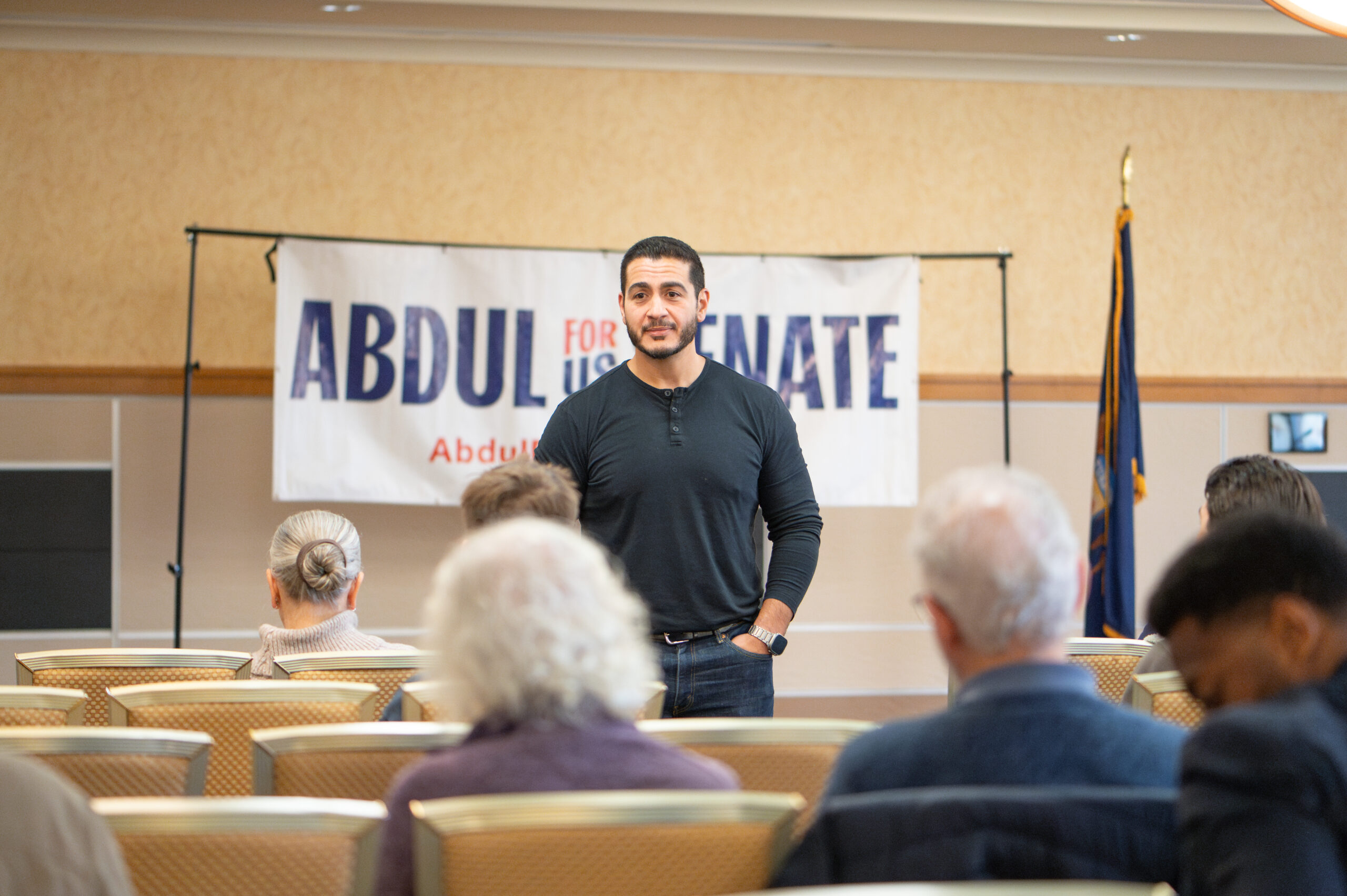
The Democratic Party achieved great results in formerly Republican districts both on the left wing, with candidates such as Abdul El Sayed, and in the centrist wing, with James Talarico and Jon Ossoff.
Their speeches focused on criticizing the high costs of healthcare and gasoline, the war against Iran, and the excessive power of the richest in politics.
To a certain extent, the excessive financing of billionaires such as Elon Musk and the Israeli lobby served as a rhetorical weapon for their Democratic opponents. The businessman of South African origin invested 446 million dollars, half of which went to stopping, unsuccessfully, the election of Talarico.
The Democratic Socialists of America gained ground, increasing their influence ahead of 2028. With only two congresswomen, Alexandria Ocasio-Cortez and Rashida Tlaib, they will go on to total up to 7 with new members from New York, Colorado, Michigan, and Pennsylvania.
Angie Nixon, also from the DSA, came surprisingly close to winning the Florida senatorial election, even though her party did not invest in the state, considering it lost. The candidate obtained 48% of the votes, even winning in Miami-Dade County, where the Cuban and Venezuelan diasporas are most concentrated.
A “woke” victory?
The 2024 elections seemed to be a defeat for the ideas of diversity and representativeness. Kamala Harris obtained 6 million fewer votes than Joe Biden in 2020, which would have been enough to defeat Trump.
In 2026, the speeches did not focus on those same ideas, but even so the Democrats triumphed with lists full of minorities and women.
Abdul El Sayed will be the first Muslim senator; Chris Pappas the first openly gay senator; Gina Hinojosa the first Hispanic governor of Texas; Xavier Becerra the first Latino governor of California; Keisha Lance Bottoms the first Black governor of the country, being elected by Georgia; and Peggy Flanagan the first Indigenous woman elected to the Senate by Minnesota.
Alaska is still to be decided, but Mary Peltola could be the first woman senator representing Alaska, if her victory is confirmed.
In Florida, Byron Donalds would be the only Republican in this category, managing to become the first Black governor of the state.
Florida: razor-thin edge
Republicans managed to defend their positions in the state, but they were close to losing both a senator, the governorship, and several key districts, taking into account the lack of investment by the Democratic campaign.
In 2024, Trump won Florida by 13.1 percentage points. In the midterms, only 3.8 points separated the two Senate candidates, Ashley Moody and Angie Nixon; and 1.3 points in the governorship, between Byron Donalds and David Jolly.
In the south of the state, congressmen Mario Díaz Balart and María Elvira Salazar are holding on by less than one percentage point, so a recount could take away seats previously considered safe.
The Venezuelan and Cuban communities of Florida, which largely supported the election of the current president, are paradoxically among those that have suffered most from ICE raids. In 2025, the Democrats won the Miami mayoralty with Eileen Higgins, the first of her party to take the office in almost 30 years.
The governing party remains, hanging by a thread, thanks to the rural vote and that of the north of the state, with a culture closer to Alabama, Georgia, and Mississippi.
Florida is key to the future of Venezuela. Its Latin American communities, particularly the Cuban one, have played a key role in American foreign policy for decades. Today, Republicans no longer have their support assured.
On the other hand, the midterms were also a battle for the fate of Marco Rubio, who is positioned as Trump’s successor for the 2028 presidential elections. The bad results could discourage him. However, the allies of JD Vance, the other favorite, lost resoundingly in Ohio, his home state.
Is an impeachment possible?
The big question after such resounding results is whether impeachment against President Trump will be possible.
Democrats will only have the ability to initiate it with their simple majority in the Lower House. But to carry it to its conclusion, they need two-thirds of the Senate, something that looks distant and very unlikely.
The only scenario in which a successful motion of censure would be possible would be convincing a dozen Republican senators on the basis of an especially serious scandal. In that case, some of them could determine that the only way to keep their seats in the next elections is to attack their own president.
What we can expect is a more aggressive Democratic Party, which calls for summoning senior administration officials to try to expose them before the American public.