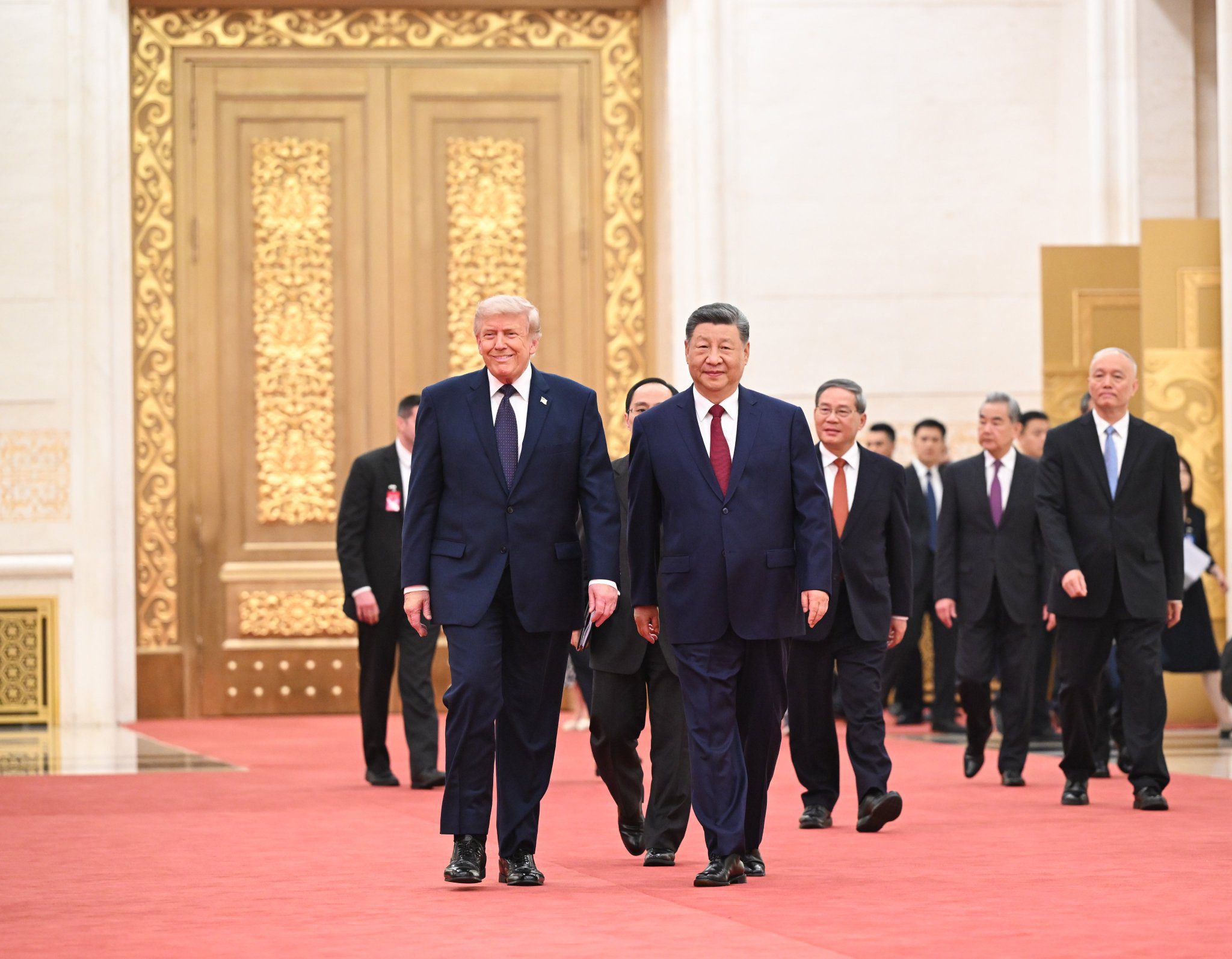
Xi Jinping and Donald Trump walk together before a two-hour meeting held this Thursday. Photograph: X account @AmbXieFeng.
Guacamaya, May 14, 2026. The visit of the U.S. president to Beijing highlights the deep interdependence between China and the United States, but also the structural tensions shaping their relationship. While both powers seek to avoid an open rupture, disputes over technological leadership, the future of Taiwan, and the impact of the crisis in the Middle East continue to fuel the risk of a new global escalation.
Donald Trump’s arrival in Beijing once again placed U.S.-China relations at the center of international politics. Eight years after his last official visit to the Asian country, the Republican leader returned amid a far more unstable global environment, marked by intensifying technological competition, rising military tensions in Asia, and a world economy vulnerable to any shock between the two largest powers on the planet.
Just hours before the summit began, China’s Foreign Ministry released a carefully crafted message. In a video filled with Cold War-era references, Beijing revived the concept of “peaceful coexistence” and warned that the world is “too small” for a confrontation between the two nations. More than a conciliatory gesture, the message reflected a shared understanding in both Washington and Beijing: an open conflict would carry economic and geopolitical costs that would be difficult to contain.
The visit comes at a particularly sensitive moment. It was during Trump’s first term that the tariff war began, reshaping bilateral relations and disrupting global trade. What initially started as a dispute over the U.S. trade deficit quickly evolved into a broader strategic competition over control of critical sectors such as semiconductors, artificial intelligence, advanced computing, and technological supply chains.
Although both governments reached a partial truce in recent months following talks held in South Korea, the relationship remains defined by a combination of indispensable cooperation and structural distrust. China and the United States now possess enough economic, technological, and financial tools to seriously damage one another. For many analysts, this dynamic resembles a form of “mutually assured destruction,” transferred from the nuclear realm into the commercial sphere.
The true scale of this competition was reflected in the composition of the U.S. delegation. The presence of figures such as Elon Musk, Jensen Huang, and Tim Cook demonstrated how the rivalry between Washington and Beijing is now centered on global technological dominance.
Each executive arrived in China pursuing specific objectives. Tesla seeks to protect its massive industrial operations in Shanghai from potential new tariffs; Nvidia hopes to maintain access to China’s AI market despite U.S. restrictions on advanced chip exports; while Apple remains deeply dependent on China’s manufacturing infrastructure to sustain its global supply chain.
Trump has repeatedly emphasized that one of the trip’s central goals is to secure greater Chinese purchases of American products and broader access for U.S. companies to the Chinese market. Yet behind the trade negotiations lies a much deeper struggle: who will define the technological, industrial, and financial rules of the 21st century.
Beijing, meanwhile, sought to portray itself as a responsible power and a defender of global stability. During the bilateral meeting at the Great Hall of the People, Xi Jinping framed relations with Washington within what he described as “changes unseen in a century,” a recurring expression in Chinese strategic discourse used to explain the transformation of the international order.
The Chinese leader stressed the need to build what he called “constructive strategic stability,” a formula aimed at managing rivalry without allowing it to escalate into open confrontation. Beijing’s proposal combines controlled competition, permanent dialogue channels, and clear limits designed to avoid military or economic escalation spiraling out of control.
In that context, Xi returned to one of the most influential ideas in contemporary geopolitical debate: the so-called “Thucydides Trap,” the theory that a rising power and an established dominant power are historically destined for conflict. Facing Trump, Xi raised the question of whether both nations could avoid that historical pattern and build a relatively stable coexistence between the world’s two largest economies.
Taiwan quickly emerged as the most sensitive issue on the summit agenda. For Beijing, the island remains the central red line in relations with Washington. Xi made clear that any shift in the U.S. position could trigger a major crisis between the two powers.
Tensions have risen in recent months after Washington approved an $11 billion military sales package for Taipei. Although part of the shipments remain delayed, China interpreted the decision as a direct provocation and as a sign of deepening U.S. support for the island.
Beijing’s concerns go beyond weapons alone. Chinese authorities have long sought to modify even the diplomatic language used by Washington regarding Taiwan. China no longer wants the United States merely to “not support” Taiwanese independence; it now seeks explicit U.S. opposition to it.
Trump’s statements before traveling to China intensified concerns in Taipei. The president suggested he was willing to discuss arms sales to Taiwan with Xi, an especially sensitive issue because it breaks with decades of strategic ambiguity and directly touches on the so-called “Six Assurances” Washington provided to Taiwan in 1982.
For China, any U.S. flexibility on this issue would represent a major diplomatic victory. For Taiwan, however, the greatest danger may not necessarily be a formal agreement, but rather a gradual shift in Washington’s political tone that Beijing could exploit to its advantage.
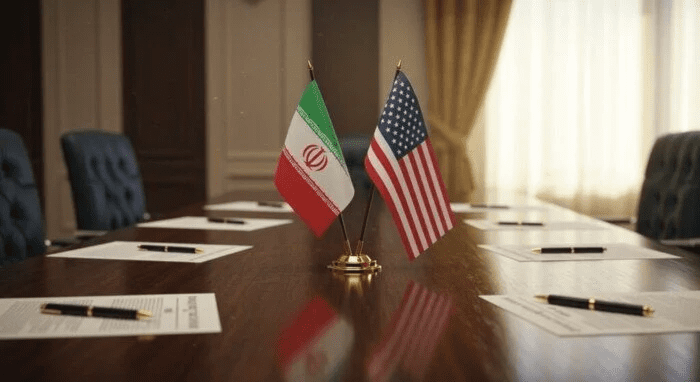
The crisis with Iran emerged as a secondary, though unavoidable, topic. Both Washington and Beijing share an interest in preventing disruptions to global energy flows through the Strait of Hormuz, particularly at a moment of economic fragility and volatility in international energy markets.
Following the meeting, the White House stated that both leaders agreed Iran must not develop nuclear weapons and supported maintaining free maritime transit through the Persian Gulf. Trump even claimed that Xi had offered to help reduce regional tensions.
This issue introduces an additional strategic dimension. The redeployment of U.S. military resources toward the Middle East partially reduces Washington’s ability to focus on the Indo-Pacific, precisely the region where China seeks to expand its military and strategic influence.
Despite the image of strength Beijing seeks to project, China also faces significant vulnerabilities. The Chinese economy is undergoing a period of slowdown and requires financial stability, foreign investment, and access to international markets to sustain growth and avoid mounting internal pressures.
Xi attempted to convey precisely that message during a meeting with American business leaders, assuring them that China would continue opening its economy and offering opportunities to foreign companies. The message was directed especially at Wall Street and Silicon Valley at a time when the technological war threatens to fragment the global economy even further.
Beyond specific announcements or potential trade agreements, the summit reflects a central reality of the contemporary international system: China and the United States compete for global leadership while simultaneously depending on one another to avoid a large-scale economic and geopolitical crisis.
Trump’s visit does not resolve those contradictions. However, it does reveal how both powers are attempting to manage a relationship simultaneously defined by rivalry, interdependence, and the need to avoid direct confrontation. To a large extent, the tone of that relationship will shape global stability in the years ahead.
Venezuela: oil, debt, and geopolitics in the shadow of the summit
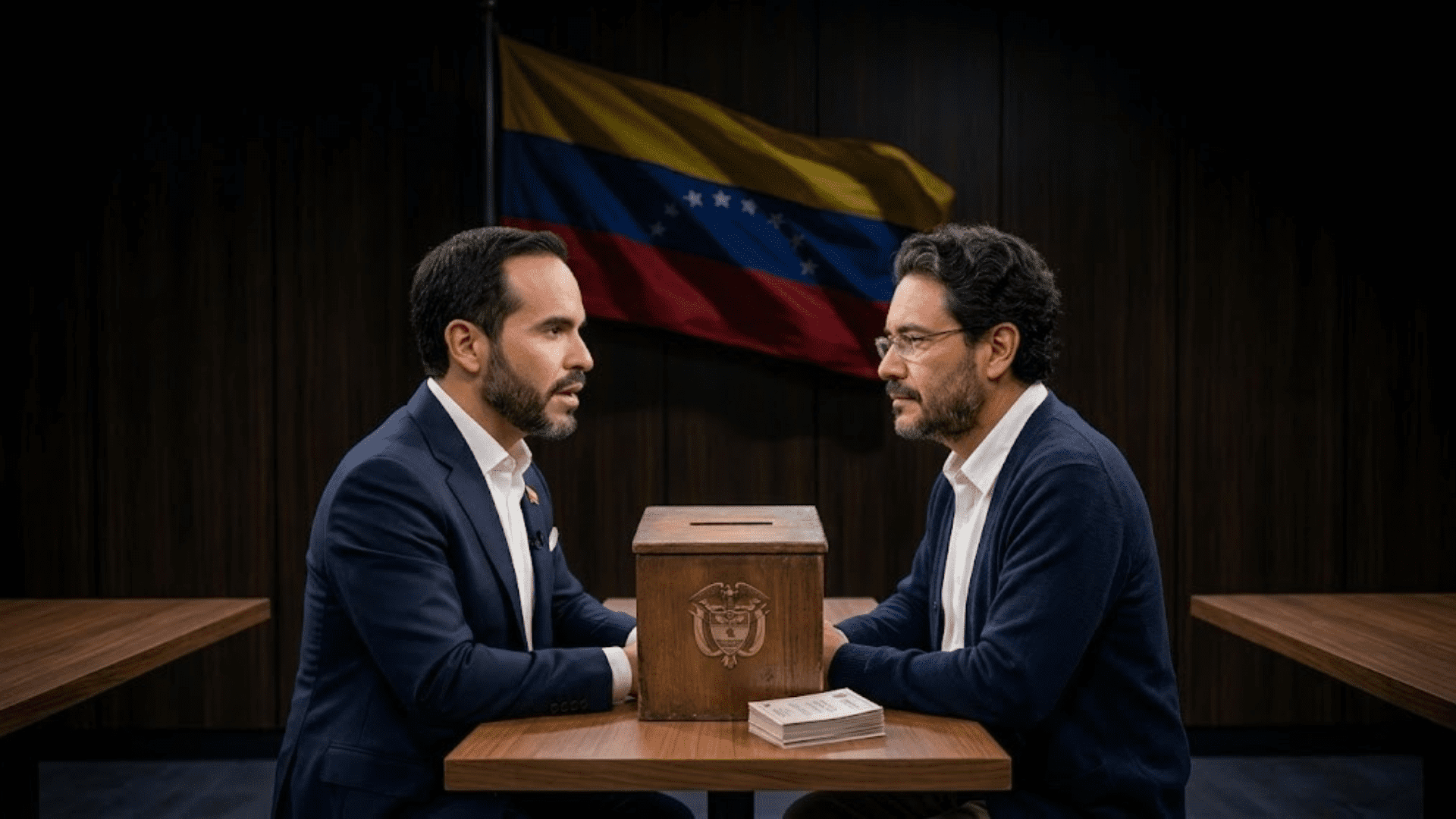
Although Venezuela does not formally appear on the public agenda of the meeting between Donald Trump and Xi Jinping, the South American country quietly intersects with several of the strategic discussions dominating relations between Washington and Beijing. Oil, debt, sanctions, and geopolitical competition make Caracas an indirect but relevant issue within the rivalry between the two powers.
The first element is energy. China remains one of the main destinations for Venezuelan crude oil while also being one of Caracas’ largest bilateral creditors. For years, much of the Chinese financing extended to Venezuela was repaid through oil shipments, creating a financial relationship deeply tied to Venezuela’s energy sector. Various estimates place Venezuela’s debt to China between $10 billion and $12 billion, although the total figure could be higher depending on interest and associated commitments.
This explains why any negotiation between the United States and China regarding trade, energy, or global stability inevitably carries implications for Venezuela. Washington understands that Venezuelan oil possesses not only economic value but also geopolitical significance, particularly because it represents one of China’s main areas of influence in Latin America.
Trump’s visit also comes at a particularly sensitive moment for Caracas. Venezuela has formally announced the beginning of an external debt restructuring process after years in default, a highly complex negotiation in which China will play a decisive role.
In that context, even a partial stabilization of relations between Washington and Beijing could indirectly benefit Venezuela. If both powers temporarily reduce commercial tensions and prioritize global economic stability, there could be greater room for energy investments, more financial flexibility, and fewer risks of Venezuela’s debt becoming another geopolitical flashpoint between China and the United States.
However, the opposite scenario is also possible. If competition between the two powers intensifies again — especially around Taiwan or technology — Venezuela could once again become a space for strategic confrontation. For Washington, limiting Chinese influence over Venezuelan energy resources forms part of a broader hemispheric containment strategy. For Beijing, meanwhile, preserving its oil and financial interests in Venezuela is a matter of international credibility and energy security.
Another relevant factor is the global oil market. The conflict involving Iran and tensions surrounding the Strait of Hormuz have increased the importance of alternative suppliers of heavy crude oil, precisely the type of oil Venezuela can provide.
The Trump-Xi summit will not resolve these tensions, but it may redefine the international context in which Venezuela seeks to renegotiate its debt, recover oil production, and reposition itself within an increasingly fragmented global system. In that broader geopolitical landscape, Caracas ceases to be merely a regional issue and instead becomes part of the wider struggle over the balance of power in the 21st century.