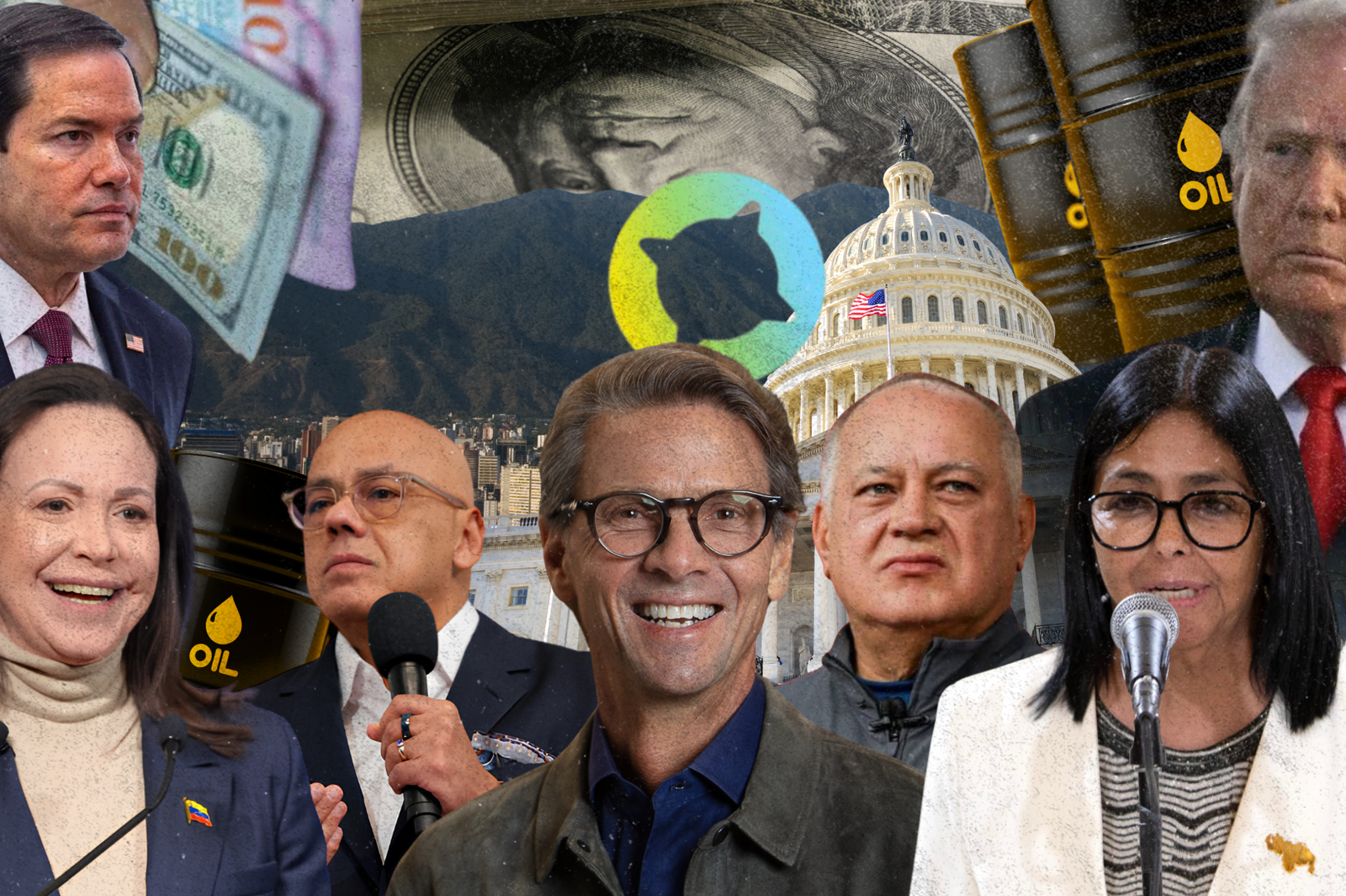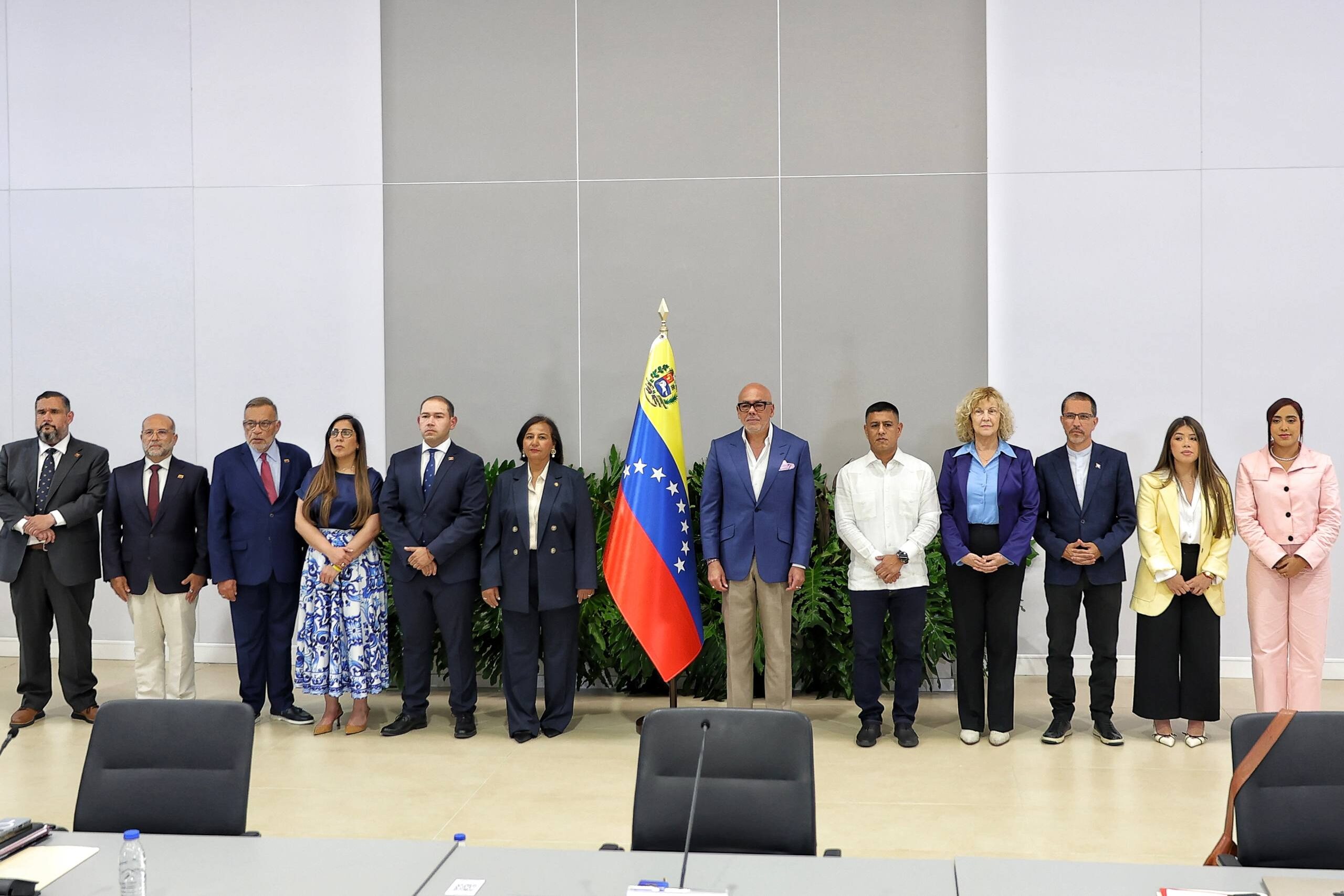
While the ruling party attempts to ease its isolation, the opposition, driven by the United States, seeks the restoration of democracy through a new electoral schedule and the reform of public institutions. | Photograph: National Assembly
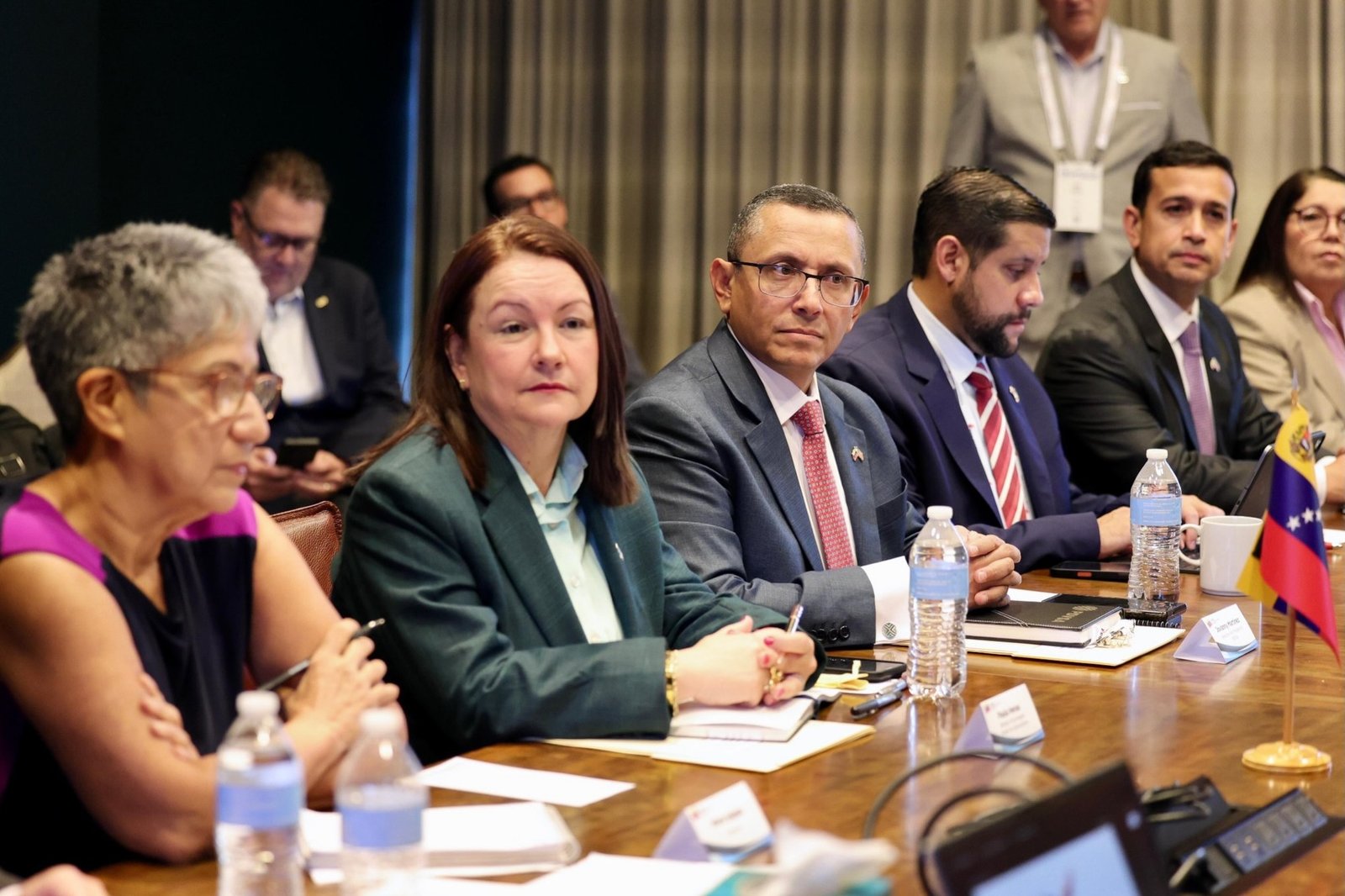
Guacamaya, August 6, 2026. In what can be considered a “staged” event to validate commitments already reached between Washington and Caracas, the dialogue table between the delegation of the Venezuelan Government and the Delegated Commission of the 2015 National Assembly was formally installed this Thursday at the La Carlota Convention Center.
The United States Department of State, through an official statement, expressed its full support for the process taking place at La Carlota. The agency described these direct conversations as a “unique opportunity” to advance toward a stable and prosperous future. In this regard, it urged “all involved parties” to support the effort to achieve “tangible results.”
Attending for the Delegated Commission of the 2015 National Assembly were Dinorah Figuera, Marco Aurelio Quiñones, Ramón López, Jorge Millán, and Juan Miguel Matheus. Notably, Desiré Barboza (from the support commission) attended in place of Sergio Vergara (from the technical-political commission) for this in-person meeting.
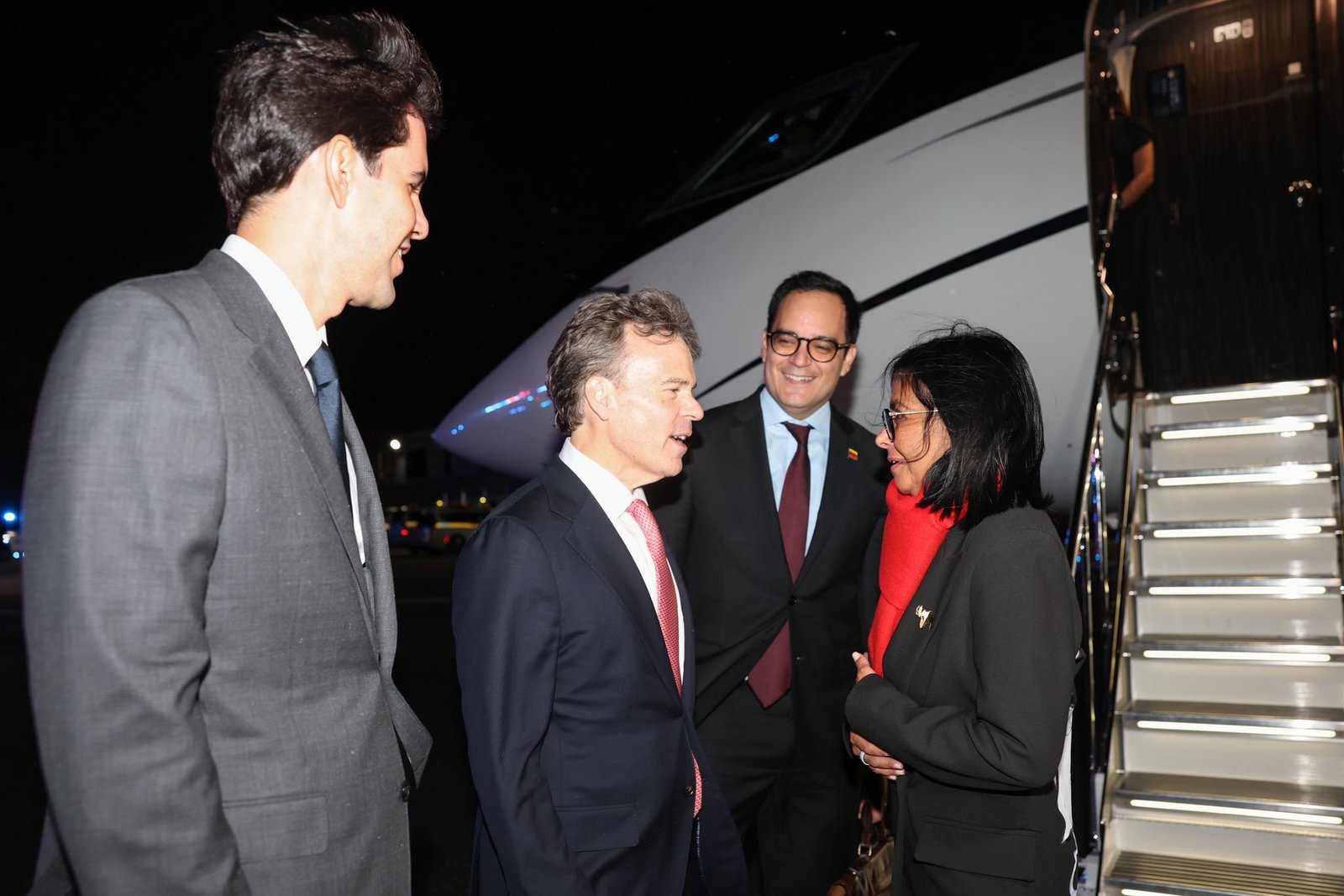
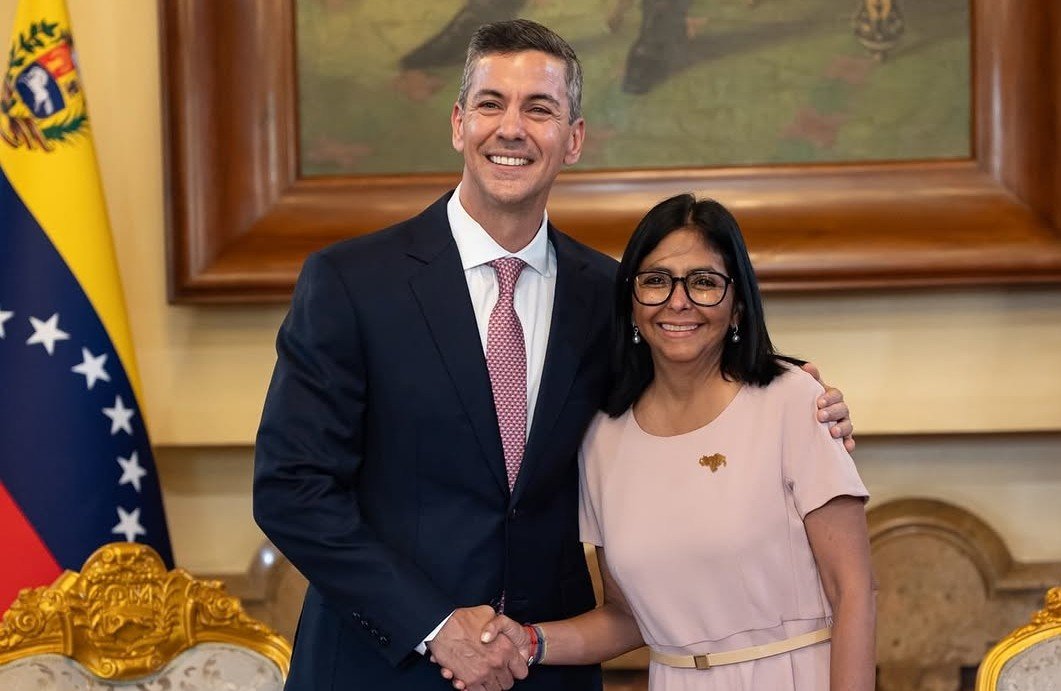
The ruling party, for its part, sent the full leadership of the current National Assembly: Jorge Rodríguez, Pedro Infante, and América Pérez. They are joined by Jorge Arreaza, Minister Ana María San Juan, and Génesis Garvett, recently appointed Vice Minister of Student Well-being and the University Community.
Elections, Machado’s Exclusion, and the “Outsider” Factor
The electoral calendar is shaping up to be the main issue of interest for Venezuelans. Under the aforementioned U.S. backing, the process begins with a roadmap that, according to sources close to the table consulted by El País, would already have its cards dealt: a renewal of the National Electoral Council (CNE) by December of this year and the holding of regional elections in 2027.
Regarding the presidential elections, Republican Senator Bernie Moreno has put forward the symbolic proposal of July 24, 2027 — Simón Bolívar’s birthday — as the date for the presidential vote. He framed the proposal as part of the three-phase plan promoted by the Trump administration, consisting of stabilization, reconciliation, and transition.
Concurrently, a bipartisan resolution is advancing in the United States Senate reaffirming support for a democratic transition through “free, fair, and transparent” elections. The proposal explicitly mentions María Corina Machado, warning that any harm to her integrity would delegitimize future elections and require accountability.
However, the opposition leader has been deliberately excluded from the dialogue by Washington and the Rodríguez brothers, a decision that breeds mistrust among various sectors. As the table is installed, the most recent Atlas Intel study for Bloomberg reveals a rise in María Corina Machado’s approval rating, reaching 72% positive image.
It is worth noting that the same survey introduces for the first time the figure of businessman Lorenzo Mendoza, who debuts with a 58% positive image, positioning himself as a potential outsider with high popularity who could be a candidate in a transition scenario. Mendoza could be a reliable authority for both the ruling party and the opposition.
A Day Marked by Secrecy and Civil Demands
The first day at La Carlota was marked by severe restrictions on journalistic work. The Ministry of Communication and Information limited access exclusively to photojournalists, prohibiting the entry of reporters and video cameras. Additionally, the use of mobile phones by those present was banned, and no official statements were issued to the media.
Despite the diplomatic stagecraft, pressure from civil society made itself felt. The installation of the table coincided with the tragic news of the death of José Breijo (71), a Uruguayan-Venezuelan political prisoner who died under house arrest. Meanwhile, Foro Penal reports, as of August 3, a total of 382 political prisoners in the country, of which 160 are military personnel and 40 are foreigners.
Meanwhile, the National Press Workers’ Union (SNTP) has presented 10 indispensable conditions for the dialogue to be genuine. Among their demands are an end to censorship, a halt to digital surveillance, and the unblocking of media outlets and digital platforms.
Following the meeting, both delegations issued the same communiqué, in which they subscribed to principles of “respect for national sovereignty,” “good-faith negotiation,” and “political equality and equal treatment at the table.” The stated objective is to reach a political, peaceful, and constitutional solution with verifiable compliance with commitments.
The first work cycle has been declared in “permanent session,” which will extend until Wednesday, August 12, when the opposition delegates are expected to return to the countries where they currently reside.
The Difference from Previous Processes
Unlike the failed attempts of 2002 (Meliá Caracas), 2003 (Recall Referendum), 2014 (Miraflores), 2017 (Dominican Republic), or the recent Barbados Agreement (2023), this process represents a historical break. Whereas in the past Miraflores controlled the variables or Norway mediated, today Washington exerts direct influence.
In the analysis, there is an actor with international political and military force, in this case on the part of the United States, to manage industries and assets amid the negotiation. This would prevent the government from simply ignoring the agreements reached without facing immediate consequences for its political and economic survival.