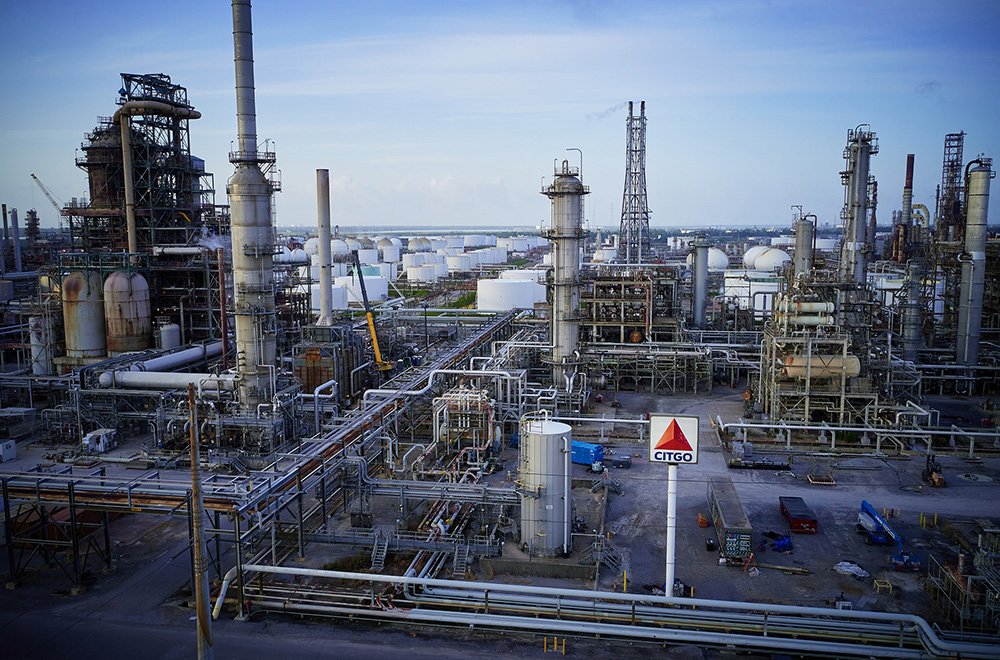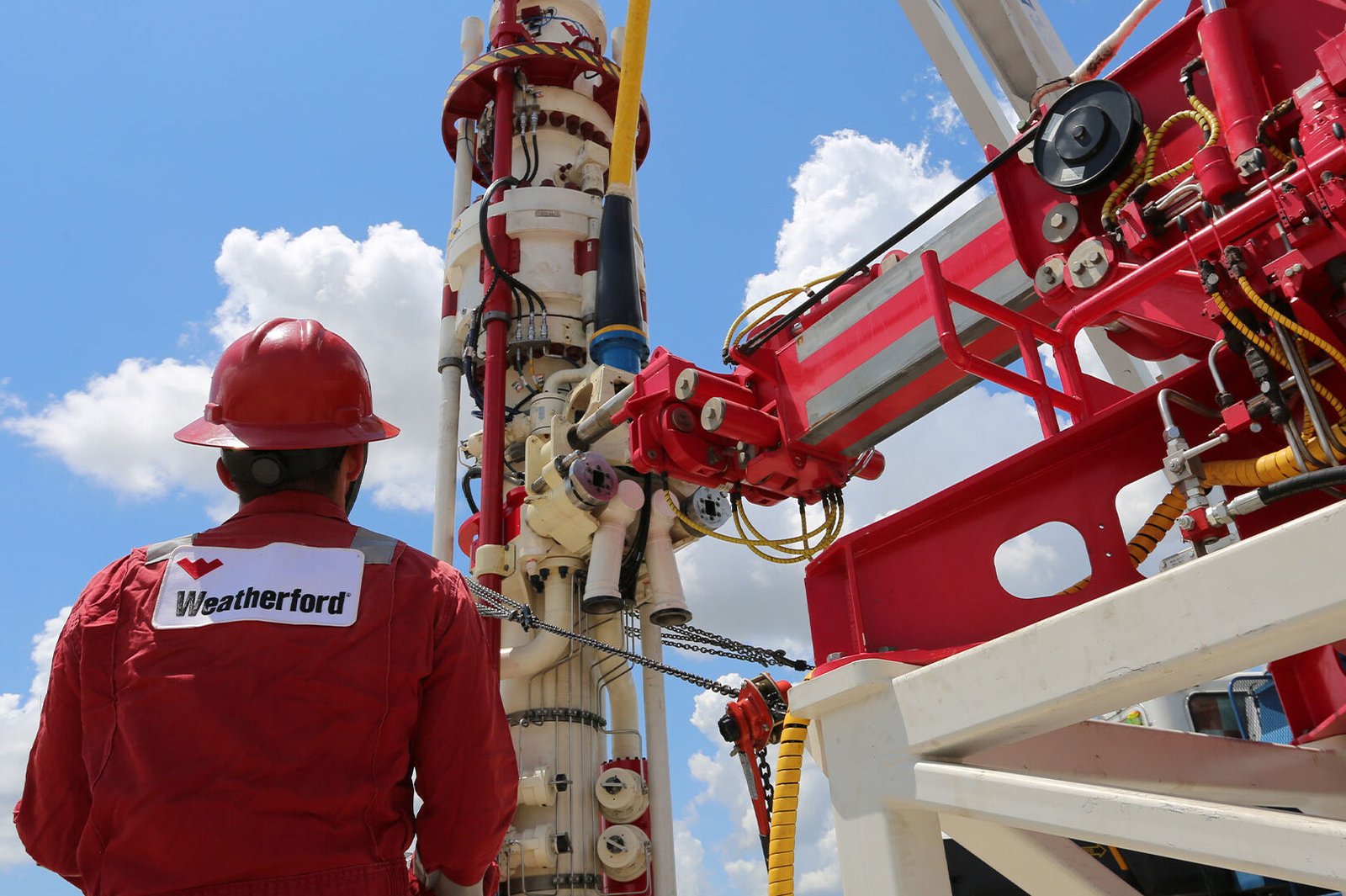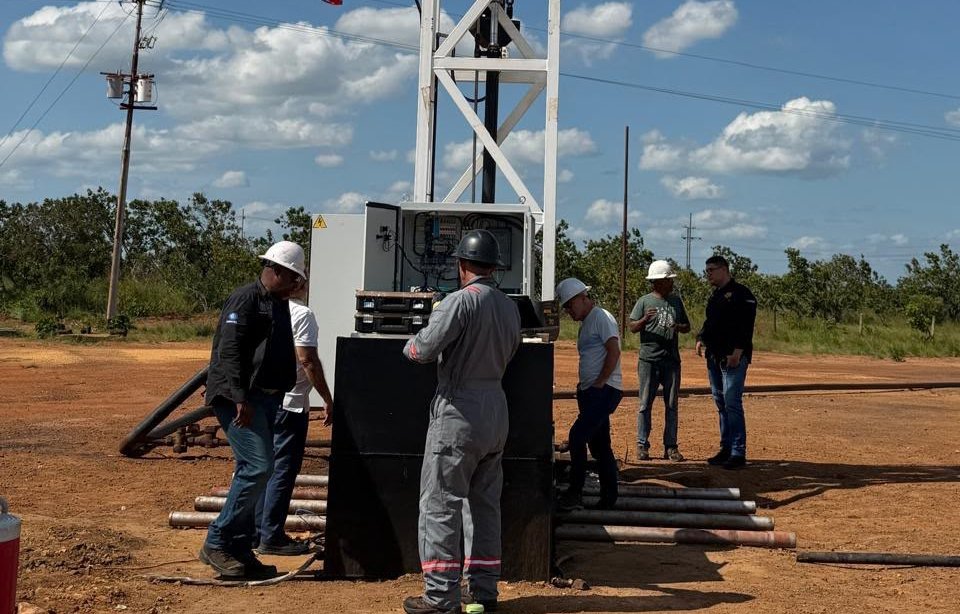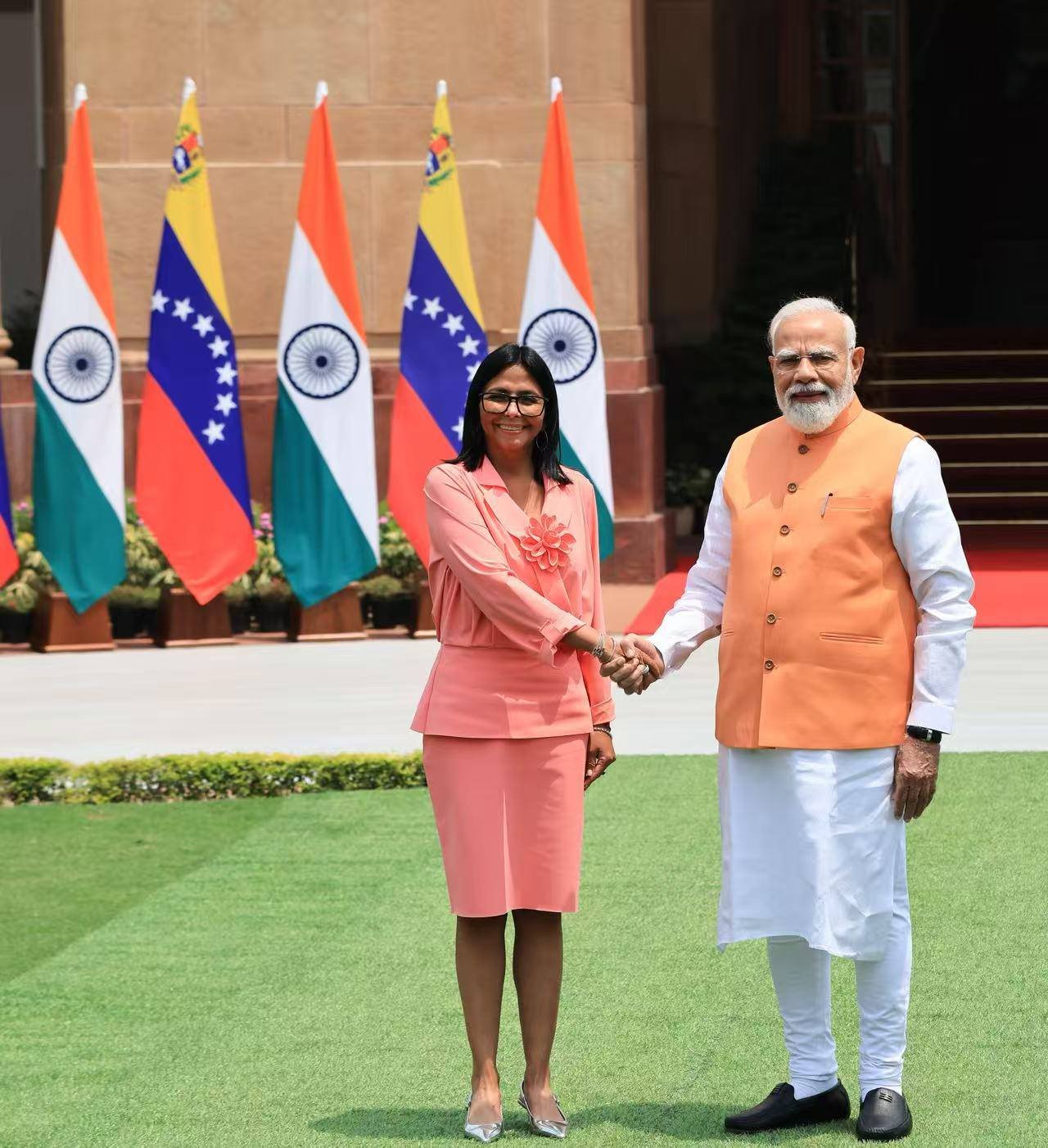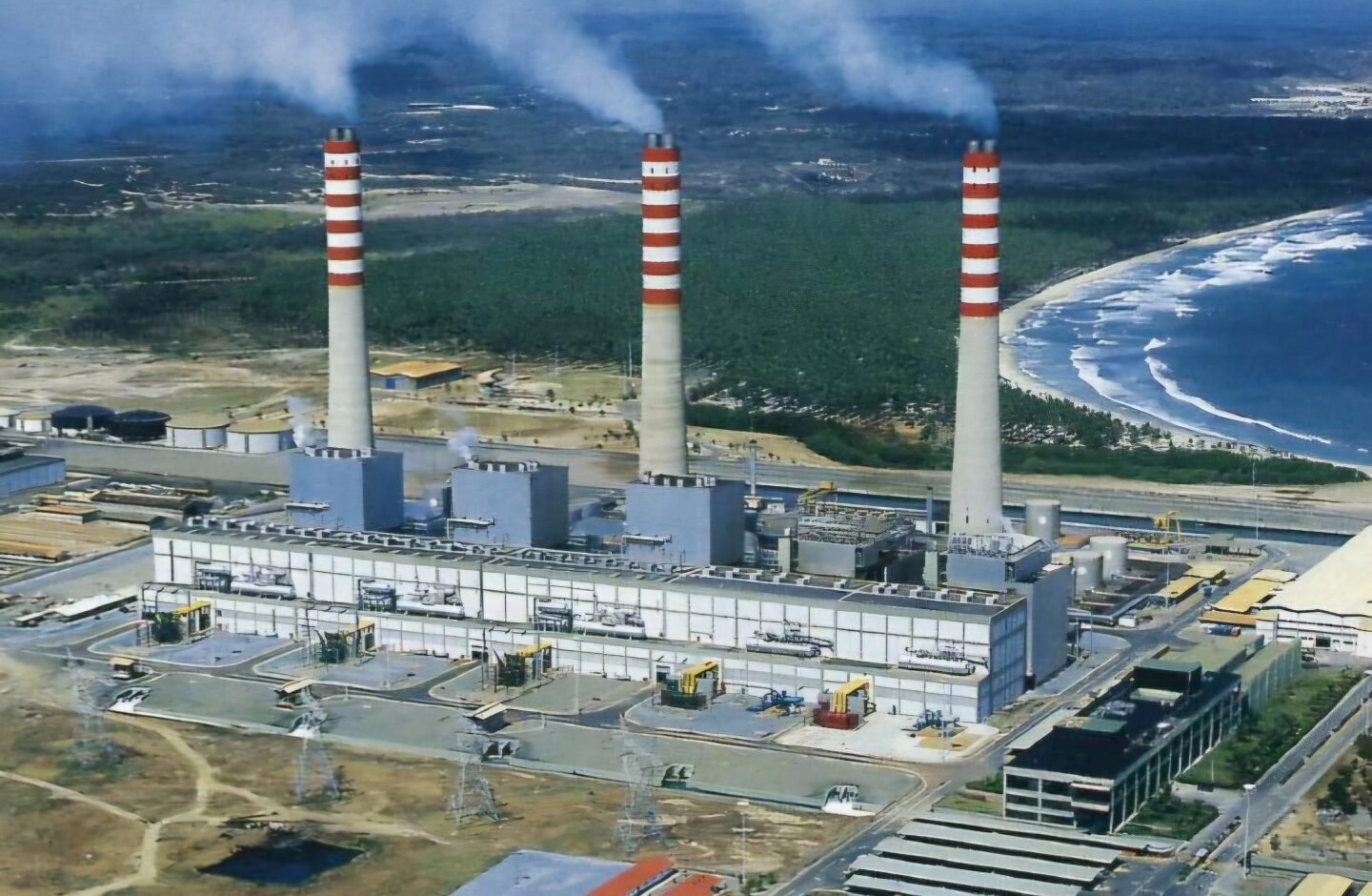
The reactivation of the Planta Centro plant in Carabobo by a Chinese company puts dozens of infrastructure projects that were signed more than ten years ago—but which mostly remained unfinished—under scrutiny. Photograph: Instagram / @arquitecturavzl.
Guacamaya, October 26, 2026. The start-up of a 600-megawatt unit in Carabobo, carried out by the Chinese state-owned company CMEC, reopens a file that Venezuela has been dragging along since the past decade: the works, plants and railway lines financed or contracted with Chinese companies that were paralyzed, half-completed, or never produced what was promised.
With Washington converted into the preferred economic partner of the new stage and with licenses that tend to leave Chinese companies out, the Planta Centro case raises a question that goes beyond electricity: can this reactivation open the door for those projects to be rescued, with transparency and in an environment of fewer sanctions, under a cooperative approach between China and the United States?
When Bloomberg reported on October 24, 2026, that the Chinese state-owned company China Machinery Engineering Corporation (CMEC) is working to put unit 6 of Planta Centro into operation, the news could be read as just another announcement from the electricity sector, but it is not.
It comes amid a full economic opening toward the United States and against a history of cooperation with China that deserves to be examined rigorously. During the governments of Hugo Chávez and Nicolás Maduro, dozens of projects with Chinese companies were announced—some backed by loans of billions of dollars, others through construction contracts, and others through simple cooperation agreements.
Many remained paralyzed, were partially executed, or never reached the announced objectives.
Before going through those cases, a clarification that orders the entire analysis is in order. Not all projects are the same. Some were abandoned half-built; others were finished but did not meet their productive objectives; others worked for a time and deteriorated afterward; and there are memoranda of understanding that never became executable contracts.
Nor can it be stated that everything that failed was directly financed by Beijing, because in several cases companies from other countries or Venezuelan resources participated. With that caveat, the balance is broad enough to ask whether the reactivation of Planta Centro is an exception or the beginning of something different.
Planta Centro: a plant that was inaugurated, shut down, and now returns
Planta Centro is a thermoelectric plant located in Punta Morón, in the Puerto Cabello area, one of Venezuela’s most important ports, in the state of Carabobo in the center-west of the country. It is a large steam-generation complex in the central region of the country, key to the stability of the electrical system in one of its most important industrial corridors. Unit 6, of 600 megawatts, was built by CMEC, a Chinese state-owned engineering, procurement and construction company with operations in several countries in Africa, Asia and Latin America, which is also a subsidiary of the state group Sinomach, to which CAMC Engineering also belongs, a protagonist of other projects in this review.
According to the AidData registry, CMEC and the National Electric Corporation (Corpoelec) signed the contract to build the unit on December 23, 2010. Work began on May 31, 2012, and was financed with a loan of about 840 million dollars from the China-Venezuela Joint Fund, with the Bank of Economic and Social Development of Venezuela (Bandes) as the financing agency and Petróleos de Venezuela (PDVSA) as the guarantor.
In 2015, CMEC organized training in China for 30 Venezuelan technicians who would operate the plant, and the handover ceremony was held on May 18, 2016. That year, the then Minister of Electric Energy, Luis Motta Domínguez, announced the incorporation of the unit and assured that with it the thermoelectric plant could reach 7,600 megawatts, according to the project profile of the Andrés Bello Foundation.
The boom was brief. The same profile indicates that the unit operated for about three years, that a fire in 2019 affected around 30% of its facilities, and that by the end of January 2020, reactivation plans had not yet begun.
By 2021, the plant had no generation left, and in January 2023, workers in the electricity industry denounced that foreign contractors were dismantling units 1, 2, 3 and 4 under the appearance of maintenance—a denunciation that could be independently verified. Planta Centro thus became a symbol of a broader electricity crisis.
The turn came in 2026. On August 4, according to press reports, Delcy Rodríguez visited the thermoelectric plant in Puerto Cabello, where the Chinese company CMEC has been working on modernization tasks. After the earthquakes of June 24, official media indicated that efforts at the plant were focused on the comprehensive rehabilitation of unit 6, equipment described as strategic. Corpoelec later reported the installation of a 450 MVA autotransformer at the plant’s substation to evacuate the 600 megawatts to the National Electric System, and the Government projects incorporating an additional 1,300 megawatts before the end of the year, with unit 6 as the centerpiece. All these figures are official and have not been verified by an independent source.
Unlike Tocoma or the Tinaco-Anaco railway, unit 6 was indeed built and was indeed delivered. What happened afterward was the fall in its operability, due to lack of fuel, maintenance, spare parts and grid stability, in addition to the 2019 fire. Its reactivation therefore does not demonstrate that an unfinished Chinese project is being completed, but rather something perhaps more relevant: whether an existing Chinese work can be recovered and sustained in a different institutional environment. Completing a work, putting it into service and keeping it running continuously are three different outcomes, and Planta Centro has already surpassed the first. The challenge is the third.
To measure what is at stake, it is worth starting with the electricity sector, where Planta Centro is inscribed.
The largest case: the Manuel Piar (Tocoma) hydroelectric plant
Work began in 2007, with a planned capacity of 2,160 megawatts and a completion date set for 2012.
Tocoma was to be the last link in the lower Caroní hydroelectric complex, downstream of Guri, Caruachi and Macagua, and received financing linked to the financial cooperation mechanisms between Venezuela and China. AidData documents that the project was suspended and records disbursements and contract costs that did not translate into the completion of the plant. It remained paralyzed without fully entering operation.
Regarding the companies, information in public records indicates that the main construction consortium was made up of foreign non-Chinese companies, including the Italian Impregilo, today Webuild, and the Brazilian Odebrecht, alongside the Venezuelan Vinccler; this data does not come from the base documents of this work and must be verified before publication. If confirmed, Tocoma illustrates an uncomfortable point: Chinese financing was not the only actor, and the work failed with contractors of several nationalities.
In the shadow of Tocoma remained another piece of the same puzzle.
The transmission line between Tocoma and Uribante-Caparo
A project that was to carry electricity generated in the Caroní toward the western region of the country and that was left with unfinished works and halted. The documents consulted attribute it to a consortium of Chinese companies without specifying the names of the companies—a gap that the report itself should fill with a request for information to Corpoelec. The importance of this line is that it illustrates the logic of interdependence between works: a plant without a grid to evacuate its energy, or a grid without the generation that was to feed it, is an investment that does not pay off. This is exactly why, at Planta Centro, the announcement of the reactivation of unit 6 came accompanied by the installation of an autotransformer to send the 600 megawatts to the system.
Closer to Planta Centro in time and in form are the thermoelectric plants that were indeed built, but whose performance has been questioned.
The Luis Zambrano plant, in Mérida state
It was a work executed by CAMC Engineering, a Sinomach subsidiary, with financing through the China-Venezuela Joint Fund and resources from the China Development Bank, according to the Andrés Bello Foundation. In 2022, the then governor of Mérida, when presenting his 100-day report, did not mention reactivation progress, which, according to the same profile, shows that the plant was not in operation.
The case of the José Félix Ribas thermoelectric plant
It was a project under Sinohydro, one of the world’s largest hydroelectric builders, now integrated into PowerChina, and the Termocarabobo plant was also under Sinohydro’s direction.
The Andrés Bello Foundation profile for Termocarabobo II records CAMC Engineering as the Chinese company, not Sinohydro, and describes it as a completed project that began in 2010, with an approximate amount of 1,116 million dollars and financing from the China-Venezuela Joint Fund with the China Development Bank; the same source indicates that the plant was not in operation.
These three plants are relevant because they are the most similar to Planta Centro: they are finished infrastructures that do not sustain generation. They are not unfinished projects in the strict sense, and it is important not to confuse them, because the distinction between a breach and a questioning of costs changes the nature of what is denounced. A plant can have been built and have operated, even if there are controversies over how much it cost or how the contract was executed. But the practical outcome is the same for the user who is left without power, and that is why Planta Centro’s performance will be read as a test for the whole set.
Transport: billions in rails that never rolled
From electricity one naturally moves to transport, where the emblematic case by committed amount is concentrated.
It was a railway network that was to connect the states of Cojedes and Anzoátegui along 468 kilometers through the Venezuelan plains. The contract was signed in 2009 with China Railway Engineering Corporation (CREC), a Chinese state-owned construction company specialized in railways, linked to the China Railway group, for an announced value of approximately 7,500 million dollars.
The project promised to reduce transport times, stimulate the development of interior regions and facilitate the movement of goods and passengers between western and eastern Venezuela without passing through Caracas. On the Venezuelan side, the counterpart would have been the Institute of State Railways.
Work began in 2009, with a planned completion date of 2012, but was repeatedly interrupted and the contractor eventually withdrew without completing the railway. An investigation by Diálogo Chino and Armando.info documented that progress was around 31% and that the project never materialized as the promised system. Among the problems were financing difficulties, labor disputes, bureaucratic obstacles and coordination problems between the parties, in addition to breaches related to local hiring obligations and environmental standards.
The fate of the Center-Western Railway System was no better. It was conceived under a rehabilitation project under Yankuang Group, with works paralyzed and rolling stock abandoned. Yankuang is a Chinese state group known above all for coal mining. With this case, the picture of railway transport is complete, marked by a new railway that was not finished and an existing network whose rehabilitation was halted.
Venezuela and its economic reactivation depend on the existence of modern infrastructure to generate supply chains and communication between the country’s different regions, and railways could play a fundamental role in that.
Industry and the countryside: facilities without the promised production
The same logic appears in the countryside. In 2010, a agro-industrial complex was agreed with CAMC Engineering, the Sinomach subsidiary specialized in turnkey projects abroad, in Delta Amacuro, whose rice processing plant had a contract amount of about 200 million dollars. The project contemplated much more than the plant, since it included silos, irrigation canals, roads and agricultural facilities intended to build a productive chain capable of supplying the national market and boosting regional agriculture.
An investigation by Reuters, also picked up by Euronews, documented that several planned works were not completed, that the processing systems were not used as planned and that production remained far below the original objectives. There were components built and even a completion ceremony in 2019, but that did not mean that the promised comprehensive agricultural system materialized. AidData also records deficiencies in execution and limited productive results.
The Batalla de Santa Inés refinery, in Barinas state
It was conceived to expand Venezuela’s refining capacity, with a planned start in 2010 and a reported investment of approximately 2,900 million dollars. It involved the South Korean Hyundai Engineering & Construction and the Chinese Wison Engineering, a private company based in Shanghai specialized in chemical and energy engineering.
It therefore should not be presented as an exclusively Chinese agreement. The refinery was not completed. The power plant that was to serve the facilities was indeed built, but the refinery as such remained unfinished.
Bolivarian Aqueduct of Falcón: a finished work that did not solve the water problem
It was conceived to expand access to drinking water in a region historically affected by scarcity.
The work appears recorded as completed. It was conceived to expand access to drinking water in a region historically affected by scarcity, with a reported investment of 450 million dollars and once again CAMC Engineering as contractor. It is the third time this company appears in the review.
The aqueduct proves that the physical completion of an infrastructure does not guarantee that it provides the public service.
Maintaining channels with China without closing the door to the United States
Venezuela is entering a stage in which the United States will have a decisive weight in its economy, as a preferred partner in oil, mining, finance and reconstruction. It would be naive to ignore it.
Since January 2026, the Office of Foreign Assets Control (OFAC) has issued more than a dozen general licenses that have been reopening sectors. But that architecture has a characteristic that matters to this debate: several of those licenses expressly exclude persons or entities linked to Russia, Iran, North Korea, Cuba or China, according to Guacamaya’s count, which mentions licenses such as 47B, on diluents, and 54B. In addition, General License 49, which allows negotiating conditioned investment contracts in oil, gas, petrochemicals and electricity, requires separate OFAC approval for each contract, according to Foley & Lardner’s analysis. We have not been able to confirm under what authorization CMEC operates at Planta Centro, and that is one of the most relevant open questions in this story.
Despite this, there are solid reasons for Caracas to keep its channels with Beijing open. The first is that the need is objective: Venezuela requires electrical, railway, water and agro-industrial infrastructure on a scale that no partner can provide on its own in the short term, and the projects that were left half-done represent physical assets, studies, equipment and billions of dollars already committed. Abandoning them completely would be losing that sunk investment.
The second is that China is one of the world’s largest infrastructure builders. Its Belt and Road Initiative has financed and built ports, railways and power plants in dozens of countries, and Venezuela signed a memorandum of adhesion in 2018. Beijing has said in recent years that it seeks smaller and more agile projects, and that orientation would fit better with a staggered recovery of existing works than with new megaprojects like those of 2009 to 2012.
The third reason is that the problem was never China. The documented cases point to a combination of failures with significant responsibility on the part of the Venezuelan State: opaque contracts, guarantees tied to oil, weak controls, cost overruns, corruption, international sanctions and a lack of Venezuelan oversight. A new administration scheme with reformed institutions and real transparency mechanisms could demand different conditions—with independent audits, publication of contracts, verifiable schedules and performance clauses—and in that scenario the same projects that failed could have another destiny.
To this is added a fourth factor: a country with fewer sanctions and fewer restrictions has more possibilities of concretizing and finishing these projects, because part of what was paralyzed in the past decade is explained by the financial collapse and the sanctions siege, and the current relief reduces the weight of financing, spare parts and payments as bottlenecks.
The geopolitical tension remains, and there the Planta Centro case may have its greatest symbolic value. Every time Washington issues a license for Venezuela, it tends to specify that its benefits are restricted for Chinese companies. That a 600-megawatt unit is reactivated by a Chinese state-owned company, in the midst of an opening toward the United States, suggests that this filter could be softened in practice, at least in sectors where the benefit for the stability of the electrical system is evident. That is a hypothesis, not a fact, and it will depend on how the licenses evolve and how Washington interprets the Chinese presence. But it offers a testing ground for Venezuela’s opening to be real for all actors who want to stay and materialize their projects—something that should be in Venezuela’s national interest.
The most favorable scenario for Venezuela is not to choose between Washington and Beijing, but for both to decide to bet on a cooperative approach, with U.S. companies in energy, mining and finance, Chinese companies in infrastructure where they have experience and assets already installed, and a Venezuelan institutional framework capable of demanding results from all. A country that urgently needs to take off economically cannot afford for the competition between the world’s two largest economies to be fought over its own unfinished works.
The strongest thesis, then, is not that the agreements with China failed, but that Venezuela has a documented history of projects in which financing, contracts and official announcements did not guarantee completion, the planned production or operational sustainability. The Planta Centro precedent offers the opportunity to verify whether those problems are being resolved and, if it happens, it could be the first sign that cooperation with China, under more transparent rules and in a less hostile framework, is part of the recovery and not only of what went wrong.
The debt with China and the opportunity to turn abandoned projects into a stabilization agreement
The recovery of unfinished projects must also be analyzed in light of the debt Venezuela owes China and Beijing’s strategic interests in Latin America. During the first decades of the 21st century, Venezuela became one of the main recipients of Chinese financing in the region and, during the 2010s, was the largest beneficiary of loans from Chinese state banks in Latin America. Much of these resources were channeled through oil-backed financing mechanisms destined for infrastructure, energy, transport and industry projects. However, the Venezuelan economic crisis, difficulties in meeting financial commitments, corruption, sanctions and the paralysis of numerous works left a relationship that requires a comprehensive review.
In this context, the fifth point is that the restructuring of Venezuela’s debt with China should not be limited to discussing payment terms, interest or possible grace periods. It could also open the door to a negotiation on the destiny of the projects that remained unfinished, the pending obligations of the contractor companies and the investments necessary to recover strategic infrastructures. A eventual agreement would have to distinguish between sovereign obligations, commercial contracts and investment commitments, without assuming that all can be renegotiated under the same mechanism. The priority should be to identify which projects are technically and economically recoverable, which require new resources and which should be definitively closed.
For Beijing, moreover, completely abandoning these initiatives can also have a reputational cost. The paralyzed projects constitute a reference for other governments evaluating hiring Chinese companies or resorting to financing from their state institutions. If the Venezuelan experiences consolidate as examples of unfinished works, unproductive investments and unfulfilled commitments, they could affect the regional perception of China’s capacity to execute long-term projects. At a time when the United States seeks to reaffirm its influence in the Western Hemisphere and limit the strategic expansion of its competitors, the credibility of Chinese projects in Latin America and the Caribbean acquires a dimension that goes beyond Venezuela.
However, the interests of Washington and Beijing do not necessarily have to be incompatible in all areas. The United States may seek a more stable Venezuela, with greater energy production capacity, functional infrastructure and better conditions for investment, while China seeks to protect its receivables, preserve its commercial interests and prevent its projects from becoming reputational liabilities. There are evident geopolitical differences, but the recovery of electrical facilities, the rehabilitation of infrastructure and the reactivation of productive activities could generate shared benefits if transparent, viable conditions compatible with Venezuelan stabilization priorities are established.
This does not mean that Washington should automatically support Chinese investments or that Beijing is willing to accept any restructuring of its credits. It means recognizing that strategic competition does not necessarily prevent reaching specific agreements when there are convergent interests. A negotiation that combines the orderly restructuring of financial obligations, the independent evaluation of pending projects and the incorporation of new oversight mechanisms could help reduce the costs of the crisis and recover assets that today represent an economic burden for the country. Venezuela’s prosperity could be profitable for both actors.
The Planta Centro experience can serve as a starting point for this discussion. If cooperation with China allows recovering electricity generation capacity and guaranteeing its sustained operation, the result could benefit the Venezuelan population, contribute to economic recovery and demonstrate that some inherited commitments can still become productive assets. Additionally, electricity plays a fundamental role for oil production, which is the main interest of the United States in Venezuela; if China contributes to its recovery, Washington could be a great beneficiary of those actions. But for this to happen, announcements must translate into verifiable results and agreements must contemplate financing, maintenance, contractual responsibilities and operational continuity.
In short, the priority of Venezuelan political actors should be to prevent abandoned infrastructure and accumulated debt from becoming additional instruments of geopolitical confrontation. The stabilization of the country requires a strategy that combines financial negotiation, asset recovery and the search for sustainable investments. Instead of posing cooperation with China and economic rapprochement with the United States as necessarily exclusive paths, Venezuela could explore specific agreements that protect its interests, broaden its negotiating margin and contribute to a lasting economic recovery. The question is not which power obtains a symbolic victory, but whether international commitments can finally translate into electricity, production, investment and better living conditions for Venezuelans.
An opportunity to rethink Venezuela’s international cooperation
The Latin American experience offers some lessons that Venezuela should consider when redefining its foreign policy. Despite the advance of governments and political actors that maintain close alignment with Washington and especially with Donald Trump, several countries in the region have preserved their commercial and financial ties with China, aware that political closeness to the United States does not necessarily require dismantling economic relations with the world’s second-largest economy. Argentina, Peru and other Latin American countries show, with their particularities, that the geopolitical competition between both powers has not eliminated the economic interdependence that characterizes the region. For Caracas, this reality constitutes an important reference: cooperation with China can continue to offer opportunities to recover infrastructure, attract capital and develop productive sectors, even in a scenario of greater strategic rapprochement with the United States.
This is especially relevant for a Venezuela that will have to rebuild its energy capacity, modernize its public services and generate conditions for a sustainable economic recovery. Chinese companies have experience in electricity generation, infrastructure, transport, telecommunications and industrial development projects—areas in which the country accumulates investment needs. The participation of these companies, under transparent contracts, independent technical evaluations and effective oversight mechanisms, could contribute to recovering existing assets and developing new productive capacities.
At the same time, maintaining cooperation with Beijing does not mean underestimating the opportunities that a closer economic relationship with Washington can offer. On the contrary, in the scenario of political and economic reconfiguration that is opening for Venezuela, the United States will probably occupy a central and priority place in the country’s foreign policy, both because of its geographic proximity and because of the importance of its markets, its financial capacity and its influence over the conditions of access to international investment circuits. The recovery of the oil sector, the normalization of financial relations and the attraction of international capital will be conditioned, to a large extent, by the evolution of that relationship. In that context, cooperation with China could function as a complementary mechanism to broaden the available alternatives, facilitate the recovery of certain infrastructures and contribute to an economic diversification strategy, without replacing the rapprochement with the United States.
There are also international precedents that demonstrate that the economic presence of different powers can coexist even in countries where Washington maintains considerable political and strategic influence. Iraq is a relevant example, although not entirely desirable. Despite U.S. influence over its political institutions, its security relations and much of its economic environment, China has consolidated itself as a fundamental actor in Iraqi trade and the oil sector, while Russian companies have also maintained interests in the energy industry. This coexistence does not eliminate tensions nor does it imply that Washington considers the presence of its competitors irrelevant. Rather, it shows that commercial interests, investment needs and the particularities of each country can open spaces for interaction that do not necessarily correspond to an absolute division between the spheres of influence of the great powers.
Venezuela, however, will have to address this possibility without naivety. Washington considers that certain Chinese investments in strategic sectors—such as energy, telecommunications, critical infrastructure and mineral resources—can have implications for its national security and for its position in the Western Hemisphere. Therefore, the expansion of Venezuelan economic cooperation with Beijing could generate friction with the United States, especially if it involves assets considered sensitive or financing mechanisms that Washington judges contrary to its strategic objectives. At the same time, China will have its own priorities: protecting accumulated receivables, preserving access to commercial opportunities and preventing its investments from becoming examples of non-compliance or loss of regional influence. Any Venezuelan strategy will have to recognize these interests and their possible incompatibilities.
Precisely for this reason, the recovery of unfinished projects and the restructuring of debt with China could become components of a broader negotiation on the stabilization of the country. Instead of addressing each initiative exclusively from the competition between Washington and Beijing, Caracas should evaluate which agreements allow recovering assets, reducing unsustainable obligations, attracting productive investments and improving the living conditions of the population. Where there are convergent interests, cooperation mechanisms could be explored that favor the continuity of economically viable projects, as long as they are compatible with Venezuelan priorities and applicable international obligations. It is not about assuming that both powers will support the same strategy, but about identifying concrete spaces in which geopolitical competition does not prevent achieving favorable results for the country.
Ultimately, Venezuela needs to recover negotiating capacity and prevent its economic reconstruction from being subordinated to a logic of automatic alignment. The relationship with the United States and cooperation with China pose different opportunities, conditionings and risks, but they do not have to become mutually exclusive alternatives in all areas. The responsibility of Venezuelan political actors consists of establishing national priorities, rigorously evaluating projects, negotiating sustainable conditions and preserving the greatest possible margin of autonomy. The reactivation of Planta Centro can be an opportunity to begin demonstrating that international commitments can still be transformed into concrete results. The challenge is that this time cooperation is not measured by the number of agreements signed or by the power that achieves greater influence, but by its effective contribution to economic stabilization, the recovery of public services and the development of Venezuela.