One thousand five hundred kilometers of Caribbean coastline, islands, tepuis and an archipelago are also an endowment. Image: Guacamaya.
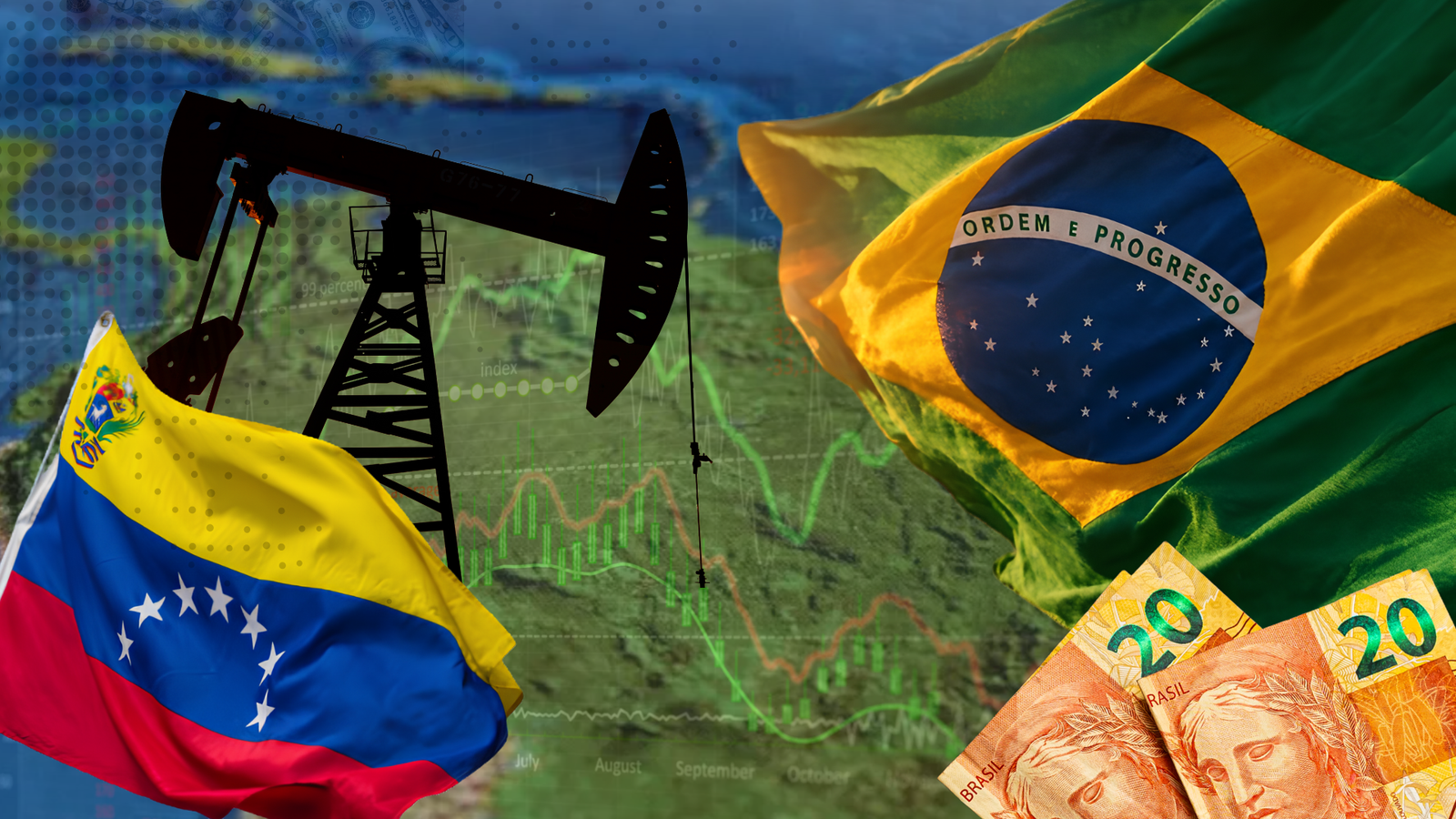
Guacamaya, November 5, 2026. After January 3, the Venezuelan economy appears to have taken a different course, defined in large part by greater openness in the country’s hydrocarbons sector, stemming from the restoration of relations between the U.S. government and that of interim president Delcy Rodríguez.
Under the promise of the country’s economic recovery, the efforts of both administrations for this task have concentrated on rebuilding the oil industry. The United States allowing the commercialization of oil and investment in the sector through the easing of sanctions, and Venezuela reforming its Hydrocarbons Law.
This combination has resulted in the signing of oil agreements, which according to statements by PDVSA president Héctor Obregón, the company expects to finalize 105 agreements by year’s end. Maintaining this scenario without variations, the signing of these agreements means an increase in oil production, which in Obregón’s figures will reach 1.5 million barrels per day by the end of 2027 —a 20% increase over current production.
In a country whose natural wealth surpasses the mineral resources for their exploitation and export, it is worth asking whether the growth policy should focus exclusively on oil activity. One thousand five hundred kilometers of Caribbean coastline, islands, tepuis and an archipelago are also an endowment, and the question is what place tourism can occupy in that strategy.
The literature indicates that there are 4 strands in which tourism is linked to GDP growth. The first is the tourism-led growth hypothesis, which holds that tourism is a key driver of economic growth. The second is the growth-led tourism hypothesis, which considers that economic growth contributes significantly to the development of the tourism sector. The third position posits the existence of a bidirectional relationship between tourism and economic growth. Finally, there is the neutrality position, according to which tourism and economic growth present no causality between each other.
The recent years of tourism in Venezuela
In Venezuela, tourism activity has not reached full development, partly because efforts have concentrated on the development of the oil sector. Given the high sensitivity of GDP to oil exports, and considering that this income is transmitted to household spending through the spending effect, it is reasonable to expect that the reactivation of the oil sector will translate into an increase in domestic tourist trips within the country.
Prior to the reduction of GDP by more than 70% in the 2014-2020 period, official figures reveal that in 2013 Venezuela received 1,084,776 foreign travelers —34.4% were Venezuelans not residing in the country. Compared with the 2012 figure, international tourism increased by 2.24%.4 According to Conseturismo, by 2015 the arrival of international tourists would fall by 30% compared to those received in 2014. In 2019, amid hyperinflation and shortages of products and services, Venezuela would receive only 292,188 foreign visitors. A reduction of 27.5% compared to the visitors registered in 2018. The steady decline in tourist arrivals led to an 81% reduction in income from inbound tourism between 2015 and 2019.
In addition to hyperinflation, public insecurity and shortages of goods during this period, exchange controls and the scarcity of foreign currency were central to the cessation of tourism activity. In 2014, airlines claimed a debt of USD 3 billion from the Venezuelan government as part of a debt it held with them as a result of the exchange control system in force since 2003: airlines sold tickets in bolívares and the State had to provide them with the dollars to repatriate those revenues. The government stopped paying it. Of the 32 airlines operating in Venezuela in 2013, around 15 stopped operating in the country or considerably reduced flight frequency between 2014-2019. In terms of the number of available international flights, by 2013 there was a total of 352 weekly frequencies abroad. The figure would be reduced to 40 weekly flights in 2019. By 2025, the number of flights increased significantly compared to those of 2019, reaching 105 flights per week. However, after the tightening of U.S. policies toward Venezuela starting in November, flight frequency fell 24.7%. According to recent figures, following the resumption of relations between the United States and Venezuela, 11 airlines operate the 129 weekly international flights in September 2026.
The combination of national consumption contracted by the effects of hyperinflation, low production, a decline in foreign currency income from oil, insecurity and exchange controls made the tourism sector one of the most affected by the economic crisis.
The Venezuelan Association of Tour Operators (Asotuv) reported that in 2015 the sector’s activity contracted by 60%. During the same year, more than 50,000 unemployed people were reported as a result of the closure of hotels and restaurants. In the case of the tourist destination of Margarita Island, in 2012 it had 20,000 bed-places. In 2026 this availability is around 4,500–8,000. As for occupancy at the national level, available figures show 40.6% in July 2017, holding in a range of 25–32% sustained in 2021–2026.
Cohabiting with oil
Today, the sector faces the challenge of recovering an infrastructure marked by decades of lack of investment and profound deterioration, which led to the abandonment and even the loss of buildings due to the impossibility of maintaining or repairing them. The need to reactivate the sector is not contingent on oil income. We know well that a booming sector —such as oil— affects the rest of the economy. The economists Corden and Neary distinguished two channels. The first is the spending effect: part of the extraordinary income is spent domestically, raising the demand for non-tradable goods and services, and raising their relative price. The second is the resource movement effect: the booming sector pays more, attracts labor and capital, and drains both from sectors that cannot match that offer.
For Venezuela the distinction is favorable. Venezuelan oil is capital-intensive and employs a small fraction of the labor force; in employment terms, it behaves almost like an enclave. That means the second channel operates weakly and the first dominates. In other words, the additional oil income does translate into domestic demand, and domestic tourism is one of the sectors that receives it, especially when a large part of public spending is also generated by oil income.
In this sense, tourism activity does not compete in terms of comparative advantages with the oil sector, but it is a significant source of employment and development for the domestic destinations that receive tourists, and therefore the relevance of its reactivation for job creation, foreign currency generation and the capacity to distribute wealth through the offering of quality services and innovation as a competitive strategy among companies.
There is an asymmetry that is worth understanding in the development of the sector when we speak of an oil economy like Venezuela’s. Inbound tourism is not a pure non-tradable service: its demand is formed abroad and paid in foreign currency. The price the foreign visitor pays is measured in their own currency. At this point, the appreciation of the local currency due to the oil boom can make the relative prices of the goods and services that international tourists must pay in the territory more expensive, making Venezuela a country with high prices to visit.
The most direct evidence comes from the Australian mining boom, studied with general equilibrium models. The exchange rate appreciation associated with the increase in mineral exports eroded Australia’s price competitiveness as a destination and made its offer more expensive relative to that of its competitors. The mechanism is not exclusive to Australia. Moyle and coauthors, with data from 190 countries between 2002 and 2017, find that natural resource intensity directly reduces international tourist arrivals. But the total effect is more nuanced, because it runs through two opposing channels: the boom attracts foreign investment, and that investment does favor tourism; at the same time it deteriorates institutional quality, and that deterioration harms it. Which of the two weighs more depends on the country.
The operational conclusion, then, is not pessimistic but one of segmentation: the oil boom pushes domestic tourism, and although it can make the destination more expensive for international tourists, this does not necessarily translate into a reduction in inbound tourism, especially when a country has the capacity to develop an institutional framework that incentivizes tourism activity.
Time to start
The same political and economic environment that today allows institutional reforms to incentivize oil and mining production can open space for tourism. The Executive has already announced openings to private participation in other key sectors, and nothing prevents extending them to investment in tourism infrastructure, training in a service culture and the technological modernization of the sector.
The moment forces us to ask how much tourism can contribute to the growth of Venezuelan GDP. With the opening to investment underway and a possible improvement in domestic consumption, it is opportune to evaluate the sector’s institutional framework and, in parallel, structure projects that reach a market with few competitors early.