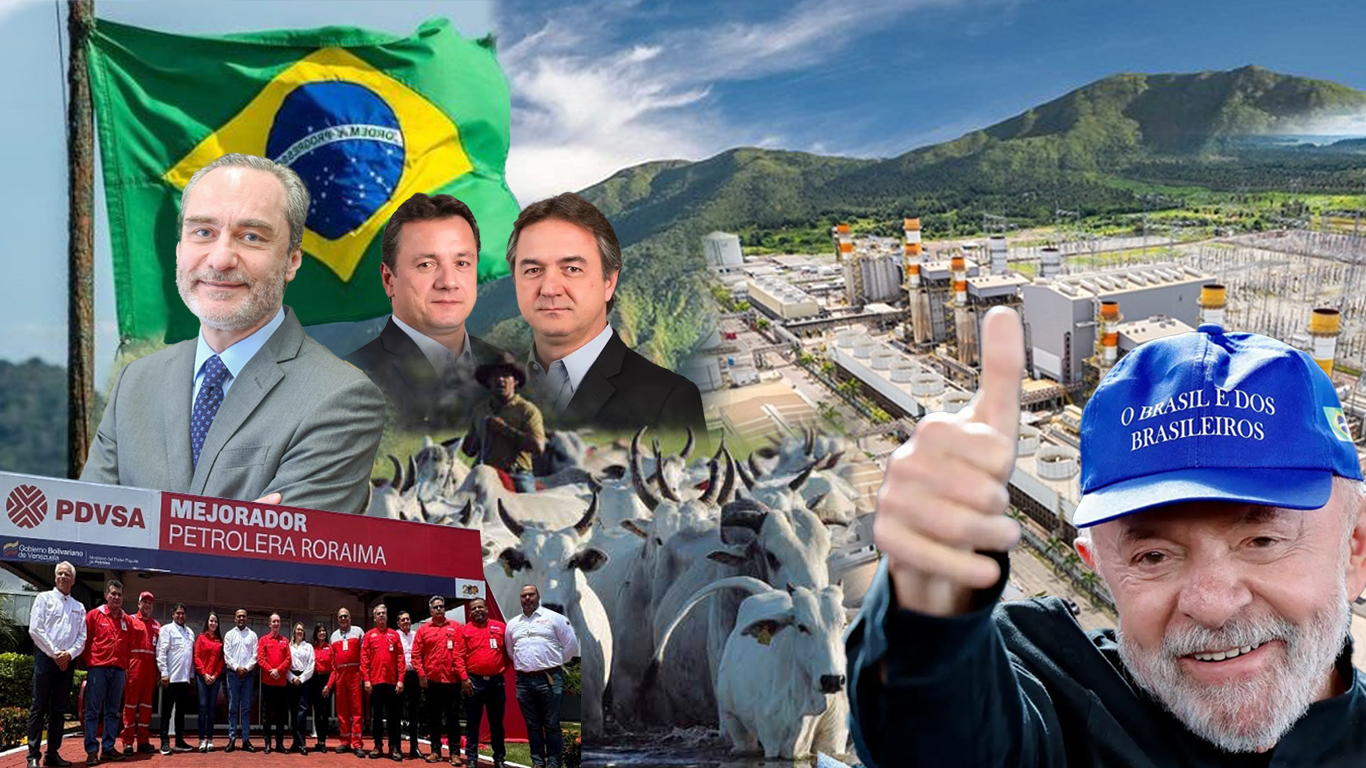
A delegation of more than thirty business representatives and officials from Brazil held meetings with Venezuelan authorities to identify opportunities for trade and investment. Image: Guacamaya.
Guacamaya, June 21, 2026. A delegation of Brazilian officials and business representatives visited Caracas from June 16 to 17 to hold meetings with the public and private sectors and explore trade and investment opportunities.
The mission reflected the growing interest of Brazilian investors and producers in their neighbouring country, across a wide range of industries, including oil and gas, power generation, automotive manufacturing, pharmaceuticals, agribusiness, and heavy machinery.
The delegation was headed by Ambassador Alex Giacomelli, Secretary for Trade Promotion, Science, Technology, Innovation, and Culture of Brazil’s Ministry of Foreign Affairs, and included other representatives from his government, the Brazilian Trade and Investment Promotion Agency (ApexBrasil), business associations, and some of the South American country’s leading companies.
The composition of the delegation shows that Brazil did not arrive in Caracas solely to increase exports, but rather to position itself in sectors that will be fundamental to any eventual Venezuelan economic expansion.
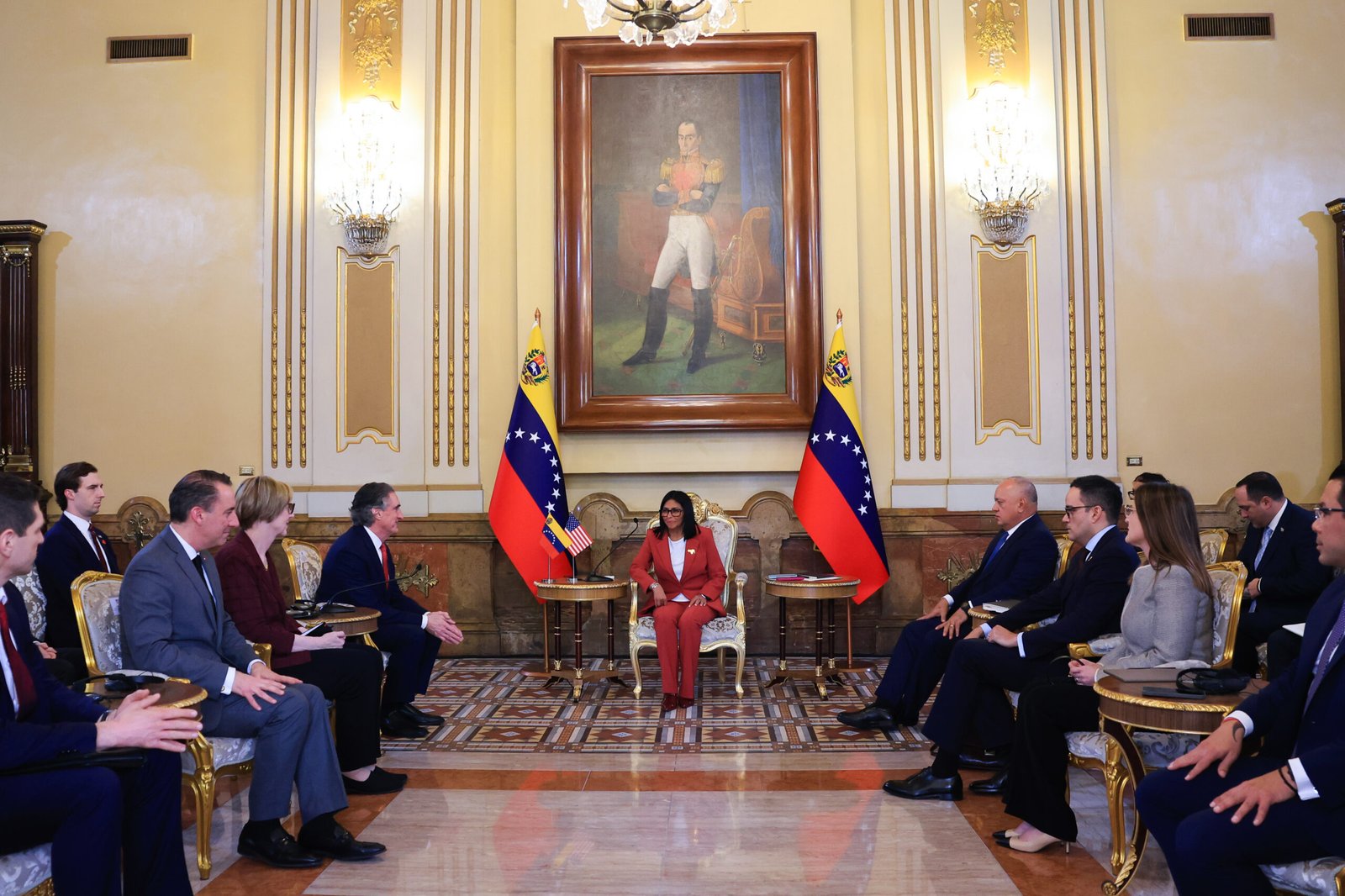
South America’s largest country thus positions itself as one of the leaders in promoting trade and investment in Venezuela, comparable to the push by the United States after January 3 of this year.
The representatives secured meetings with Sectoral Vice President of Economy Calixto Ortega and Foreign Minister Yván Gil, according to the Embassy’s comments to Guacamaya. The second meeting also included Deputy Minister for Latin America Mauricio Rodríguez and Brazil’s Ambassador to Venezuela, Glivânia Maria de Oliveira.
According to the Venezuelan chancellor, both parties held a dialogue aimed at establishing an agenda for work and economic cooperation that would generate shared benefits for both countries.
The visit takes place in a context of gradual rapprochement between Caracas and Brasilia driven by the government of President Luiz Inácio Lula da Silva, which has sought to reestablish and expand economic ties with Venezuela after years of contraction in bilateral trade.
According to data from Brazil’s Ministry of Development, Industry, Trade, and Services cited by Bloomberg, trade between the two countries reached approximately $837 million in 2025, a figure still far below the historical high of $5.1 billion recorded in 2008.
In April, Giacomelli’s predecessor, Ambassador Laudemar Aguiar, also visited Caracas, where he met with government representatives and participated in Orinoco Research’s Caracas Investment Week.
Energy tops the list
One of the sectors with the strongest presence in the mission was energy, including both hydrocarbons and power generation. The delegation included representatives from the Brazilian Institute of Oil and Gas (IBP), as well as executives from exploration and production companies such as Eneva and PetroRecôncavo.
Brazilian company Eneva is reportedly evaluating opportunities related to integrated natural gas production and thermoelectric generation projects, a model it has developed in various regions of Brazil. Other members of the mission also showed interest in this business, though it requires changes to the regulatory framework.
In Venezuela, 2.3 billion cubic feet per day are wasted through flaring and venting, representing 58% of the gas extracted. This is because the state monopolises this sector as well as electricity, displacing private players. However, the Government has already asked oil companies to secure their own generation plants while the National Assembly debates a new Electricity Law.
Other Brazilian capital companies had already entered in recent years with the introduction of new production models, including Alvorada and Maha Capital. We could also include Venezuelan company A&B Oil and Gas, linked to the Batista brothers Wesley and Joesley, as well as businessman Roberto Viana, a pioneer in the now-obsolete “hydrocarbon service alliances” (ASH).
Paulo Buzanelli is the CEO of Alvorada Holding. In a statement for Guacamaya, he explained that “Alvorada arrived in Venezuela and has been betting on the country and its people for three years. We understand that Brazilian companies will find a favorable environment here to develop their projects. From the beginning, we have been enthusiasts of this rapprochement and promote more businesspeople to establish themselves in Venezuela.”
Agribusiness: Brazil’s flagship industry
The mission also brought together some of the main players in Brazilian agribusiness. Representatives participated from the Brazilian Association of Meat Exporting Industries (ABIEC) and the Brazilian Animal Protein Association (ABPA). The emblematic JBS, owned by the Batista family, was also present.
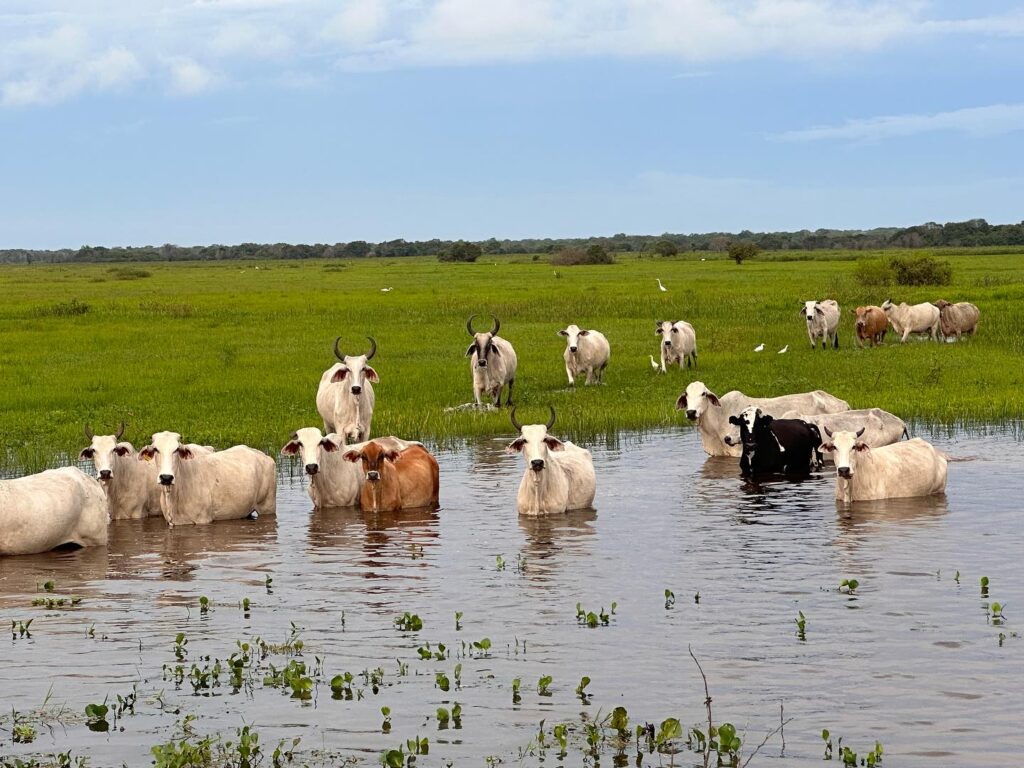
While the main focus is exporting meat to a market with great growth potential, several Brazilian businesspeople also sought to invest in pastureland.
One Brazilian businessman commented that he had just purchased pastureland in Apure state and stated that “the conditions are almost identical to those of the Pantanal in Brazil.” Another attraction for cattle ranching was the possibility of acquiring large tracts of thousands of hectares at prices several times lower than in their home country.
Over a decade ago, JBS itself had also devised plans to turn Venezuela into its distribution hub for the Antilles, though the plans were abandoned with the country’s economic crisis.
Likewise, the delegation included representatives from the Brazilian Association of the Rice Industry (ABIARROZ) and the Brazilian Institute of Beans and Pulses (IBRAFE).
The participation of these sectors points to possible initiatives related to agricultural production, technology transfer, seed improvement, and strengthening food supply chains.
Heavy industry and transport seek opportunities in the Venezuelan market
Another group with significant representation was the automotive sector, with the National Association of Motor Vehicle Manufacturers (ANFAVEA) and the National Association of Auto Parts Manufacturers (SINDIPEÇAS). Visible brands included Toyota, General Motors, and Scania, along with parts manufacturer Sindipeças.
Notable was the participation of the Federation of Industries of the State of São Paulo (FIESP) and the Brazilian Association of Machinery and Equipment Industry (ABIMAQ), as well as steelmaker Tenaris and cement company Sementes Aliança.
These visitors evidence the great interest in the Venezuelan market, from which they expect exponential growth in the coming years. They see opportunities in renewing the vehicle fleet, selling agricultural and industrial machinery, and recovering manufacturing capacities that were severely affected during years of economic crisis.
Although Bloomberg reported that Embraer, the region’s only aircraft manufacturer, had been invited to participate in the meetings, the company indicated that it ultimately did not send representatives to the mission.
Health and specialised manufacturing
The delegation also included representatives from two of Brazil’s leading pharmaceutical companies: Biolab Sanus Farmacêutica and Eurofarma.
The presence of these companies adds to the interest shown in recent years by regional pharmaceutical companies in expanding commercial operations and supply agreements in Venezuela.
Alongside them, organizations linked to recycling and industrial processing participated, such as the National Institute for Processing Empty Packaging (INP). The combination of pharmaceutical, manufacturing, and industrial input companies suggests interest both in product supply and in possible productive partnerships and technological cooperation schemes with Venezuelan actors.
Economic meetings and rapprochement
Part of the Brazilian businesspeople also held meetings on June 16 with Venezuela’s Sectoral Vice President of Economy, Calixto Ortega Sánchez, who simultaneously heads the International Centre for Productive Investment (CIIP).
The business mission constitutes one of the most extensive economic promotion initiatives carried out by Brazil in Venezuela in recent years. It is part of the Lula da Silva government’s efforts to strengthen influence in its neighbouring country through economic and commercial ties, amid a new stage of opening and growth.
Brazil’s Embassy in Caracas explained to Guacamaya that “business dialogue rounds were held, with more than 120 bilateral meetings (B2B) between representatives of the private sectors of both countries, with a view to expanding contacts and exploring new opportunities for cooperation and investment.”
The diplomatic mission also stated that “Brazil is currently Venezuela’s third-largest trading partner and one of its main suppliers of corn, rice, sugar, agricultural inputs, and manufactured products. Bilateral trade has significant growth potential, particularly in areas such as oil and gas, mining, electricity and associated infrastructure, plastic packaging, meats, urban transport, tractors, trucks, agricultural equipment, pharmaceuticals, and health services.”
The meetings also reportedly “made it possible to identify opportunities to strengthen institutional cooperation, promote the exchange of experiences and good practices, and contribute to building a favourable environment for business and investment between both countries.”
From a geopolitical perspective, the visit of this Brazilian business mission goes far beyond a simple search for commercial opportunities. It represents a move consistent with several historical constants of Brazilian foreign policy: strategic autonomy, rejection of the exclusion of extra-regional actors, strengthening regional integration, and defending Brazil as an articulating power in South America.
Venezuela as a strategic issue for Brazil
Since January 3, 2026, when the United States intervened militarily in Venezuela and promoted a new political and economic framework, Brazil has maintained a particularly cautious position. Lula described the US operation as a violation of sovereignty and a dangerous precedent for the region, while insisting on the need for negotiated solutions.
However, Brazil neither broke relations with the new Venezuelan authorities nor marginalised itself from the subsequent economic process. On the contrary, it has sought to keep channels open and expand its presence.
This reveals a classic principle of Itamaraty: Brazil rejects South America becoming a space of exclusive influence for an external power, even when it does not fully share the views of the governments involved.
The issue is not solely who governs Venezuela, but who controls the country’s future economic reconstruction. Avoiding a US monopoly and maintaining economic influence over Venezuela is also consistent with Lula’s attempts to engage in finding a solution to the Venezuelan conflict.
It must be taken into account that Brazil rarely competes head-on with the United States; its strategy usually consists of building economic, diplomatic, and institutional presence that limits the exclusivity of other actors without provoking open confrontation. The business mission fits exactly that pattern.
In geopolitical terms, Brazil appears to pursue four simultaneous objectives: recovering a historically important market for its exports, participating in Venezuela’s economic reconstruction ahead of its competitors, avoiding an exclusive US economic hegemony over Venezuela, and reaffirming its role as South America’s leading power and an indispensable actor in any regional reconfiguration.
Therefore, the delegation’s visit should not be interpreted solely as a commercial mission. It is also a political signal: regardless of the changes that have occurred since January, Brazil considers Venezuela to remain part of its immediate strategic environment and is not willing to be left on the sidelines of the country’s economic and geopolitical redefinition.
Elías Ferrer contributed to the writing of this article.