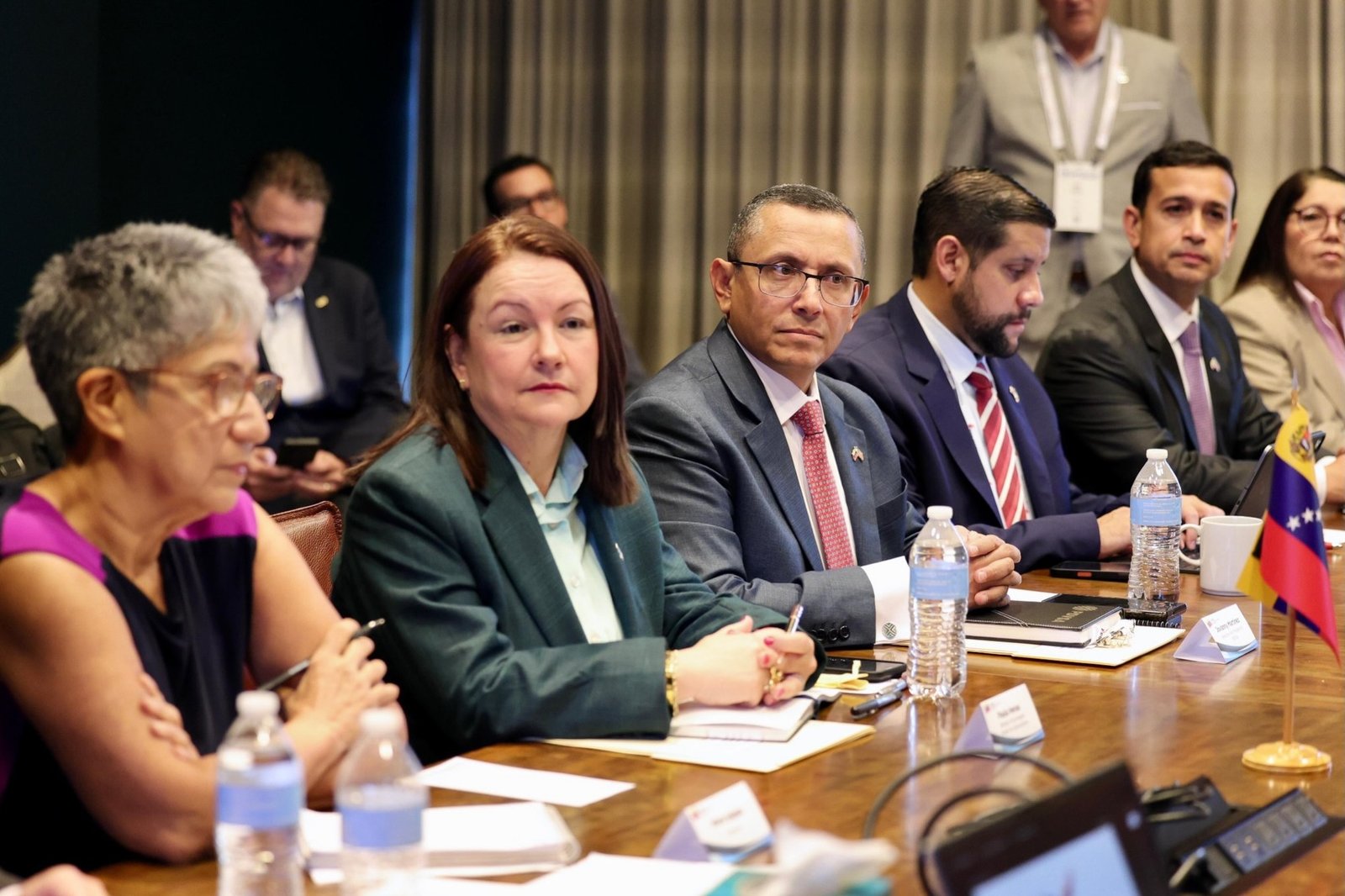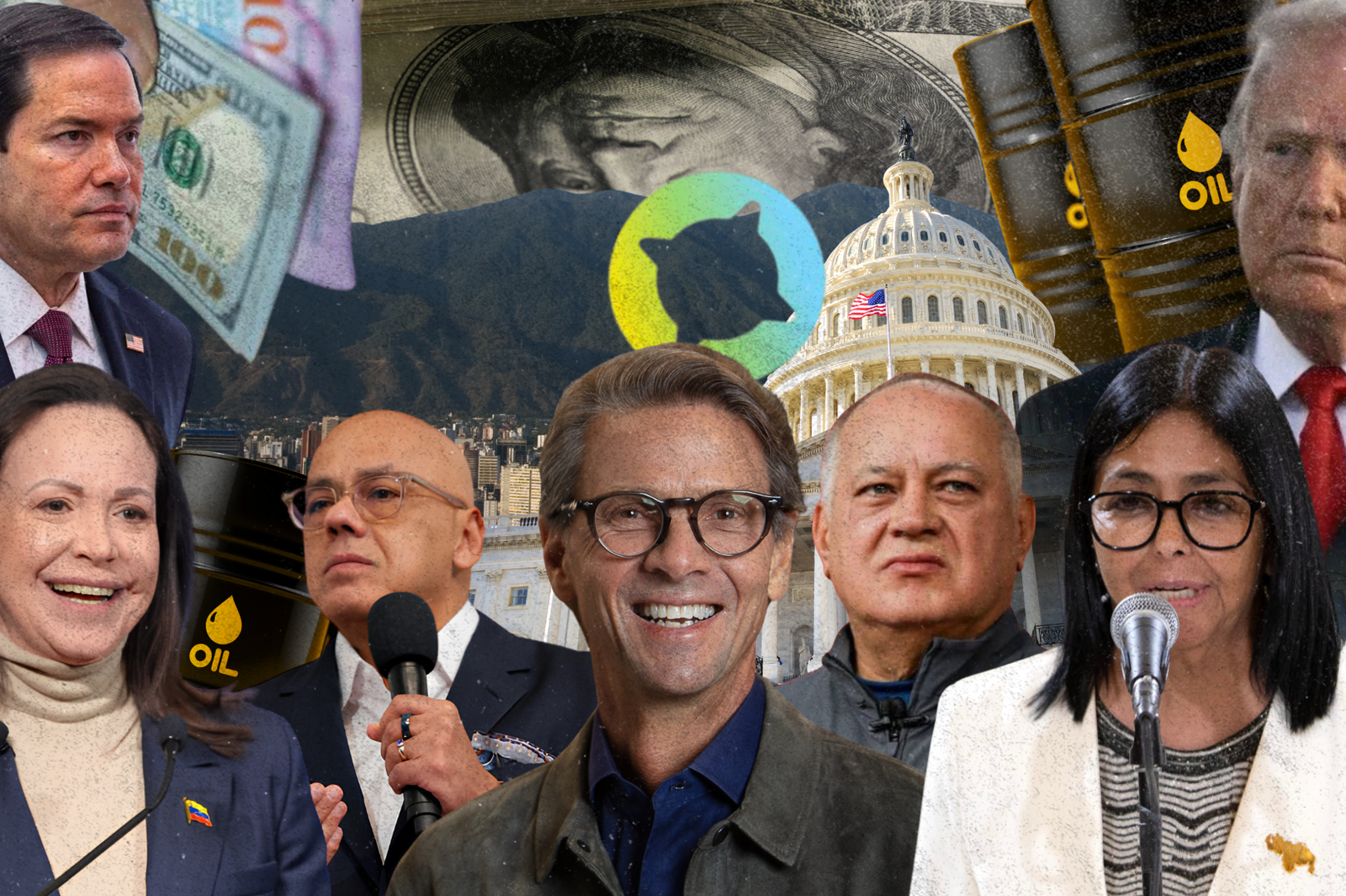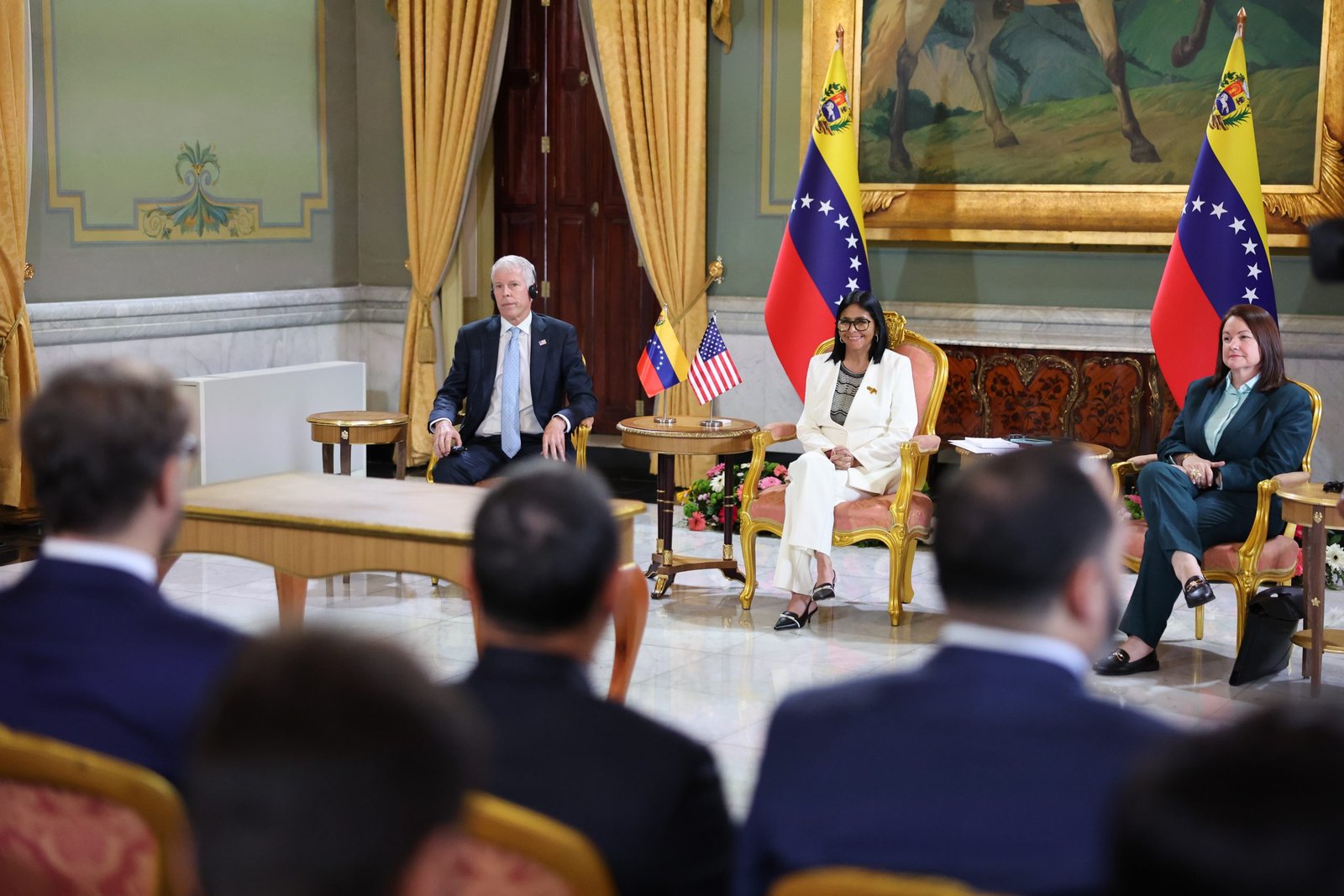
For this Saturday, August 1, the start of a political negotiation was scheduled, which would seek to establish a roadmap toward a democratic transition, under the mentorship of Washington, which gives the meeting a mandatory character for both factions. Image: Guacamaya.
Guacamaya, August 1, 2026. Venezuela woke up under the expectation of a new cycle of political conversations that seeks to define the country’s institutional future. This process, which brings together at a negotiating table representatives of the current Parliament with a Chavista majority and the National Assembly elected in 2015, is developing under the direct promotion of the United States and following the extraction of Nicolás Maduro last January 3 and the double earthquake of June 24.
The agenda for this meeting, although described by some as a “parity technical and political table,” has deeply divergent objectives depending on the side. Initially, a “parity technical and political table” of 20 members has been formed, although different sources indicate that the meeting could reach 24 or 30 participants.
The composition of the two delegations has also generated criticism and divisions; it does not represent two parliaments, but really three parties: the ruling PSUV, Primero Justicia, and Voluntad Popular. On the other hand, this dialogue arises on the initiative of the United States, rather than national actors, and the most popular opposition force, led by María Corina Machado, has been openly excluded.
Certainties and Doubts about the Delegations
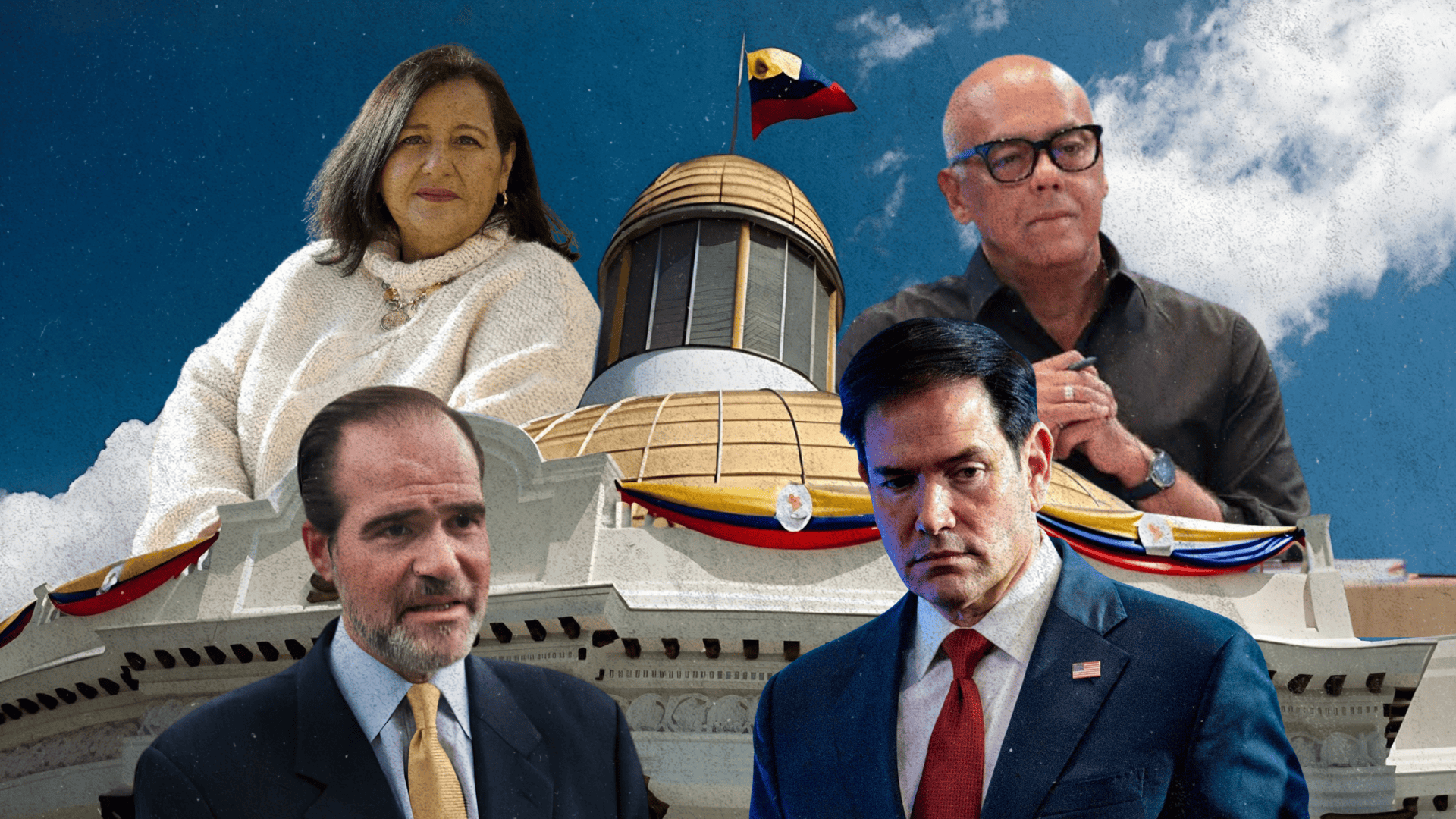
The Opposition (AN 2015), led by Dinorah Figuera, aspires to a “roadmap for the stability and recovery of the country.” Their points of honor include the total renewal of the National Electoral Council (CNE), the restructuring of the Supreme Court of Justice (TSJ), the cessation of political disqualifications, and a timely presidential electoral schedule.
For its part, the Chavismo (AN 2025), under the spokesmanship of the current President of Parliament, Jorge Rodríguez, and the backing of the PSUV’s Secretary General, Diosdado Cabello, insists that the dialogue is not to “capitulate.” Their absolute priority is the lifting of international sanctions, respect for the current Constitution, and the maintenance of peace after the seismic tragedy.
The opposition delegation, according to unofficial information, is composed mainly of members of Primero Justicia (PJ) and Voluntad Popular (VP). Among them are, for PJ, in addition to Figuera, Juan Miguel Matheus, Ramón López, Jorge Millán, Elimar Díaz, and Julio César Moreno. Meanwhile, from VP go Marco Aurelio Quiñones, Sergio Vergara, Macario González, and Desiré Barboza.
On the Chavista side, secrecy has been the norm. Only Jorge Rodríguez, President of the National Assembly and brother of the acting President Delcy Rodríguez, has been officially confirmed as head of the delegation. He is expected to be accompanied by other PSUV deputies, but their names have been kept under wraps until the last moment.
Washington’s Impetus and the Rubio Factor
The United States Department of State has been the true architect of this rapprochement. Secretary of State Marco Rubio not only announced the start date but, according to information from ABC of Spain, has overseen preparatory meetings in Madrid between Dinorah Figuera and the unofficial envoy for Latin America and for Venezuela, Mauricio Claver-Carone.
However, one day before the meeting on August 1, Claver-Carone declared to Reuters his separation from both responsibilities, a fact that is unknown how it might affect progress. The presence of the United States, nevertheless, implies a “guardianship” of the table in search of a “peaceful democratic transition” as a bastion that gives guarantees to investors.
Rubio has emphasized that for there to be reconciliation, “every element of Venezuelan society needs to be represented,” although in practice Washington has chosen the AN 2015 as its legitimate interlocutor. Unlike previous negotiations, what is relevant is that the Chavismo in power does not control the process, something that favors increased expectations of favorable results.
María Corina Machado and the Marginalized Actors
The most notable absence is that of María Corina Machado, Nobel Peace Prize laureate and the leader with the most popular support according to the 2023 primaries. Along with Edmundo González Urrutia, Machado issued a statement in which she distances herself from the design and operation of this mechanism, warning that they will only support initiatives that produce “real and verifiable progress.”
Other sectors such as Acción Democrática (AD), in the voice of Henry Ramos Allup, Andrés Velásquez (La Causa R), or the current deputy for Unión y Cambio, Henrique Capriles, have criticized Machado’s exclusion and pointed out that a process without all forces is “doomed to fail.” The 16J Fraction of the AN 2015 (Alianza Bravo Pueblo, Vente Venezuela, and Convergencia) maintains skepticism and declares itself in a “oversight function” to monitor the agreements.
Even so, Capriles’s own movement, Unión y Cambio, and the party Un Nuevo Tiempo, led by Manuel Rosales, support the process in favor of the “re-institutionalization of the country” and based on “plurality.” Meanwhile, Deputy Luis Augusto Romero (Avanzada Progresista) described as “petty and irresponsible” the position of those sectors that disqualify the dialogue simply for not having been invited.
Cracks within Chavismo
The process not only divides the opposition. Within Chavismo, Deputy Iris Varela has called the negotiations “falsehood” and “abstraction,” flatly stating: “Iris Varela does not support these negotiations.” During a protest in Caracas against the presence of Israel and the United States in Venezuela, she also demanded that “whoever has set up parallel governments and violated the Constitution not go unpunished.”
Similarly, Deputy and former Governor of Zulia, Francisco Arias Cárdenas, asked that the PSUV grassroots be consulted about the negotiations and that the agreements be consulted with the people.
In parallel, a group of 29 “original Chavistas” signed the Maracay Declaration, demanding an end to the “guardianship” of the United States and demanding transparency in the management of national resources. Figures such as Elías Jaua and Tony Boza have advocated for a “coherent, honest, and transparent” dialogue that includes all social factors without foreign interference.
Demands and Expectations of Civil Society
Civil society, battered by the crisis and the effects of the double earthquake, demands tangible results. On one hand, the Alliance for the Freedom of Political Prisoners demands from the dialogue a general pardon for “the more than 500 detainees for political reasons.” Meanwhile, unions in Guayana such as Sintraferrominera express skepticism, stating that the focus should be a “presidential electoral schedule.”
Analysts like Phil Gunson warn that “we are not going to go from a dictatorship to a full democracy overnight,” suggesting that a transition government prior to free elections is more likely. For his part, Benigno Alarcón points out that the United States seeks a “final solution” to protect investors and stabilize the oil market.
So, what can be expected?
Despite the media deployment, shadows persist over the meeting and even rumors of it being postponed. It is estimated that it will be at the temporary headquarters of the National Assembly located in La Carlota or at the United States Embassy, but there is no official confirmation. It is unknown whether there will be opposition deputies who currently hold seats in the Chavista-majority assembly.
This attempt adds to a long list of failed negotiations since 2002, including the OAS table (2003), the Peace Conference (2014), the Vatican dialogue (2016), Santo Domingo (2017), Oslo (2019), and the more recent Mexico and Barbados Agreements (2021-2024). The difference today lies in Washington’s direct pressure and the weakness of the establishment following Maduro’s capture.
The very absence of technical details makes it likely that the first meeting will be merely protocolary and informative, or that it may even be postponed. The credibility of the process will also depend on the transparency of its operation, as well as on “early signals,” such as the release of the first political prisoners or the formalization of a schedule to renew the CNE.