Diplomatic Approaches Between the U.S. and Venezuela After Maduro’s Capture: What We Know So Far
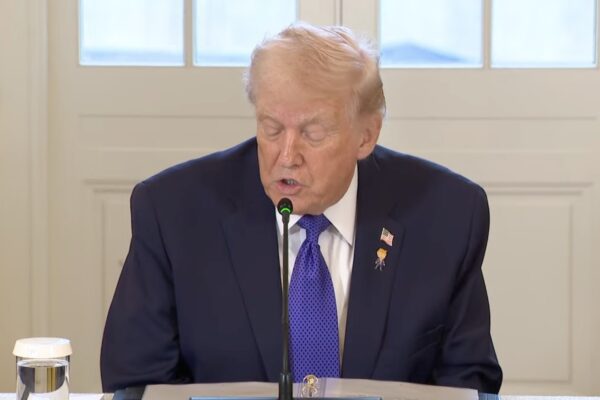
During a meeting with executives from international oil companies, U.S. President Donald Trump confirmed approaches with the interim government of…
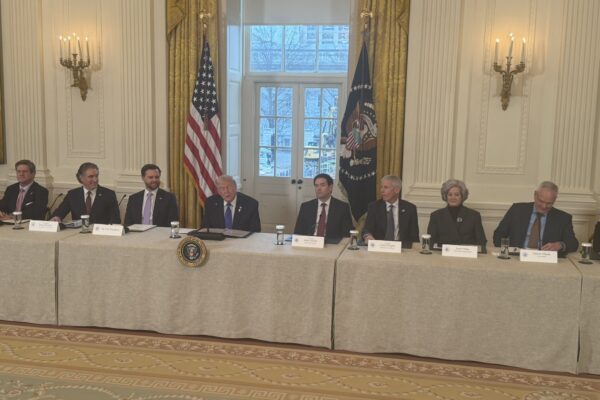
U.S. President Donald Trump led a high-level meeting at the White House on Thursday with leading executives from the international energy sector to address the future of the commercialization, exploitation, and control of Venezuelan oil, in a context marked by U.S. intervention in Venezuela, the installation of interim authorities in Caracas, and the reshaping of the hemispheric energy map.
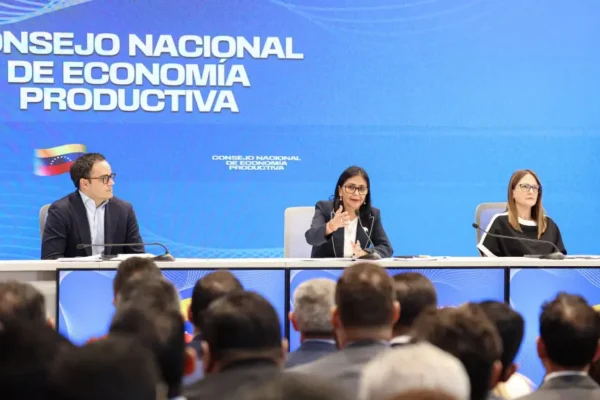
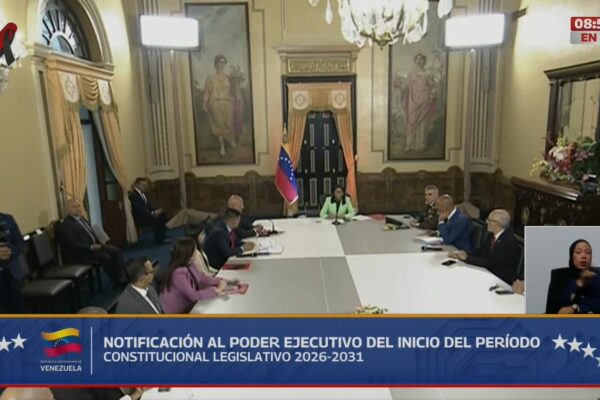
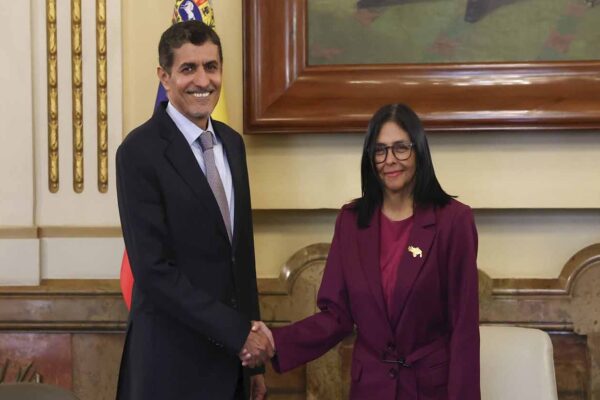
The leadership of the National Assembly formally notified the Executive Branch of the start of the 2026–2031 constitutional term during a meeting at Miraflores Palace chaired by Acting President Delcy Rodríguez. The encounter served to outline a broad agenda of legal, economic, and political reforms, amid signs of a recomposition of relations with the United States and new regional diplomatic initiatives.
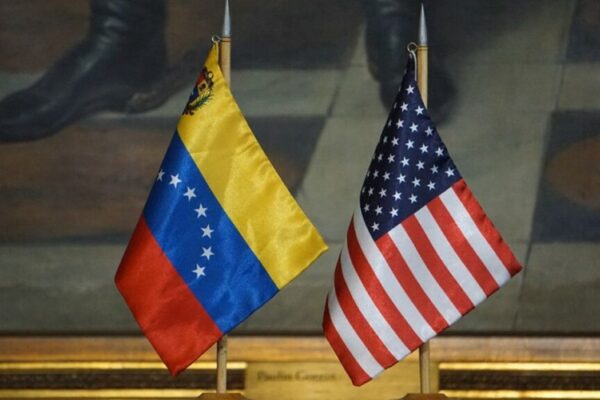
Statements by U.S. Secretary of State Marco Rubio, together with recent military, financial, and regulatory moves, outline a gradual strategy by Washington toward Venezuela that combines control over oil, conflict management, and a political transition still full of unanswered questions.
The Organization of American States (OAS) held an extraordinary session, convened at Colombia’s request, to address the Venezuelan crisis following the U.S. military operation that resulted in the capture of President Nicolás Maduro. The development has triggered a deep regional divide between those who condemn the intervention as a violation of sovereignty and those who, while opposing the use of force, insist on the illegitimacy of the authorities in Caracas.
The Venezuelan education system, at the beginning of the Christmas recess, shows an opacity and lack of responses to a…
Caracas and Moscow concluded the XIX Meeting of the High-Level Intergovernmental Commission (CIAN) with the signing of 42 agreements in areas such as health, air connectivity, science, and economic development, updating their cooperation framework for the coming years.
The Bloomberg agency has reiterated, using satellite maps, that a growing wave of electromagnetic interference is making Venezuelan airspace practically impassable, diverting commercial flights and forcing several international airlines to suspend operations. The phenomenon coincides with the most significant US naval deployment in the Caribbean in years and the state of alert decreed by Nicolás Maduro, fueling fears of a regional conflict and leaving Venezuela isolated on the air navigation map.
The decision of the dominican government to postpone the tenth Summit of the Americas, scheduled for December of this year in Punta Cana, reveals a complex web of political, diplomatic, and geo-strategic factors affecting the continent: controversial exclusions, tensions with Venezuela, the suspension of bilateral flights, aircraft confiscations, and a growing climate of polarization in the Americas.
The interests align with the “America First” policy that has defined President Trump since his first term. Photograph: U.S. Army…