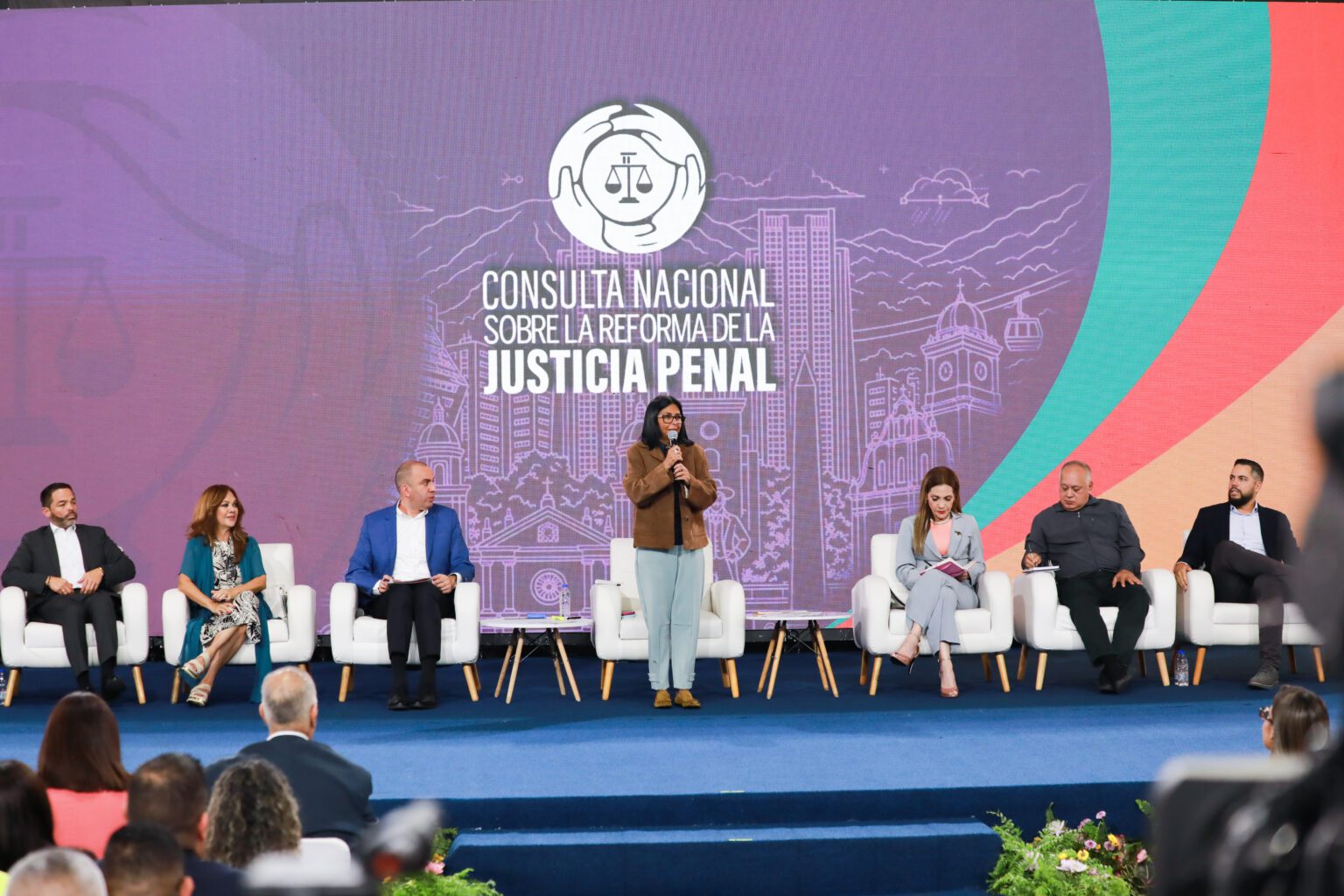
The State, at the initiative of the Executive Branch, seeks to move from exceptional measures toward a permanent criminal justice system, but still faces citizen resistance to institutional trust | Photograph: Presidential Press Office
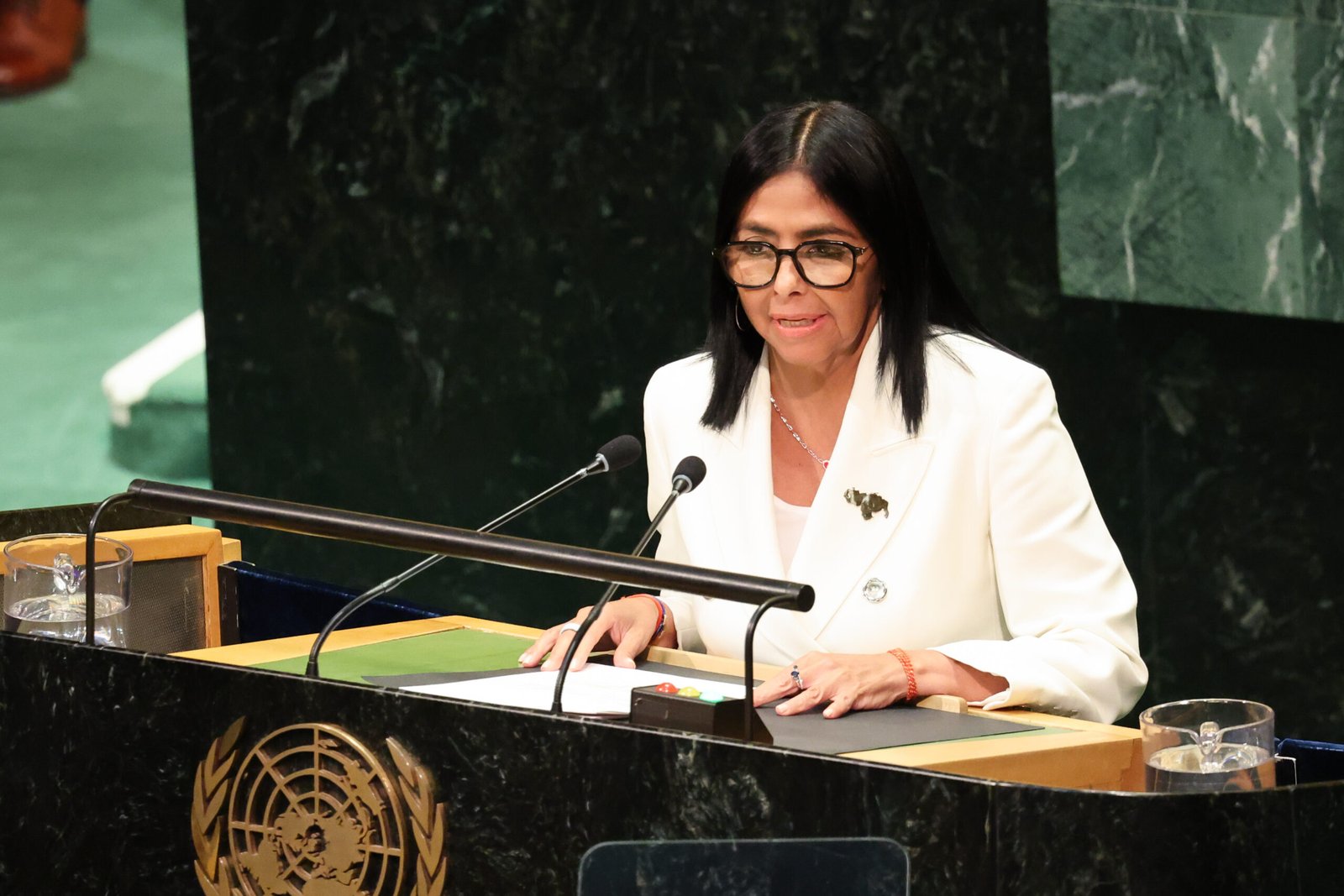
Guacamaya, June 1, 2026. As an initiative seeking to profoundly restructure the Venezuelan legal system, acting President Delcy Rodríguez led the launch this Monday, June 1, of the Great National Consultation for the Reform of Criminal Justice. This marks the beginning of a nationwide deployment aimed at integrating citizen proposals into the modification of fundamental codes and laws within the judicial sphere.
The main event, held at the Coliseo de La Urbina in Petare and marked by a strong technical and social component, had as one of its central announcements the activation of the 0800-EXTORCION platform. The tool was designed as a direct hotline to eradicate “bad practices” and “protect” both citizens and “honest officials.”
“It is not fair that honest police officers pay for the one who extorts citizens. It is not fair that honest prosecutors pay for prosecutors who charge citizens… I want to put an end to the shakedown and extortion,” Rodríguez stated. The declared objective, therefore, is to purge institutions through a safe and efficient citizen oversight mechanism.
However, following a monitoring of public opinion on social media, the new hotline, as well as the consultation itself, faces the challenge of overcoming institutional distrust. Despite the discourse of transparency, doubts persist regarding the system’s independence, so its effectiveness will depend on whether citizens feel safe reporting or whether they will even fear persecution for doing so.
Strategic Framework and Participants
The commission in charge of directing this process was installed on April 23, 2026, at the Miraflores Palace. The multidisciplinary team includes figures such as Larry Devoe, Attorney General and secretary of the consultation; Jorge Rodríguez, President of the National Assembly; Caryslia Rodríguez, President of the Supreme Court of Justice; and Egleé González Lobato, Ombudsperson, as well as representatives from the academic sector and human rights organizations.
Larry Devoe specified that the debate will be structured around nine strategic axes to achieve a “comprehensive transformation.”
- 21st-century criminal policy.
- Access to justice and citizen participation.
- Coordination and integration of the system.
- Ethics, autonomy, and independence.
- Due process guarantees and procedural speed.
- Efficiency and organizational quality.
- Human talent.
- Infrastructure and equipment.
- Technological tools.
Devoe noted that the goal is to build a “shared diagnosis of the challenges, weaknesses, and strengths of the Criminal Justice System” to design a roadmap toward a fairer system.
The ultimate purpose of the consultation, according to Rodríguez, is to settle a “historical debt” and establish a judicial system that “lays the true foundations for when they try to shake the tranquility and peace of Venezuela.” The process will now move through various social sectors, including farmers, workers, and feminist movements, to gather the technical data necessary for new policies.
The Symbolism of the Venue
The location chosen for the launch, the Coliseo de La Urbina, carries significant symbolic weight in the “restorative justice” policy promoted by the acting president. This facility, which functioned as the headquarters of the Sucre Municipal Police and a detention center, will now be transformed into a space for sports and culture for the Petare community.
In this regard, it was arranged to ensure the facility’s operability by entrusting the Venezuela Bella Mission with the immediate execution of plans for its aesthetic and structural recovery. “I give the order to the Venezuela Bella Mission to make this coliseum beautiful and deliver it fully adapted to the communities of this Sucre municipality,” asserted Rodríguez.
This action replicates the measure applied to El Helicoide, whose definitive closure as a prison was announced on January 30, 2026, to be converted into a social, sports, and cultural center. For the Executive Branch, these restructurings represent the materialization of a preventive approach compared to the traditional penal system, replacing confinement spaces with areas for “neighborhood gathering and peace.”
The Institutional Transition from Amnesty to Permanent Reform
From an analytical perspective, this launch is not an isolated event but is part of a significant institutional transition. The installation of the Commission for the Great National Consultation on the Reform of Criminal Justice on April 23 coincided with the closing of a cycle marked by the Amnesty Law for Democratic Coexistence, which was in effect until that day.
Following the end of this exceptional regime, which benefited more than 8,600 people according to official figures, the State now seeks to channel justice demands through permanent structural reforms. It is worth noting that this process also runs parallel to the renewal of the Supreme Court of Justice (TSJ), which, after a legal reform, will expand its composition from 20 to 32 magistrates.