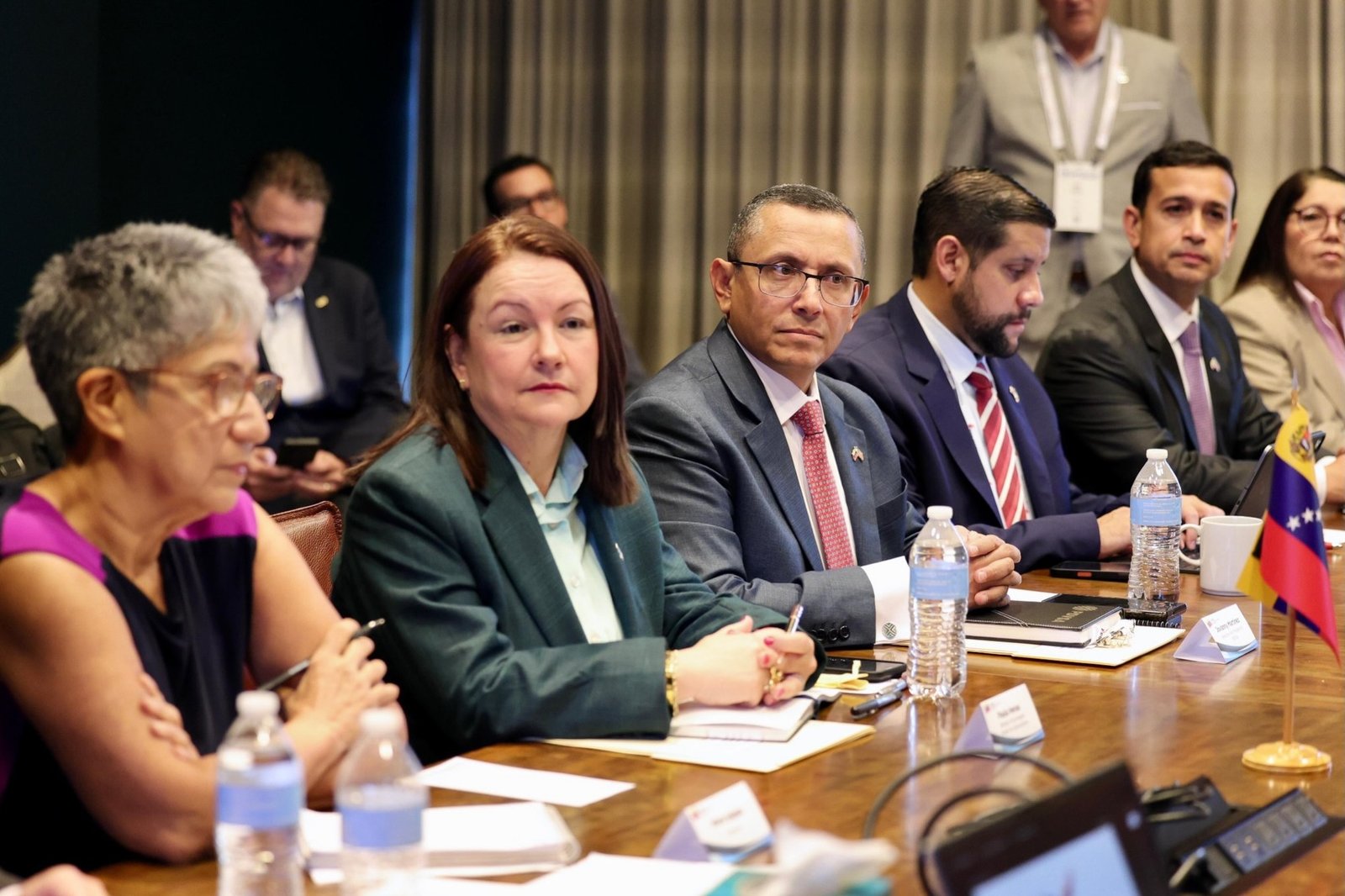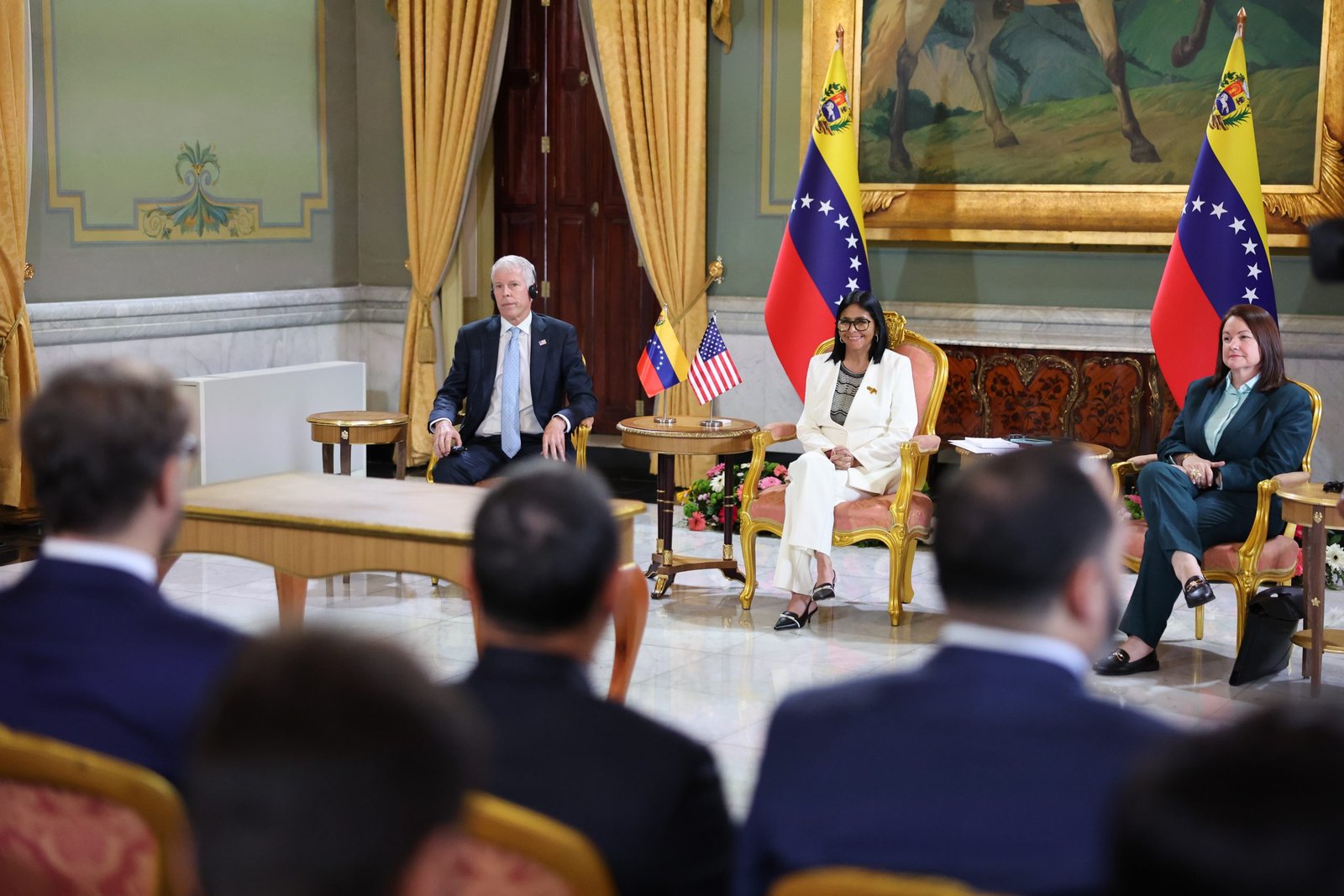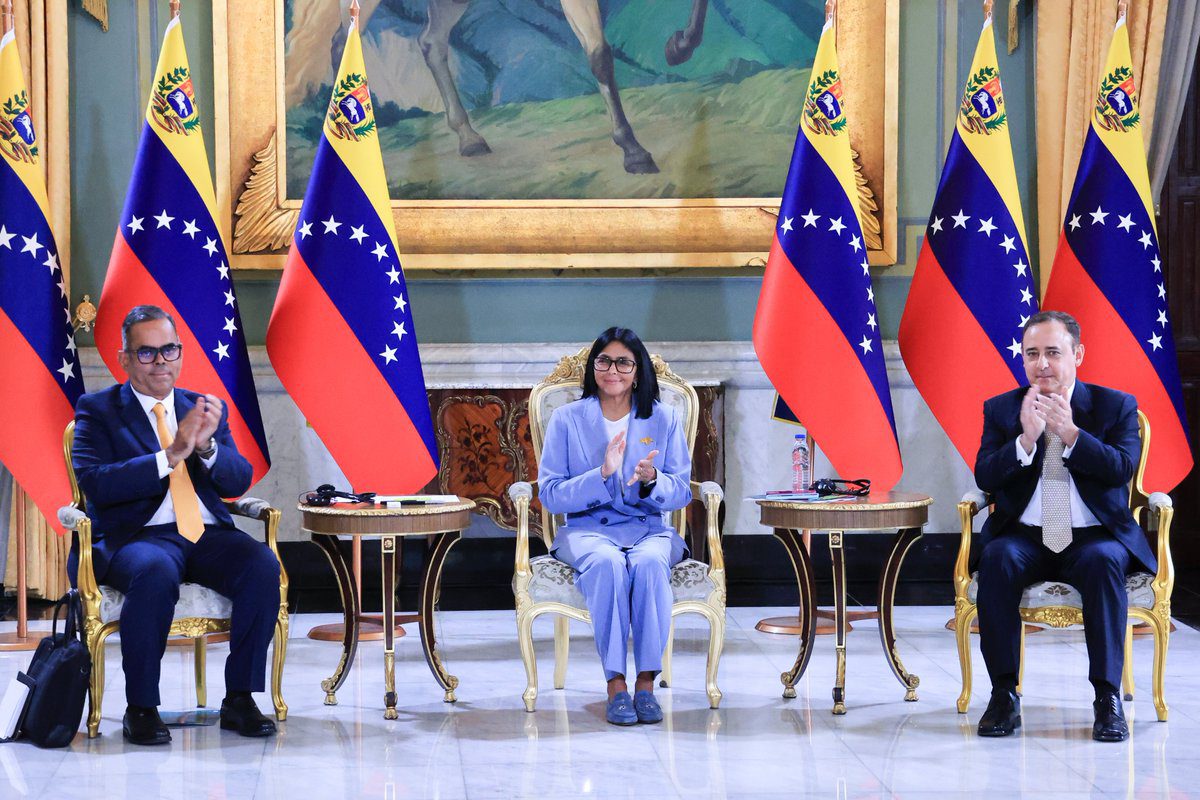
The memorandum of understanding was signed at Miraflores Palace and was attended by diplomatic representatives of the United States. Photograph: Presidential Press Office
Guacamaya, June 16, 2026. The Venezuelan government has signed a memorandum of understanding with U.S.-based General Electric Vernova (GE Vernova) to support the recovery and modernization of the National Electric System (SEN). The agreement includes the rehabilitation of energy infrastructure, technical training programs, and the addition of new generation capacity, amid efforts to open the sector to private investment and stabilize electricity supply. Meanwhile, Colombia announced new investments to advance a binational electricity interconnection project through the border department of Vichada.
Acting President Delcy Rodríguez led the signing ceremony on Monday at Miraflores Palace alongside representatives of General Electric Vernova, one of the world’s leading energy technology companies.
During the event, Rodríguez stated that the agreement is part of the government’s strategy to strengthen the power system and ensure reliable energy supply for both households and strategic sectors of the economy, including the oil industry.
The acting president said the goal is to rapidly convert the memorandum into an operational contract in order to begin recovery efforts. According to Rodríguez, the plan aims to add approximately 1,000 megawatts of generating capacity within the first 24 months and more than 5,000 megawatts over a four-year period.
GE Vernova was represented by Chief Sustainability Officer and Corporate Affairs Officer Roger Martella and President of Gas Power Americas Eric Gray, accompanied by John Barrett, the United States Chargé d’Affaires in Venezuela.
Martella said the company has already reached agreement on the project’s key technical aspects and expressed its intention to accelerate implementation. He estimated that initial results could begin strengthening the power system within the next twelve months.
In addition to infrastructure rehabilitation, the agreement includes training programs for Venezuelan electricity sector workers. Martella explained that the initiative seeks to transfer technical knowledge and expertise so local personnel can assume maintenance and operational responsibilities.
For his part, Gray noted that GE Vernova contributes to approximately 25 percent of global electricity generation and described the agreement as a joint effort to improve the stability of Venezuela’s power system. He also said that many Venezuelan professionals currently working for the company have expressed interest in returning to the country to contribute to these projects.
The memorandum comes as Venezuela advances a partial reform of the Organic Law on the Electric System and Service, which was approved in its first legislative discussion on June 2 and has been under public consultation since June 9. The proposal includes amendments to 42 articles aimed at modernizing the regulatory framework and facilitating the participation of mixed enterprises in infrastructure rehabilitation and expansion projects.
In parallel, the government recently announced an agreement with energy company IMPSA to complete the Manuel Piar (Tocoma) hydroelectric plant in Bolívar state. According to Rodríguez, the project could add approximately 2,400 megawatts to the national grid once completed.
The government’s strategy is also complemented by the creation of a commission responsible for selecting contractors in the electricity sector, a measure intended to channel private and foreign investment into a system that has suffered years of operational deterioration.
Meanwhile, Colombia confirmed progress on plans for an electricity interconnection with Venezuela. Colombian Minister of Mines and Energy Edwin Palma Egea announced an investment equivalent to approximately $25.7 million to strengthen energy infrastructure in the border department of Vichada and advance the binational connection.
Palma stated that the interconnection seeks to improve the reliability of electricity services, stimulate economic development in the border region, and deepen integration mechanisms between the two countries.
Beyond improving electricity service for households, the recovery of Venezuela’s National Electric System remains one of the country’s most important challenges for economic reactivation. Limitations in generation, transmission, and distribution have affected industrial, commercial, and agricultural activity for years, increasing operating costs and reducing the competitiveness of key productive sectors.
In the oil industry, reliable electricity supply is particularly critical. Extraction, upgrading, refining, and transportation operations depend on stable power availability, especially in western and southern Venezuela. The government’s decision to link power sector recovery with higher oil and gas production reflects the close interdependence between both sectors: greater energy revenues can help finance new infrastructure investments, while a more reliable electricity system can support higher productive capacity across the economy.
The agreements with GE Vernova and IMPSA, together with plans for energy integration with Colombia, suggest that the government views the rehabilitation of the electricity sector as a central pillar of its economic recovery strategy. The ultimate impact of these initiatives, however, will depend on the ability to mobilize financing, execute the planned projects, and sustain the regulatory reforms necessary to attract long-term investment.