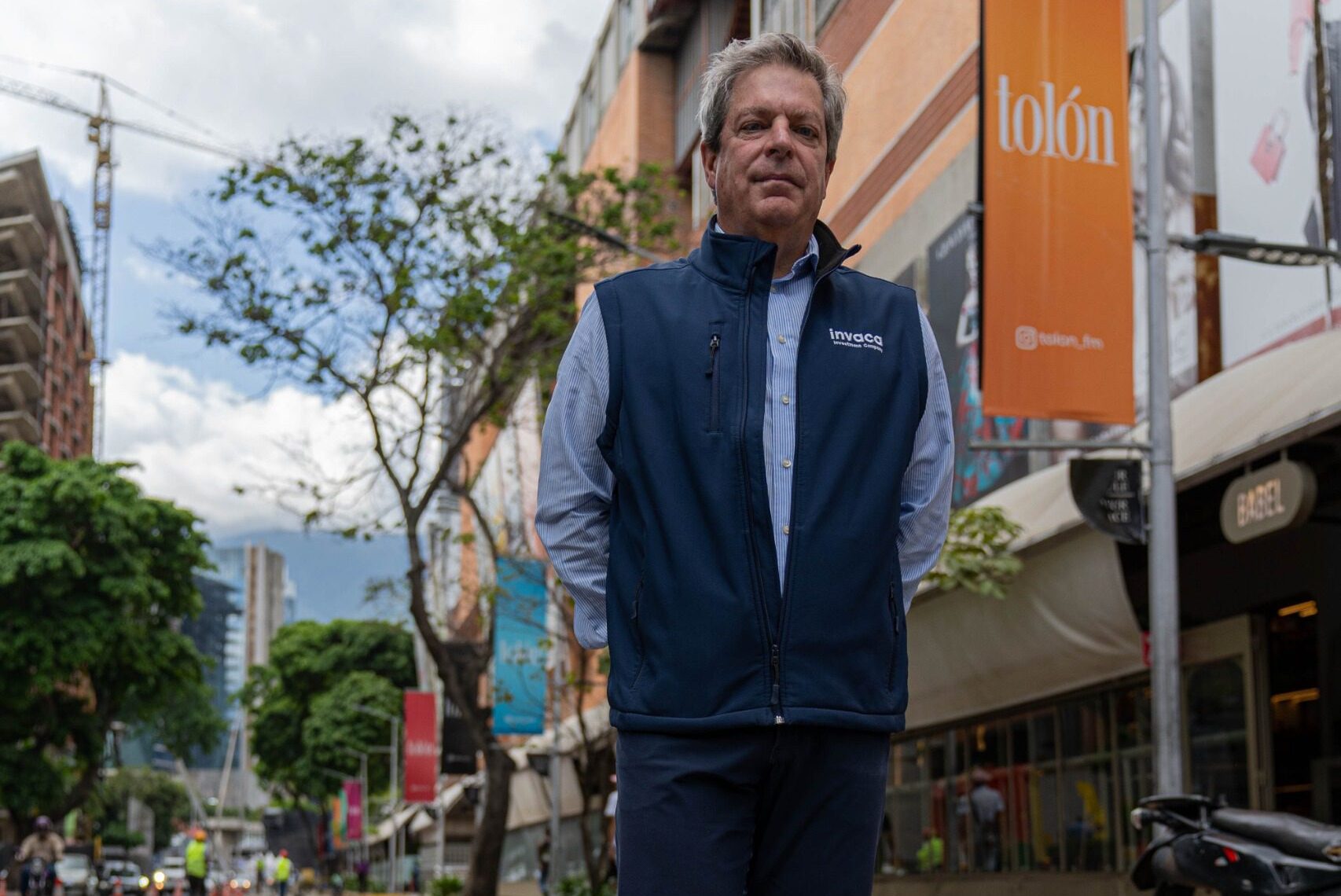
The executive vice president of Invaca Investment Company, the investment firm behind the project, noted that the initiative seeks to prioritize the citizen experience by blending urban and commercial elements. Photo: Guacamaya
Guacamaya, June 17, 2026. In the heart of Las Mercedes, the start of an innovative urban transformation has been marked. With the roar of drills, the first formal step has been taken in the construction of Tolón Boulevard—a project that aims not only to redesign Nicolás Copérnico Avenue but also to send a message to the capital markets that Venezuela is now a territory open for investment.
In an exclusive interview with Guacamaya, Gabriel Roig, Executive Vice President of Invaca Investment Company—the driving force behind the project—shared the details of this endeavor. After years of planning, it is finally taking shape amid a context of new economic openings and strategic alliances that seek to consolidate a larger plan: the local brand Cuadra Las Mercedes.
A Wake-Up Call That Instills Confidence in Investors
Although Tolón Boulevard was initially conceived between 2017 and 2020 by renowned urban planner Elisa Silva, external factors such as the pandemic and the contraction of the retail sector delayed its execution. However, Roig explains that the environment has evolved. “Venezuela is undergoing a transition… toward a freer, more capitalist, and more equitable economy,” the executive stated.
The current enthusiasm of the productive sectors has been the definitive catalyst for the project’s launch. A key fact reinforcing the project’s sovereignty is the origin of the funds: 100% Venezuelan capital, coming from own resources, local bank financing, and stock issuances on the Caracas Stock Exchange.
The investment, amounting to $25 million for this first half of the year, is not limited solely to the boulevard. The work includes the modernization of the Tolón Fashion Mall, improvements to the roadways of adjacent streets such as Nueva York and California, and the remodeling of strategic assets. This trend emerges as a response by physical retail to the rise of e-commerce.
Inspired by international models such as Bogotá’s Zona Rosa, Mexico City’s Mazarik Street, or Madrid’s Salamanca neighborhood, the boulevard seeks to integrate commercial with urban spaces. “Today’s consumers prefer an urban shopping experience, where from outside you can see what’s happening inside the mall, and from inside you can see what’s happening on the street,” Roig explained.
A Vision of a “Caracas Manhattan”
From a technical standpoint, the project includes high-level details such as:
- Smart mobility: After more than 200 traffic engineering simulations, Nicolás Copérnico Avenue will be reduced from four to three traffic lanes, ensuring no bottlenecks are created.
- Green infrastructure: A row of leafy trees will be planted to provide shade and a pleasant microclimate, allowing residents to enjoy Caracas’s weather.
- Commercial hub: International “affordable luxury” brands are expected to confirm their presence, joining the already-announced Zara flagship store mentioned at the official project launch.
- Services: 450 additional parking spaces will be added to the existing ones, improving accessibility in the area.
One of Roig’s most emphatic points during the interview was his invitation to those who still hesitate to invest in the country. For the executive, the risk of failure in such projects is low because they are based on urban models already proven worldwide. “This is a time to invest. We are doing it because we believe we will get a good return,” he asserted.
This climate of confidence is bolstered by a public-private alliance with the Baruta Municipality. Mayor Darwin González has implemented incentives such as tax exemptions of up to one year for new investors and fast-track processes for permits. “You have to make your environment work better so that you can do better,” Roig reasoned about corporate co-responsibility.
Social Impact and the Future
With an estimated execution time of 4 to 5 months, the boulevard is expected to be delivered in the last quarter of this year, 2026. The impact on job creation would be “enormous,” considering that the shopping mall industry already sustains about 650,000 jobs in the country, according to data from the Venezuelan Chamber of Shopping Centers (Cavececo), as cited by Roig.
For Invaca, which boasts 100 years of history, Tolón Boulevard is just the beginning of a new phase of expansion into underserved real estate segments. As Gabriel Roig concluded, the ultimate goal is to restore Las Mercedes’s character as a “cool and trendy spot” by integrating citizens with modern, walkable, and safe spaces.