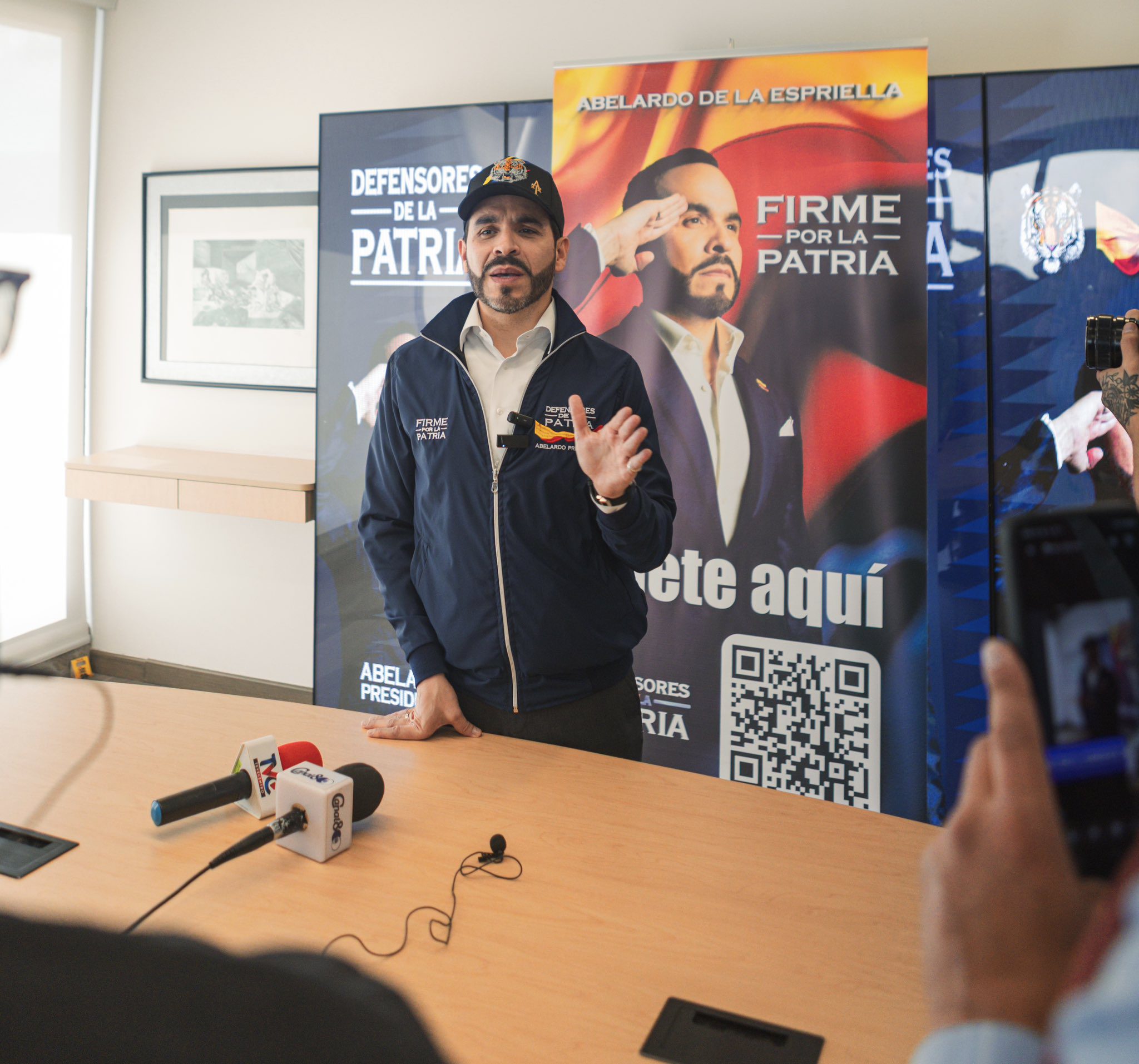
The election of Abelardo de la Espriella as the new president of Colombia marks a shift in the country’s stance toward Venezuela, in a context also transformed by January 3rd. Photograph: X / @ABDELAESPRIELLA.
Guacamaya, July 21, 2026. The arrival of Abelardo de la Espriella’s government will mark a turning point in Colombian foreign policy, with a strategy that seeks to reposition the country as an actor more aligned with the United States, open to private investment, and with a diplomacy focused on economic results.
The initial definitions from the appointed foreign minister, Omar Bula, suggest that Bogotá will attempt to abandon the ideologized approaches of the governments of Gustavo Petro and Iván Duque, moving toward an agenda based on trade, security, strategic alliances, and attracting foreign capital.
In a conversation with the Atlantic Council in early July in Washington, Bula stated that Colombia is going through a moment of global geopolitical readjustment and that the new government will seek to position the country within this new international scenario. According to him, “the tectonic plates of geopolitics are rearranging,” alluding to changes in the balance of power between the United States, China, Russia, and emerging powers.
Jorge Jaller: The Businessman Who Will Lead the New Stage of Colombia–Venezuela Relations
The appointment of Jorge Jaller as the new Colombian ambassador to Venezuela is a clear signal of the direction President-elect Abelardo de la Espriella intends to give to bilateral relations. More than a traditional political or diplomatic profile, the choice of an executive with extensive experience in the retail sector reflects a commitment to economic diplomacy focused on trade, investment, and business expansion.
Jaller will assume diplomatic representation in Caracas starting August 7, replacing Milton Rengifo, at a time when Venezuela is undergoing a process of economic opening and international reintegration following the political changes initiated on January 3, 2026.
Jorge Jaller’s professional career is closely linked to the growth of one of Colombia’s leading retail companies. For over twenty years, he developed his career at Grupo Éxito, where he held strategic positions in sales, operations, brand development, and business. His trajectory culminated as Vice President of Retail between 2022 and late 2024, being responsible for the operations of the Éxito and Carulla chains.
That experience allowed him to acquire deep knowledge of supply chains, commercial expansion, mass consumption, logistics, and management of large operations—skills uncommon within the foreign service but highly valued in a bilateral agenda oriented toward trade.
After leaving Grupo Éxito, he founded Glovanze, a consulting firm focused on supporting business internationalization processes and expansion into Latin American markets, including Venezuela, which allowed him to maintain contact with the process of reopening the Venezuelan market.
Additionally, during the presidential campaign, he was part of Abelardo de la Espriella’s advisory team, participating in the design of the new government’s economic and business proposals.
We will have a Colombian embassy in Venezuela oriented toward business and expanding opportunities for Colombian entrepreneurs in Venezuela.
Jaller’s appointment coincides with the message conveyed by the appointed foreign minister, Omar Bula, who has stated that the relationship with Caracas should abandon the political and security emphasis that characterized recent years to focus on shared economic potential.
According to Bula, in statements to the Colombian media El Espectador, the priority will be to turn the bilateral relationship into an instrument to strengthen trade, attract investments, and generate growth for both countries, leaving behind an agenda dominated by organized crime and border conflicts.
In this context, Jaller’s business experience seems aligned with the objective of building a diplomatic representation closer to the private sector than to traditional diplomacy, functioning as a nexus for investments and the growth of bilateral exchange.
Venezuela Returns to the Colombian Business Radar
The appointment also comes at a particularly favorable time for Colombian business presence in Venezuela. Since the government change on January 3, numerous Colombian companies have begun to explore opportunities again in the Venezuelan market, taking advantage of the progressive economic opening, the reestablishment of financial channels, the relaxation of the regulatory framework for foreign investment, and the prospects for reconstruction following the June earthquakes.
Sectors such as food, retail, construction, healthcare, logistics, financial services, energy, technology, and manufacturing are among the main areas where Colombian companies seek to position themselves. For many of them, Venezuela once again represents a natural market due to geographic, cultural, and commercial reasons, after years of contraction in bilateral relations.
The choice of an executive with corporate experience may also facilitate dialogue between governments and businesses in a context where both countries seek to increase trade. Beyond traditional diplomatic functions, the Colombian embassy could assume an active role as an investment facilitator, accompanying companies interested in entering the Venezuelan market, promoting binational alliances, and reducing obstacles for business.
This vision coincides with the economic strategy promoted by Delcy Rodríguez’s administration, which has made the recovery of private investment and economic reconstruction national priorities.
The Colombian Private Sector Facing Venezuela’s Economic Reopening
Colombia’s renewed business interest in Venezuela is also reflected in bilateral trade projections. According to Carlos Luna, director of the ProColombia office in Venezuela, trade between the two countries could exceed 1.4 billion dollars during 2026, driven by the recovery of Venezuelan productive sectors and the progressive return of Colombian companies to the neighboring market.
It is worth noting that this relationship is highly asymmetric: it is dominated almost entirely by sales of Colombian products to Venezuela, which represent between 80% and 90% of total trade.
Luna highlighted that there is expectation of a rebound in Venezuelan economic activity, especially in strategic areas such as hydrocarbons, energy, agribusiness, manufacturing, and infrastructure. In his view, the commercial relationship is going through a stage of new opportunities, where both countries can advance toward business cooperation schemes, strategic alliances, and joint ventures.
Among the sectors with the greatest potential, he identified the supply of inputs, machinery, and equipment for the Venezuelan oil and electric industries, as well as new opportunities in the agribusiness sector, taking advantage of productive capacities in regions such as the south of Lake Maracaibo and Portuguesa.
Additionally, he noted that there is interest from Colombian entrepreneurs in participating in the recovery and expansion of strategic Venezuelan companies, including state-administered companies and industrial sectors considered key to the national economy.
For Luna, one of the main challenges is to reduce the perception of risk that still exists regarding Venezuela and to bring Colombian entrepreneurs closer to the reality of the Venezuelan market again. In that sense, he insisted on the importance of investors directly getting to know the country, updating their information, and evaluating on the ground the opportunities that are emerging.
This dynamic reflects a shift in bilateral economic relations: after years marked by trade contraction and political uncertainty, Venezuela is once again seen by part of the Colombian business community as a market with expansion possibilities, especially in a context where Bogotá seeks to strengthen a foreign policy oriented toward trade and investment.
The embassy in Caracas is considered one of the most relevant representations of Colombian foreign policy due to the complexity of the shared agenda: we are talking about more than 2,200 kilometers of border, millions of citizens with family ties in both countries, an intense commercial dynamic, and permanent challenges regarding migration and security.
However, De la Espriella’s government seems willing to rebalance that agenda by giving greater weight to the economic dimension. We will see a relationship with a strong geoeconomic component, as the center and argument for rapprochement.
The Return of Washington as a Strategic Axis
One of the main foreseeable changes will be the reconstruction of the bond with the United States, a relationship historically considered strategic for Bogotá, but which in recent years experienced tensions due to political differences between both governments.
Bula has indicated that Colombia will seek to recover its role as one of Washington’s main allies in Latin America, strengthening cooperation on security, the fight against organized crime, and the defense of Western values.
This approach could have a direct impact on policy toward Venezuela. Under this new vision, Caracas would cease to be solely a political or security issue and would also become a component of a regional strategy coordinated with the United States.
However, the return to a close relationship with Washington does not necessarily imply a policy of isolation toward Venezuela. On the contrary, the new Colombian government seems to bet on a pragmatic relationship that allows taking advantage of economic opportunities, always within strategic coordination with its main allies.
We will see economic diplomacy as a priority. One of the most prominent elements of Bula’s discourse is the intention to transform Colombian foreign policy into a tool to boost economic growth. The appointed foreign minister stated that he will work together with the Ministry of Finance and other institutions to make Colombia a “truly trade-oriented” country, promoting exports, private investment, and the opening of new markets.
During Gustavo Petro’s government, the relationship with Caracas was marked mainly by diplomatic normalization, border reopening, and the search for political channels. The incoming administration seems to maintain interest in a functional relationship with Venezuela, but with a different emphasis.
The priority would no longer be solely to maintain political dialogue channels, but to turn the bilateral relationship into a mechanism to generate economic growth and strengthen Colombia’s regional position. In this sense, Venezuela could occupy a strategic place within the new Colombian trade policy as a nearby market, as a potential energy supplier, and as a space for the expansion of national companies.
Security and Organized Crime: The Main Challenge
Despite the economic focus, security will continue to be one of the central issues in the relationship with Venezuela. Bula has stated that transnational organized crime represents a direct threat to Colombian sovereignty and that the new government will seek to strengthen international cooperation to confront these networks.
This point will be especially relevant on the Colombia-Venezuela border, where illegal armed groups, drug trafficking networks, and illicit economies operate.
Plan Patriota 2.0 and Venezuela: The New Regional Security Scenario and the Challenge of the Binational ELN
Border security between Colombia and Venezuela is once again taking a central place within the new regional defense architecture, at a time when both countries are undergoing a transformation of their international relations and a redefinition of their strategic alliances.
Venezuela has historically played a significant role in the dynamics of the Colombian conflict. During Gustavo Petro’s government, Caracas even served as the setting for peace talks between the Colombian government and the National Liberation Army (ELN), acting as a guarantor country and host for several rounds of negotiation. Venezuelan participation sought to facilitate a political process that would reduce violence on the border and move toward a negotiated solution with an armed organization whose presence had ceased to be limited to Colombian territory.
However, one of the main challenges identified by experts and research centers is precisely the transformation of the ELN into a structure with binational operational capacity. A report from the Universidad del Norte on the presence of the ELN in Venezuela warns that the guerrilla’s expansion into Venezuelan states and border municipalities has modified the nature of the armed group, to the point that a possible solution to the phenomenon would no longer depend exclusively on decisions made in Bogotá.
According to research such as that carried out by the Paz y Reconciliación Foundation (Pares), between 2012 and 2019 the ELN consolidated its presence in the seven Colombian departments bordering Venezuela, especially in Norte de Santander, Arauca, and Vichada, while expanding influence networks on the other side of the border.
This reality makes the ELN one of the main points of convergence between Colombia’s new foreign policy, the U.S. security agenda, and the transformation of the Caracas-Washington relationship.
The announcement of Plan Patriota 2.0 by the incoming government of Abelardo de la Espriella represents a significant change in Colombian security strategy. The initiative, designed together with the United States, seeks to modernize Colombia’s military and police capabilities, strengthen the fight against transnational criminal organizations, and recover operational capabilities considered weakened in recent years.
The plan includes cooperation in intelligence, surveillance, reconnaissance, special operations, cyber defense, protection of critical infrastructure, aerial, maritime, and riverine interdiction, as well as the creation of a Regional Training Center against Drug Trafficking and Transnational Threats.
Beyond Colombia, the program’s scope has regional implications because it is based on a premise shared between Bogotá and Washington: the main current threats are no longer exclusively national, but criminal networks that operate by taking advantage of border spaces and institutional voids.
In that scenario, Venezuela inevitably appears as a strategic factor.
The ELN as the Main Connection Point Between Colombia and Venezuela
The main implication of Plan Patriota 2.0 for Caracas will be related to the treatment of the ELN and other criminal structures operating on the border. For years, the presence of the ELN in Venezuelan territory was a sensitive issue in bilateral relations. While Colombia denounced the expansion of armed groups in border areas, Caracas defended a vision where these actors should be addressed mainly from a political perspective.
The new stage could modify that approach and generate cooperation mediated by the leadership of the Trump administration.
De la Espriella’s administration seems to be moving toward a strategy where transnational organized crime will be considered a regional threat, which would imply greater coordination with the United States and pressure from Washington for Venezuela to actively participate in border security operations.
However, the current scenario is different from previous years. The relationship between Caracas and Washington is undergoing a process of recomposition that has allowed for practical cooperation on security matters. Even before the June earthquakes, both governments participated in a joint operation against the Tren de Aragua, which culminated in the neutralization of a major leader of that criminal organization. This episode showed that, despite historical differences, there is room for operational security cooperation.
One of the most relevant elements of the new Venezuelan scenario is the growing U.S. influence over Delcy Rodríguez’s administration. Following the political change on January 3, Caracas has sought a more functional relationship with Washington, especially in areas where there are converging interests: energy, economic reconstruction, regional security, and the fight against criminal networks.
This opens the possibility that Venezuela will cease to be seen solely as a scenario of geopolitical competition and become a limited operational partner on certain issues. For the United States, the goal seems to be to prevent transnational criminal organizations from consolidating regional corridors, especially those linked to drug trafficking, illegal mining, human trafficking, and smuggling.
For Caracas, greater security cooperation could represent an opportunity to strengthen international legitimacy and recover institutional capabilities aligned with the plan designed by Washington.
Plan Patriota 2.0 must also be understood within a broader trend promoted by Washington, related to the call for Latin American countries to increase their investment in defense and security. The U.S. administration has insisted that Latin America must assume greater responsibility in the face of transnational threats, especially those related to organized crime, foreign influence, and the protection of strategic infrastructure.
Colombia, as the United States’ main historical military ally in South America, seems to be positioning itself as the main regional partner for this strategy. For Venezuela, this presents a complex scenario. On the one hand, Caracas could benefit from greater cooperation against common threats, and for Rodríguez’s administration, it would represent continuing to show itself as Trump’s partner not only economically but also in matters of security and regional stabilization. On the other hand, it will have to carefully manage the balance between approaching Washington and maintaining strategic autonomy.
Toward Trilateral Cooperation Washington-Bogotá-Caracas
Plan Patriota 2.0 does not necessarily represent a direct threat to Venezuela, but it does modify the strategic environment in which Caracas will have to operate. The strategy represents a transition from a traditional vision of national security toward a regional architecture against transnational threats.
For Venezuela, the main challenge will be how to integrate into this new dynamic without losing political autonomy. The presence of the ELN, which for years was a source of tension between Bogotá and Caracas, could now become a point of cooperation if both countries manage to transform the border from a space of confrontation into an area of coordination led by Washington.
The paradox of the new scenario is that an armed organization that for years complicated bilateral relations could become one of the incentives for greater cooperation between Colombia, Venezuela, and the United States. The future of regional stability will depend on whether this new convergence of interests—security, energy, economic reconstruction, and the fight against organized crime—manages to overcome past political differences and consolidate a new stage of strategic pragmatism.
In this situation, the United States would have a key role as the articulator of this new dynamic due to its military, technological, and intelligence capabilities in the hemisphere. The insistence of the U.S. administration that Latin American countries increase their defense investment responds precisely to a vision where current threats—cartels, armed groups, criminal networks, and external actors—require more sophisticated regional capabilities.
From this perspective, Colombia would be Washington’s main military partner in South America, while Venezuela could become an operational partner on specific issues if it maintains the current trend of rapprochement. U.S. influence over Delcy Rodríguez’s administration may also facilitate this process. Washington currently has pressure and negotiation tools linked to energy, investment, and financial access, but also incentives to promote greater regional stability.