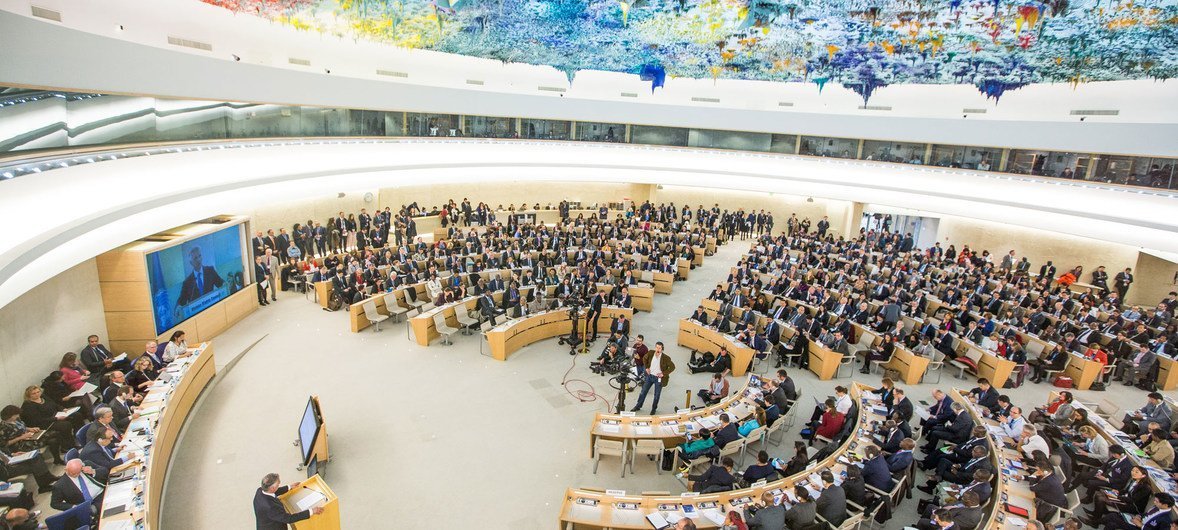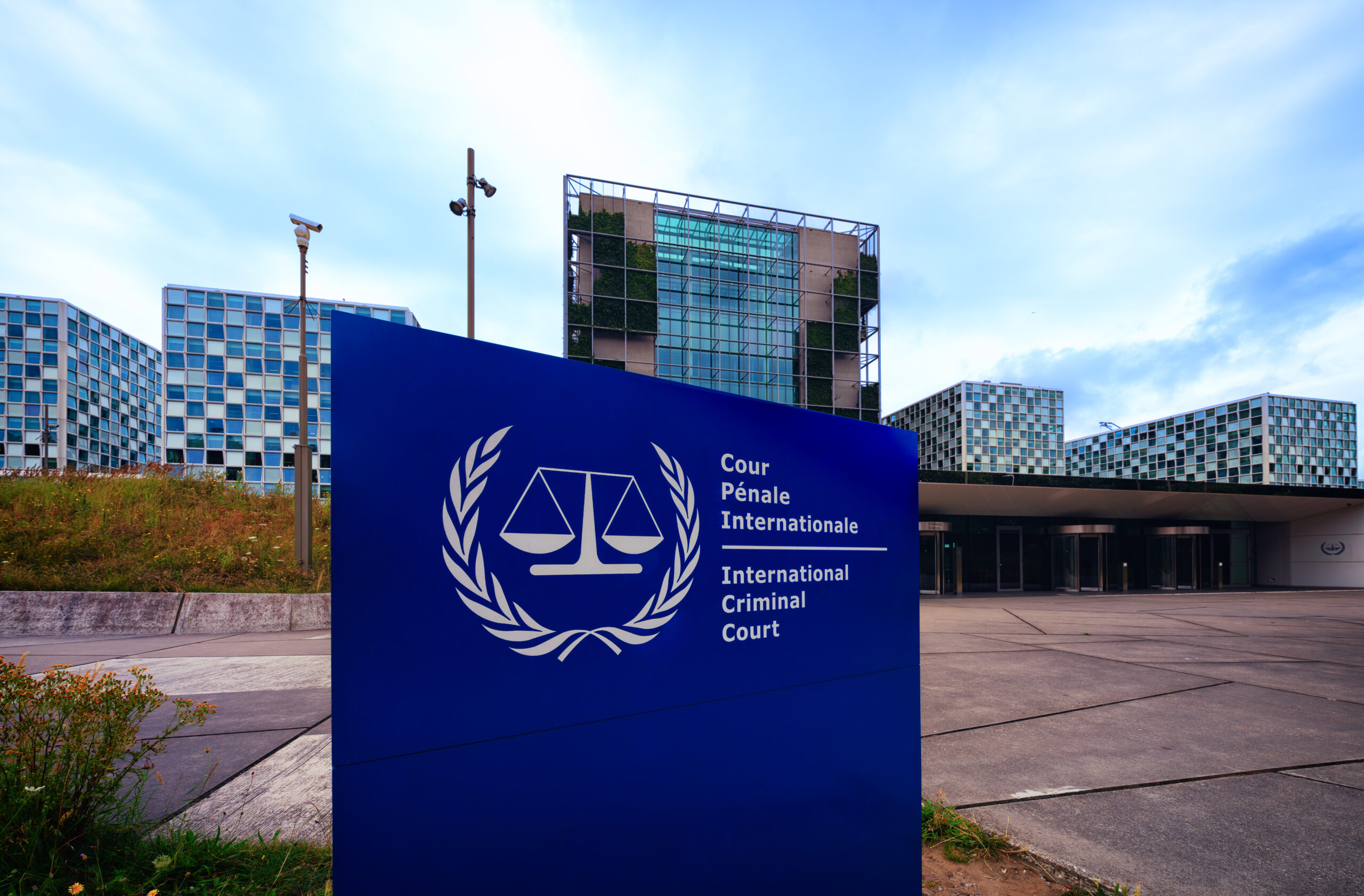
The International Criminal Court (ICC) is an intergovernmental organization and an international tribunal based in The Hague, with around 120 member states. Photo: Tony Webster.
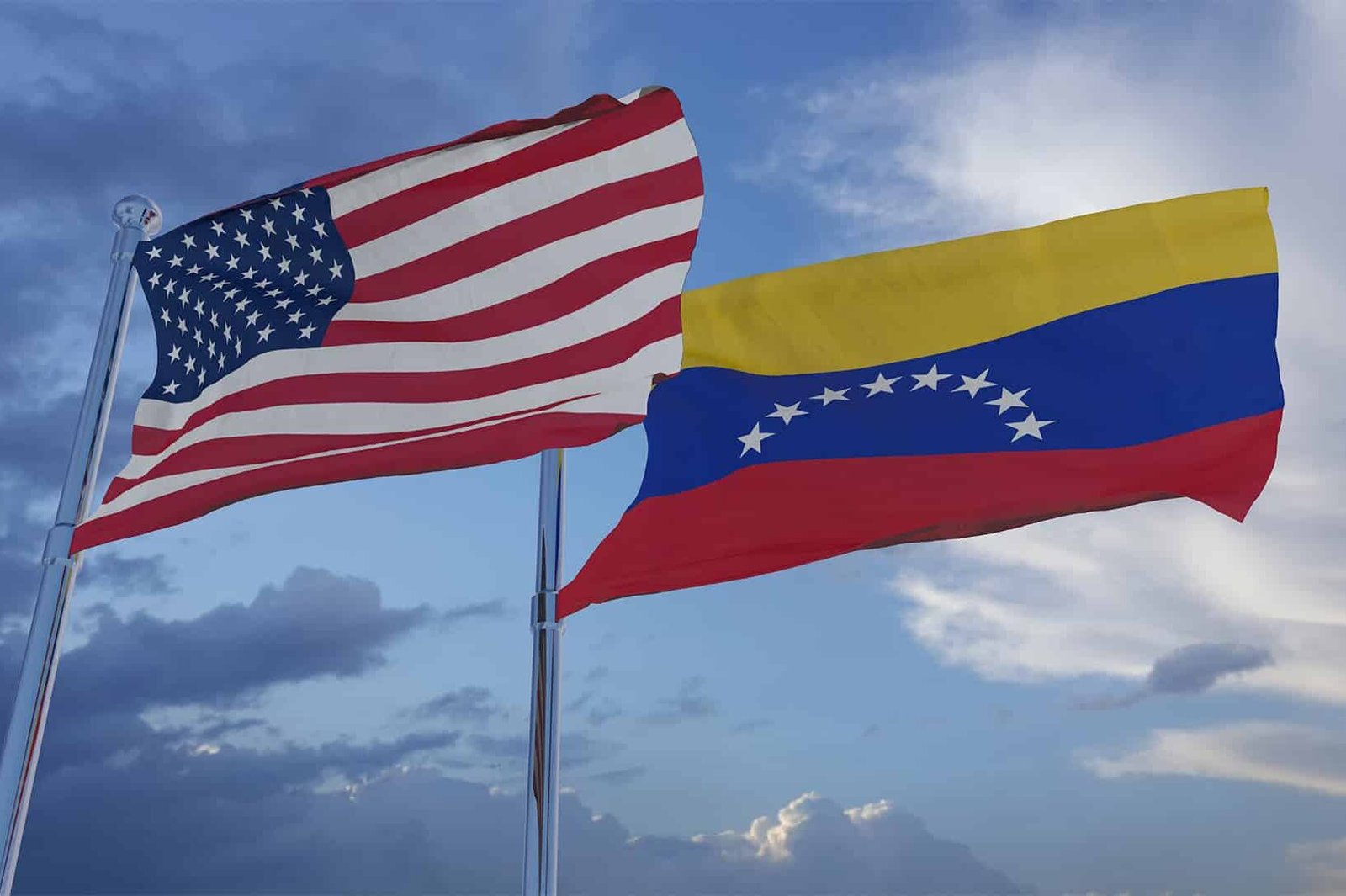
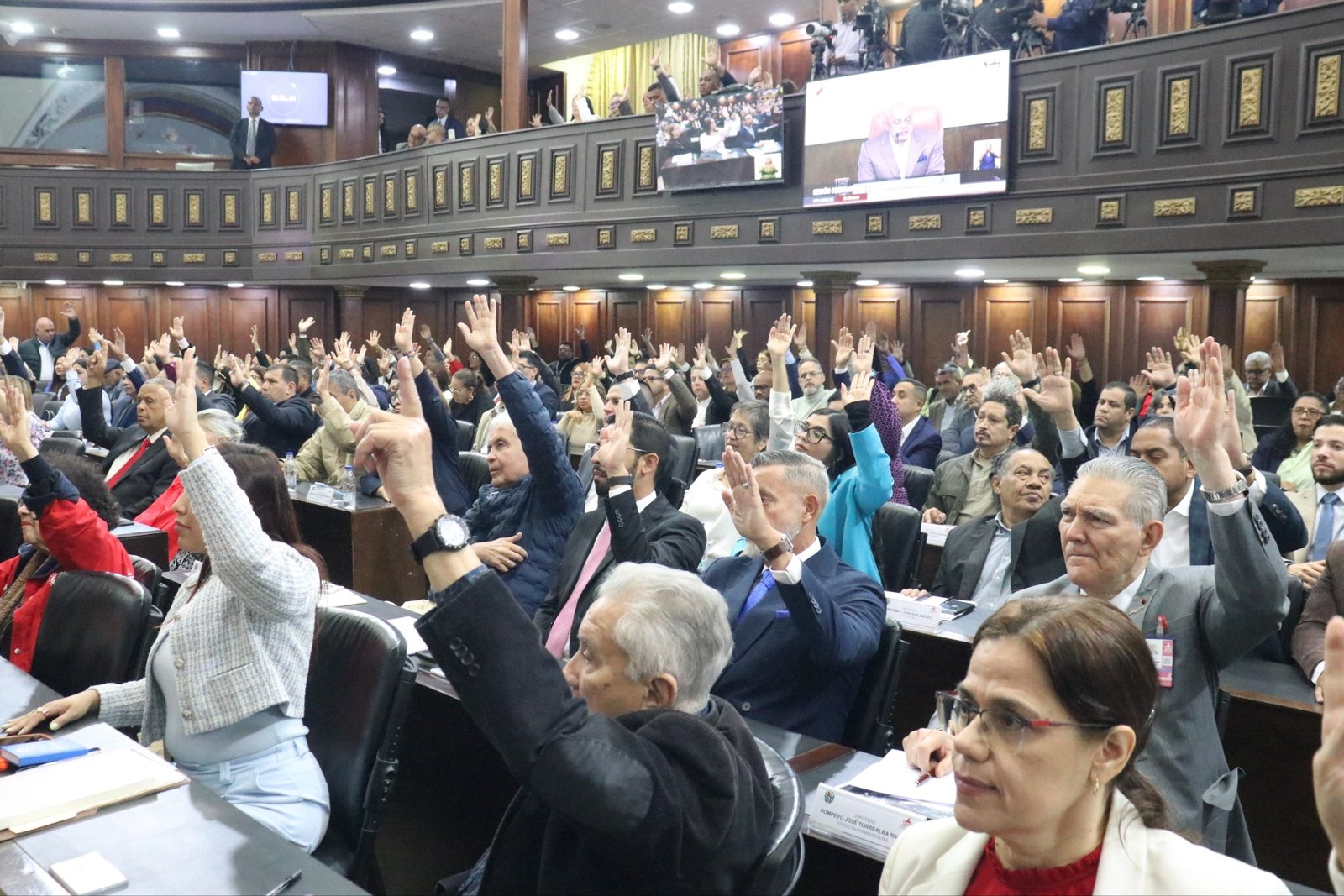
Guacamaya, July 24, 2026. The Government of Venezuela announced this Friday its decision to denounce the Rome Statute and initiate the formal process to withdraw from the International Criminal Court (ICC). The decision was communicated to the Secretary-General of the United Nations, António Guterres, in accordance with the procedure established in Article 127 of the treaty.
According to the official statement, published by the new Chancellor Félix Plasencia, the decision was adopted on the instructions of the acting president, Delcy Rodríguez, as a “firm and irrevocable” measure.
In the communication, the Venezuelan government maintains that the ICC’s actions have been marked by a “geographical bias,” arguing that the court has disproportionately concentrated its investigations and actions in countries of Africa and Latin America. According to the official position, this pattern would demonstrate an unequal application of international criminal justice and differentiated treatment toward countries of the so-called Global South.
Likewise, the Executive states that the Court has been used as an instrument that responds to political interests foreign to the principles of international justice, describing this situation as an expression of lawfare or judicialization for political purposes. In that sense, it maintains that the court’s actions have contributed to the persecution against Venezuela and have affected the principles of sovereignty and self-determination of States.
The Government also reiterated that it maintains its commitment to an international justice that is truly impartial, equitable, and respectful of the sovereignty of peoples.
Why now?
Beyond the official statement, Caracas’s decision follows a course set by Washington. The Trump administration had already had several frictions with the court. On July 13, Secretary of State Marco Rubio announced a “campaign to dismantle the ICC threat to U.S. sovereignty.”
The United States, which is not a party to the Rome Statute, has clashed with the Court mainly as a result of its investigations against Israeli leaders: it has issued arrest warrants against Prime Minister Benjamin Netanyahu and former Defense Minister Yoav Gallant for alleged war crimes and crimes against humanity.
In 2025, the Trump administration responded with sanctions against prosecutors, judges, and other ICC officials, accused of acting “unfoundedly” against the United States and Israel. Rubio’s announcement on July 13 intensifies actions against the court.
This is where the political backdrop of Venezuela post-January 3 comes in. The government of Delcy Rodríguez has left behind old alliances with countries like Iran, Russia, and China, in favor of a close cooperative relationship with Washington. Following the double earthquake of June 24, a further step was taken: the first official Israeli delegation arrived in Venezuela, intending to assume a leading role in the reconstruction.
The decision to leave the ICC, therefore, does not originate in a direct conflict between Caracas and The Hague, but is adopted in support of the State Department’s efforts, amid the reconfiguration of Venezuelan foreign policy.
What does denouncing the Rome Statute imply?
Article 127 of the Rome Statute establishes that any State Party may withdraw by means of a written notification addressed to the Secretary-General of the United Nations, who acts as depositary of the treaty. The withdrawal takes effect one year after the notification is received, unless the State establishes a longer period.
However, the Statute itself provides that a country’s withdrawal does not extinguish the obligations contracted while it was a State Party. Consequently, the Court maintains jurisdiction over alleged crimes committed during the period in which the State was party to the treaty and over investigations or proceedings initiated before the withdrawal takes effect.
The Venezuelan decision represents one of the most significant moves in the relationship between Caracas and international criminal justice in recent years and opens a new chapter in the country’s relationship with the International Criminal Court.
What is the process for withdrawing from the International Criminal Court?
The procedure for a State to leave the International Criminal Court (ICC) is regulated by Article 127 of the Rome Statute. The first step consists of the State submitting a written notification to the Secretary-General of the United Nations, who acts as depositary of the treaty. Upon receipt of that notification, a one-year period begins before the withdrawal formally enters into force, unless the State itself indicates a longer period.
During that transition period, the country remains a State Party to the Rome Statute and maintains the obligations arising from the treaty. Even once the withdrawal takes effect, the exit does not eliminate the ICC’s competence over alleged crimes committed while the State was part of the Statute, nor does it affect investigations or proceedings that were already ongoing before the effective date of the withdrawal.
In practice, this means that withdrawal prevents the Court from exercising jurisdiction over future events occurring after the denunciation enters into force, but it does not extinguish legal responsibilities arising from the period in which the State accepted the court’s jurisdiction.
The precedents of other States
To date, very few countries have completed the process of withdrawing from the Rome Statute. The best-known case is that of Burundi, which notified its withdrawal in 2016 and became the first State to formally leave the ICC in October 2017. However, the Court maintained its investigation into alleged crimes against humanity committed in the country before the withdrawal took effect.
Another relevant precedent is the Philippines, which notified its denunciation of the treaty in 2018 and formalized its withdrawal in March 2019, during the government of then-President Rodrigo Duterte. Despite this, the ICC concluded that it retained jurisdiction to investigate alleged crimes related to the so-called “war on drugs” that occurred while the Philippines was a State Party, an interpretation later upheld by the Court itself.
There have also been withdrawal attempts that were ultimately not carried out. In 2016, South Africa notified its intention to leave the ICC following a controversy related to the visit of then-Sudanese President Omar al-Bashir. However, a South African court declared the procedure followed by the Executive invalid, and the government withdrew the notification. That same year, Gambia announced its intention to leave the Rome Statute, but the decision was reversed after the change of government in early 2017.
These precedents show that, although the Rome Statute provides a clear mechanism for the withdrawal of States Parties, withdrawal does not imply the automatic closure of existing investigations nor does it eliminate the Court’s competence over events that occurred during the period in which the country was subject to its jurisdiction.
The relationship between Venezuela and the International Criminal Court
The decision to denounce the Rome Statute comes while Venezuela is the subject of one of the most significant International Criminal Court proceedings in Latin America. Since 2021, the ICC Prosecutor’s Office has been conducting a formal investigation into the alleged commission of crimes against humanity in the country, focusing mainly on alleged acts that have occurred since at least April 2017, in the context of protests and the actions of State security forces.
The investigation began after a preliminary examination that lasted several years and concluded with then-Prosecutor Karim Khan’s determination that there were reasonable grounds to believe that crimes within the Court’s jurisdiction may have been committed, including alleged cases of arbitrary detention, torture, sexual violence, and persecution on political grounds.
The Venezuelan government has repeatedly rejected these conclusions and maintains that national institutions have the capacity and will to investigate and sanction any human rights violations. Based on the principle of complementarity, Caracas has argued that it is for Venezuelan justice to hear these cases and has questioned the Prosecutor’s Office’s decision to keep the investigation open.
In recent years, both parties have maintained a complex relationship that has combined institutional cooperation with legal disputes. The ICC Prosecutor’s Office has made several official visits to Venezuela and has signed memoranda of understanding with the Government to strengthen technical cooperation and information exchange. In parallel, Venezuela has filed various procedural appeals before the Court to try to stop or suspend the investigation, alleging that national authorities are already carrying out sufficient investigations and judicial reforms to satisfy the principle of complementarity.
To date, the ICC’s Pre-Trial Chamber and Appeals Chamber have authorized the Prosecutor’s Office to continue with the investigation, considering that the information presented by the Venezuelan State does not demonstrate that the same facts and the same persons of interest to the Court are being sufficiently investigated by national authorities.
In this context, Venezuela’s eventual departure from the Rome Statute would not imply the automatic closure of the file opened by the Prosecutor’s Office. According to Article 127 of the treaty, the Court retains jurisdiction over alleged crimes committed during the period in which Venezuela was a State Party, as well as over all investigations and proceedings initiated before the withdrawal takes legal effect. Consequently, the currently ongoing investigation could continue regardless of whether the withdrawal from the Statute materializes.
However, this limitation is not absolute. The Rome Statute system itself contemplates mechanisms by which the Court could re‑exercise jurisdiction over events occurring after withdrawal.
The first is a referral by the United Nations Security Council, acting under Chapter VII of the UN Charter. In that case, the Court may investigate situations occurring in any State, regardless of whether it has ratified the Rome Statute or not. This mechanism has already been used in the cases of Darfur (Sudan) in 2005 and Libya in 2011, both countries not subject to the ICC’s ordinary jurisdiction at that time.
Can the ICC act in States that are not parties?
The case of Darfur in Sudan constitutes one of the most important precedents regarding the scope of the International Criminal Court’s jurisdiction over States that are not parties to the Rome Statute. In March 2005, the United Nations Security Council adopted Resolution 1593, by which it referred the situation in Darfur to the ICC Prosecutor’s Office, considering that serious violations of international humanitarian law constituted a threat to international peace and security.
Although Sudan had never ratified the Rome Statute, the Security Council referral gave the Court jurisdiction to investigate alleged crimes committed in the region. As a result, the ICC issued arrest warrants against several senior Sudanese officials, including then-President Omar al‑Bashir, accused of genocide, crimes against humanity, and war crimes. The case set a precedent by demonstrating that the Court’s jurisdiction can exceptionally extend to non‑State parties when the Security Council acts under Chapter VII of the UN Charter.
A similar precedent occurred in Libya in 2011. Following the outbreak of civil war and the repression of demonstrations against the government of Muammar Gaddafi, the Security Council unanimously adopted Resolution 1970, referring the Libyan situation to the ICC. Like Sudan, Libya was not a State Party to the Rome Statute; however, the Security Council’s decision allowed the Prosecutor’s Office to open an investigation and request arrest warrants against Muammar Gaddafi, his son Saif al‑Islam Gaddafi, and then‑intelligence chief Abdullah al‑Senussi for alleged crimes against humanity. Although Muammar Gaddafi died before being tried, the investigation continued regarding other accused individuals and consolidated the criterion that a Security Council referral constitutes an autonomous basis of jurisdiction for the Court.
These two cases illustrate that a State’s withdrawal from the Rome Statute — or even its non‑adherence to the treaty — does not guarantee absolute immunity from the jurisdiction of the International Criminal Court. If the Security Council determines that a situation represents a threat to international peace and security, it can refer it to the ICC, enabling the court to investigate alleged international crimes regardless of whether the affected State has accepted the Court’s ordinary jurisdiction or not.
However, in practice this mechanism depends on the approval of the Security Council, where the five permanent members (United States, Russia, China, France, and the United Kingdom) wield veto power, making such referrals highly conditioned by international political and geopolitical dynamics and thus highly unlikely.
The second possibility would be for a future Venezuelan government to submit a declaration of acceptance of jurisdiction under Article 12.3 of the Rome Statute. This provision allows a State that is not a party to the treaty to voluntarily accept the Court’s competence with respect to a specific situation or a specific period. Such acceptance can have retroactive effects on events occurring before the declaration, as long as they fall within the period expressly recognized by the State.
Finally, Venezuela could also decide to re‑accede to the Rome Statute in the future. In that case, it would regain the status of State Party, and the Court would once again exercise jurisdiction over the crimes contemplated in the treaty starting from the entry into force of the new accession, without prejudice to the rules on temporal jurisdiction established by the Statute itself.
In practical terms, Venezuela’s departure does not mean the closure of the chapter opened with the International Criminal Court, but rather delimits the scope of its competence over time. The investigation currently underway will continue its normal course, and the Prosecutor’s Office will retain the power to bring charges for acts allegedly committed while the country was a State Party. What changes is the Court’s ability to hear new conduct occurring after the withdrawal takes effect, unless one of the extraordinary jurisdictional mechanisms provided for by international law is activated.
The ICC removes Karim Khan amid investigations and international pressure
Venezuela’s decision to withdraw from the Rome Statute coincides with a time of significant changes within the International Criminal Court itself. This Friday, the Assembly of States Parties approved the removal of ICC Chief Prosecutor Karim Khan, following a secret vote held at the United Nations headquarters in New York.
According to information disseminated by Reuters and Associated Press, 82 member states supported the removal of the British jurist, widely exceeding the required majority of 63 votes. Khan had ceased performing his duties since May 2025 to respond to an investigation arising from allegations of sexual misconduct made by a colleague, accusations that the former prosecutor has repeatedly denied.
Previously, the Bureau of the Assembly of States Parties — the Court’s governing body composed of 21 countries — had agreed to suspend him from his functions while the disciplinary process proceeded, clarifying at the time that the precautionary measure did not prejudge the final outcome of the investigation.
During his tenure, Khan led some of the ICC’s most prominent cases, including the investigation into alleged crimes against humanity in Venezuela, the case against former Philippine President Rodrigo Duterte, and the requests for arrest warrants against Israeli Prime Minister Benjamin Netanyahu and then‑Defense Minister Yoav Gallant for alleged crimes related to the war in Gaza. He also pushed for arrest warrants against Hamas leaders.
His actions generated strong diplomatic tensions with the United States. The U.S. administration questioned the Court’s jurisdiction in certain cases and responded by imposing economic sanctions against Khan, in addition to banning his entry into U.S. territory, considering that the ICC’s actions affected the sovereignty of the country and some of its allies. The prosecutor’s removal therefore occurs in a context of growing political pressure and debate over the Court’s role in international criminal justice.
A shift in foreign policy with an exception in international justice matters
The announcement of withdrawal from the Rome Statute marks a contrast with the orientation that has characterized Venezuelan foreign policy since the government change on January 3, 2026. In recent months, Caracas has promoted a process of normalizing relations with the United States, deepened the rapprochement with the European Union, and sought to rebuild ties with multilateral organizations, especially in the economic and financial spheres. That effort has included negotiations for the recovery of the energy sector, restructuring of the external debt, and obtaining international support for the country’s reconstruction following the June earthquakes.
However, in the area of human rights and international criminal justice, the trend has been different. The decision to leave the International Criminal Court reflects a hardening of the Venezuelan Government’s position toward the court in The Hague and growing criticism of its legitimacy, in line with the challenges that in recent years have also been voiced by other international actors such as Russia, Israel, and the United States.
Thus, while Venezuela seeks greater integration with the international community on economic and diplomatic fronts, its exit from the ICC shows that important differences persist regarding the international accountability architecture in human rights matters. This duality suggests that the country’s re‑integration into the international arena will not be uniform, but will advance at different rhythms depending on the sphere of the international agenda in question.
Elías Ferrer contributed to the writing of this article.