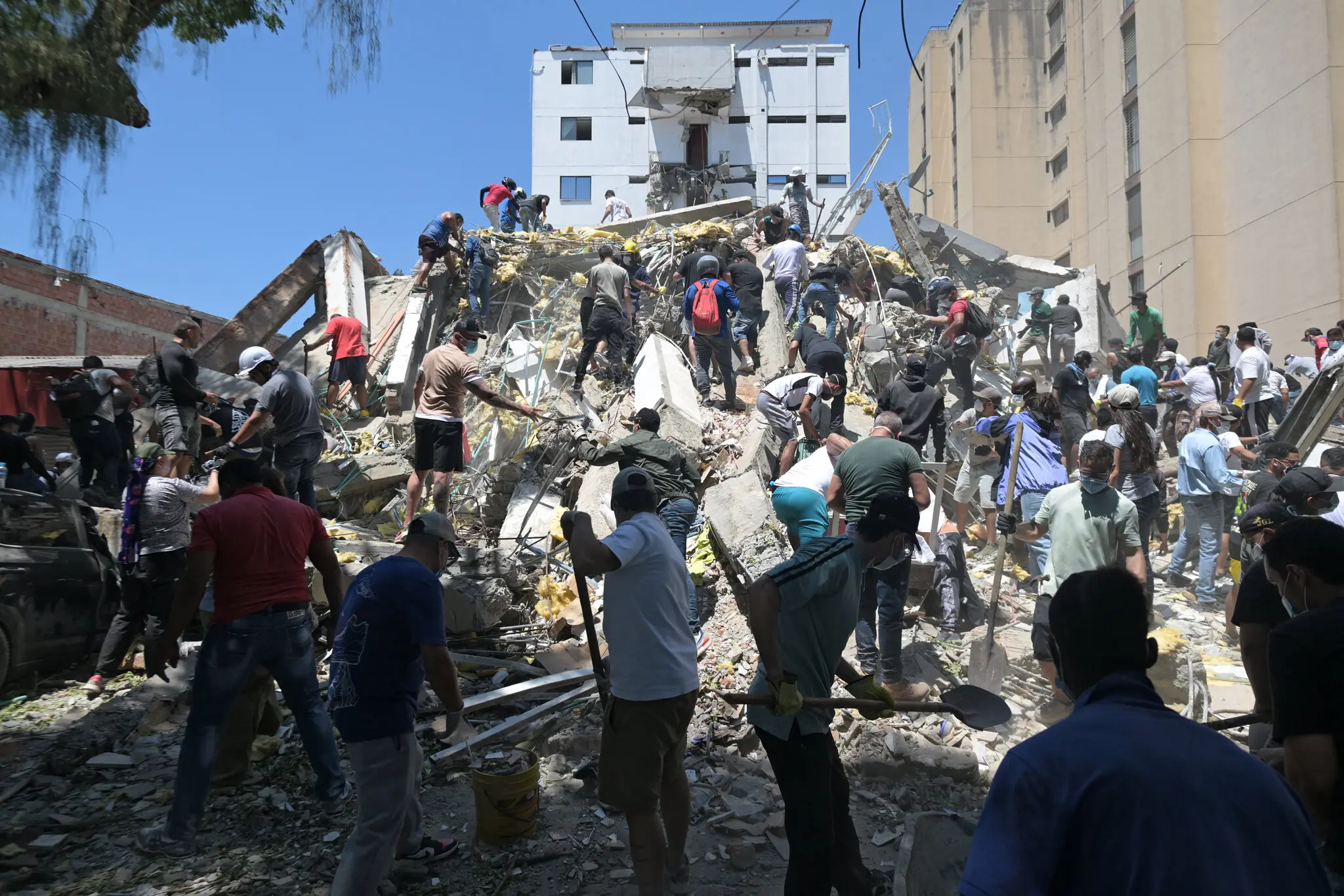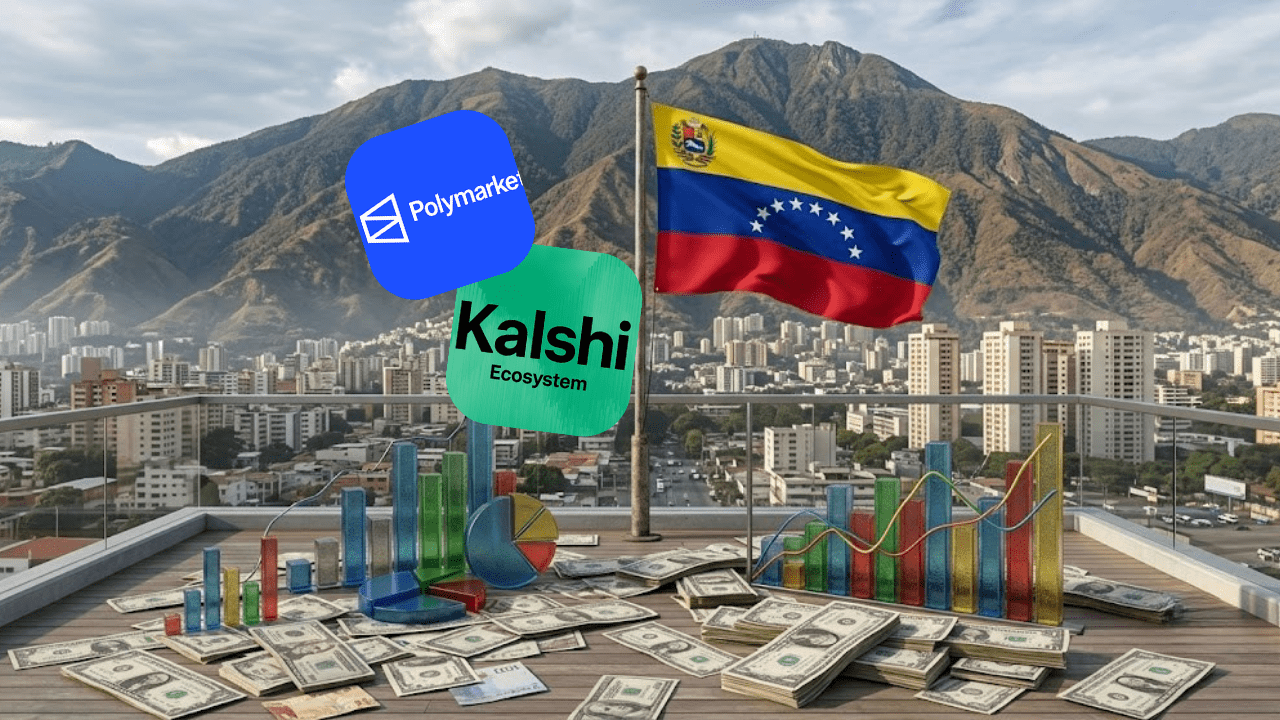
Political diatribes and military operations have become million-dollar financial assets on platforms like Polymarket and Kalshi. | Image: Guacamaya.
Guacamaya, June 24, 2026. In a world where geopolitical tensions are multiplying, money has stopped moving exclusively through traditional financial markets and has begun seeking profits in the margins of political uncertainty. Venezuela has become an epicenter of this phenomenon, as its power crises and military actions have been transformed into financial instruments on platforms such as Polymarket and Kalshi.
What was once a matter for ballot boxes or international negotiations has now also become binary “yes” or “no” contracts on which up to $130 million is wagered. Through digital prediction environments, thousands of users venture guesses on who will hold power in Caracas, whether there will be a military intervention, or whether the country will become another state of the United States.
The Venezuelan Board: Millions at Stake
On Polymarket, the decentralized platform, the currently traded volume across a total of 19 Venezuelan topics surpasses the astonishing figure of $123 million ($123,124,600 USD). The bet on who will be the country’s officially recognized political leader by the end of 2026 alone dominates with $91 million, still led by Nicolás Maduro, who projects a 74.2% probability.
Kalshi, by contrast, operating under the oversight of the U.S. Commodity Futures Trading Commission (CFTC), reaches $7.3 million in volume across 5 markets directly related to Venezuela. Its presidential leadership market—formally recognized—by the close of 2026 totals $4.9 million, with Nicolás Maduro in the lead, maintaining a 69% favorable trend.
Two Architectures with Similarities and Differences: Kalshi vs. Polymarket
Both platforms operate under the premise of “event contracts,” where a user buys—at a price set by probability—a “Yes” or “No” option that pays $1 if the event occurs. However, behind the astonishing figures lies a technical, regulatory, and ethical war that is redefining how information is consumed in times of crisis.
On one hand, Polymarket is a decentralized environment running on the Polygon blockchain, uses cryptocurrencies like USDC, and operates largely outside the traditional U.S. regulatory framework for its international markets. In disputes, it delegates resolutions to Universal Market Access (UMA), an oracle where token holders vote on the outcome.
Meanwhile, Kalshi is a U.S.-regulated exchange under the oversight of the Commodity Futures Trading Commission (CFTC) and operates exclusively with U.S. dollars. In controversies, an internal team of experts decides the outcome based on strict rules and official sources.
Regarding privacy and content, Kalshi requires full Know Your Customer (KYC) identification and is prohibited from listing markets on war or terrorism, as they are considered contrary to the public interest. Polymarket, for its part, allows pseudonymity and offers near-total flexibility to bet on armed conflicts and military operations.
Both operate in a regulatory “gray area” in the United States, as several states consider them unauthorized gambling. This is because sports contracts make up a very significant portion of the volume and business in both systems. Additionally, Polymarket is restricted for U.S. users, yet some still attempt to access it from the country, which has intensified clashes with state regulators.
The Weight of Rules and the Specter of Insider Information
A crucial aspect is how the accuracy of these markets depends not only on ground-level events but also on the resolution rules imposed by the platforms. In April 2026, the markets on both platforms related to Venezuela’s officially recognized political leadership experienced, for that reason, a sharp jump in favor of Nicolás Maduro over Delcy Rodríguez.
Kalshi issued a clarification on April 15 indicating that, although Delcy Rodríguez may be internally recognized as “acting president,” this does not meet the criterion of “officially holding” the office, as her role is temporary. Polymarket, for its part, updated its “Additional Context” on April 17, stipulating that if the government does not clarify who the head of state is, a “consensus of credible reports” from the UN and international media will be used.
On the other hand, the shadow of insider information is a scandal surrounding these markets. An anonymous bettor won $436,000 by predicting Maduro’s capture just hours before Donald Trump’s official announcement. Likewise, María Corina Machado’s odds for the Nobel Peace Prize jumped from 4% to 70% just before it was confirmed.
This demonstrates that prediction markets not only anticipate events but also function as a global thermometer that can shape international political perception. With figures like Donald Trump Jr., son of the U.S. president, serving as an advisor and shareholder on both platforms, the debate over the integrity and neutrality of these digital “oracles” is far from settled.
Trends in Venezuela Amid Uncertainty
Among the most prominent and peculiar bets on Venezuela, Polymarket concentrates scenarios of governance and international conflicts, with some options bordering on extreme speculation. Kalshi, for its part, offers very specific markets on U.S. officials’ agendas and electoral timelines.
The “De Facto Leader” market on Polymarket gives a 90% probability that Delcy Rodríguez will hold real power by the close of 2026. The option “Venezuela as the 51st state” posits annexation to the United States with a 4% probability. The contract “Maduro’s time in prison,” with over half a million dollars traded, has 35% betting that he will not spend time incarcerated.
Regarding recognition of María Corina Machado, Polymarket has a market that specifically asks whether the United States will recognize her as Venezuela’s leader by December 31, currently giving it a 14% probability. In another related bet, on whether Trump will endorse her for Venezuela’s presidency in 2026, the probability percentage is 12%.
On Kalshi, meanwhile, there are bets on whether Marco Rubio (19% probability) or Donald Trump (16%) will visit Venezuela during the year. Another market speculates on when presidential elections will be held in the South American country, with 46% betting they will occur before June 2027 and barely 12% before January 2027.
The landscape of these digital environments configures a model of total “financialization” of geopolitics. These platforms no longer just anticipate events but also shape the global narrative on Venezuela and other contexts in real time, turning uncertainty into a market signal. Thus, the open question remains whether they are indeed a mirror of reality or forgers of truths.