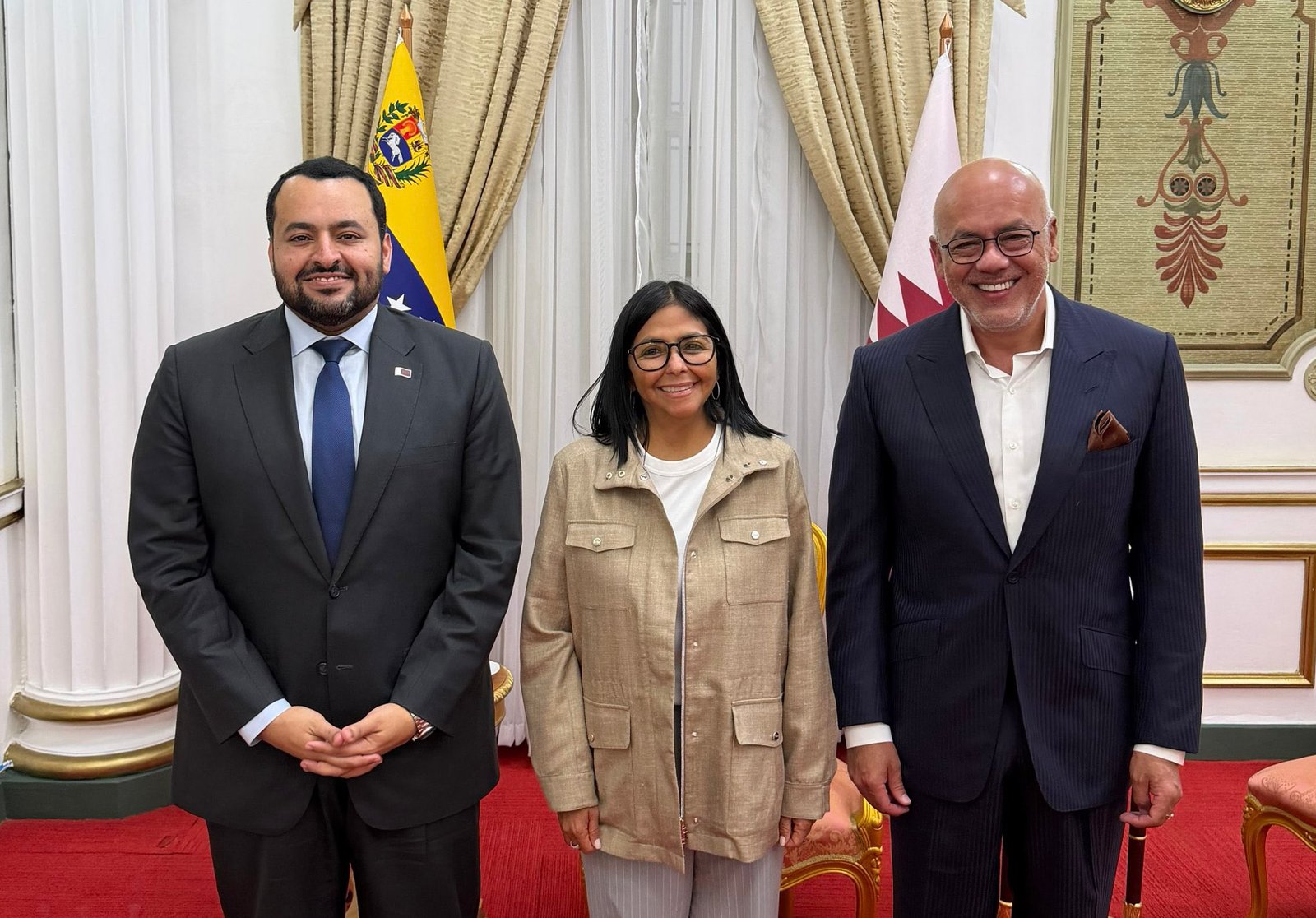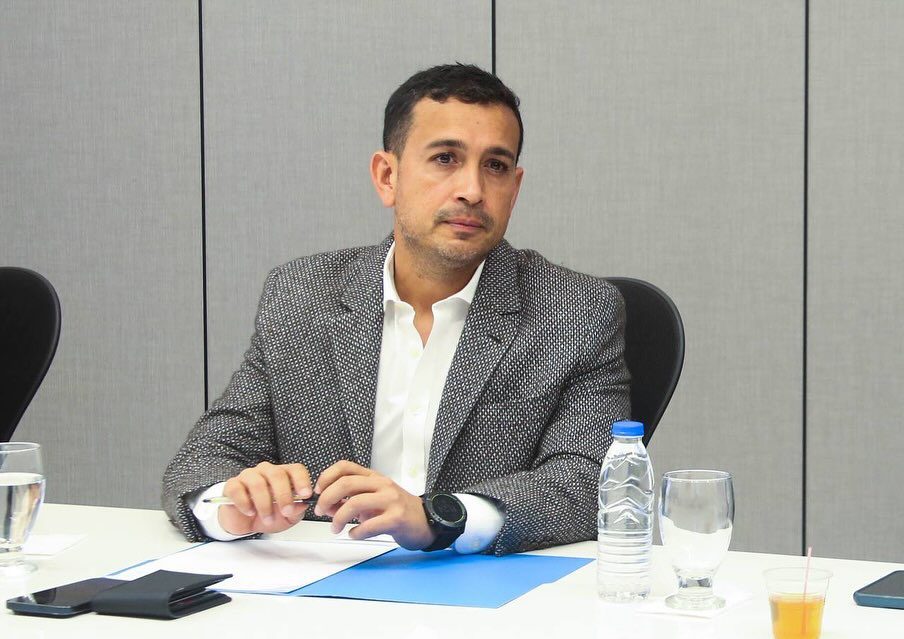
Johann Álvarez has held several senior public administration positions focused on foreign trade and investment promotion. Photograph: Instagram / @johannalvarez08.
Guacamaya, July 14, 2026. Acting President Delcy Rodríguez appointed Johann Álvarez as the new chargé d’affaires in the United States on July 14, taking over from Félix Plasencia following his appointment as foreign minister.
The day before, the head of state had appointed Félix Plasencia as Minister of Foreign Affairs and Foreign Trade, merging both portfolios and leaving the diplomatic mission in Washington, DC vacant.
While former Chancellor Yván Gil took over the Science and Technology portfolio, the now-former Minister of Foreign Trade, Johann Álvarez, takes Plasencia’s place at the Venezuelan embassy in the U.S.
Álvarez’s career has focused on positions related to economic policy and investment promotion, representing a technical profile and one trusted by the acting president.
The closure and reopening of the embassy in Washington, DC
In 2019, the first Trump administration handed over the embassy and Venezuelan consulates in the U.S. to representatives of Juan Guaidó. The diplomatic conflict included a weeks-long occupation by activists from Code Pink and other leftist organizations. They were later decorated by Nicolás Maduro, who awarded them a replica of Simón Bolívar’s saber.
In 2023, the 2015 National Assembly put an end to Guaidó’s self-proclaimed “Interim Government,” completely closing the diplomatic and consular offices in the U.S.
After January 3, 2026, the second Trump administration and the government of Delcy Rodríguez resumed diplomatic relations. The first head of mission was Félix Plasencia, then ambassador in London.
In March, Vice Minister for North America and Europe Oliver Blanco and Plasencia traveled to Washington, DC to begin the reopening process, once again raising the flag in the U.S. capital.
Who is Johann Álvarez?
Delcy Rodríguez’s diplomatic appointments have prioritized, above all, a high degree of political trust. This is evidenced by both the new foreign minister and positions held by non-PSUV militants such as Vice Minister Oliver Blanco and the ambassador to Spain, Timoteo Zambrano.
Álvarez, for his part, represents a technical profile. He holds a degree in Economics from the University of Carabobo and has a master’s degree from the Complutense University of Madrid. He is also pursuing a Master’s in International Economics at the Central University of Venezuela (UCV).
He began his professional career at the Libertador Municipality (Carabobo). He has chaired several state-owned companies, including Banco del Tesoro (2021-2022) and Algodones del Orinoco (2019-2024), as well as the Social Protection Fund for Bank Deposits (FOGADE) (2020-2021) and Conglomerado Productivo (2015-2017).
In 2022, he was appointed Vice Minister of Foreign Trade and Investment Promotion, which led him to become National Superintendent of Special Economic Zones—areas with special tax regimes to attract investment.
In January 2025, President Nicolás Maduro separated Foreign Trade from the Economy and Finance portfolio, placing Coromoto Godoy in charge. Álvarez became Vice Minister of International Trade Policy. He later served as Vice Minister of Export Promotion.
In March 2026, he reached the position of Minister of Foreign Trade, while Coromoto Godoy was sent as Venezuela’s ambassador to the United Nations. In April, Delcy Rodríguez appointed him president of the Export Promotion Agency (Venexporta), initially led by Daniella Cabello, who then became Minister of Tourism.
He is also an International Master of Chess, having been national champion, Central American champion, and Pan American runner-up. He is a member of Venezuela’s Olympic Team and was president of the Venezuelan Chess Federation between 2021 and 2025.
A new era in U.S.-Venezuela relations
Álvarez will lead the most important diplomatic mission for Venezuela following the military operation of January 3, which has completely reshaped the balance of power. The U.S. once again positions itself as the most influential foreign power, both economically and politically.
The North American nation is now the main trading and investment partner. But at the same time as it promotes rapprochement with Venezuela, Washington, DC controls a large part of the flow of foreign currency into the country through the Office of Foreign Assets Control (OFAC).
This strategic relationship will have many other fronts to consider. The reopening of the embassy in Washington, DC is only a first step. The resumption of consular relations will also be of utmost importance; Venezuelans in the U.S. could exceed one million, while many have fragile immigration status or are in the process of having it revoked, such as TPS.