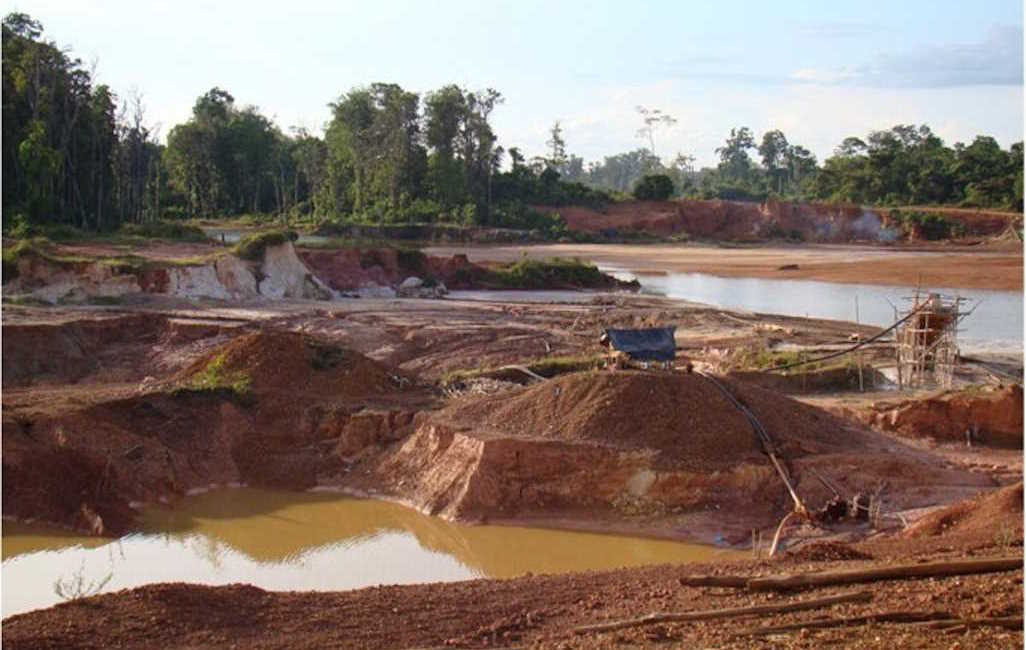
Illegal mining activity has led to the strengthening of criminal groups, as well as the devastation of the environment. Photo: Net Worth Magazine.
Guacamaya, June 10, 2026. On Tuesday, June 9, a major military deployment began in the mining areas of Bolívar state. Although there has been no detailed official statement, it marks a turning point in the management of the Arco Minero del Orinoco.
Local reports and evidence on social media confirm operations by the Bolivarian National Armed Force (FANB) in critical areas with large gold deposits, such as Las Claritas and Km 88, in the Sifontes municipality.
The operations, which according to reports had already begun at the start of the week, involve special FANB commandos and the Directorate of Special Affairs (DAE) of the DGCIM. The objective appears to be the eviction of groups illegally occupying land, primarily informal and artisanal miners, in order to “clean” areas controlled by criminal structures and various “syndicates.”
In El Callao municipality, for example, the unprecedented presence of a joint contingent of Venezuelan military and uniformed US personnel was reported, allegedly having taken control of 41 gold recovery plants, although the latter has not been confirmed. Among the occupations, the strategic El Chocó complex, administered by the Venezuelan Mining Corporation (CVM), stands out.
The shift toward private investment
Two key lines of events led to this point: on the one hand, the approval of the new Organic Mining Law in April 2026, which repeals the 1999 law and opens the door to private concessions. The models used in the last decade, such as mixed companies with the state and strategic alliances, have become obsolete given the greater appeal of the new contracts for capital.
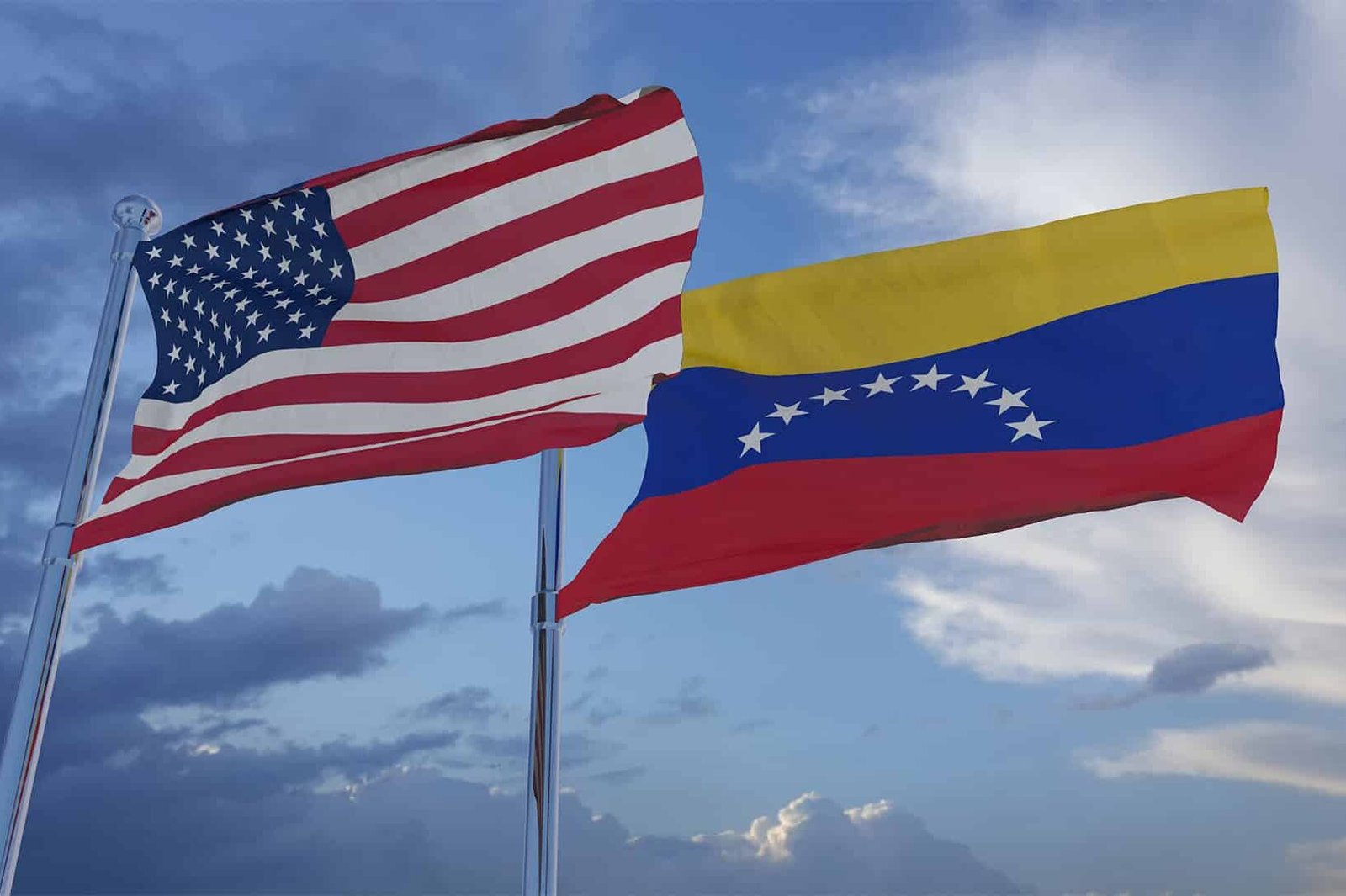
On the other hand, high-ranking US officials have met with the Venezuelan government on several occasions, expressing concern over the insecurity situation and the control of irregular groups in mining areas.
Among these meetings, we can note the visits of Interior Secretary Doug Burgum on March 4; the Chief of the Joint Staff, General Dan Caine, on June 3; and the most recent visit of the Commander of the Southern Command (SOUTHCOM), General Francis Donovan, on May 23. A recent conversation between the Chargé d’affaires, John Barrett, and Héctor Silva, Minister for Ecological Mining Development, also addressed this issue.
These discussions are said to have led Caracas to take action in the Arco Minero to facilitate the arrival of large foreign investments. These could bring machinery, technology, human talent, and formality, increasing productivity and reshaping the region’s economic and social dynamics.
Actors and companies on the board
While giant multinationals await further changes, some companies are already making progress in gaining access to mineral deposits in Venezuela.
Heeney Capital and Mercuria Energy Group have already secured agreements with Venezuela, backed by the White House. They would have a mineral export contract worth up to US$2.2 billion annually, supported by associated investment commitments.
Similarly, the corporation Gold Reserve is seeking to return to Venezuela through its new US subsidiary American Heralds, based in Miami with deposits in Alaska — its intention, therefore, is to align with the objectives of the Trump administration.
Known for a recent history of expropriations and arbitration awards, Gold Reserve still owns 45% of the mixed company Siembra Minera, which covers one of the largest gold deposits in the world, precisely in the Km 88 area.
The treasure in dispute: reserves and critical minerals
Regarding gold, according to the International Center for Productive Investment (CIIP), Venezuela holds between 2,200 and 8,000 tons of gold, which would place the country as the world’s second-largest reserve of this metal. However, few deposits have international certification.
Siembra Minera — in which Gold Reserve has interests — has certified reserves of 52.2 million ounces (1,480 tons), in addition to 5 billion pounds (2.3 million tons) of copper. In Isidora and La Camorra (former Rusoro assets), 925,000 ounces of gold (26 tons) have been verified.
The country also has large reserves of other minerals, several of them classified as “critical” by the US government. Venezuela has 14.721 billion tons of proven iron ore, making it the world’s eighth-largest reserve, as well as 321 million tons of bauxite and 3 billion tons of coal.
There are also notable but uncertified deposits of coltan, nickel, tin, and diamonds. These deposits are primarily known through informal mining activities, which barely scratch the surface — typically reaching no more than 15 meters in depth.
There is also significant potential at Cerro Impacto and in resources associated with bauxite, such as gallium, essential for defense technologies and semiconductors.
A humanitarian and environmental challenge
However, as millions are negotiated, the International Crisis Group highlights that on the ground, violence, the displacement of indigenous communities, and an environmental disaster prevail. The rise in the global market price of gold has increased irregular and illegal activity throughout the Amazon region, as well as in southern Venezuela. This has strengthened Venezuelan criminal gangs while attracting foreign groups.
The operation in the Arco Minero is marked by opacity, with no official statements. Serious human rights violations could be taking place, according to reports from the field via social media.
On the other hand, it could be an opportunity to transform the region’s mining industry into a formal activity that must follow laws and regulations. Informal activity is also particularly destructive to the environment due to its methods, such as the use of mercury in vital rivers like the Caroní and the Cuyuní.
The current military deployment in Bolívar appears to be the operational phase of a state strategy to offer “security and predictability” to transnational capital, while no clear official information is yet available.
Elías Ferrer contributed to the writing of this article.