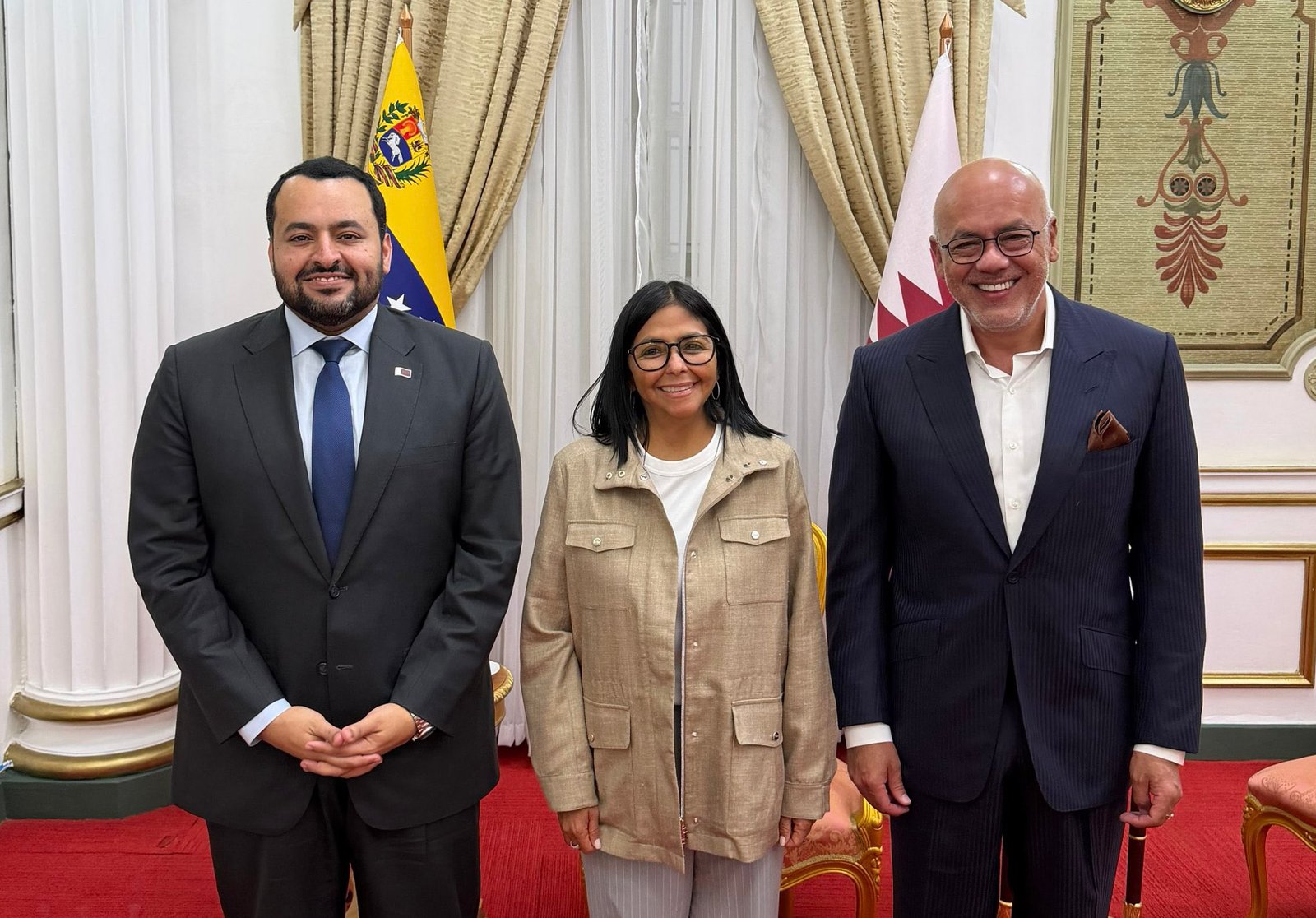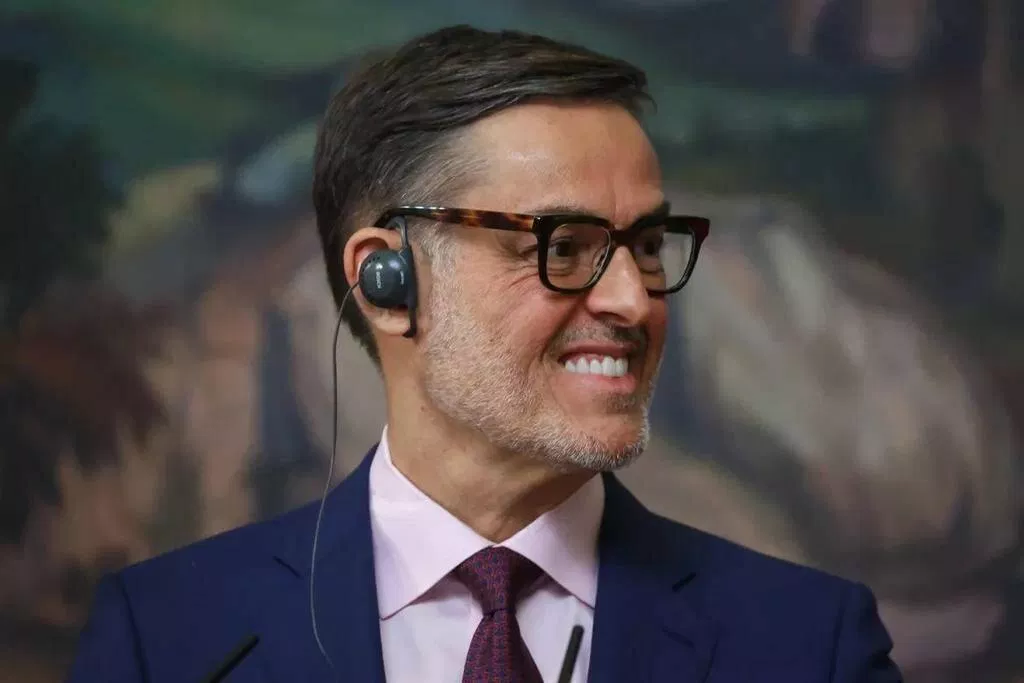
Ambassador Félix Plasencia already headed the Foreign Office between 2021 and 2022. Photo: Ministry of Foreign Affairs.
Guacamaya, July 13, 2026. The latest cabinet reshuffle under interim President Delcy Rodríguez marks a turning point for Venezuelan foreign policy, with diplomat and politician Félix Plasencia at its center.
The ministries of Foreign Affairs and Foreign Trade have been merged, while more than half of the ministerial portfolios have already changed since Delcy Rodríguez assumed the presidency on January 5, 2026.
Plasencia will head the new ministry, leaving behind his role as ambassador to the United Kingdom and diplomatic representative in the United States, while former Chancellor Yván Gil will serve as Minister of Science and Technology.
More than a personnel change, the decision reflects a reconfiguration of the Venezuelan state’s priorities in its new phase of challenges. The country simultaneously faces a process of political conflict, the enormous challenge of post-earthquake reconstruction, and a new stage of international reinsertion, marked by a radically different relationship with the United States.
Career diplomat and a lasting relationship of trust with Delcy and Jorge Rodríguez
Félix Plasencia’s career combines more than three decades of diplomatic and governmental experience, with responsibilities in foreign trade, investment promotion, political negotiation, and relations with foreign powers.
However, his importance derives not only from his positions but also from the close relationship he has maintained with Delcy and Jorge Rodríguez, whom he has known for more than 30 years and with whom he has worked in key roles.
Plasencia entered the Venezuelan diplomatic corps in 1991 through a public competitive examination, during the second government of Carlos Andrés Pérez. He was thus trained with a professional logic typical of the Venezuelan state institutional framework prior to the Bolivarian Revolution. Unlike many later political cadres, Plasencia managed to navigate the regime change without breaking with the diplomatic apparatus.
His academic background reinforces the profile of a diplomat focused on Western countries. A graduate in International Studies from the Central University of Venezuela, he also holds a master’s degree in European Studies from the Catholic University of Louvain in Belgium and a postgraduate degree in Diplomatic Studies from the University of Oxford. This background fully places him within European and multilateral diplomatic culture, something that would later prove crucial for Venezuela in contexts of isolation and sanctions.
In 1994, he worked with Delcy Rodríguez at the embassy in London, beginning to build a close relationship that endures to this day, explaining much of his rise. When the Rodríguez siblings consolidated themselves as one of the most important power centers within Chavismo, Plasencia became an absolutely trusted diplomatic operator.
In 2012, he was appointed Director of International Relations for the Caracas Mayor’s Office and President of Fundapatrimonio under the administration of Jorge Rodríguez, currently President of the National Assembly. In 2014, Delcy Rodríguez appointed him Director of Protocol at the Ministry of Foreign Affairs, a strategic position for managing formal relations and high-level contacts. Subsequently, in 2016 and 2018, he was appointed Vice Minister for Asia, the Middle East, and Oceania, and then Vice Minister for Multilateral Affairs, respectively.
2019–2021: Key positions during a period of political crisis
With Delcy Rodríguez’s rise to the vice presidency, Plasencia reached several high-level positions, consolidating himself as a manager of diplomacy under pressure.
In June 2019, he served as the host for the Venezuelan government during the visit of the United Nations High Commissioner for Human Rights, Michelle Bachelet, at a time when the state was under intense scrutiny and facing international allegations. Bachelet’s report was highly critical of the human rights situation in Venezuela, particularly regarding the status of political prisoners.
That same year, he was part of the official delegation in the Norway dialogues with the Venezuelan opposition, shortly after the failed coup attempt of April 30, 2019. The setting required discretion, the ability to engage with European mediators, and the simultaneous management of internal and external pressures.
In August 2019, Nicolás Maduro appointed him Minister of Tourism and Foreign Trade, and later head of government for the Francisco de Miranda Insular Territory. He also served as president of the International Center for Productive Investment (CIIP); these roles introduced him fully to economic diplomacy, particularly in attracting foreign investment amidst sanctions.
His appointment as Venezuela’s ambassador to the People’s Republic of China between 2020 and 2021 placed him in one of the most relevant geopolitical scenarios of the 21st century. There, he operated amid the strategic rivalry between the United States and China, managing a relationship vital for Venezuela in energy, financial, and political terms. This experience gave him a real understanding of the multipolar order and the limits—and conditions—of Chinese support, distancing him from the idealized visions common in Chavismo and reinforcing his diplomatic pragmatism.
First tenure at the Foreign Ministry: international reinsertion
Félix Plasencia first assumed the Chancellorship during a political thaw between 2021 and 2022, after years of economic collapse and political conflict. His arrival in the role responded to a strategic need of the Maduro government to transition from a conformist and defensive diplomacy toward a more pragmatic, technical approach oriented toward damage control on the international stage.
Plasencia replaced Jorge Arreaza, a chancellor with a strong ideological profile and technical foundations, closely identified with the period of maximum confrontation with the United States, the Lima Group, and the European Union. The change marked more of a tonal shift than a shift in objectives. Under Plasencia, Venezuelan foreign policy did not abandon its core positions but modulated its language, prioritized discretion, and sought to rebuild channels of dialogue with actors that had until then been virtually closed.
In November 2021, municipal and regional elections received observers from the European Union, and contacts with the administration of then-President Joe Biden were resumed during this period.
On the multilateral front, his administration focused on reinserting Venezuela into international forums where its presence had weakened, particularly within the United Nations system. He continued the line initiated after Michelle Bachelet’s visit, keeping channels open with the UN Office of the High Commissioner for Human Rights. Although the Venezuelan government continued to reject much of the critical reporting, under Plasencia it opted for a strategy of limited and controlled cooperation aimed at reducing total isolation and gaining political leeway.
Plasencia was also one of the figures tasked with articulating Venezuela’s discourse against unilateral sanctions, but unlike previous stages, he did so by combining political denunciation with a search for practical dialogue, especially with European actors and sectors of the U.S. government. During this period, Venezuela began to more clearly explore mechanisms for partial easing, specific licenses, and technical understandings that did not imply immediate political recognition but would alleviate key economic restrictions.
His tenure also saw a regional realignment. Plasencia worked on rebuilding ties with Latin American governments that were beginning to shift politically—Mexico, Argentina, Bolivia, and later Colombia—preparing the ground for the formal restoration of relations, which he himself would later lead as ambassador in Bogotá.
Likewise, his relationship with extra-regional powers such as China, Russia, Iran, and Turkey was maintained but with a more functional than ideological approach. Plasencia prioritized operational agreements, concrete cooperation, and diplomatic support in multilateral forums, avoiding rhetoric that could definitively close doors with the West.
With Russia, the relationship was more political and symbolic. As chancellor, Plasencia maintained a line of mutual diplomatic support in international forums, particularly at the UN. However, after the start of the war in Ukraine, Venezuela remained neutral beyond messages of support, while initiating rapprochements with Washington and Brussels.
March 2022: the first thaw with Washington
In March 2022, while Plasencia was chancellor, a direct high-level contact occurred between Venezuela and the United States. Juan González, Principal Director for the Western Hemisphere at the White House National Security Council during the Biden administration, visited Caracas alongside Presidential Special Envoy for Hostage Affairs Roger Carstens and then-U.S. Ambassador Jimmy Story.
This episode is particularly relevant due to its temporal and geopolitical context. It occurred just weeks after the start of the Russia-Ukraine war, an event that abruptly altered the global energy balance and forced Washington to reconsider its policy toward previously sanctioned hydrocarbon-producing countries, including Venezuela.
Ultimately, the release of U.S. prisoners was achieved, and a dialogue channel began to be built that subsequently continued with ups and downs regarding energy and political agreements. Although Plasencia was not the architect of these meetings, he did build the capacities within Chavismo and the state to make them possible. He also established a logic of layered diplomacy: while political discourse remains firm in public, operational technical understandings, licenses, exceptions, and communication channels are built that do not necessarily align with public rhetoric. This logic is now central to Venezuelan foreign policy and explains, for example, the coexistence of formal sanctions with practical mechanisms of easing.
Ambassador in Colombia, the United Kingdom, and the IMO
After serving as chancellor, in 2022 Plasencia was appointed as the first ambassador to Colombia following the restoration of relations with the arrival of Gustavo Petro to power. His mission there was to rebuild a relationship broken for years, normalizing political, commercial, and border ties.
Subsequently, he was appointed ambassador and permanent representative of Venezuela to the United Kingdom and several London-based multilateral organizations, the most important being the International Maritime Organization.
The first envoy to Washington in the post-January 3 stage
Following Delcy Rodríguez’s assumption of office as interim president, choosing an emissary for contact with the United States required finding a profile experienced in Western politics and diplomacy, and more importantly, of absolute trust. Plasencia thus became the ideal figure for this new atypical relationship, being designated as Venezuela’s representative in Washington.
Plasencia has already traveled to the United States on several occasions, including a visit in March with Vice Minister Oliver Blanco to begin the process of reopening the Venezuelan embassy. It had remained closed since 2019, while the United States has already sent a significant diplomatic contingent to Caracas since January, initially headed by Laura Dogu.
In the first half of 2026, Plasencia has been present at various milestones of Venezuela’s new international environment. These include the visit of U.S. Secretary of Energy Chris Wright and the resumption of direct American Airlines flights, while he has already met with IMF Managing Director Kristalina Georgieva.
The new architecture of Venezuelan foreign policy
The merger of the two ministries, with Félix Plasencia at the helm, can be interpreted as one of the most important institutional transformations in Venezuelan foreign policy in recent years.
More than a simple administrative reorganization or cabinet change, the measure appears to reflect a redefinition of the state’s strategic priorities at a time when Venezuela simultaneously faces a political transition process, post-earthquake reconstruction, and the gradual restoration of its relations with key international actors, particularly the United States.
The unification of the ministries suggests that the government considers foreign policy and international economic policy can no longer function as independent spheres. This change also responds to a trend observable in numerous countries that have strengthened so-called economic diplomacy.
Plasencia, precisely, combines in his résumé experience in both vectors: as a diplomat and later chancellor, as well as Minister of Foreign Trade and Tourism and president of the CIIP, and as ambassador to countries of high strategic value for Venezuela.
The creation of the new ministry must also be analyzed in light of the new national context. The earthquakes profoundly altered the priorities of the Venezuelan state. Before the disaster, much of foreign policy was oriented toward easing sanctions, diplomatic normalization, and international reinsertion. After the earthquakes, these priorities remain but become subordinate to national reconstruction and the guarantee of internal stability.
The magnitude of the damage implies that Venezuela will need financial resources, technical assistance, humanitarian cooperation, foreign investment, reconstruction of critical infrastructure, recovery of the productive apparatus, and access to international financing for several years. In this scenario, foreign policy ceases to be solely an instrument of political representation and becomes a fundamental tool for the country’s economic recovery.
It is also clear that the new ministry will be focused on the United States: the most important foreign power in Venezuela for political reasons, while positioning itself as the main trading and investment partner. In this case, Plasencia’s recent experience as diplomatic representative in Washington proves especially valuable.
Elías Ferrer contributed to the writing of this article.