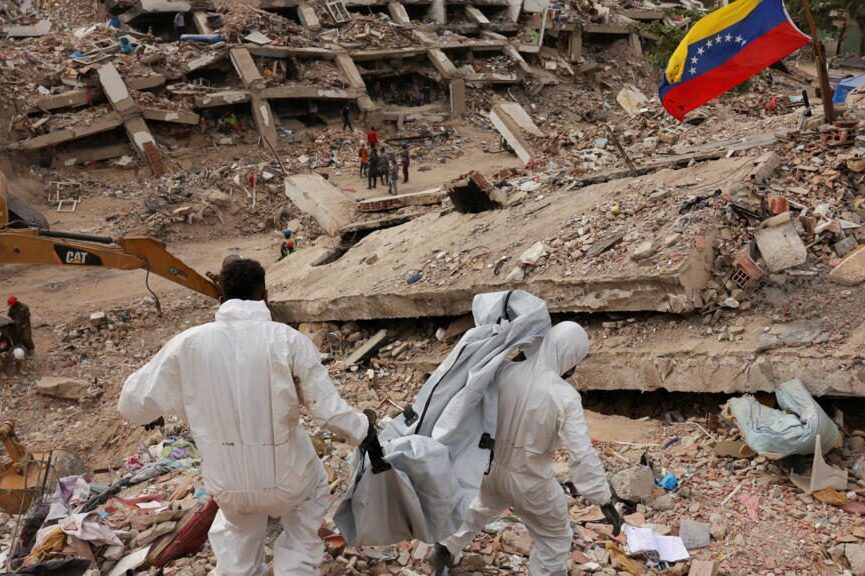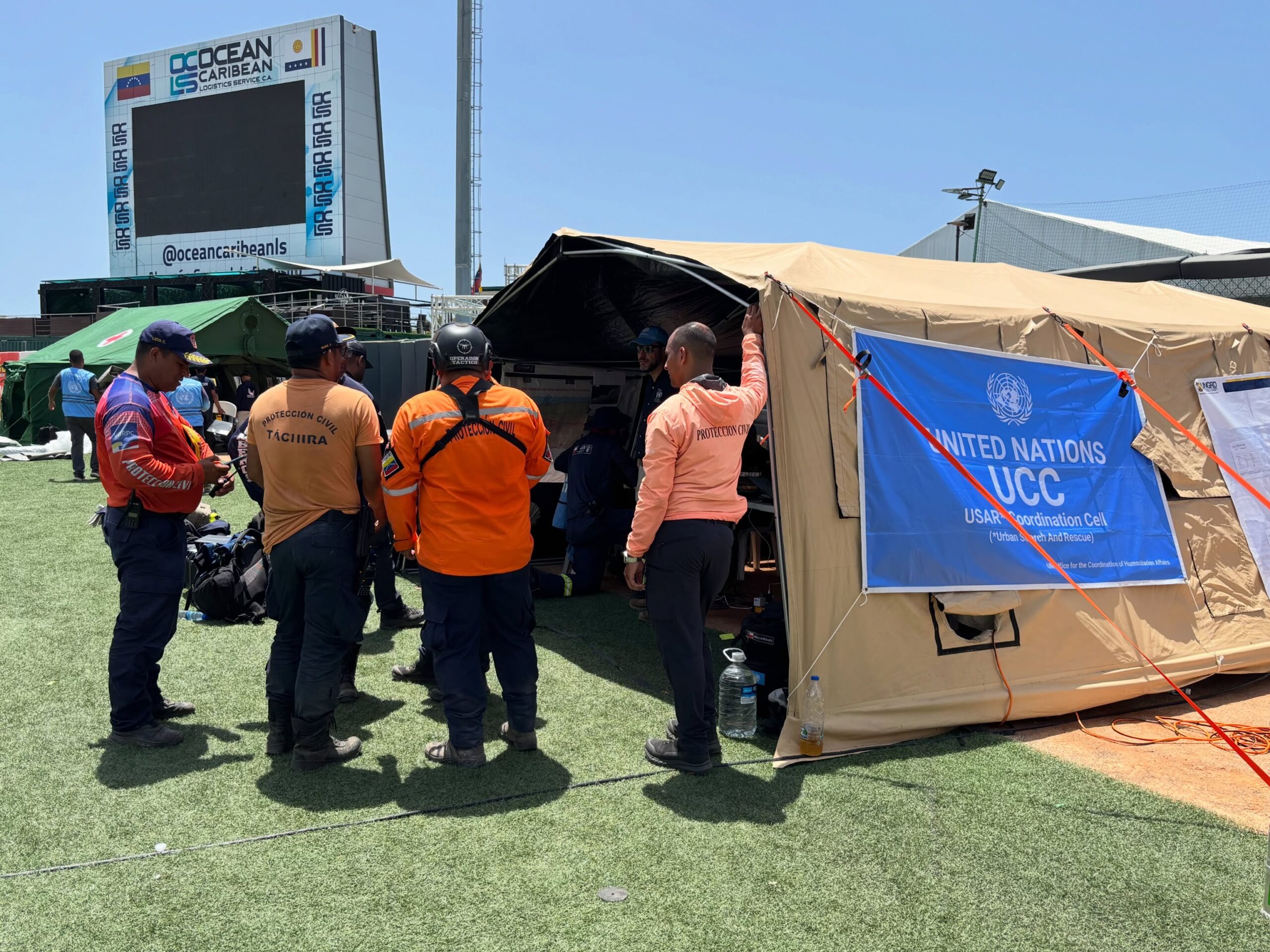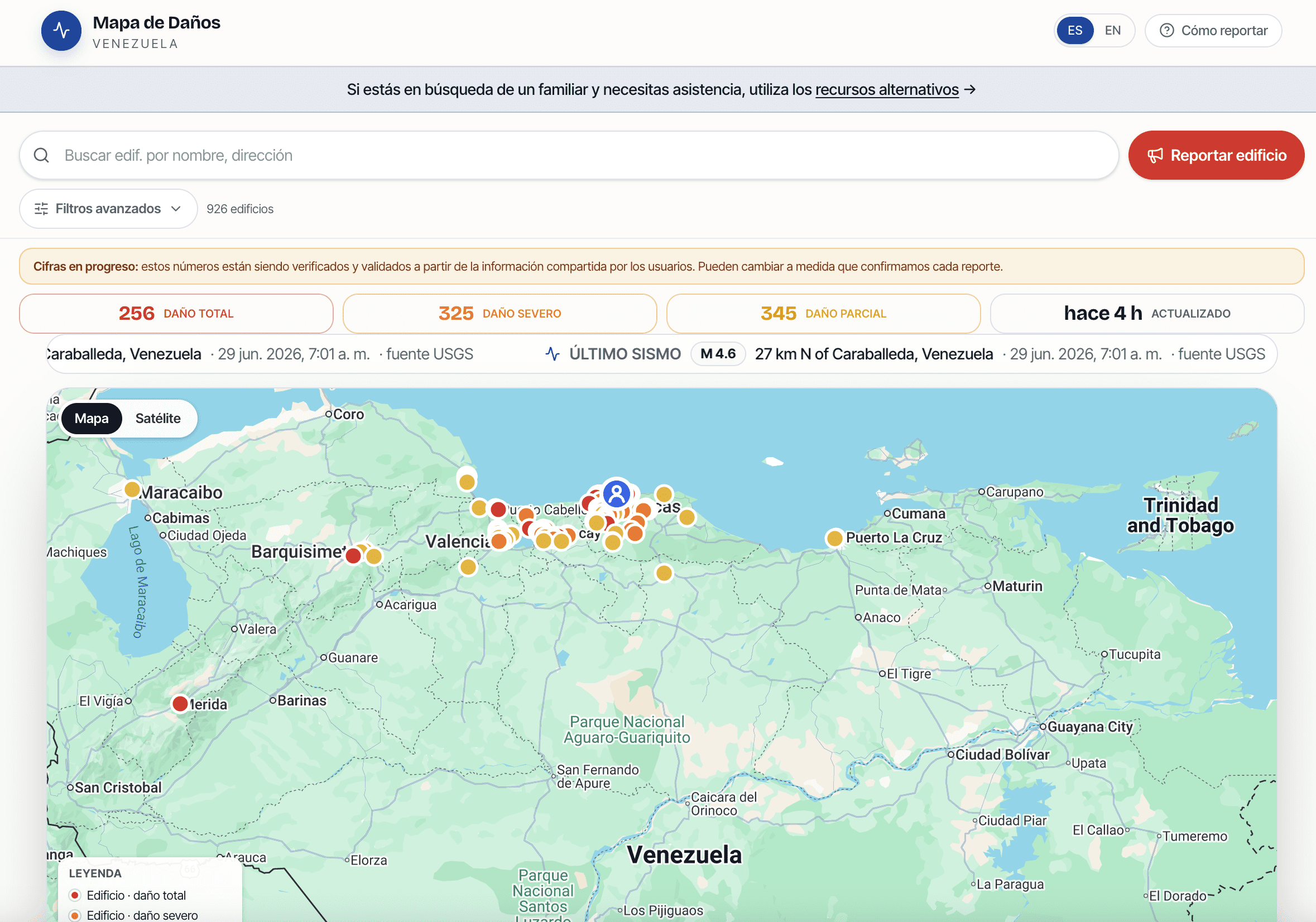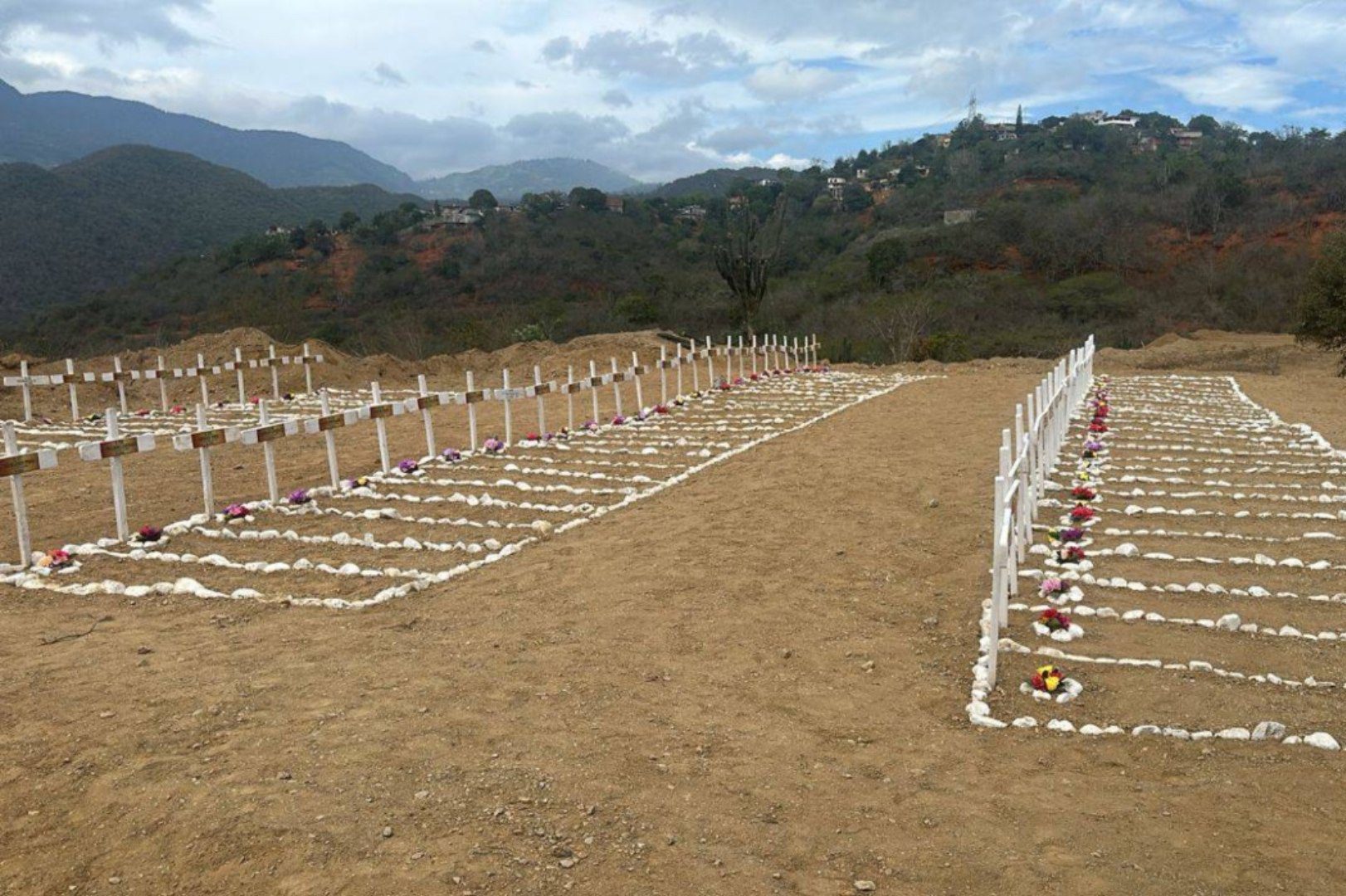
Amid statistical cross-references and the tireless work of its volunteers, the municipal cemetery enabled for the fatal victims of the twin earthquakes attempts to restore some humanity in the face of tragedy. Image: Agencia Venezolana de Noticias
Guacamaya, July 16, 2026. Following the catastrophic earthquakes of magnitudes 7.2 and 7.5 that struck Venezuela on June 24, the state of La Guaira has become the epicenter of an unprecedented humanitarian and funerary crisis.
In the midst of grief, the La Esperanza municipal cemetery has emerged as the final resting place for hundreds of victims, transforming into a symbol of both the disaster’s magnitude and the efforts to maintain dignity in the final disposition of human remains.
Located at the western end of La Guaira, specifically in the Carayaca parish—about 25 kilometers from Catia La Mar—this cemetery was enabled and expanded on an “express” basis to respond to the collapse of morgues and other burial grounds.
Although official figures from July 6, provided by Governor José Alejandro Terán, cited 231 burials, journalistic reports from international agencies and testimonies from workers on the ground have raised this number, estimating that by mid-July approximately 800 people had already been interred at the site.
Community leader and cemetery operations manager Elis Zabala has told local and foreign media that the facility has the capacity to receive more than 2,000 to 3,000 deceased individuals.
The Rigor of the Procedure Amid the Myth of the “Mass Grave”
Despite images of extensive trenches dug by heavy machinery, authorities and cemetery officials have been emphatic in debunking the existence of mass graves. The procedure is described as individualized burial intended to facilitate future exhumations and identifications.
The standards applied at La Esperanza include a minimum depth of 1.5 to 2 meters and technical spacing between bodies to ensure a dignified and safe burial. Each body is interred in an individual grave within plots organized on terraces identified by letters (A through G). This protocol also includes:
- Forensic identification: DNA records, fingerprints, dental records, and photographs are taken prior to burial.
- Marking: Each grave is marked with a white cross and a plate or numerical code linking the body to its legal file.
- Dignified treatment: Remains are placed in individual coffins, often surrounded by white stones to demarcate spaces and allow family members to eventually pay their respects.
This effort responds to the fact that many of the victims transferred to La Esperanza are unidentified persons or unclaimed bodies, mostly from the poorest areas or collapsed buildings in the “ground zero” zone.
The mass management of corpses at La Esperanza aligns with the recommendations of the World Health Organization (WHO), the Pan American Health Organization (PAHO), and the International Committee of the Red Cross (ICRC).
According to these protocols, in natural disaster situations, corpses do not represent an epidemic risk by themselves, but their accumulation requires biosafe management to avoid risks from fluids or environmental contamination.
The WHO itself, as well as the Venezuelan Society of Infectious Diseases (SVI), have emphasized that rapid and orderly burial is a “vital epidemiological barrier” in the face of the collapse of health infrastructures, whether conventional or provisional morgues, such as the one at Los Silos, where hundreds of coffins and bags containing human remains have been stacked.
Analysis of Figures: A Survival Window That Appears to Have Closed
The latest official report, issued on July 16, 2026, records 4,930 deceased, 16,740 injured, and 6,462 rescued.
An analytically relevant fact is that the figures for rescued and injured individuals have shown no variations since July 3, demonstrating that the “biological window” for survival has completely closed, which has now focused current efforts almost exclusively on recovering bodies.
Nevertheless, the Government maintains opacity regarding the number of missing persons, which has given rise to independent estimates presenting a terrifying picture. The registry “Venezuela Te Busca” counts, as of July 17, 17,892 people yet to be located. Meanwhile, “Desaparecidos Terremoto Venezuela” records a less encouraging figure of 28,893 people still unaccounted for.
Meanwhile, the United Nations Office for the Coordination of Humanitarian Affairs (OCHA) describes as “plausible” that the real figure could reach 50,000 people.
An analysis based on the statements of Jorge Rodríguez, appointed Chief of Staff for Transitional Camps and recently put in charge of delivering the official report, reinforces the speculations.
Rodríguez estimated on June 30 that in the most affected areas of La Guaira there were about 30,000 people. If one subtracts about 13,500 who left on their own, according to Rodríguez, and the 6,461 rescued up to that point, a margin of approximately 10,000 people remains.
Of that latter group, nearly 5,000 have already been confirmed dead, leaving another 5,000 individuals in an informational limbo that will likely swell the final list of fatalities.
The donation of 10,000 body bags by the UN and reports of 3,600 bags delivered by the company Yummy (a mobility app), while confirming the expected magnitude of the tragedy, may also foresee a guarantee that individualized treatment at cemeteries like La Esperanza can continue under adequate sanitary conditions.
Voices of the Tragedy
Nevertheless, what is incalculable is the social trauma. Davenio Velásquez, president of the Association of Funeral Sector Professionals (Asoproinfu), estimates that 90% of the victims have not had a wake. The urgency of burials and the condition of the bodies prevent traditional ceremonies, leaving thousands of families in suspended and painful grief.
On the ground, this human drama is palpable. The Zapata sisters, interviewed by the international press near the municipal cemetery, are searching for their mother and six-month-old niece, confirmed deceased but not located. The affected women expressed their anguish at the uncertainty. “I will not rest. We can’t even cry or anything because we have nowhere to cry,” they stated.
Meanwhile, workers like Elis Zabala reiterate that their labor is an act of “dedication and love” in the face of the grief that overwhelms all Guaira residents.
The La Esperanza cemetery stands today not only as a repository of remains, but as a forensic and spiritual archive where each numbered cross holds the promise of a recovered identity and a grief that, though postponed by urgency, ultimately seeks to find peace.