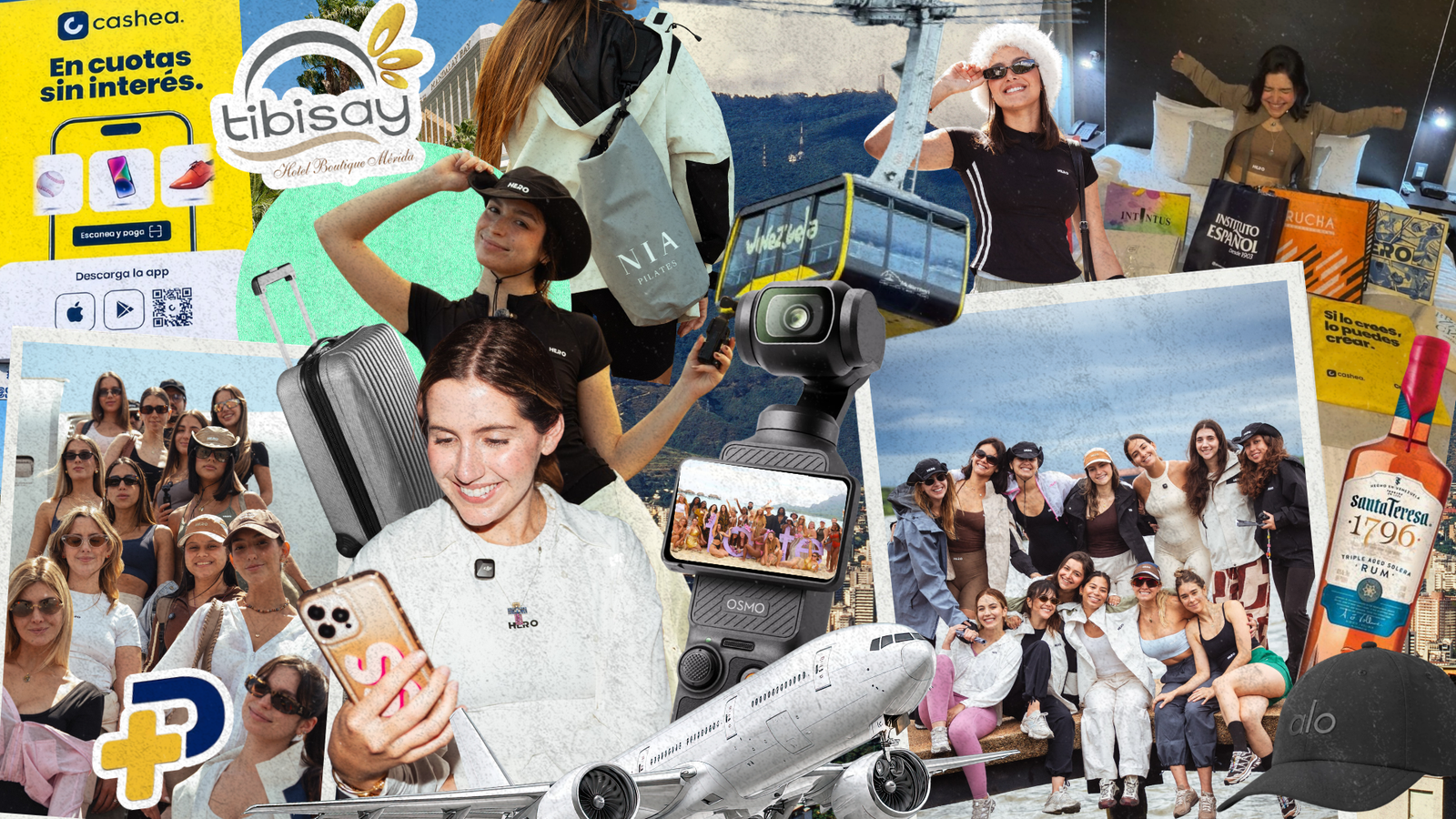
Brandtrips: experiential marketing that connects creators, consumers, and the tourism sector—ranging from global leaders to domestic brands like Hero Activewear. Image: Guacamaya.
Guacamaya, October 23, 2026. For decades, the formula for consolidating any fast-moving consumer goods brand in Venezuela was the same: rent a space in a busy shopping mall, rely on wholesale distributors, place ads in traditional media and on social networks, and finally, wait for customers to walk through the door. Today, the brands that are increasing their sales daily and dominating the conversation are also driving a total and hard-to-ignore transformation of retail in the country.
The rise of brand trips arrives in Venezuela, and while it is not a new concept globally, it reflects an unprecedented generational and platform shift. These are strategic immersion trips designed by brands for various content creators to live and communicate the exact same experience in real-time. It is an approach where not only is the product put to the test, but an entire network of allies—from the destination and lodging to transportation—is activated, multiplying the impact of the campaign and turning spontaneous cohabitation into an advertising showcase that feels much closer to the final consumer.
Companies like Hero—led by Sofía Saavedra and linked to the brand ecosystem that includes Covas/Samos—are not using these trips to make up for a lack of physical locations; in fact, they operate their own brick-and-mortar stores and consolidated direct sales channels. Instead, they use them to transform their communication model into a highly covetable experience.
Through relatable vlogs and social media videos, content creators produce material that goes beyond merely entertaining the audience: it convinces final consumers that they, too, can live the same experience as the creators and enjoy the exact same products and services shown. For brands, this strategy ultimately enriches brand equity, justifies a premium positioning, and converts what they sell into an aspirational experience that no traditional ad spot can match.
This phenomenon represents the evolution of press trips—dynamics where the tourism and hospitality sector invited print journalists long before social media or digital creators even existed.
Press Trips: The Predecessors of Brand Trips
At an international scale, this model operated under the editorial logistics of major global outlets between 1980 and the 2000s: luxury chains such as Four Seasons or The Ritz-Carlton covered all-inclusive stays for correspondents and editors from publications like National Geographic Traveler or The New York Times Travel Section. The goal behind these dynamics was always the same: securing a multi-page feature story or a prominent mention in seasonal print guidebooks. Later, with the emergence of early fashion blogs starting around 2010 and the subsequent rise of Instagram, U.S. retailer Revolve became the first to transform the model—moving away from writers’ notebooks to real-time photoshoots with fashion bloggers or influencers like Chiara Ferragni or Aimee Song in destinations like Tulum or Palm Springs.
Venezuela also implemented this model under a well-established corporate circuit between the 1990s and early 2000s. Various consumer goods and hospitality companies used press trips to guarantee coverage in the entertainment, tourism, and lifestyle sections of national daily newspapers such as El Nacional and El Universal, as well as magazines like Estampas.
Starting in the year 2000, Hacienda Santa Teresa structured guided visits and press trips to El Consejo, Aragua, to unveil launches like its Santa Teresa 1796 rum and give visibility to Project Alcatraz, frequently inviting columnists, radio hosts, and opinion journalists. Similarly, Empresas Polar organized private trips with media outlets to Margarita Island, Mochima, and Morrocoy during Carnival and Easter holidays to cover the production of its iconic Chicas Polar calendar.
Advertising Efficiency and the Shift Toward Measurable Results
The influence of traditional press trips declined as the need to optimize expenses grew. The classic press trip functioned as a sunk PR cost, where companies covered flight and per diem expenses for journalists without access to precise conversion metrics, relying entirely on a third-party review. Brand trips, on the other hand, invert this economic equation, transforming the investment into a direct performance asset.
The brand does not expect a single piece of coverage; instead, it brings together creators who act simultaneously as creative directors, models, and real-time mass distribution channels. In terms of return on investment (ROI), brand trips generate a massive bank of user-generated content (UGC) that lowers standard audiovisual production costs and enables immediate tracking of direct sales via links, discount codes, and digital traffic.
International Validation: The Numbers Behind Tarte and Alo Yoga
Widely considered the top pioneer of brand trips internationally, Tarte Cosmetics established the model in 2015 with its #TrippinWithTarte program. In 2023, the brand flew 30 content creators first-class via Emirates to private villas at The Ritz-Carlton Ras Al Khaimah. Despite sparking social media controversy over perceived “absurd luxury,” the brand accumulated 140 million views on TikTok in just a few days. Tarte Cosmetics also demonstrated that its volume of organic impressions and direct e-commerce sales far surpassed what an equivalent placement during massive traditional broadcast events—such as the Super Bowl, where a 30-second commercial runs around $7 million—would have cost.
Another well-known example of leveraging brand trips as an advertising strategy is Alo Yoga, which successfully professionalized the concept into accessible luxury starting in 2020. Through its exclusive “Alo Wellness Retreats” in destinations like Aspen or the European coast, the company gathered global athletes and figures like Kendall Jenner and Georgina Rodríguez in rooms set up as private showrooms. According to retail analytics firm Launchmetrics, a single week-long activation for these retreats typically generates between $5 million and $10 million in Media Impact Value (MIV), driving expansion for a firm whose annual turnover exceeded $1 billion.
When Did Brand Trips Start Taking Off in Venezuela?
Domestically, the brand Essens—focused on essential denim pieces and led by María Buitrago and her daughter, María Paula Gotera—set an early precedent. Rather than relying on highway billboards or classic studio catalogs, they built their launch around weekend getaways and close-knit retreats with creators in their network. The initiative not only exceeded hundreds of thousands of organic views, but also recorded engagement rates above 8% on vertical video, compared to the standard 1% to 2% average seen in local static retail advertising.
Building on that foundation, cases like Hero demonstrated the viability of scaling logistics into broader expeditions. Their metrics go far beyond trip anecdotes: according to statements shared by Sofía Saavedra (Sognis) and commercial feedback from partners, Tibisay Canaima and Viajes Humboldt reported a direct spike in quotes and bookings for the exact package the creators experienced. Beyond the location itself, people wanted the same itinerary, the same excursions, and the same lodge shown in the vlogs. Furthermore, items included in welcome gift sets and outfits worn during the trip became the fastest-selling products both in physical stores and online.
Opportunities, Benefits, and Challenges for Partner Brands
Sofía Saavedra also noted that for participating brands, joining as partners delivered greater returns than paying for traditional advertising: they achieved four to five consecutive days of organic exposure across multiple creators’ channels simultaneously.
In a market saturated with imported goods and constrained purchasing power, on-site experiences allow local firms to capitalize on cultural ties. Far from a passive barter deal, this is structured co-branding that optimizes customer acquisition cost (CAC) by showing the product in real-life, aspirational usage scenarios, fostering a genuine sense of national pride.
Under this dynamic, the real challenge for companies shifts from logistics to curation. The relationship with creators moves beyond the traditional ambassador role, positioning them as direct channels for both conversion and commercial traction. Companies delegate part of their narrative to creators because they trust the legitimacy those profiles have built within their communities.
Additionally, the frequent appearance of creators across different regions of the country not only expands possibilities for niche markets, but also establishes digital talent as a formal asset within the local economy. In fact, Venezuelan creators are already being signed by international brands and invited on brand trips abroad, proving that local vertical content and creative direction meet a competitive standard with clear export potential.
Faced with this challenge, Hero applied a unique formula: participatory marketing. The brand delegated the selection of some participating creators directly to its audience. Actively involving followers in company decision-making builds organic interest prior to launch and turns followers into invested customers with direct buying intent.
With corporate financing still facing uphill battles, Venezuelan brands must sharpen their ingenuity to stay competitive in the market. Brand trips offer an efficient alternative to large ad spends: they cost less than a mass campaign, deliver clear conversion metrics, and simultaneously revitalize high-end tourism in the country.