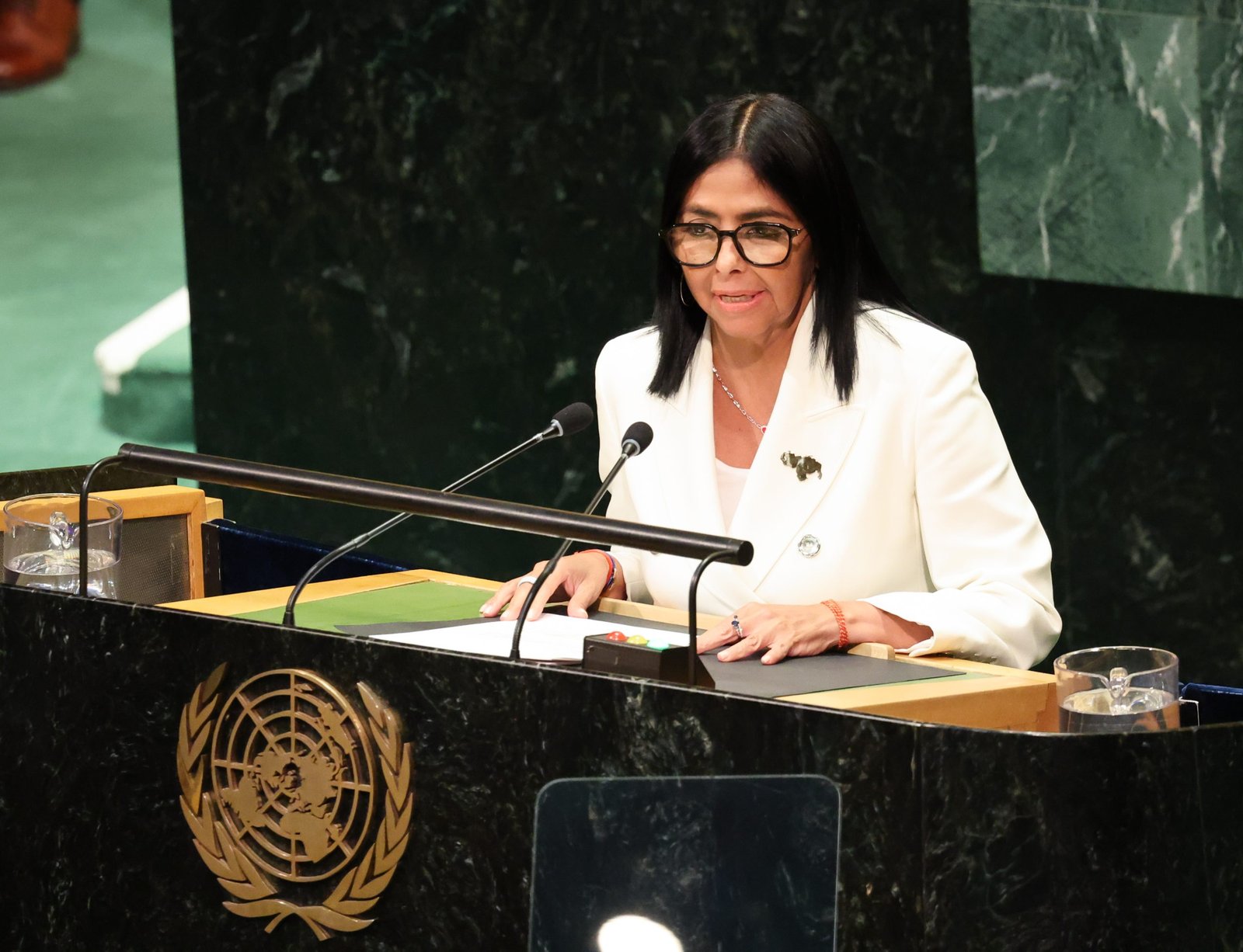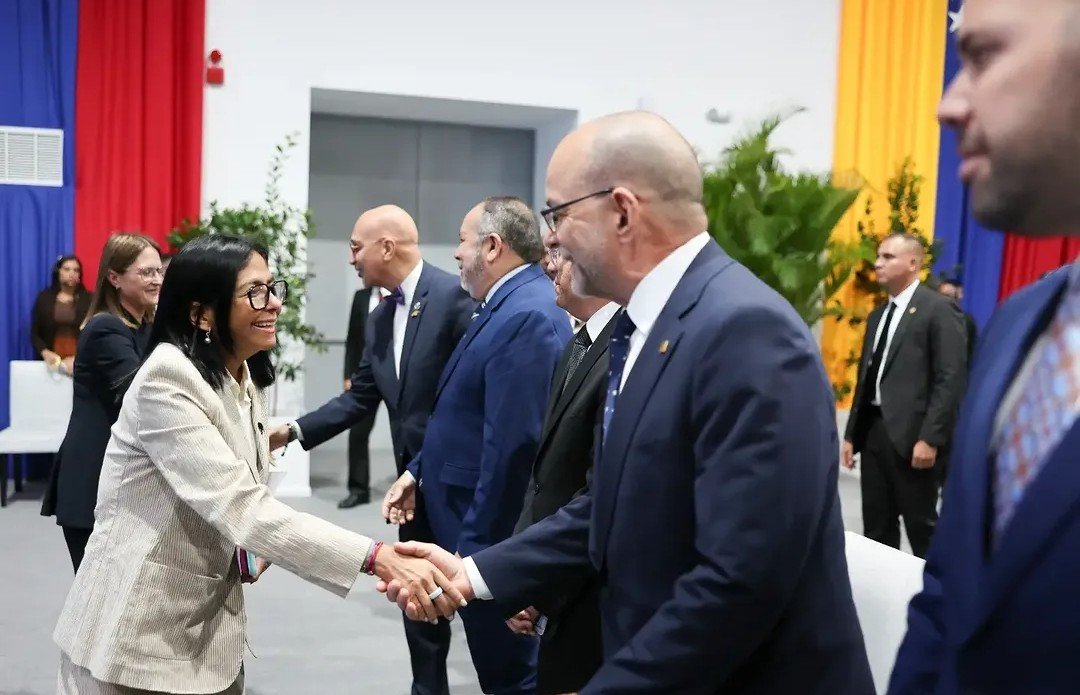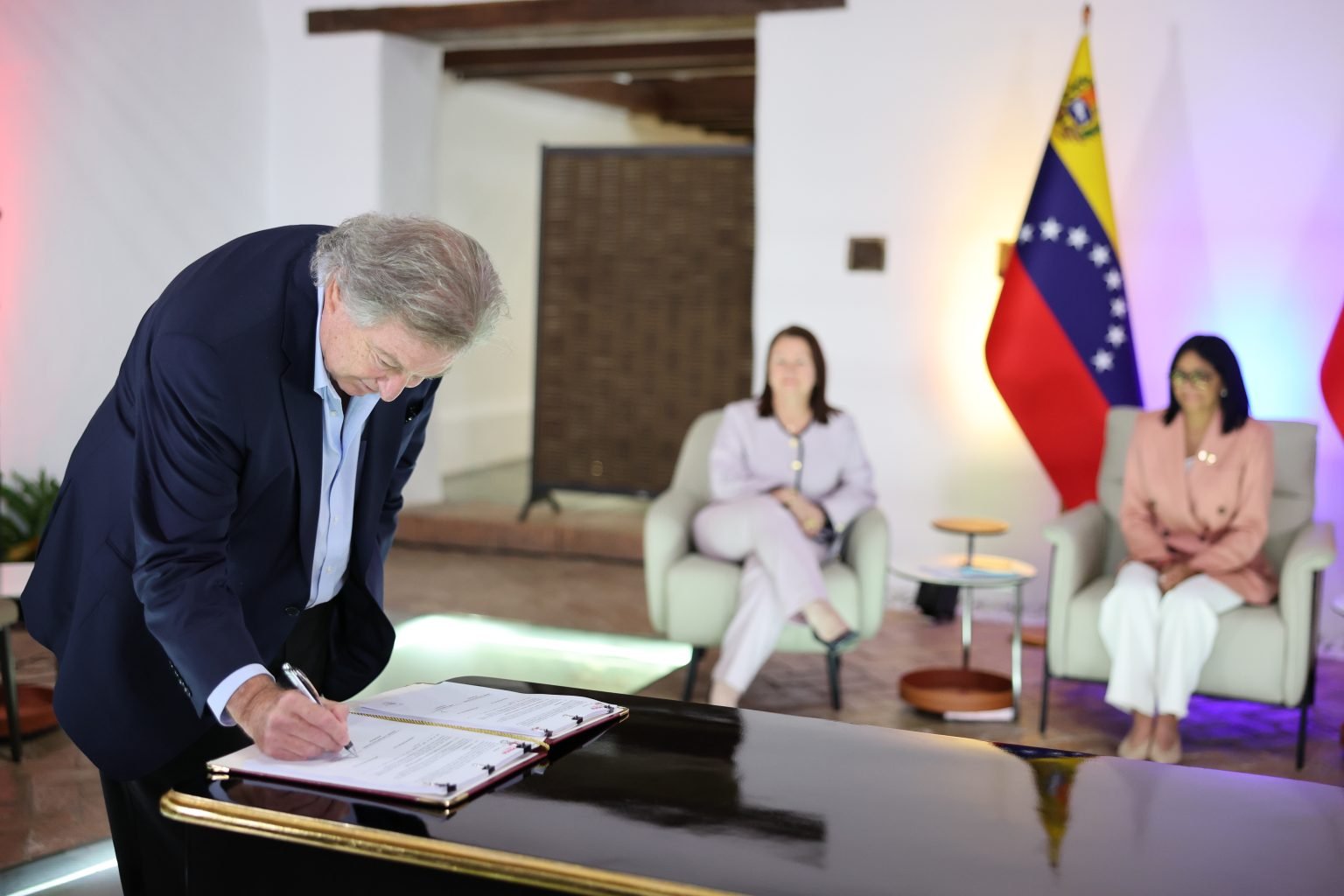
Jaime Gilinski signs an agreement with the Venezuelan government and PDVSA on September 4, 2026, alongside the Minister of Hydrocarbons, Paula Henao (center), and acting President Delcy Rodríguez (right). Photo: Presidential Press.
Guacamaya, October 20, 2026. While Delcy Rodríguez’s interim government negotiates with Washington over the survival of Chavismo without Maduro, Colombia’s richest family signs 25-year oil contracts, buys Venezuela’s most beloved ice cream factory, and watches—from its tribune at Semana magazine—as Caracas begins to extend a hand toward Israel.
The Gilinskis are not a neutral actor on that board: they are simultaneously mass-consumption producers, bankers, publishers, and now oilmen with a stake in Venezuela’s aperture working out.
A Jewish-Lithuanian Dynasty That Became Colombia’s Largest Holding Company
The Gilinskis arrived in Barranquilla in the 1920s, fleeing Lithuania as part of the Jewish migration to the Colombian Caribbean. Isaac Gilinski Sragowicz was born on February 19, 1934, in that city, where his parents had settled on their route from Israel. The family’s first business was a tannery; later, once established in the Valle del Cauca, the family founded Productos Yupi and Plásticos Rimax, the seeds of what is today a multinational conglomerate.
The decisive financial leap was made by Jaime Gilinski Bacal, born in Barranquilla in 1952, trained in industrial engineering at Georgia Tech and with an MBA from Harvard Business School. In 1991 he acquired the Colombian subsidiary of the failed Bank of Credit and Commerce International (BCCI), and three years later, alongside investors such as George Soros—whose son was his classmate at Harvard—Barclays, and ING, he took 75% of Banco de Colombia for 361 million dollars. That asset would eventually be merged, after a corporate dispute lasting more than a decade, into what is today Bancolombia, owned by the Grupo Empresarial Antioqueño (GEA), the Gilinskis’ historic archrival.
Since then, the family has built its true financial muscle around Banco GNB Sudameris, with which in 2013 it bought HSBC’s operations in Colombia, Peru, Paraguay, and Uruguay for 400 million dollars. The group’s most recent and loudest offensive was the dispute for control of the GEA between 2021 and 2022, which ended in 2023 with what in Colombia is known as “el enroque” (the castling): the Gilinskis kept Grupo Nutresa—the country’s largest food conglomerate, owner of brands such as Zenú, Colcafé, Doria, and El Corral—in exchange for returning to the GEA their stakes in Sura and Argos.
That move shot Jaime Gilinski’s fortune from about 4.4 billion dollars in 2022 to 10.7 billion dollars in 2025, according to Forbes magazine estimates, consolidating him as Colombia’s richest man, ahead of David Vélez, founder of Nubank.
The group, today led by Jaime alongside his son Gabriel Gilinski—president of Nutresa since January 2025—also has a banking presence in the United Kingdom through London’s Metro Bank, controlled by another of Jaime’s daughters, Dorita Gilinski, and maintains family residences spread across London, New York, Miami, Panama, and Colombia.
Political Ties: From the Colombian Embassy in Israel to Colombian Uribismo
The family’s political power is not a side effect of its economic power; it is a deliberate, long-term strategy. Isaac Gilinski Sragowicz, patriarch of the clan, served as Colombia’s ambassador to Israel between 2009 and 2013 and to the United Nations Mission in New York, under the government of Álvaro Uribe Vélez.
That diplomatic precedent was not an isolated event, given that in August 2026, Tania Gilinski Bacal—Jaime Gilinski’s sister, with studies at Wellesley College and a master’s degree in International Relations from Stanford—was designated Colombia’s ambassador to Israel by the new government of Abelardo de la Espriella.
The appointment has, according to reporting by the outlet Pluralidad Z, “a particular symbolic weight because her father, Isaac Gilinski, held exactly the same position between 2010 and 2013.” That appointment is better explained in the context of the relationship between the Gilinskis and the De la Espriella government, which is detailed further below.
The Link to Israel: Origin, Banking, and Now a Bridge to Caracas
The family’s Jewish-Lithuanian origin is not just a biographical detail: it is one of the keys to understanding why the Gilinskis’ new investments in Venezuela coincide, in time, with the process of diplomatic rapprochement between Caracas and Jerusalem. The family maintains institutional ties with Israel that go beyond the diplomatic service of Isaac and Tania. The Gilinskis are part of the Colombian Jewish community, with business and philanthropic connections extending to Israeli and international Jewish institutions and capitals.
The foregoing is not a minor precedent, as it helped position the family as a relevant interlocutor in relations between Israel and Colombia. Its role has been linked both to promoting trade and Israeli investment in the Colombian market and to consolidating spaces for dialogue with potential political influence. This dimension transcends the bilateral sphere and acquires regional relevance in a context that has been particularly favorable for Israel in Latin America and the Caribbean, marked by the rise to power of several ideologically aligned governments close to Prime Minister Benjamin Netanyahu.
That background becomes relevant because, in parallel with the arrival of Grupo Gilinski in the Venezuelan oil business, Caracas and Tel Aviv reactivated their consular coordination in August 2026, seventeen years after Hugo Chávez broke relations with Israel on January 15, 2009, in solidarity with the Palestinian cause.
The immediate trigger was humanitarian: an Israeli technical delegation traveled to Venezuela to assist in damage assessment after the June 2026 earthquakes, and on August 10, the chief rabbi of the Israelite Association of Venezuela, Isaac Cohen, delivered to Foreign Minister Félix Plasencia a letter addressed to interim President Delcy Rodríguez, requesting the full restoration of diplomatic and consular relations.
The shift is not without geopolitical reading. Delcy Rodríguez announced the restoration of consular relations between Venezuela and Israel, breaking with Hugo Chávez’s anti-Israeli policy, in a decision that the outlet directly links to the influence Washington exerts over the interim government after Maduro’s fall.
In that scenario, a Colombian family of Jewish roots, with its own ambassadors to the State of Israel in its history and with oil and mass-consumption investments recently landed in Venezuela, occupies an unusual position: it is a private actor with simultaneous interests in seeing normalization advance.
In Colombia, the Gilinskis’ relationship with political power has oscillated according to circumstances, as they were close to the Uribe government, maintained a functional relationship with Gustavo Petro’s during the Nutresa dispute, and since 2025 have become one of the main financial and media engines of the candidacy and, later, of the government of Abelardo de la Espriella, elected president of Colombia in June 2026 and inaugurated on August 7 of that year.
From Campaign Financing to the State: The Gilinskis and the Government of Abelardo de la Espriella
The relationship between the Gilinskis and Colombian political power took a qualitative leap with the arrival of Abelardo de la Espriella—a 48-year-old criminal lawyer, self-styled “El Tigre,” holding Colombian, U.S., and Italian nationality—to the Presidency of Colombia. De la Espriella, founder of the Defensores de la Patria movement in 2024, won the first round on May 31, 2026, with 43.74% of the votes and prevailed in the June 21 runoff against leftist senator Iván Cepeda by a minimal margin (49.66% to 48.70%), the tightest victory in Colombian presidential history. He took office on August 7, 2026, with José Manuel Restrepo as vice president.
The Gilinski network’s support for that candidacy did not begin with De la Espriella, but with the pre-candidacy of Vicky Dávila, the former director of Semana herself. According to a reconstruction by the independent outlet La Silla Vacía, Dávila’s signature-collection campaign cost 2.1 billion pesos, of which 700 million were contributed directly through Semana magazine, owned by Gabriel Gilinski, in what the outlet itself described as a maneuver that “financially inserts the medium into electoral politics.”
When Dávila advanced to the Gran Consulta por Colombia—the center-right primary, which senator Paloma Valencia ultimately won—she again spent another 2 billion pesos, this time financed through a loan from Banco GNB Sudameris, Grupo Gilinski’s flagship entity.
After the shipwreck of Dávila’s candidacy in that primary, both she and her former campaign manager, Sandra Suárez—general manager of Semana during the years of Gilinski’s purchase of the medium—aligned with Abelardo de la Espriella. The Gilinskis’ financial backing did not stop there, as in the presidential runoff, Banco GNB Sudameris granted a credit of 17.5 billion pesos to De la Espriella’s campaign, reported to the National Electoral Council (CNE), according to documentation by the portal Pluralidad Z based on official records.
In parallel with the financial backing, Semana exercised editorial support that generated questioning within Colombia’s own journalistic guild. La Silla Vacía reported that, between the first and second rounds, the magazine reproduced in full 133 campaign propaganda videos for De la Espriella—more than six per day—several of them with voting instructions or ballot included, without at any point warning that it was campaign material.
An opinion analysis published by the portal 45 Segundos went further and described the relationship as “the Semana Pact,” describing the medium as a platform that “has ceased to be a medium of record to become De la Espriella’s debate headquarters.” It is worth clarifying that this expression—”Semana Pact”—is the interpretation of an opinion outlet, not a judicial finding nor a confirmation by the parties; the verifiable data contrasted with official records are the bank credit reported to the CNE and the count of audiovisual pieces documented by La Silla Vacía.
The alliance translated, after the presidential inauguration, into concrete appointments within the new government. Sandra Suárez was designated director of the Administrative Department for Social Prosperity (DPS) through Decree 1147 of August 10, 2026, an entity that administers a good part of the Colombian State’s subsidies and social programs.
Meanwhile, sources cited by La Silla Vacía place Gabriel Gilinski within the “power circle” of the major businessmen accompanying the start of the new government.
Tania Gilinski Bacal, as mentioned earlier, was appointed Colombia’s ambassador to Israel, a designation that also fits with De la Espriella’s diplomatic agenda, which has prioritized the restoration and strengthening of relations with Israel, including the opening of a Colombian embassy in Jerusalem. Just three days after the inauguration, Colombia also became the second country in the world to recognize Israeli sovereignty over the Golan Heights, an occupied territory considered part of Syria by the UN Security Council and the vast majority of the international community.
The link also has a philanthropic dimension that reinforces the personal closeness between the businessman and the president. After the 7.4-magnitude earthquake that struck western Colombia on August 10, 2026—with its epicenter in San José del Palmar, Chocó, and more than 289 deaths in an initial toll—De la Espriella announced on his X account that he had spoken by phone with Jaime Gilinski and his wife, Raquel Kardonski, who communicated their decision to donate 150 billion pesos for the reconstruction of hospitals and schools in Cali, a city especially affected by the quake. The donation was formalized through a letter from the Gilinskis addressed to the president and the first lady, Ana Lucía Pineda, and widely covered by Semana.
Taken together, these elements—campaign financing reported to the CNE, favorable editorial coverage documented by an independent outlet, appointments of people from the group’s inner circle, and a high-profile philanthropic donation coordinated directly with the president—sketch a relationship of structural proximity between Grupo Gilinski and the government of Abelardo de la Espriella. That proximity is, in itself, a matter of public interest regardless of whether there exists—nor is it suggested here that there exists—any legal irregularity in the operations described, all of them reported to the electoral authorities or publicly announced by the parties themselves.
“The Weekly“
No Gilinski asset has generated as much journalistic controversy as Semana magazine, progressively bought by Gabriel Gilinski from 2019 until he gained total control of Publicaciones Semana in November 2020. The operation provoked the departure of historic figures from the weekly—María Jimena Duzán, Antonio Caballero, Rodrigo Pardo, Ricardo Calderón, Alejandro Santos, and cartoonist Vladdo, among others—and an editorial shift to the right that dismissed columnist Daniel Coronell described, as reported by the Spanish newspaper elDiario.es, as the attempt to turn Semana into a sort of “Fox News, Colombian-style”: pugnacious and conservative.
Under the direction of Vicky Dávila, who headed Semana between November 2020 and November 2024, the medium’s editorial line toward Venezuela was consistently critical of Chavismo. Dávila has described Nicolás Maduro in interviews as a “drug trafficker” and “a disgrace for Venezuela,” and has asserted that as a eventual president she would never allow herself to be seen shaking his hand. When Maduro himself mentioned her as his “candidate” in Colombia, Dávila responded with sarcasm on social media. That history of rhetorical confrontation marked the relationship between Semana and Chavismo for years, and contrasts notably with the medium’s recent coverage of Delcy Rodríguez’s interim government.
The political-institutional turning point was Maduro’s capture by U.S. military forces on January 3, 2026, an episode described by the White House itself as an operation against drug trafficking and by Chavismo as a kidnapping and a violation of Venezuelan sovereignty. Two days later, the Supreme Court designated then-Executive Vice President Delcy Rodríguez as acting president, initiating a transition government that has combined gestures of economic opening toward Washington with rhetorical defense of Maduro as “legitimate president.”
It is in the coverage of that interim government that Semana’s tone has become notably more informative and less confrontational than in Dávila’s stage. The medium has reproduced without major editorial questioning Delcy Rodríguez’s interviews with Time and NBC News, has covered in detail her diplomatic tour, and has given ample space, in a tone close to an institutional communiqué, to the signing of the oil agreement between Grupo Gilinski and PDVSA on September 4, 2026.
Semana’s note on that agreement describes GeoPark’s arrival in the Venezuelan oil business as “a sign of confidence and a great opportunity for both countries and Colombian businessmen,” and reproduces without critical counterweight Rodríguez’s invitation for more Colombian businessmen to invest in Venezuela.
The Ties in the United States: From Miami to Wall Street
The Gilinskis’ U.S. footprint is, above all, banking. The family owned Miami’s Eagle National Bank, an entity where Gabriel Gilinski began working in 2008, in the midst of the financial crisis, and which the family eventually sold to the Spanish bank Sabadell—of which Jaime Gilinski is also a relevant shareholder—for about 56 million dollars in the Miami operation, after having acquired 5% of Sabadell’s shares for 373 million dollars. That operation left Sabadell with 31 branches and a business volume of about 8 billion dollars in South Florida.
Miami also functions as one of the family’s bases, as the Dori Gilinski Gallery, founded by Dorita Gilinski, is headquartered there, and Jaime Gilinski maintains one of his several residences in the city, alongside those in New York, London, and Panama. No direct and named relationship between the Gilinskis and figures of the Trump administration or the State Department has been documented in the sources consulted for this article; what is established is their status as private investors with capital, banks, and assets located in U.S. territory, which places them within the financial ecosystem that Washington closely monitors in any operation linked to Venezuela, given the sanctions regime and U.S. Treasury oversight of transactions with PDVSA.
The New Investments: Nutresa, Tío Rico, and the “Re-entry” into Venezuela
Grupo Gilinski’s commercial return to Venezuela has been built in successive waves through Grupo Nutresa. Between July 2025 and July 2026 the company completed four acquisitions in Colombia, Ecuador, and Venezuela, beginning with control of Alimentos Yupi in Ecuador (June 2025), that of Inversionista Alcora and its subsidiaries—among them Productos Yupi in Colombia—(October 2025), the purchase of Mimo’s (May 2026), and that of Universal Sweet Industries (“La Universal,” in Ecuador, June 2026).
The most symbolic piece of that strategy came on July 21, 2026, when Nutresa announced the purchase of 100% of Industrias Tío Rico, the ice cream brand with more than 55% market share in Venezuela and “more than seven decades of history,” as described by the financial portal Valora Analitik. The operation—valued at more than 30 million dollars—included the brand, a production plant in Guacara, Carabobo state, an industrial complex of 210,000 square meters, and five distribution centers with national coverage. Tío Rico had passed through the hands of the Cisneros family, then through Unilever since 1994, and in 2025 had been sold to Mack de Venezuela, an automotive-sector company, before ending up in Nutresa’s portfolio.
Nutresa’s chief financial officer, Andrés Bernal, explained that the company recorded revenues of close to 14 million dollars in Venezuela during 2025 and that, with the integration of Tío Rico, it projects monthly sales of between 8 and 10 million dollars for the fourth quarter of 2026, with a goal of 60 million dollars in revenue by year-end and up to 200 million in 2027. Jaime Gilinski summarized the objective of the operation in a Bloomberg interview with a phrase that the Colombian press widely reproduced: “flood Venezuela as soon as possible with Nutresa products.”
Nutresa historically came to concentrate between 20% and 30% of its sales in Venezuela before the country’s economic crisis reduced that share to a marginal fraction. The company also has plants near the Colombian-Venezuelan border that would facilitate supply, and has told investors that Venezuela could recover GDP per capita levels comparable to those of 15 or 20 years ago within three to five years, an optimistic projection that should be contrasted with the extreme recent volatility of the Venezuelan economy.
The Entry into Oil: GeoPark and the Bare Block
Grupo Gilinski’s boldest move in Venezuela is not food-related, but oil-related. On September 3, 2026, GeoPark—a company with operations in Colombia and Argentina, led by former Ecopetrol president Felipe Bayón, and of which Grupo Gilinski is majority shareholder—confirmed its entry into the Venezuelan oil market through the 25-year development of the Bare block, in the Orinoco Oil Belt.
The agreement was signed the following day, September 4, 2026, in Caracas, between Jaime Gilinski and acting President Delcy Rodríguez.
The financial structure of the operation is complex, as the vehicle controlling the contract with PDVSA belongs 95% to Grupo Gilinski and 5% to GeoPark, but the oil company plans to acquire the entirety of that stake through the issuance of 42.1 million shares at 12.22 dollars each, with a value of 514 million dollars. This would leave Grupo Gilinski with between 56% and 58% of the company’s common capital, according to different journalistic estimates that vary slightly from one another and are reported here with that caveat.
The development of the block will be carried out under the new Productive Participation Contract (CPP) scheme enabled by Venezuela’s recent Organic Hydrocarbons Law, under which GeoPark will operate the field and finance 100% of capital investments, in exchange for a net economic participation reported by Semana at 65%.
Asked by Guacamaya about the factors that tipped the decision to enter Venezuela now, GeoPark described the country as “a naturally attractive geography for this sector,” with the world’s largest proven crude reserves, a good part of them in an Orinoco Oil Belt that “today produces barely a fraction of its potential.” The company stated that the decision “was the result of a rigorous technical, operational, regulatory, and legal analysis,” which included multiple field visits and close work with PDVSA’s technical teams, and that, after reviewing a broad portfolio of opportunities, Bare became its priority for three reasons.
The first is the asset: we are talking about a field in production, with installed infrastructure and great reactivation potential, whose production history began in 1982 and reached peaks of 120,000 barrels per day.
The second is its alignment with the company’s growth strategy, as it would allow it to significantly increase its production and reserves in the long term, alongside its operations in Colombia and Argentina; GeoPark maintained, in its response to Guacamaya, that it has a team with experience in heavy crudes, well intervention and reactivation, and reservoir management, and that part of its management team “knows the Orinoco Belt in depth.”
The third is the contractual framework: according to the company, the Productive Participation Contract gives it “operational control and a 65% net participation for 25 years, a horizon consistent with long-term development,” all structured “in compliance with the OFAC framework.”
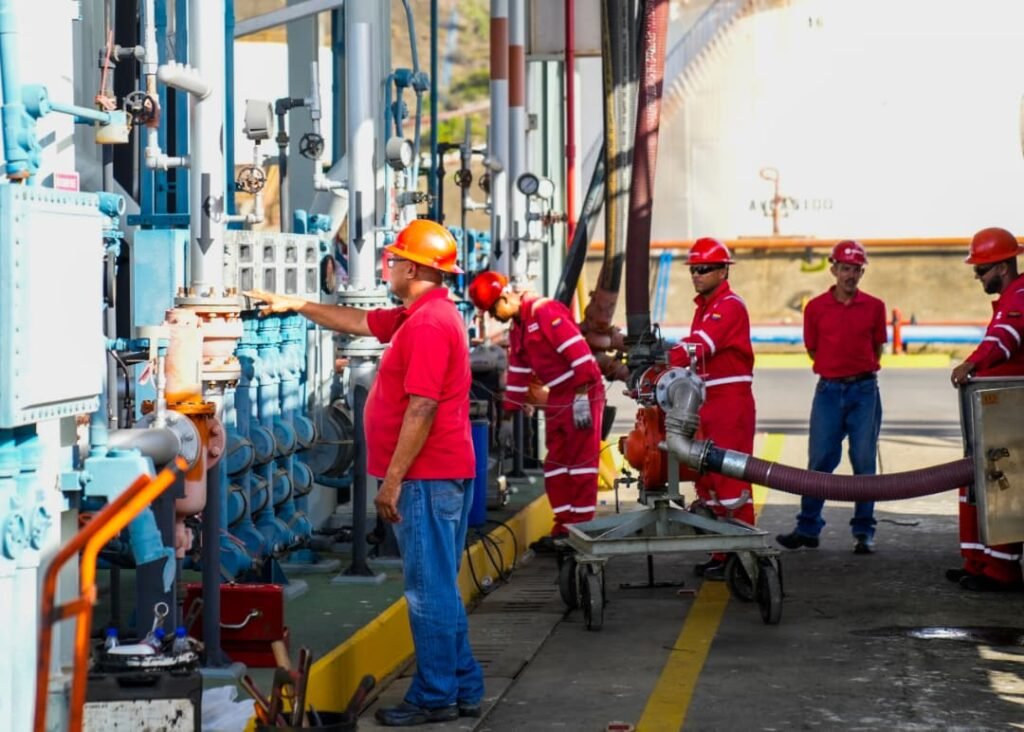
Bare is a heavy crude deposit with about 15.7 billion barrels of original oil in place, of which more than 700 million barrels have already been extracted throughout its history; today it produces barely about 11,000 barrels per day spread across 1,100 wells, far below the more than 100,000 barrels per day it once reached in the past. GeoPark’s plan aims to raise the recovery factor from a range of 4%-5% to one of 8%-9%, with a maximum potential of between 85,000 and 95,000 barrels per day, and an estimated cumulative net production of about 400 million barrels for the company.
In its response to Guacamaya’s inquiries about the block’s development expectations, GeoPark detailed a phased roadmap to first reach about 20,000 barrels per day in 2027, exceed 30,000 in 2028, and reach between 45,000 and 56,000 gross barrels by the end of this first phase, in 2030. From 2031, with more drilling, the company aspires to approach 90,000 barrels per day, a figure within the maximum range of 85,000 to 95,000 barrels noted above.
Of the nearly 1,100 wells in the field, GeoPark expects to initially reactivate between 400 and 500, and then move toward drilling new wells, including horizontal wells; later it would incorporate technologies such as steam injection in the reservoir. Between investments and operating expenses, the company estimates a total close to 6.8 billion dollars over the life of the contract, an investment that, as it explained to Guacamaya, “begins this year and will grow as production increases.”
Regarding employment, the company noted that at Bare there is a PDVSA team “with a lot of knowledge of the field” and that in Venezuela there is “very valuable oil talent”; as activity grows, it said, so will the need for personnel, services, and suppliers, and the goal is for the benefits to reach the communities in the operating areas, “as we do in Colombia and Argentina.” As the main operational challenge of the early years, GeoPark identified the reactivation of the field, especially recovering wells, getting infrastructure ready, and increasing production “safely and sustainably.” It is, it added, a process that “will take months” and requires “discipline, technical knowledge, and joint work with PDVSA.”
During the signing ceremony, Jaime Gilinski delivered a phrase that condenses the tone with which the group has sought to present its Venezuelan bet: “This agreement is not simply a commercial transaction, it is a declaration of shared faith in the future of Venezuela, in its people, and in the immense potential of its natural resources.” Delcy Rodríguez, for her part, described the arrival of Colombian capital as a gesture that “strengthens cooperation between both countries” and took advantage of the event to invite more Colombian businessmen to invest in Venezuela, on the same day that Chevron announced a 7 billion dollar investment for the next five years in the Carabobo 1 and Carabobo 2-South-A fields.
Asked by Guacamaya about the scenario created by the agreement announced by the Donald Trump administration with Venezuela, GeoPark did not refer directly to that agreement. It responded, instead, that its entry into Bare occurs through a Productive Participation Contract “signed directly with PDVSA,” which reflects the new legal framework approved by the National Assembly, and that the entire process has been done “in compliance with OFAC regulations.”
The company stated that “today there are conditions to reactivate the Venezuelan oil sector” and that there is interest in bringing capital, technology, and operational experience, something it said it has seen in “many companies in the region, not only in the energy sector,” seeking to participate in the country’s economic reactivation. It added that at PDVSA it has found technical and commercial teams “with the will to increase production, apply technology, and attract more investment.”
Regarding a possible expansion of its presence beyond Bare, GeoPark indicated that its attention “is on Bare”: it has ahead a transition period and a long-term development plan, and its priority is to execute it well, reactivating the field safely, complying with commitments to PDVSA, and demonstrating results. Any new opportunity would be evaluated, according to the company, with the same criteria that led it to Bare: the quality of the asset, “a contractual framework that gives stability and protection to investment,” full regulatory compliance, and logistical and commercial viability, among others. “Capital discipline will continue to be the rule for any future decision,” it stated.
Regarding the strategic importance of Venezuela within its business structure, GeoPark responded to Guacamaya that the country will be “a complementary and highly relevant piece” in its portfolio.
Colombia, it explained, is its production base and it has operated there since 2012; a good part of that history is explained by Llanos 34—one of the country’s most productive blocks in the last decade, which the company discovered, developed, and continues to operate—and, alongside other blocks such as Llanos 123 and CPO-5, the country is its most significant operation, with production of 25,871 barrels of oil equivalent per day in the second quarter of 2026. In Argentina, Vaca Muerta is its growth platform in unconventional resources, and Venezuela adds, it said, “a long-term heavy crude redevelopment opportunity, in one of the largest hydrocarbon basins in the world.”
By its scale, the company maintained, Bare “will be transformational”: together with the growth of the rest of the portfolio, it would allow it to go from the nearly 28,000 barrels per day it produces today to between 75,000 and 85,000 in 2030, “almost three times our current production.” “The scale changes and the strategy remains,” added GeoPark: to remain “a Latin American operator, focused on technical excellence and on investing where we can create value,” with three assets that, according to the company, complement each other and make GeoPark a more diversified and resilient company.
The Latin American Right’s Ecosystem and Washington’s New Interlocutor
The Gilinskis’ landing in Venezuela does not occur in a vacuum, as it is part of a broader movement of Colombian capital and, in a looser sense, of a business sector aligned with center-right and regional right positions that had kept its distance from Chavismo for almost two decades and that now sees in Delcy Rodríguez’s interim government a viable interlocutor, largely because it has the tacit backing—or at least the active tolerance—of Washington.
Nutresa’s and GeoPark’s investments place Grupo Gilinski among the main private actors betting on Venezuela’s economic reopening.
Its presence combines interests in energy and mass consumption with political, media, and diplomatic connections in Colombia and Israel. The evolution of these businesses will depend on productive recovery, legal and regulatory stability, and the geopolitical conditions that determine the access of new capital to the country.