María Antonieta Figuera is an internationalist and specialist in International Oil Trade and Energy Geopolitics.
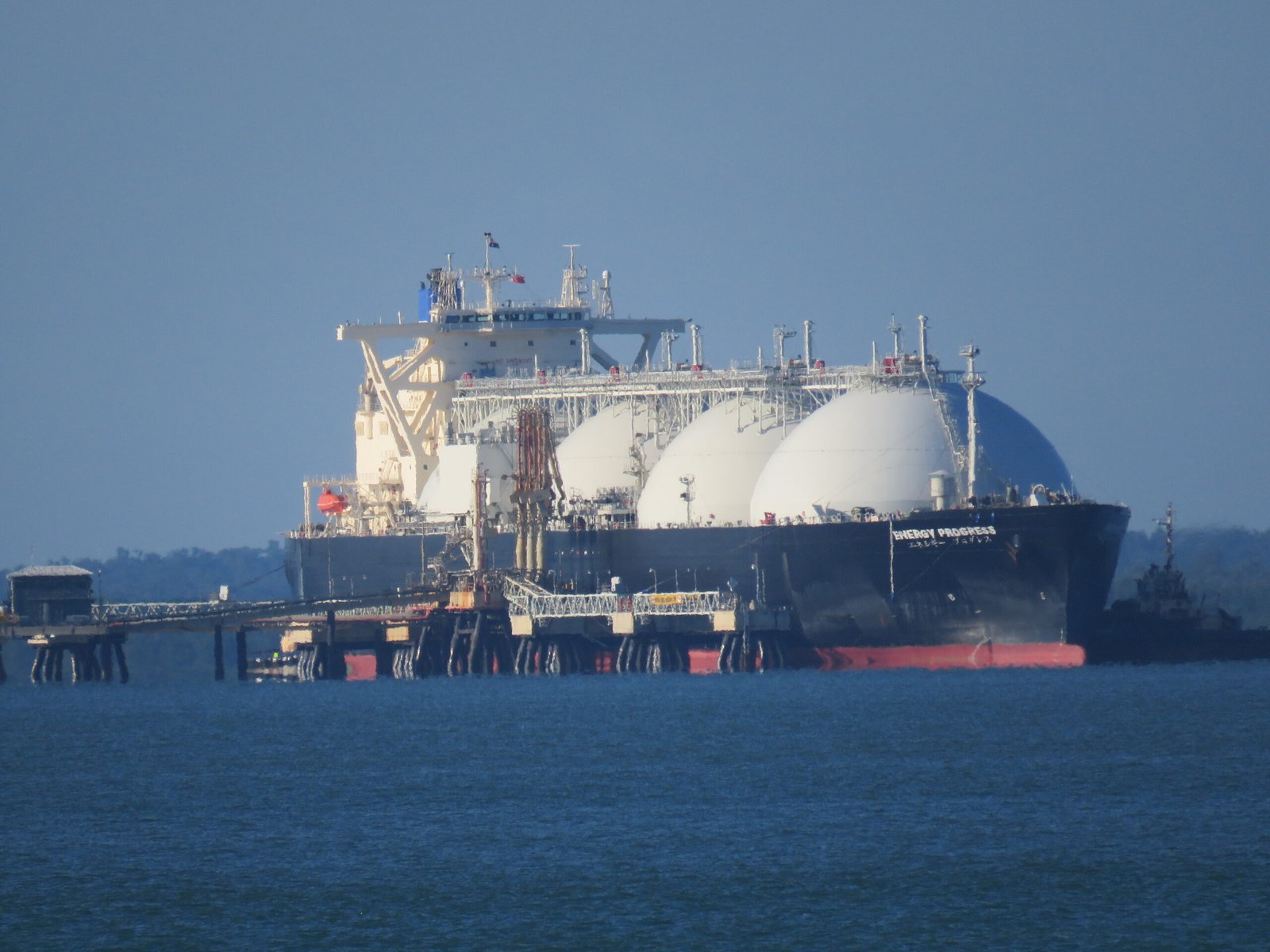
Guacamaya, October 26, 2026. The maritime trade of liquefied natural gas (LNG) has ceased to be a simple flexible complement to pipeline networks; it has become the central pillar of global energy security. Geopolitical crises at critical supply points—ranging from interruptions and blockades in the Strait of Hormuz to infrastructure vulnerabilities at Ras Laffan, Qatar—together with Europe’s structural disconnection from Russian pipeline gas, have shattered the industry’s historic business model.
The traditional model of large state-backed investments, rigid point-to-point infrastructure, and 20-year contracts tied to destination-restriction clauses (destination clauses) is no longer valid. Today’s market rewards a single paramount variable: logistical agility to redirect the gas molecule in real time to wherever spot prices rise. In this new structure, the leading independent commodity trading firms (commodity traders) are not only earning real-time arbitrage margins but are also obtaining large valuations of their physical assets amid severe liquefaction and transportation constraints.
The flexible revolution: the U.S. model
This structural transformation is best illustrated by the evolution of U.S. natural gas production and exports. Following the outbreak of the war in Ukraine in 2022 and the subsequent rise in transit risks in the Middle East, the U.S. export framework—based on Henry Hub indexation and contracts without destination restrictions—became the foundation of global supply flexibility.
The trajectory of the U.S. gas market demonstrates how commercial flexibility replaced the traditional advantage of low wellhead costs:
2010–2015 (Early Shale Revolution): U.S. dry natural gas production rose from approximately 60 billion cubic feet per day to approximately 74 billion cubic feet per day through hydraulic fracturing and horizontal drilling. During this time, the U.S. remained a net importer with no LNG export capacity from the lower 48 states.
February 2016 (First cargo export): Cheniere Energy shipped the first LNG cargo from Sabine Pass, Louisiana. U.S. LNG exports averaged only 0.5 billion cubic feet per day in 2016, marking the beginning of the U.S. export era.
2017–2021 (Infrastructure expansion): Major liquefaction facilities (Cove Point, Corpus Christi, Cameron, Elba Island, Freeport) came online. By the end of 2021, natural gas production exceeded 95 billion cubic feet per day, and LNG exports reached approximately 9.8 billion cubic feet per day.
February 2022 (Ukraine war and Europe’s turning point): The disruption of Russian pipeline flows triggered an unprecedented European energy crisis. Dutch TTF prices reached historic highs. The U.S. redirected more than 70% of its LNG shipments to Europe, acting as the main emergency supplier.
2023 (Global export supremacy): With an average of 11.9 billion cubic feet per day, the United States surpassed Qatar and Australia to become the world’s leading LNG exporter. Domestic gas production exceeded 102 billion cubic feet per day, driven largely by associated gas from the Permian Basin.
2024–2026 (Strait of Hormuz disruptions and supply records): Rising tensions in the Red Sea and the Strait of Hormuz restricted Persian Gulf transit routes. New projects such as Plaquemines and Golden Pass began operations. U.S. LNG exports reached record levels of 14.6 to 15.0 billion cubic feet per day, raising total production to between 107 and 110 billion cubic feet per day.
Compared with Qatari or Algerian supply, the U.S. export model won buyers’ preference worldwide. Contractual freedom to redirect cargoes without penalty transformed Gulf of Mexico gas into the ultimate strategic asset for commodity trading firms. The definitive proof of this paradigm shift came when Persian Gulf producers themselves sought U.S. supply contracts as a physical hedge strategy against potential maritime transit chokepoints.
The rise of asset-heavy traders: vertical integration into physical assets
This market dynamic catalyzed a fundamental evolution among the leading independent trading firms. Entities such as Vitol, Trafigura, Glencore, Gunvor, and Mercuria permanently abandoned their traditional asset-light intermediation models, investing record balance sheets directly in ownership of physical infrastructure. Traders no longer function as mere financial intermediaries; they have emerged as the leading architects and financiers of global gas trade infrastructure.
Four key strategic pillars define this vertical integration:
Upstream reserves and direct participation in resources: To secure firm gas supply, traders are acquiring direct stakes in upstream fields. Gunvor’s acquisition of stakes in the Haynesville shale basin (U.S.) is an example of this trend, securing physical gas supply directly at the wellhead.
Capital investments in liquefaction plants (FLNG): Beyond simple service agreements, trading firms are investing capital directly in liquefaction assets. Vitol acquired a key equity stake in the Delfin FLNG floating project off the coast of Louisiana, while Glencore and Mercuria acted as anchor buyers, enabling the final investment decision (FID) for new developments such as Commonwealth LNG.
Control of shipping and owned fleets: Occasional chartering is no longer sufficient during supply crises. Trafigura established Volare Shipping with a fleet of owned tankers, while trading desks collectively control a significant share of long-term charter contracts for modern Q-Flex and LNGC fleets.
End-user capture (downstream regasification): By leasing floating storage and regasification units (FSRUs) in Europe, Latin America, and Asia, trading firms inject regasified LNG directly into national grids during demand peaks, capturing the margin across the entire value chain.
Venezuela at the LNG crossroads: cross-border realities and legal frameworks
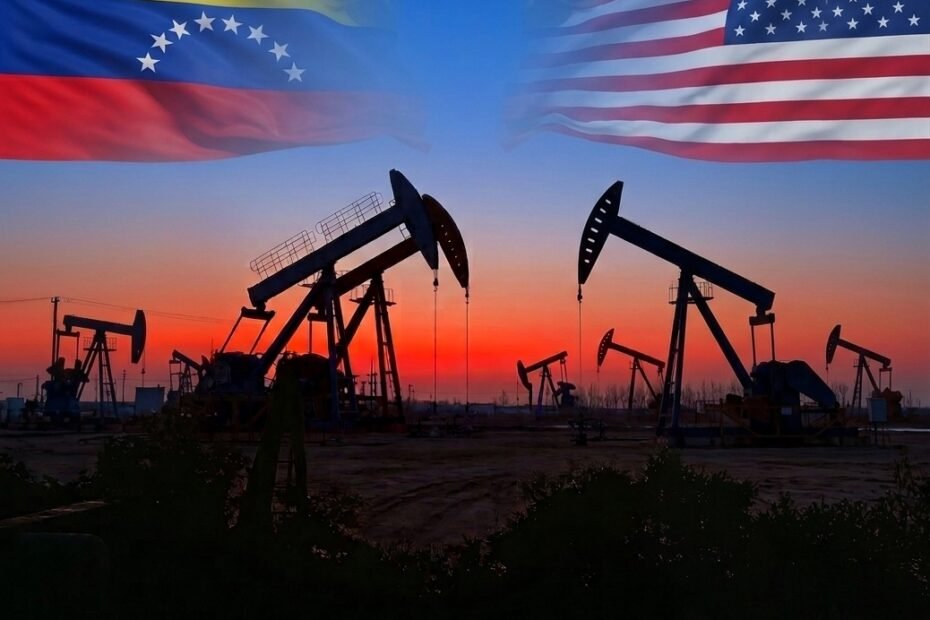
In this constantly shifting geopolitical landscape, Venezuela presents an extraordinary paradox. With more than 195 to 200 trillion cubic feet (Tcf) of proven natural gas reserves—the eighth largest in the world and the largest in Latin America—its presence in global LNG trade remains nil.
The vast majority of its domestic production remains associated with gas obtained alongside crude oil extraction, generating enormous losses due to flaring and reinjection into reservoirs as a consequence of the lack of compression and pipeline infrastructure in the eastern basins. While domestic consumption relies on simple cryogenic separation (San Joaquín, Jose) for industrial methane supply and LPG cylinders, the country’s most abundant gas resources remain undeveloped in coastal areas.
Key projects and recent international agreements
Rather than proceeding with the construction of onshore liquefaction plants requiring large capital investment and built from scratch, Venezuela’s current strategy focuses on cross-border integration, leveraging Trinidad and Tobago’s existing infrastructure:
Dragon gas field (4.2 trillion cubic feet) and Shell license: Venezuela granted Shell and Trinidad’s National Gas Company (NGC) a 30-year exploration and production license. The project involves an approximately 17 km subsea pipeline connecting the Venezuelan offshore field to Shell’s Hibiscus platform in Trinidadian waters, sending gas directly to the Atlantic LNG complex for global export.
Cocuina-Manakin cross-border field and BP: Venezuela granted BP and NGC a 20-year license for the joint development of the Cocuina cross-border field (Venezuelan sector), integrating reserves directly into Trinidad and Tobago’s industrial gas network.
Cardón IV (Perla field): Operated by Eni and Repsol in the Gulf of Venezuela, Perla represents the largest non-associated offshore gas field currently in production. While it currently supplies energy for national power generation, its future export potential depends on the deployment of floating LNG vessels (FLNG).
Legal framework clarification: the 1999 Organic Law on Gaseous Hydrocarbons (LOHG)
To understand Venezuela’s regulatory landscape, it is necessary to resolve a common legal misconception regarding recent legislative reforms.
The partial reform of the Hydrocarbons Law designed to legalize Production Participation Contracts (CPP) applies strictly to crude oil and associated gas (gas produced alongside crude oil onshore). This reform grants private operators direct management of sales and the use of foreign bank accounts to mitigate gas flaring.
However, free natural gas offshore that is not associated with any field (such as Dragon, Loran, or Cocuina) is not regulated by the LOH. Instead, it operates under the 1999 Organic Law on Gaseous Hydrocarbons (LOHG), which already provides a highly competitive and flexible legal framework, with 100% private capital ownership, no requirement for a state majority; direct licenses for exploration, production, and export; and a fiscal regime independent of PDVSA’s corporate structure.
Strategic imperatives for international integration
To position itself effectively in the global LNG market, Venezuela must implement key structural reforms:
Operational autonomy: Maintain strict regulatory separation under the LOHG, isolating non-associated gas projects from PDVSA’s operational and administrative bottlenecks.
Contractual security and impartial arbitration: Offer firm 20- to 30-year contractual stability, backed by recognized international arbitration jurisdictions.
Direct purchase partnerships with trading firms: In addition to the major traditional exploration and production companies (Shell, BP), establish direct purchase agreements with independent trading firms (Vitol, Trafigura, Gunvor) to leverage their shipping fleets and accelerate financing for floating LNG projects.
Domestic pricing reform: Adjust domestic gas tariffs to incentivize private capital investment in capturing and processing associated gas currently being flared in the eastern onshore basins.
The global gas market will not wait for operational rigidity or regulatory ambiguity. As commodity traders consolidate ownership across the entire physical value chain, energy geopolitics confirms a fundamental reality: power in the modern gas market belongs not simply to those who own reserves underground, but to those who have the legal agility and logistical control to deliver the frozen molecule to the right port at the moment of peak demand.