U.S. Interior Secretary Doug Burgum in Venezuela. What does it have to do with rare earths?
Doug Burgum’s visit to Caracas might seem, at first glance, a strange move within U.S. diplomacy.
Understand how the Venezuelan economy moves.
Doug Burgum’s visit to Caracas might seem, at first glance, a strange move within U.S. diplomacy.
Venezuela is experiencing a rapid reconfiguration of its energy sector and international economic relations, marked by the easing of sanctions, the return of major oil companies, the review of contracts signed during years of isolation, and new negotiations with Washington and Europe.
Venezuela’s oil industry is undergoing a period of reconfiguration marked by a partial increase in domestic refining, new U.S. licenses that are energizing exports and gas projects, the return of supertankers to its terminals, expectations of foreign investment, India’s presence in light of the agreement with the United States, challenges stemming from past debts, the IMF’s interest, and prospects for economic reactivation in the country’s oil-producing regions.
The United States Government, through the Office of Foreign Assets Control (OFAC), published a new exception to its sanctions on Venezuelan oil and gas on Friday, allowing new investments.
The U.S. government issued three sanctions waivers on Venezuela’s oil and transport infrastructure on Tuesday, in the wake of Energy Secretary Chris Wright’s visit to the South American country.
Two million barrels of Venezuelan oil will be shipped to the Spanish oil company Repsol, according to export schedules released this week. This is the first significant shipment destined for Spain. Meanwhile, Shell says it expects to produce gas from the Dragón field, located in Venezuelan waters, within approximately three years, with processing in Trinidad and Tobago for subsequent export. The American oil company ConocoPhillips, however, has made it clear that it is not considering any return to operations in Venezuela
U.S. refineries and major international buyers, including Indian companies and global trading houses, have resumed purchases of Venezuelan crude following the easing of sanctions and new energy agreements driven by Washington and Caracas. The reopening of oil flows is already beginning to be reflected in refining margins and in Venezuela’s repositioning in the global market.
Venezuela is seeking to move beyond its image as the country with the world’s largest crude oil reserves and position itself as one of the leading global oil producers, amid a political and economic shift that has reshaped its relationship with the United States and revived interest from major international energy players.
According to Reuters, Venezuela’s oil exports rebounded sharply in January following the partial lifting of the oil blockade and the issuance of U.S. licenses, in a context in which Washington is consolidating its control over Venezuela’s energy sector and using crude as a tool to reconfigure key alliances, especially with India, amid the war in Ukraine.
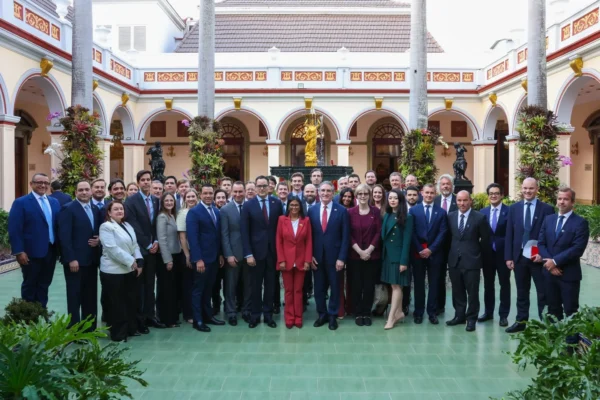
Venezuela’s acting president, Delcy Rodríguez, chaired a high-level meeting on Thursday at the Miraflores Palace with Venezuelan authorities and representatives from Indonesia to consolidate strategic alliances in oil and gas, with the aim of strengthening South-South cooperation and creating a legal environment that attracts international investment.