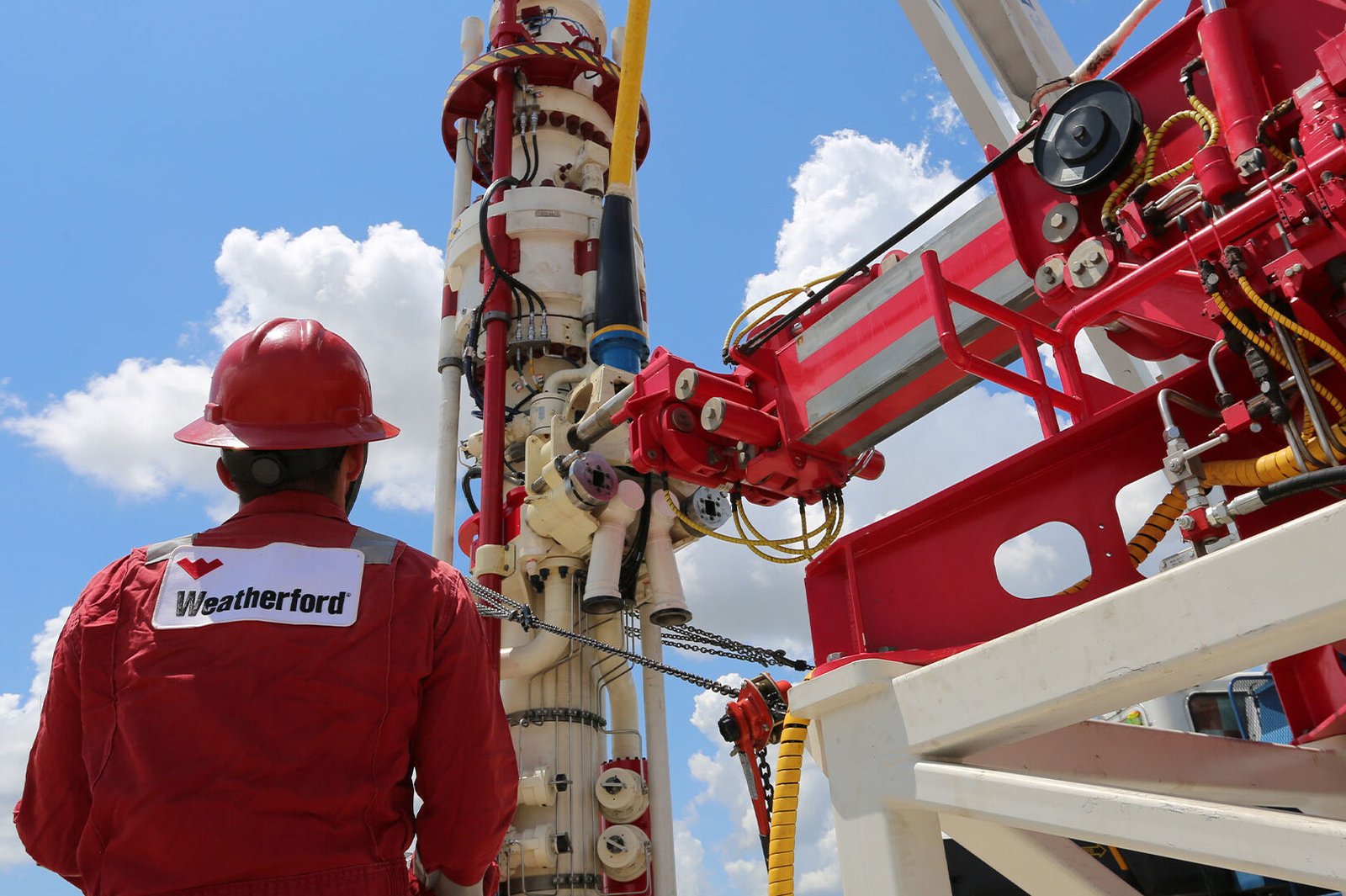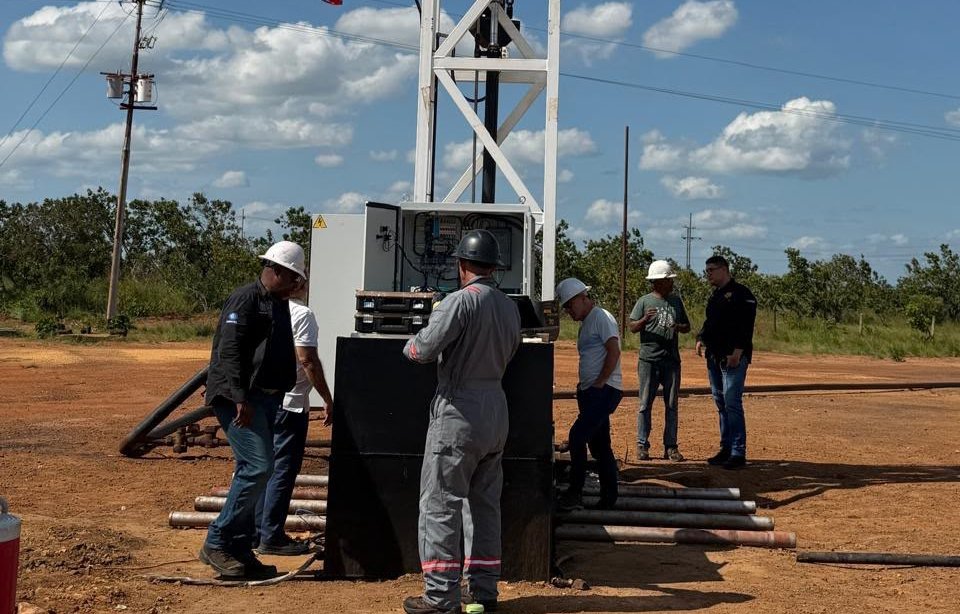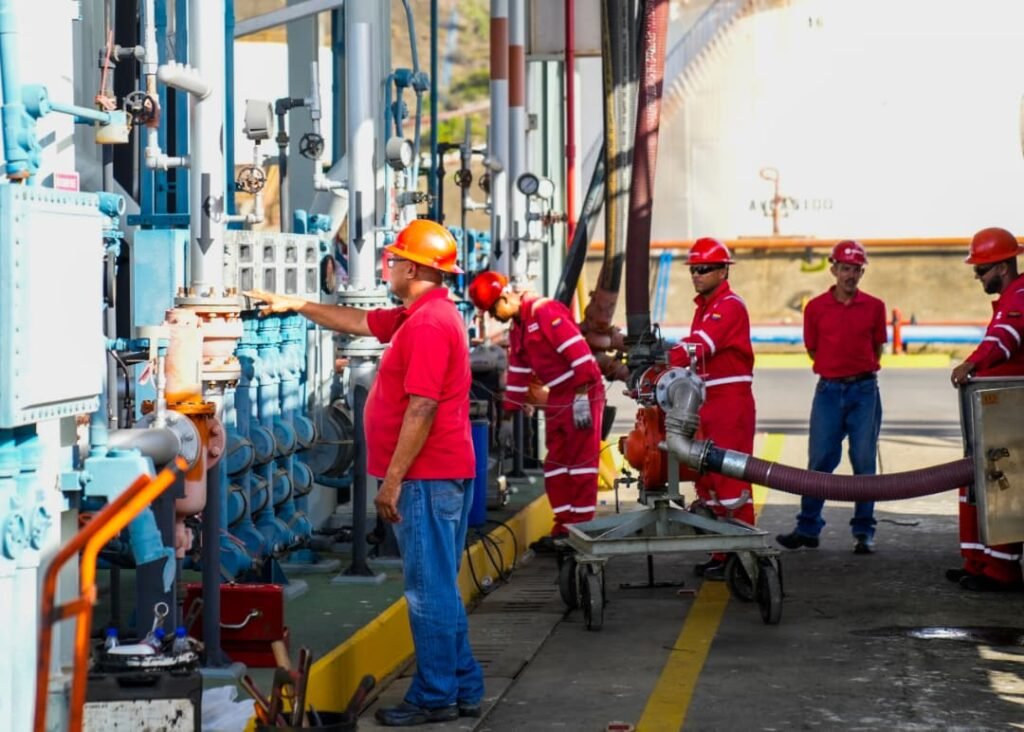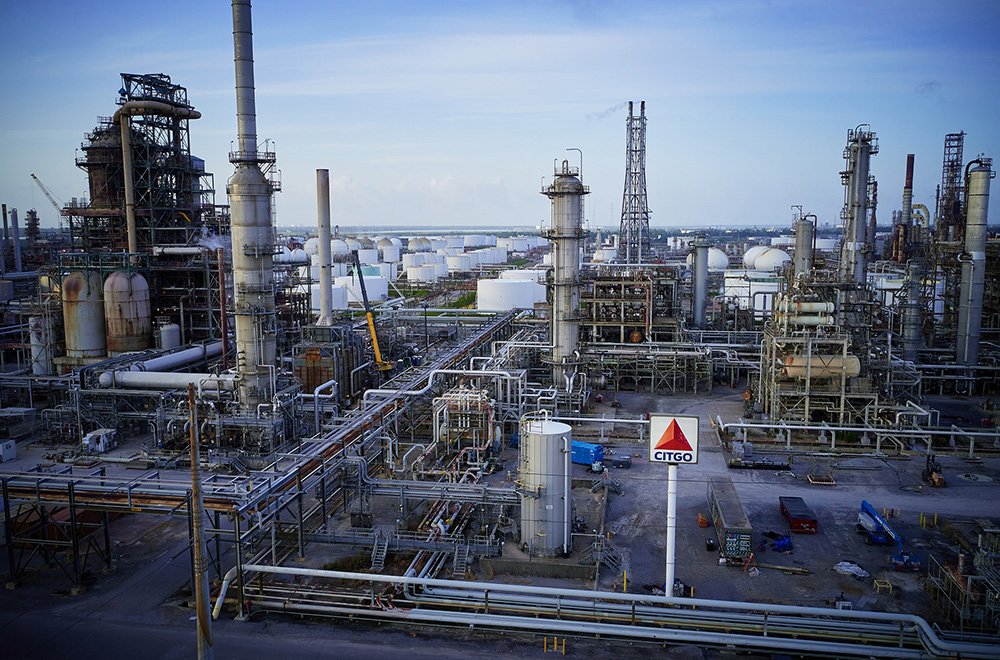
Citgo has the seventh-largest refinery network in the United States by volume of refined oil. Photo: Citgo Petroleum Corporation.
Guacamaya, October 28, 2026. The U.S. refiner CITGO, owned by Venezuela’s PDVSA and the subject since 2019 of a dispute among creditors, governments, and rival boards, is experiencing a week of simultaneous developments.
PDVSA is working to appoint new boards of directors at PDV Holding and CITGO following Washington’s recognition of Delcy Rodríguez’s government.
On another front, the Second Circuit Court of Appeals confirmed the validity of the guarantee for the PDVSA 2020 bonds, which gives bondholders the right to take 50.1% of CITGO Holding.
And CITGO itself is among the first recipients of Venezuelan crude arriving in Texas under the agreement between the U.S. and NABEP. Read together, the three facts sketch a change of era for Venezuela’s most valuable foreign asset.
PDVSA prepares new boards for its U.S. subsidiaries
Officials at state-owned PDVSA are working to appoint new boards of directors for its U.S. subsidiaries, PDV Holding and Citgo Petroleum Corporation. Attorney Katherine Wellington, who represents the Venezuelan energy company, made the notification to a U.S. appeals court on Wednesday, October 21.
The move comes after the U.S. government formally recognized the government of interim President Delcy Rodríguez this year, following the military incursion by U.S. forces in Caracas on January 3, Reuters reports.
That recognition is the key piece. Since 2019, control of CITGO had been in the hands of an ad hoc board designated by the opposition with Washington’s backing. That PDVSA, now a recognized interlocutor, is moving toward appointing its own boards raises a fundamental question: who will legally govern the refiner.
Second Circuit confirms validity of PDVSA 2020 bonds
The Second Circuit Court of Appeals unanimously confirmed the validity of the guarantee to take a majority stake in Citgo Holding, according to its interpretation of Venezuelan law.
In October 2016, amid falling prices and oil production, PDVSA exchanged bonds maturing in 2017 for new bonds maturing in 2020. Unlike the previous ones, the new bonds were guaranteed with 50.1% of Citgo Holding.
In 2019, the ad hoc PDVSA board appointed by Juan Guaidó’s “interim government” chose another path: it stopped paying and sued in New York for the nullity of the bonds, alleging that the issuance did not have authorization from the National Assembly. It lost at every level. The district court ruled against it in 2020 applying New York law; after New York’s highest court determined that Venezuelan law should apply, it lost again in 2025, and now it has lost the appeal.
According to economist Francisco Rodríguez, the decision to file this litigation was based on a very weak legal premise—that PDVSA’s bond issuance required authorization from the National Assembly and that the Assembly denied it. But Venezuelan law and jurisprudence exempt PDVSA from seeking Assembly authorization to take on debt. “One can question that doctrine, but it is the law in force in Venezuela,” he writes. He adds that the National Assembly in 2016 never attempted to annul the operation nor cited Article 150 in its resolution on it, and that courts interpret such claims as those of a debtor trying not to pay a debt.
Rodríguez’s reading goes beyond the bonds. Relying on Venezuelan jurisprudence, the courts determined that a contract of national public interest must be signed by the Executive, or by state companies to fulfill commitments assumed by the Venezuelan government. That premise was not met in the case of the PDVSA 2020 bonds, but it clearly is met in the oil agreement between the U.S. and Venezuela, publicly and prominently announced by the leaders of both countries. Thus, by affirming that the bonds did not require Assembly authorization, the courts also established that Executive agreements can be contracts of national public interest. And one that commits 20% of the country’s oil resources undoubtedly is.
Regarding the legitimacy of Delcy Rodríguez’s government, which some question, the economist maintains that it will not be a problem for U.S. courts, because they only examine whether the government in question is recognized by Washington, and Rodríguez’s clearly is. His conclusion is a political warning. It is one thing to believe that a contract was not of public interest, or that it was approved illegitimately or possibly unconstitutionally, and quite another to get an international court to issue a ruling invalidating it.
These courts tend to require very high thresholds, among other things because they are wary of governments that opportunistically try to use their control over local courts to escape their payment obligations. That is why, he says, democratic forces and civil society should not rely on future judicial activism, but should focus on the present and organize to forcefully denounce how the Republic signs agreements that do not respond to the national interest nor improve the lives of Venezuelans.
First crude from the NABEP agreement arrives in Corpus Christi
According to Reuters, the first cargo of Venezuelan crude under the agreement between the United States and producer NABEP was unloaded in Texas on Tuesday and will be sold by the U.S. government to refineries operated by Exxon Mobil and by Citgo Petroleum, which is Venezuelan-owned, according to a White House official. NABEP confirmed in a statement that it supplied one million barrels of Merey 16 and that the oil, which arrived in Corpus Christi, was sold to the U.S. at the cost of production. President Donald Trump visited the port that day, and one of the vessels transporting the heavy crude served as a backdrop for his speech.
The agreement, announced in late August, gave the U.S. Department of Defense a stake in NABEP’s parent company, along with the right to buy 20% of the oil it produces at the cost of production. NABEP, Venezuela’s largest private oil producer after Chevron, pumps around 200,000 barrels per day and its short-term goal is to exceed one million. The pact caused an uproar in both the U.S. and Venezuela, by giving Washington control over a large part of the country’s oil wealth. There is also an irony worth emphasizing: the Venezuelan-owned refiner is among the first to process Venezuelan crude produced under an agreement that ceded to the U.S. a portion of that wealth.
Historical context: from Cities Service to PDVSA’s crown jewel
CITGO has its roots in Cities Service Company, founded in the early 20th century in the United States. The CITGO brand became popular in the 1960s as the trade name for its service stations. After successive acquisitions, the company ended up in the hands of Southland Corporation, owner of the 7-Eleven stores.
In the mid-1980s, PDVSA launched an internationalization strategy to secure destination markets for its heavy crude.
It first bought 50% of CITGO in 1986, and then the rest in 1990, and integrated the company into its U.S. refinery network, designed to process Venezuelan crude. Today CITGO operates refineries in Lake Charles (Louisiana), Corpus Christi (Texas), and Lemont (Illinois), in addition to terminals, pipelines, and a service station network.
Over time, CITGO went from a commercial asset to a political and financial one. It served as collateral for debt operations, including the 2016 issuance that originated the PDVSA 2020 bonds. In January 2019, Washington sanctioned PDVSA and recognized Juan Guaidó as interim president. Control of CITGO passed to an ad hoc board designated by the opposition, and an OFAC license protected its assets from creditor enforcement. That same year Venezuela defaulted on the 2020 bonds.
Meanwhile, creditors with arbitration awards and judgments against Venezuela, including mining company Crystallex, litigated in a federal court in Delaware to collect with the shares of PDV Holding, CITGO’s parent company. Judge Leonard Stark supervised the process and a court-appointed officer conducted the auction. The winning bid was from Amber Energy, a subsidiary of the Elliott Investment Management fund. In November 2025, the court approved the sale for $5.892 billion, plus a $2.125 billion support agreement with the holders of the PDVSA 2020 bonds. The operation was expected to close in 2026.
The fate of the bonds was decisive in that dispute. In February 2024, New York state’s highest court determined that Venezuelan law should apply. In July 2024, the Second Circuit ruled in favor of the opposition at an earlier stage. But in September 2025, Judge Katherine Polk Failla validated the bonds, which strengthened Amber’s position. The appellate decision that Rodríguez comments on closes, for now, that debate.
What comes next
Several open questions remain. The first is who legally controls the refiner: if PDVSA appoints new boards, what role do the ad hoc board and the 2015 National Assembly that sustained it retain?
The second is whether the sale to Amber Energy will actually materialize, since Washington’s recognition of Rodríguez’s government and OFAC licenses could alter or halt the closing.
The third is what effect the national public interest doctrine will have, since Rodríguez’s reading suggests that the agreement with the U.S. will be very difficult to challenge in court.
And the fourth is how CITGO will integrate into the new supply chain: does receiving Venezuelan crude from the NABEP agreement anticipate a possible return of the flows that motivated its purchase nearly forty years ago?