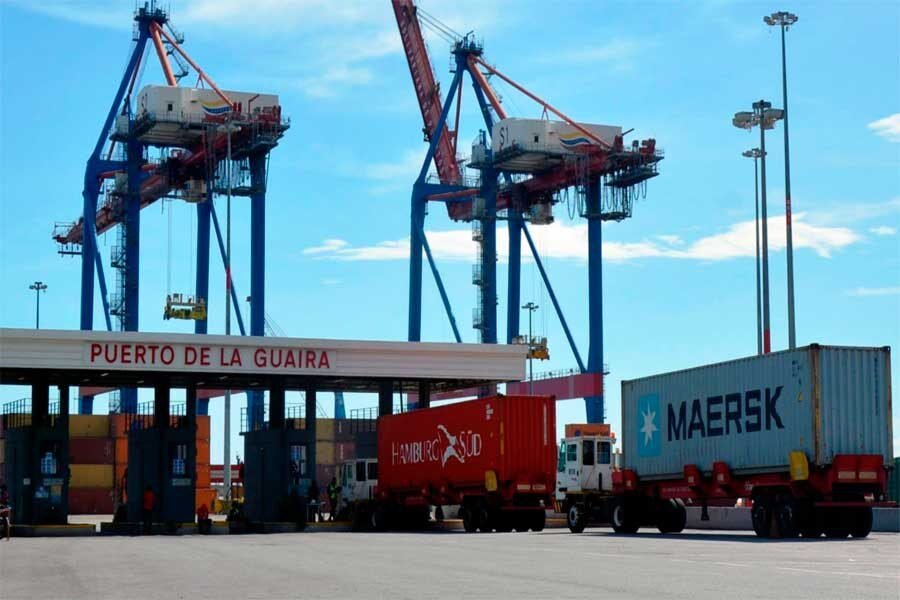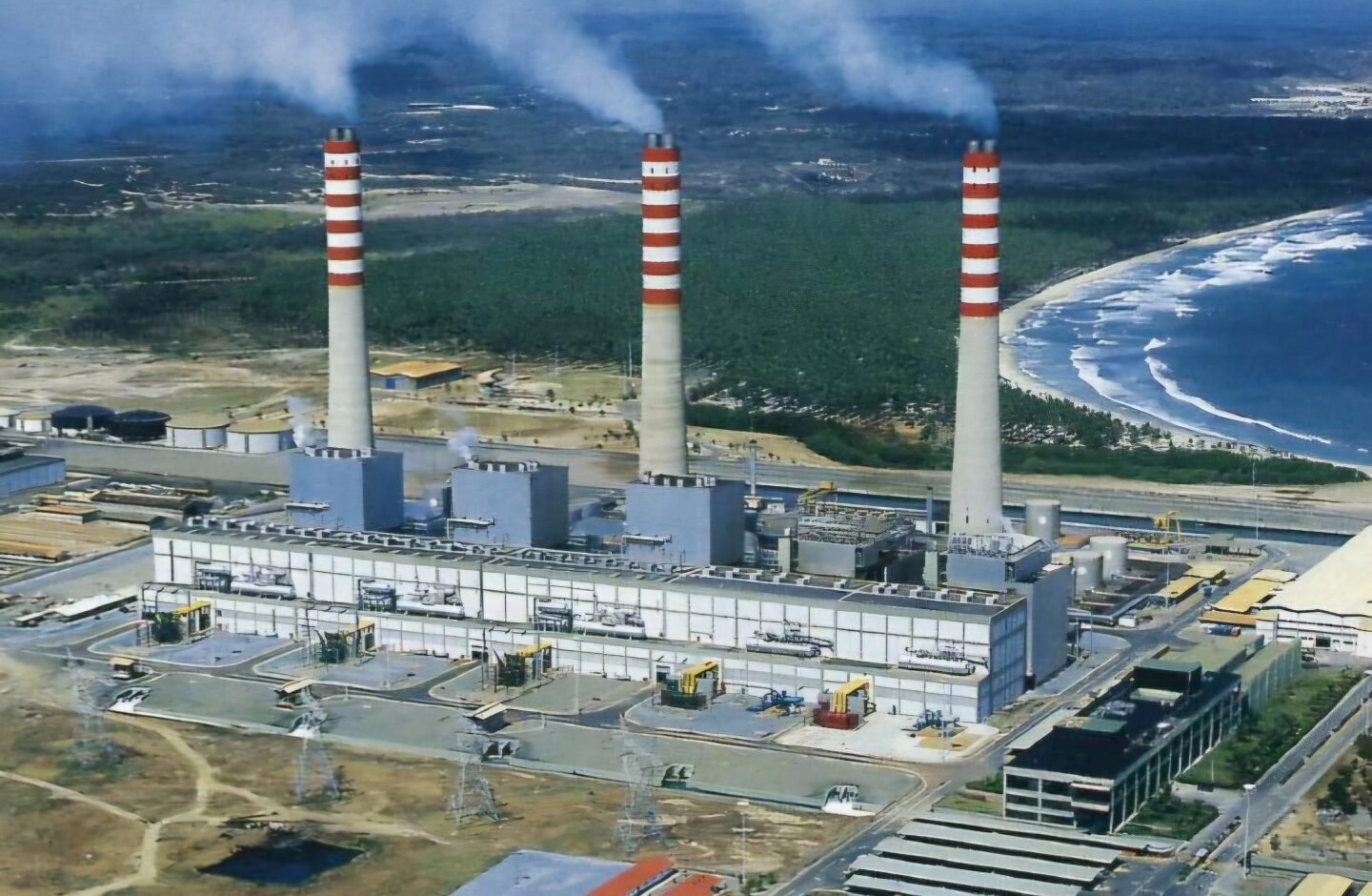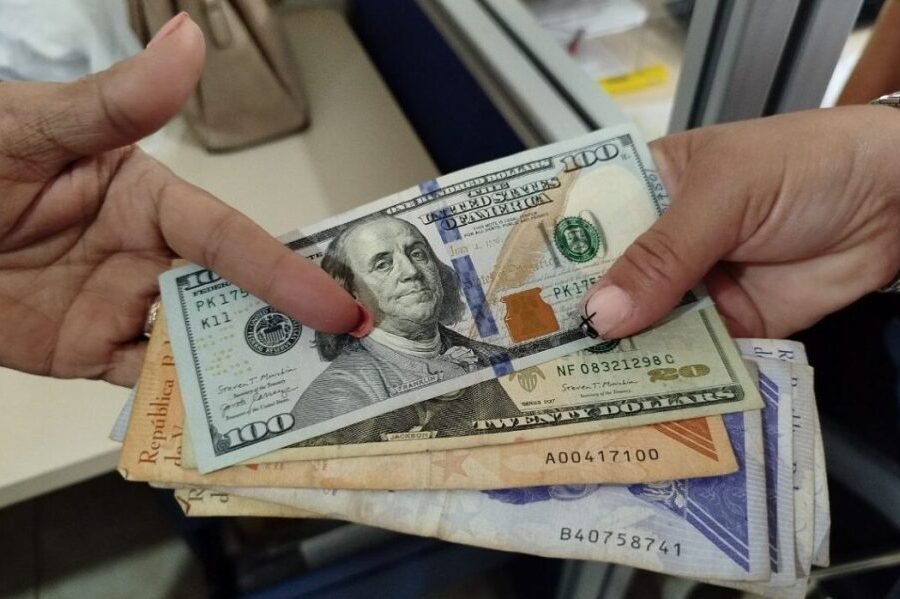
Although the revenue is guarded by Washington, various analyses point to a lack of efficiency benefiting the end recipients when it comes to the millions in foreign currency generated by energy revenue. Photograph: EFE/Rayner Peña.
Guacamaya, November 18, 2026. The Report on Venezuela Custody Account Operations was recently published, a 53-page document prepared by the financial services firm KPMG on behalf of the United States Department of State. The report, authorized for public disclosure, has put exact figures on the country’s largest financial flow operation in the last decade.
Between January 3 and September 30, 2026, the Custody Account managed by the U.S. Treasury at Citibank (New York) captured a total of US$12.263 billion from the supervised exports of Venezuelan natural resources. Of that total, the overwhelming majority —US$12.107 billion (98.7%)— was returned and disbursed at the request of the Central Bank of Venezuela (BCV).
However, the money from Venezuelan oil did not turn into infrastructure works or productive credit, but rather fed a genuine “exchange-rate vacuum cleaner.” US$11.767 billion (97% of the disbursed funds) were destined to inject foreign currency into the national banking market with the formal objective of containing the depreciation of the bolívar, without precisely much effectiveness.
The Exchange-Rate Vacuum Cleaner and Unequal Allocation
The channeling of the US$11.767 billion to the financial system was executed through three channels. One was the foreign currency auction, operated between January and March, which awarded US$2.087,7 billion. Another was the electronic exchange intervention, implemented as of March 31 at a fixed rate set by the BCV, which absorbed US$9.322,0 billion. Finally, the investment in banknotes, introduced in July, which dispatched US$549,8 billion.
Five banks concentrated 83% of the exchange dollars: Banco de Venezuela (US$2.879,3 M), Banesco (US$1.846,9 M), Mercantil (US$1.712,6 M), BBVA Provincial (US$1.693,7 M) and BNC (US$1.671,9 M). However, although the BCV gave KPMG the registry of recipients by RIF, the report does not detail the final identity of the corporations benefited in the bank auctions.
What is known is that 77% (US$9.366,6 billion) was absorbed by legal persons (companies) and 23% (US$2.873,2 billion) by natural persons. Likewise, three sectors concentrated 72% of the business quota, and they were Food and Mass Consumption (35.8%), Business and Administrative Services (23.7%) and Agriculture (12.6%).
It is at this point that economist Isabel Cristina Ávila Moreno, a member of the analysis team at Ecoanalítica, points out the distortion of the mechanism. “The concentration of foreign currency in legal persons affects above all natural persons and small businesses, which are relegated to the parallel market,” she explains.
For his part, economist Manuel Sutherland, postgraduate coordinator at Cendes-UCV, agrees with the diagnosis. “Large supermarkets and chains linked to sectors of power access foreign currency fluidly, while small businesses must pay higher premiums, which distorts competition and ends up reducing purchasing power,” he says.
The Implicit Subsidy and the Price Pass-Through Trap
The central knot of the economic debate lies in the gap between the rate at which the BCV sells dollars and the rates at which goods are quoted in the final market. On whether it makes sense for the State to sell dollars at a regulated price while the private sector sets its prices taking higher rates as a reference, the experts were also consulted.
“Indeed, this is a subsidy. By selling foreign currency at an official rate lower than the market rate, the State receives fewer bolívares than it would obtain at the free quotation, and that difference remains in the hands of those who access the official market. In other words, each dollar sold with an exchange gap implies an implicit transfer of public resources to the buyers,” Ávila said.
Manuel Sutherland delves into the mechanics of this transfer and the failure of price pass-through. “We are talking about a tremendously regressive subsidy. The actors who obtain preferential dollars do not sell cheaper; everyone sets their prices against the highest market rate to defend themselves against arbitrage and cover uncertainty,” he states.
The Bolívares from the Exchange Were Centralized in Wages
In the midst of the debate provoked by the leak of the KPMG report in the international press, the official platform Transparencia Soberana reactivated its publications unexpectedly. The portal was initially announced on January 17, 2026 by Delcy Rodríguez and brought online in March with first partial movements of US$300 million from fuel oil sales.
The figures published on the portal as of November 12, 2026, without updates to date, show a balance centralized almost entirely in salaries and wages. The platform, however, represents a historic disclosure, since according to various media, it is the first time in 17 years that the Executive openly details the country’s oil and mining figures.
According to the platform, the State had total accumulated revenues of US$15.603 billion, in 26 records. 97.1% (US$15.148 billion) comes from the sale of oil and derivatives. Meanwhile, accumulated expenditures are shown at US$14.860 billion, in 19 records, with an account balance of US$743,1 million.
The most revealing datum of the official portal lies in the allocation of spending, which officially shows that 99.0% of expenditures (US$14.710 billion) went to salaries of public sector workers and pensioners. Only 1.0% (US$150,5 million) was classified as government operating expenses, while the National Infrastructure Fund has no registered activity.
Opportunity Cost and Productive Paralysis
The massive injection of foreign currency certainly managed to cushion the acceleration of inflation —according to the BCV, monthly inflation fell from 32.6% in January to 6.2% in October and the exchange gap was reduced to about 15%— but economists warn about the macroeconomic sacrifices that this model entails.
For Isabel Ávila, the problem does not lie in selling foreign currency per se, but in the persistence of the differential. “As long as an exchange gap persists, each sale of foreign currency generates a subsidy that today is granted excessively. That is the true opportunity cost,” she expressed.
The economist adds that to this are added the renunciation of reconstituting international reserves and the fact that the bolívares were destined for current spending and not for investment. Ávila concludes that financing current spending with the sale of oil foreign currency “is not sustainable in the face of an eventual fall in oil prices” because in that context that spending then cannot be covered.
Manuel Sutherland, for his part, harshly objected to the thesis of payroll financing and questioned the priority assigned to the exchange market, which he described as a “temporary analgesic.” He points out that, instead, “that money should have gone to productive investment, industrial credit and the modernization of the electrical system, hospitals and roads.”
Furthermore, Sutherland states that it is “false” that oil revenue is what pays the payroll, since the State collects massive bolívares via issuance and aggressive taxes —with up to 192 fiscal procedures that suffocate companies—. He adds that “depending on the liquidation of foreign currency for current spending is the climax of rentism.”
Between Technical Monitoring and the Absence of a Real Audit
KPMG’s role operated under the protection of Executive Order 14373 issued by Washington, which protects Venezuelan assets against creditor embargoes and conditions each movement on U.S. authorization. However, the document itself takes care to clarify that KPMG’s work does not constitute a formal audit.
The service, which was limited to the review of counterparties, anti-money laundering risk assessment and operational tracking, charged a direct invoice of US$18,2 million, paid with Venezuelan funds. The charge comfortably exceeded the amount disbursed for the purchase of medicines and critical medical supplies ($11,6 million) or what was executed in recovery of the electrical system ($8,3 million).
Opacity persists at a neuralgic point, such as that of crude oil buyers, since in the public version of the report, the names of the 20 depositors authorized by the Department of State appear covered with black bars. Journalistic reports reveal, however, that only two global trading companies, Trafigura and Vitol, concentrated 61% of the deposited money (more than US$7.480 billion).
A Model That Liquidates Wealth
The joint X-ray of the KPMG report in the United States and the local data from Transparencia Soberana confirms a structural paradox: the country has recovered an oil cash flow of more than US$15.000 billion in 2026, but the architecture of public spending is stuck in a rentist cycle with key opacities.
By burning more than 90% of the foreign currency captured in bank exchange tables to contain the exchange rate and finance current consumption of imports, the State has ended up granting an implicit subsidy to the corporate sector. Meanwhile, prices are raised on account of the exchange gap, real consumption does not take off and the reconstruction of the national productive apparatus remains postponed.