The restart of operations will be partial, with only an estimated quarter of the pre-disaster operational flow. | Photo: Ministry of Transport.
Guacamaya, September 1, 2026. – The Simón Bolívar International Airport in Maiquetía, Venezuela’s main air gateway, formally resumed commercial passenger operations this Tuesday. This milestone marks the beginning of a complex economic and social recovery following a total shutdown caused by the devastating earthquakes of June 24.
The reactivation is not taking place inside the traditional buildings, which suffered severe structural damage, but rather through an unprecedented and extensive complex of temporary terminals set up in the parking areas. After the catastrophe, some setbacks delayed the reopening, which has finally begun with logistics adapted to the space, different active routes, and under a financial investment outlook with international scrutiny for full recovery.
The June 24 Catastrophe and the Aviation Shutdown
The double earthquake of magnitudes 7.2 and 7.5 that struck northern Venezuela on June 24 plunged La Guaira state into its worst tragedy since the 1999 mudslide. The quakes left more than 6,500 fatalities, according to official figures, and caused the collapse of dozens of buildings.
The infrastructure of the Simón Bolívar Airport did not escape unscathed: the earthquake caused severe structural damage to the passenger terminal, including falling masonry, ceilings, airline counters, road access, and pedestrian bridges.
The National Institute of Civil Aeronautics (INAC) and the national government ordered an immediate closure of commercial and private operations for safety reasons, forcing airlines to divert all itineraries on a contingency basis to domestic terminals, primarily to Arturo Michelena Airport in Valencia (Carabobo) and José Antonio Anzoátegui Airport in Barcelona (Anzoátegui).
The Frustrated Attempt of August 24 and the Definitive Reopening
For weeks of arduous debris removal, the Venezuelan government and air service providers targeted August 24 — exactly two months after the quake — as the deadline for reopening. However, the lack of an official announcement and the emergence of severe technical complications at the provisional facilities forced a postponement of the resumption of commercial operations.
The main obstacle was that the systems at the 36 temporary counters failed to connect with the internal platforms of national airlines for flight dispatch. Likewise, pilot tests revealed high temperatures inside the tents due to air conditioning failures, raising fears of massive delays in such a confined space.
The president of the Venezuelan Airline Association (ALAV), Marisela de Loaiza, explained the climate of uncertainty at the time: “Some airlines commented that the systems for flight dispatch could not be connected, and that needs to be corrected. Another factor to consider is the heat inside the temporary facilities and the likely delays or cancellations due to capacity limitations.”
After the software and climate-control issues were resolved, INAC and the Maiquetía International Airport Institute (IAIM) formally rescheduled the commercial takeoff date for September 1.
Operations at the Temporary Terminal in the “Super-Tents”
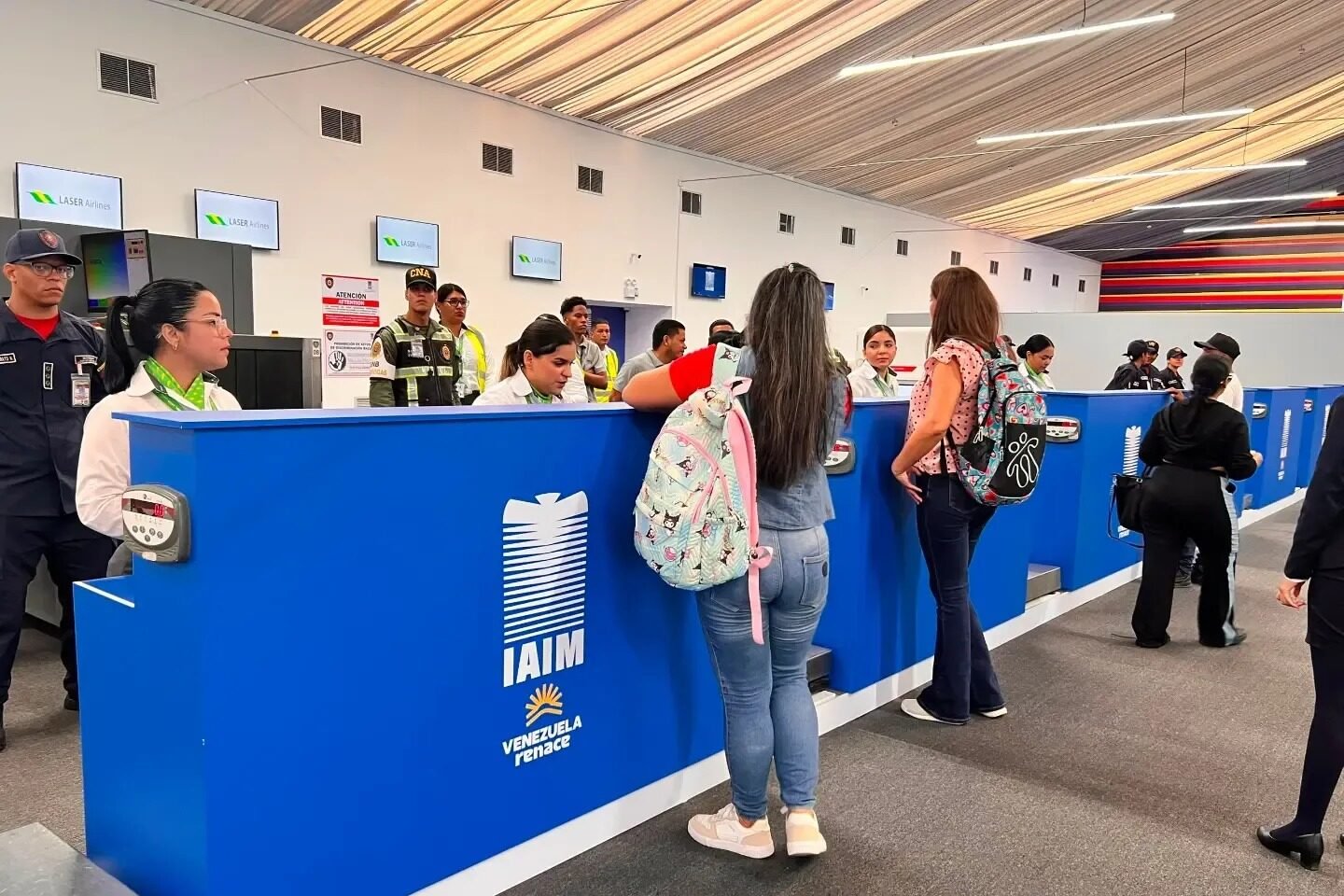
The provisional solution has been described as an unprecedented piece of military-style field engineering in the country. On the outer areas of the parking lots, modular metal structures (aluminum and galvanized steel) spanning over 7,600 square meters were erected.
This “field airport” is distributed across two terminals with independent modules for arrivals and departures, respectively, composed as follows:
- International Terminal: Covers 4,300 square meters, with four boarding gates and capacity to simultaneously accommodate 780 passengers in the departure lounge and 496 in the arrivals module.
- Domestic Terminal: Covers 3,300 square meters, with three boarding gates and capacity for 480 passengers in departures and 472 in the arrivals tent.
Alongside these modules, authorities enabled an additional outdoor area of approximately 1,000 square meters specifically for passenger waiting.
In total, the terminal’s instantaneous capacity is 2,168 people. Despite being tents, authorities equipped them with air conditioning, free Wi-Fi, device charging points, medical assistance, a VIP lounge (for a fee), and accessible ramps.
The New Travel Protocol for Passengers
Because the tents operate with a remote gate system, passengers will complete their check-in, migration, and customs processes inside the temporary structures and then be transported by buses to aircraft positioned on the main runway ramp.
The president of the Venezuelan Association of Travel and Tourism Agencies (Avavit) and of Conseturismo, Vicky Herrera, positively assessed the magnitude of the project: “The reopening of the airport has meant a titanic effort, because one truly has to go and see the scale of the tents installed at Maiquetía Airport to know that this is not something improvised; it is something truly well structured.”
The trade leader added during a radio and television interview that “it is also important to know that everything done in this regard must meet international standards, and obviously this is the case.”
Authorities have also required travelers to show up two hours in advance for domestic flights and three hours for international flights, in addition to completing online check-in beforehand. Likewise, they have reiterated that only individuals with a travel ticket in hand are allowed entry to the tents.
The Flight Map for Progressive Reactivation
The Minister of Transport, Francisco Garcés, has led the reactivation, insisting that the process is phased. The first firm step occurred on August 5 with the resumption of cargo operations. The first flight received was a Boeing 737-300F from Uniworld, arriving from Panama with 13.9 tons of merchandise.
For the current date, with the commercial opening for passengers, 11 airlines are initially operating. The initial departure schedule began with eight daily flights (four domestic and four international). The first commercial passenger flight departed at 8:00 AM bound for Valera (Trujillo), operated by Conviasa, followed by a Rutaca departure to Porlamar (Nueva Esparta) at 10:00 AM.
Below is the status of confirmed routes and airlines:
- Laser Airlines: Formally moves its international operations back to Maiquetía as of this Tuesday, September 1. It will also operate daily routes to Miami (in alliance with U.S.-based Global X), flights to Madrid (Monday through Saturday), and to Santo Domingo (Wednesdays and Sundays). Meanwhile, its Barcelona–Bogotá connection will continue from Anzoátegui.
- Copa Airlines: Reactivates one daily flight between Caracas and Panama City as of the restart. Roberto Pulido, general manager of the airline, along with other executives, confirmed they will temporarily maintain two daily flights from Valencia to support demand in the country’s central region. The airline will thus offer 29 weekly frequencies in Venezuela across its five destinations (Caracas, Maracaibo, Valencia, Barcelona, and Barquisimeto).
- Air Europa: Resumes, upon terminal rehabilitation, the direct Madrid–Caracas connection with five weekly frequencies (Tuesdays, Thursdays, Fridays, Saturdays, and Sundays). During July and August, it had operated diverted to Valencia.
- Iberia: Would return to Maiquetía on September 3, offering three weekly frequencies (Mondays, Thursdays, and Sundays).
- Plus Ultra: Maintains a partial return for September 8 with one weekly frequency (Tuesdays), though it will continue operations from Valencia as an alternative until September 27.
- LATAM Colombia: Scheduled the resumption of its Bogotá–Caracas route for September 4.
- GOL (Brazil): Plans to resume its direct connection with São Paulo on September 15.
- Turkish Airlines: Postponed the return of its direct flights with Istanbul until October 1.
- United Airlines: Initially scheduled for August and then October 2026, the U.S. airline postponed its much-anticipated Houston–Caracas route until January 12, 2027, due to post-earthquake regulatory and infrastructure reorganization.
Minister Garcés offered an optimistic balance on this first day of operations. “After hard work, we have achieved the operational start of Maiquetía Airport through temporary terminals. Several flights have already departed. The flow we measured today is behaving adequately, and all services are available,” he stated.
Geopolitical Context, International Aid, and Estimated Investment
The resumption of commercial activities takes place amid a historic reactivation of direct flights between the United States and Venezuela, which had originally materialized on April 30, 2026 (led by American Airlines after seven years of air suspension imposed in 2019).
To underpin the airport’s operational recovery after the disaster, several international actors, including the United States, deployed unprecedented logistical and technical efforts:
- United States: Just days after the earthquake, on July 4, 2026, the U.S. Air Force deployed a contingent of 110 military personnel to Maiquetía. This staff provided temporary technical, logistical, and military assistance in critical areas: air traffic control, structural assessment of the terminal, and cargo administration and handling to expedite the entry of humanitarian aid.
- IATA: Provided technical assistance in assessing physical damage and recommended the temporary infrastructure scheme.
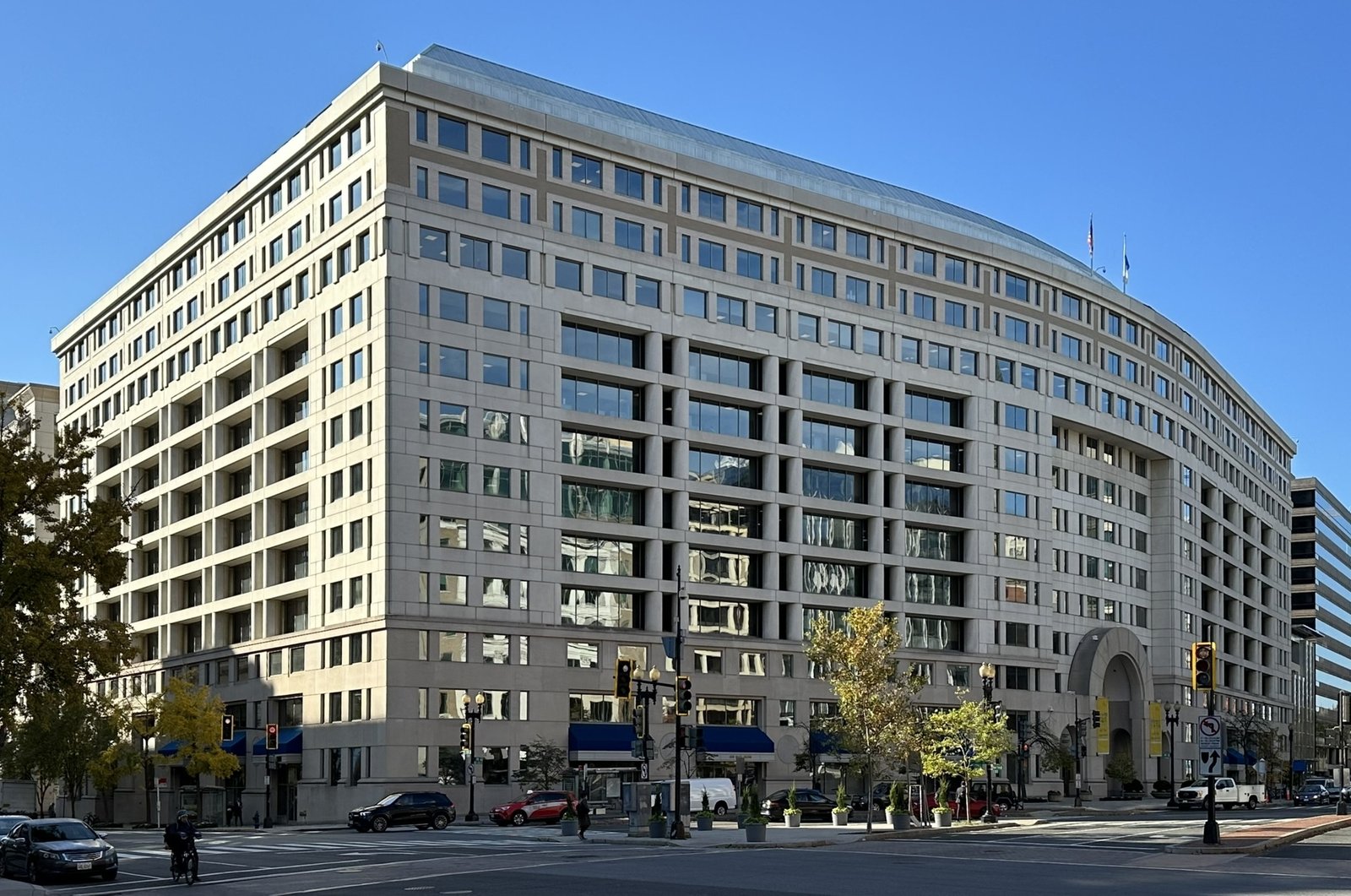
- CAF (Development Bank of Latin America and the Caribbean): Inspected the airfield on July 28 and announced an initial financial contribution of $1 million from its “Venezuela Recovery and Reconstruction Fund.” CAF also established a multi-donor fund of up to $200 million for the country’s reconstruction.
CAF’s Infrastructure Manager, Ángel Cárdenas, emphasized a key focus during the technical inspection. “Recovery cannot happen without opportunities: it is not enough to intervene in infrastructure; we must relaunch economic opportunities in the territories,” the executive stressed.
Time and Investment in Perspective
The authorities’ operational targets are clear: recover 25% of pre-quake flight capacity immediately, rise to 40% within a couple of months, and aim for 60% by the end of the year or early 2027. However, Minister Garcés estimated that the full recovery of operations and the main building’s infrastructure will extend until the first quarter of 2027.
Regarding the cost of this titanic reconstruction and modernization, an analysis of a new Public-Private Partnership (PPP) model proposed by the specialized portal Informe Aéreo estimates the investment range required for the comprehensive rehabilitation of the Simón Bolívar Airport at between $500 million and $1.2 billion. It is a significant figure, but indispensable for the country’s main air hub to finally “take off into the future” safely.