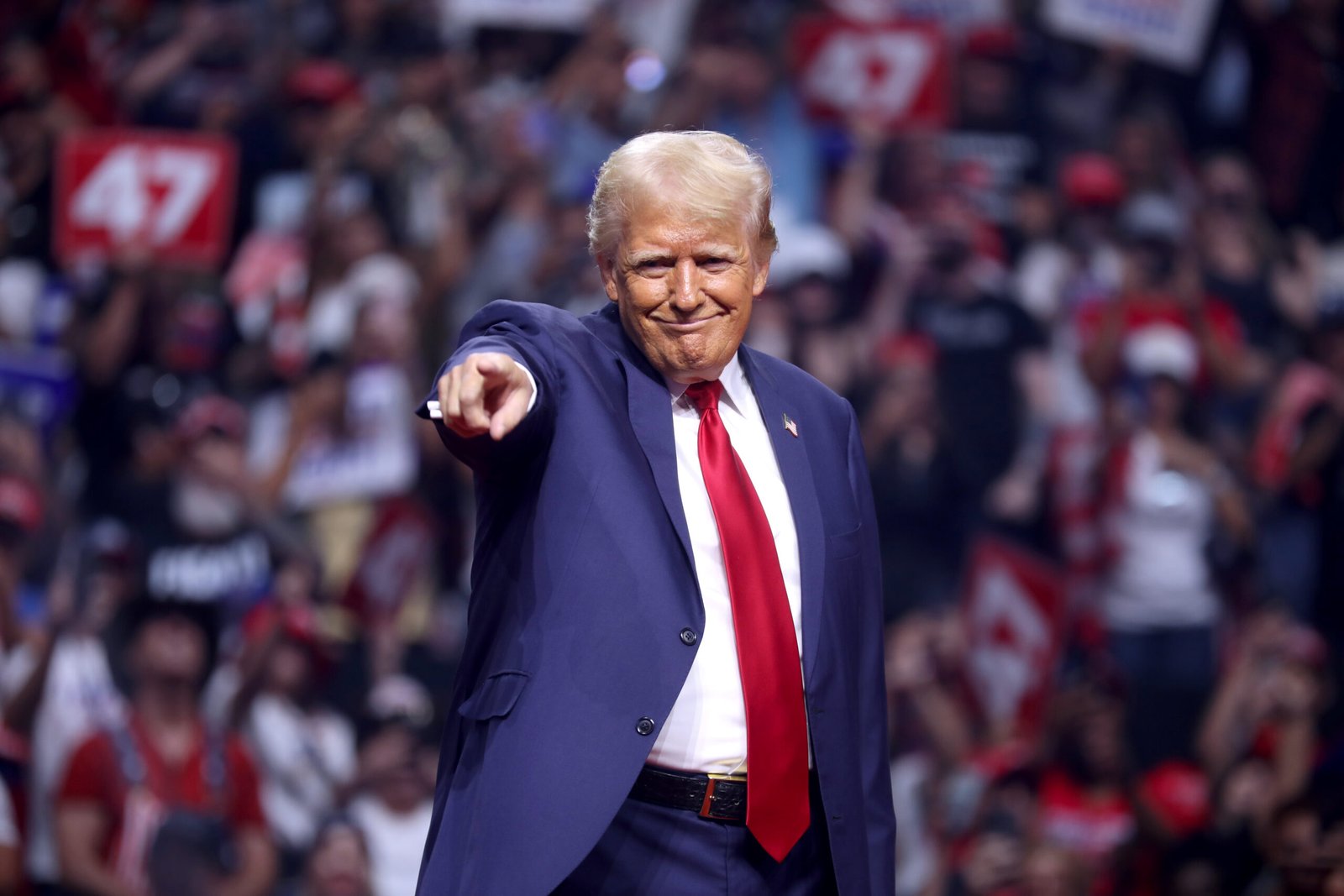
United States President Donald Trump announced an unprecedented major oil deal for Venezuela, with a company owned by Alejandro Betancourt playing a leading role. Photograph: Gage Skidmore.
Guacamaya, September 1, 2026. The details of United States President Donald Trump’s major oil deal for Venezuela have been gradually coming to light, following leaks to the press. It is possible that the latest version was prepared hastily, still leaving many questions unanswered.
On August 31, however, the White House issued a statement with key data on the agreement between the two countries and a private company: North American Blue Energy Partners, owned by Venezuelan businessman Alejandro Betancourt.
According to the White House, NABEP has secured 17 oil concessions for 100 years, something unprecedented in Venezuelan history. Another unprecedented aspect is the leading role of the U.S. government in all aspects.
Washington will be both a shareholder with veto power in the company and will also have a guaranteed share of the oil production at cost.
The choice of NABEP as a central player has also sparked controversy, given that Betancourt faces money laundering investigations in the United States, Spain, and Switzerland.
The United States’ Energy Reserve
The Pentagon’s Strategic Capital Office will hold 35% of NABEP’s shares, something without precedent. The same entity is not permitted to own its own resources or equity, so it likely would not take direct ownership but rather could do so through guarantees.
Washington will have veto power over the board of directors, while a majority of the board must be composed of U.S. citizens. The company will also be subject to audits in the United States.
The State Department will have the right to purchase 20% of production at production cost, while it will have a right of first refusal for the remaining 80%.
This guarantees a flow of cheap oil from Venezuela to U.S. refineries and storage, although the Strategic Petroleum Reserve (SPR) only takes light crude, unlike the heavy and extra-heavy oil that the South American country mostly produces.
The 17 concessions already produce more than 220,000 barrels per day, and could exceed one million after necessary investments within a few years. Reserves of 65 billion barrels allow for this, while several of the blocks are still undeveloped.
Trump’s speech, clearly aimed at his electorate, refers to securing energy resources and lowering gasoline prices. The midterm elections are just around the corner.
This agreement cannot be understood without considering the growing instability around the world’s major energy centers, which has dealt a severe blow to Trump’s foreign and energy policies.
The Middle East faces armed conflicts in both the Strait of Hormuz and the Bab al-Mandab Strait, affecting a third of global hydrocarbon shipping. The war in Iran, which began in late February, shows no signs of abating, despite several announcements by Trump that he is “very close” to a final peace agreement.
This conflict is compounded by other disruptions further north: the war in Ukraine has destroyed part of the energy infrastructure between Russia and Europe, and the Caucasus region remains vulnerable along the Caspian corridors.
“Reaffirming the Monroe Doctrine”
According to the White House, most of the new fields operated by NABEP “were previously controlled or operated by Russian or Chinese companies, or by corrupt partners of Maduro and Chávez.”
President Trump, the statement continues, “has reestablished the Monroe Doctrine, purging foreign malign influence from our environment and ensuring that U.S. dominance in our hemisphere is never again questioned.”
In the transfer, we can see NABEP taking over operations previously held by the private Chinese company China Concord Petroleum in Lake Maracaibo, and the lower-production area of state-owned CNPC: Intercampo Norte. It is still unclear what will ultimately happen to the other operations of Russian and Chinese state companies, including Petromonagas and Petrolera Sinovensa, with a combined production of nearly 200,000 barrels per day.
Neither Beijing nor Moscow have reported, to date, on which operations their state companies may have lost, nor whether they will undertake arbitration or litigation processes. On September 1, the spokesperson for China’s Ministry of Foreign Affairs, Guo Jiakun, stated that “China’s legitimate rights and interests in Venezuela must be safeguarded.”
It is also noteworthy that for more than a decade, Alejandro Betancourt was known as part of the circle of contractors for the Venezuelan state under presidents Hugo Chávez and Nicolás Maduro, from electric power projects, through Derwick Associates, to oil.
While NABEP was born in 2024, its first operation was in Petrozamora, in the Lake Maracaibo basin. Previously, Betancourt’s companies participated in the same area through the figure of a mixed company between PDVSA and Gazprombank, the bank of Russia’s state gas corporation.
A $100 Billion Investment?
Official announcements indicate that NABEP will make an investment of up to $100 billion, which is practically equivalent to the total size of the country’s economy. They also point out that more than $200 billion will be generated in taxes and royalties for the Venezuelan state, which would double the GDP.
The first point has been questioned because it is unlikely that a single private company could achieve such an investment, especially in a high-risk and uncertain environment. The energy giants that did not have a presence in Venezuela are still not daring to make the first investments, while it is unlikely that we will see large bank loans or injections from major venture capital funds. In short, the White House does not mention a clear timeline or deadlines for investments.
The second point, on tax collection, is based on a minimum royalty rate of 16% on gross income, and a 34% income tax rate, according to Venezuela’s acting president. These rates would be the lower limit, applied to undeveloped or greenfield fields.
The announcements of large figures also create a dilemma for Delcy Rodríguez’s administration: they generate an expectation that enormous sums will soon arrive in both the private sector and state coffers, and that consequently, purchasing power and public services in the country should improve rapidly.
The Political Risk Paradox
On one hand, the most powerful state in the world openly supports—in rhetoric and in practice, as a guaranteed buyer—NABEP. Caracas has also expressed its support. However, this agreement is too intertwined with the political fate of Trump and Delcy Rodríguez. What if tomorrow there is another president in the White House, in Miraflores, or in both palaces?
The path to the agreement has also been marked by state interference amid a conflict between Betancourt and his former partner, American Harry Sargeant III. Paradoxically, Washington forced the exit of the latter, who held a minority stake through Bluewave Properties.
The pressure was exerted, according to press reports, through the Treasury Department’s OFAC, which reportedly warned Sargeant to sell his stake before Bluewave Properties was added to the list of sanctioned entities, just days later.
The major oil deal thus becomes an exclusive project of Betancourt and the Trump administration. Although, being a fully private company, NABEP does not disclose who its shareholders are, or whether other entities have, for example, a right to purchase its shares.
Luis Alejandro Ruiz contributed to the writing of this article.