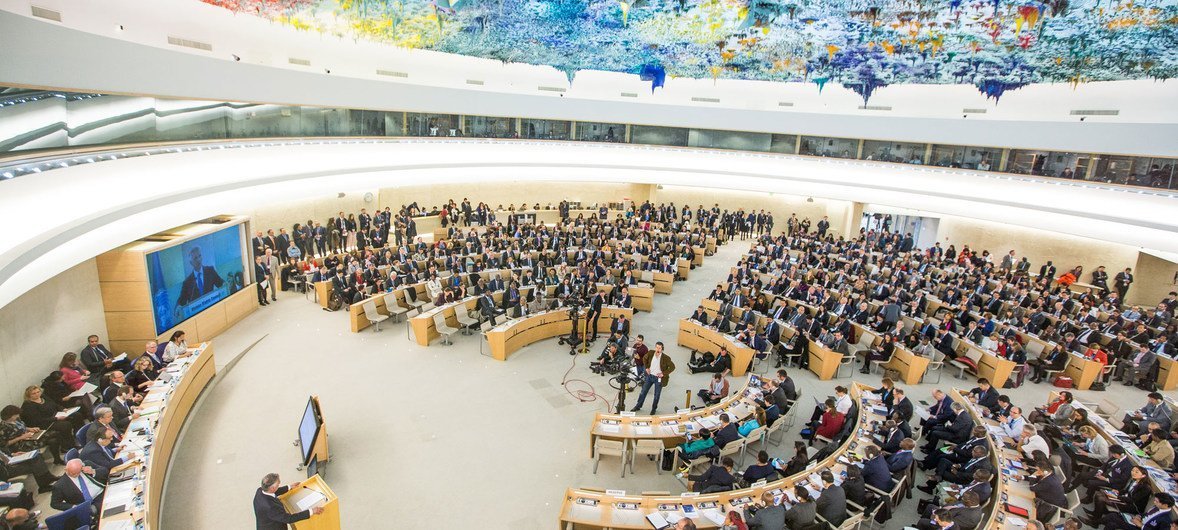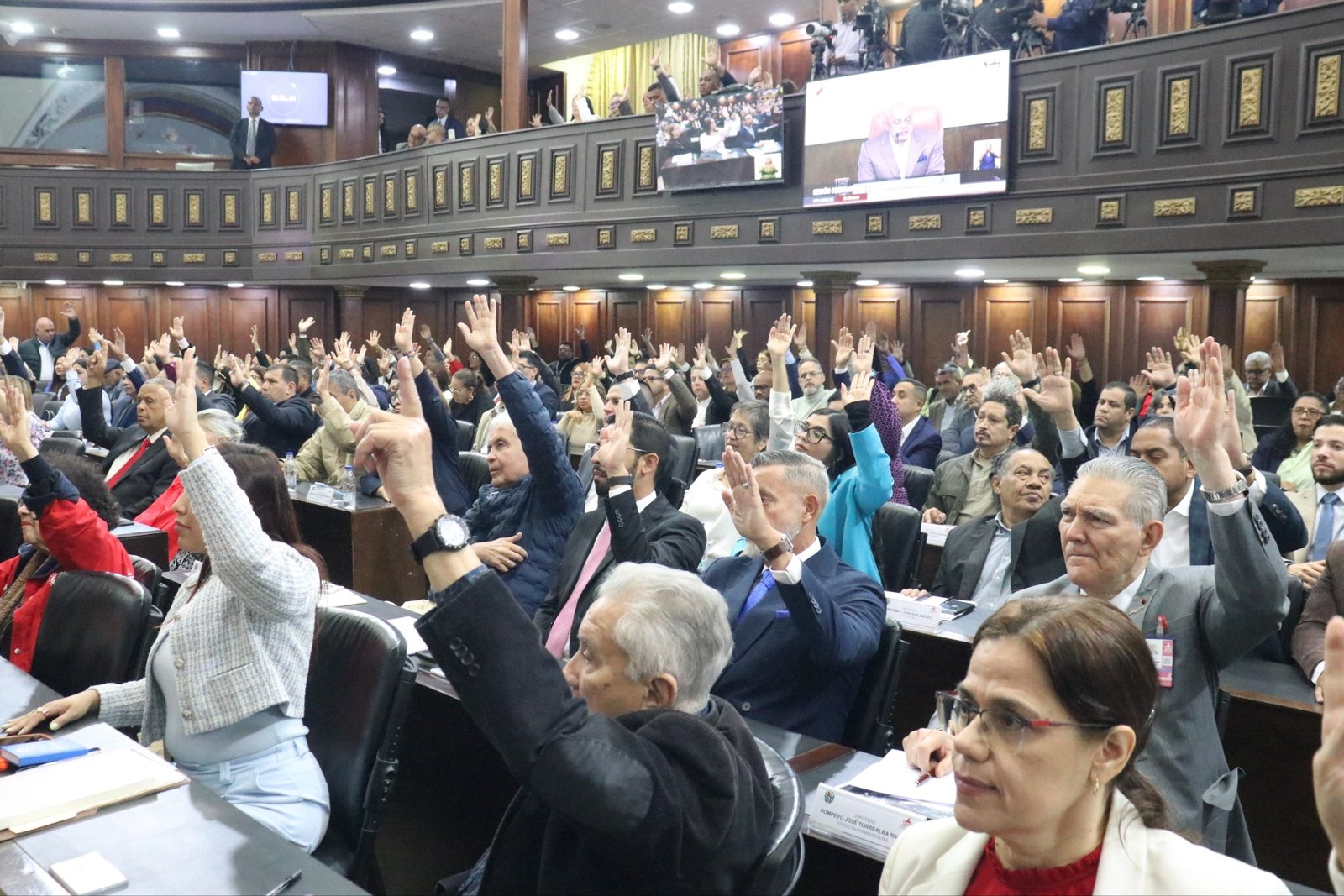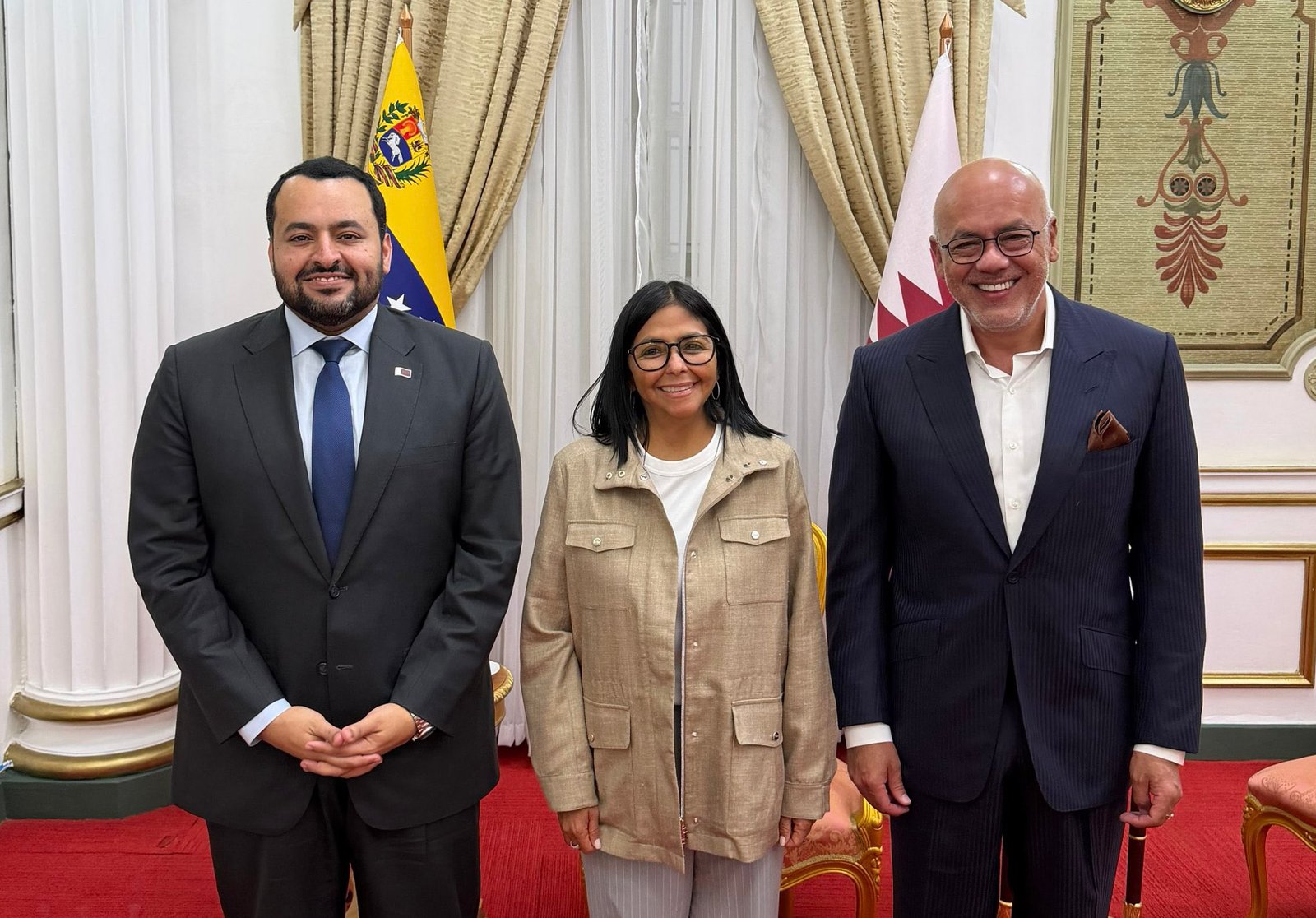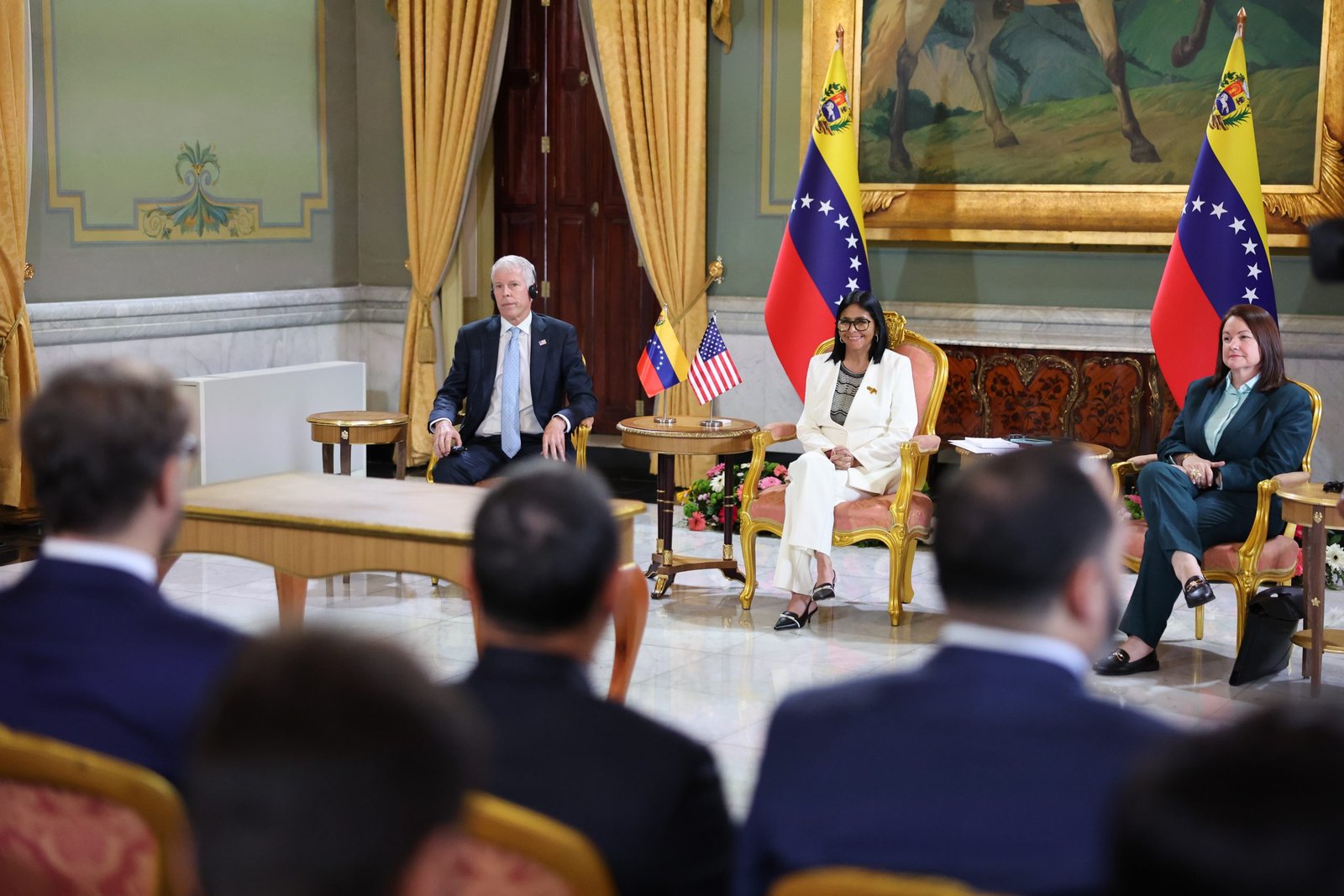
The energy giant Chevron and other oil companies signed oil contracts with the Venezuelan government during the second visit of United States Secretary of Energy, Chris Wright (left). Also pictured are acting President Delcy Rodríguez and Hydrocarbons Minister Paula Henao. Photo: Presidential Press Office.
Guacamaya, September 2, 2026. Chevron announced, during the visit of Secretary of Energy Chris Wright, an investment of over $7 billion to more than double its production in the country. The visit of the senior U.S. official is thus marked by a package of signings that also includes ENI, Geopark, KEO Capital, and Primavera, the firm backed by Coinbase co-founder Fred Ehrsam. Wright, in Caracas since Tuesday, projected that Venezuela will exceed 2 million barrels per day before the end of the decade.
Venezuelan Oil Minister Paula Henao and Wright himself are overseeing the signings alongside President Delcy Rodríguez at the Miraflores Palace around noon, Caracas time.
United States Secretary of Energy, Chris Wright, described the agreements signed this Wednesday between Venezuela and companies in the oil and gas sector as “historic” during the ceremony. According to the official, these understandings will help boost economic activity, generate new jobs, and advance the transformation of Venezuela’s energy system.
Wright stated that energy recovery will be decisive in improving living conditions in the country. “The catalyst for improving the quality of life in Venezuela is energy,” he affirmed, highlighting that Washington seeks to expand its energy cooperation throughout the Western Hemisphere, from Colombia to Argentina.
Reuters reported that most of these pacts correspond to expansions of projects that were already being negotiated with the Ministry of Petroleum and PDVSA, within the framework of migrating dozens of energy contracts to the new terms established by the oil reform approved in January. Reuters underscored a relevant nuance: these agreements are independent of the Caracas-Washington pact that grants the United States access to 17 large oil fields, announced last week.
The president of Petróleos de Venezuela (PDVSA), Héctor Obregón Pérez, explained at Miraflores that the agreement reached with Chevron and the mixed companies contemplates a progressive increase in oil production, with the aim of exceeding 700,000 barrels per day.
Obregón noted that over the past eight months, significant transformations have occurred in the hydrocarbons sector that made it possible to finalize the new agreements signed with international companies. Among the main changes, he mentioned the reform of the Organic Hydrocarbons Law and the implementation of Production Participation Contracts, designed under international standards.
The Chevron Package: $7 Billion and New Areas in the Orinoco
Chevron confirmed in a statement—as reproduced by the company itself—agreements with Venezuela that update the terms of its mixed companies, with fiscal, commercial, and legal improvements aimed at sustaining long-term investments. As part of the package, the U.S. oil company was assigned an additional area in the Orinoco Belt, added to its already established position in the zone.
According to additional operational details, the mixed company Petroindependencia, S.A.—in which Chevron’s subsidiary holds a 49% stake—received the rights to develop the adjacent Carabobo-1 and Carabobo-2-South-A areas, greenfield sites that expand the operational footprint where the company is already increasing its production of extra-heavy crude.
With these improvements, Chevron backs plans to invest more than $7 billion over the next five years, with the goal of more than doubling its production to about 600,000 barrels per day compared to 2026 levels. The company highlighted that, with total costs below $20 per barrel and a broad resource base, Venezuela constitutes a differentiated growth platform within its disciplined capital management model.
Chevron CEO Mike Wirth stated in an interview from Caracas: “Chevron’s history in Venezuela spans more than a century, and our expanded position reflects our confidence in the country’s deep resource potential and its ability to compete for investment within our portfolio for decades to come.”
From Miraflores, after signing the commitments, the corporate executive considered that the agreements signed represent significant progress for the company, its partners, and the Venezuelan people. The U.S. company also acknowledged the Venezuelan government’s role in creating the necessary conditions to attract new investments and facilitate the development of energy projects.
He confirmed that the goal is to invest more than $7 billion and double production, extracting over 500,000 barrels in Venezuela.
ENI, Geopark, KEO Capital, and Primavera Complete the Picture
ENI: According to Reuters, ENI—which already shares an offshore gas project with Repsol and a shallow-water oil project with PDVSA—is seeking to expand its operations into a new area in the Orinoco Belt. The Italian company told the agency that it is working with its Venezuelan partners to support the revitalization of the country’s energy sector, without offering further details.
According to Bloomberg, Italian oil company Eni SpA aims to raise production associated with its operations in Venezuela to exceed one million barrels per day. This figure also includes volumes produced by Petróleos de Venezuela (PDVSA), according to people familiar with the plans. If materialized, the increase would represent significant support for the strategy promoted by U.S. President Donald Trump to recover the production capacity of Venezuela’s oil industry.
As part of this strategy, Eni is expected to announce a new agreement with PDVSA this Wednesday to develop Junín 5, one of the large heavy crude deposits located in the Orinoco Oil Belt. The Italian company has held a stake in the project since 2010, but the new understanding would substantially modify its role, as Eni would become the exclusive operator of the area and assume leadership of its technical, financial, and commercial operations.
Claudio Descalzi, CEO of Eni, described the new investment agreements reached in Venezuela as a turning point that will open a new chapter for the country’s energy industry. From Miraflores Palace, the executive highlighted the historic nature of the understanding and stated that it could lay the groundwork for a future of significant opportunities for Venezuela.
GeoPark is an independent Latin American oil and gas exploration and production company with over two decades of experience in the region. The company has historically concentrated its operations in Colombia and Argentina and is characterized by working on existing production assets, seeking to increase their performance through investment, technology, and operational optimization.
Its importance for Venezuela derives from negotiations it is holding with Caracas to obtain rights over the Bare field, a heavy crude asset in the Orinoco Oil Belt. Reuters reported that GeoPark is advancing toward an agreement that could give it access to reserves of up to 1 billion barrels, within the new round of contracts that Venezuela is structuring following the reform of its oil legislation.
GeoPark’s strategic relevance lies precisely in the type of asset, given that the heavy crude from the Belt requires investment, diluents, infrastructure, and technical capacity to increase production. Therefore, its eventual entry would allow Venezuela to diversify the group of international operators beyond the large U.S. and European companies. Furthermore, its regional experience may make it particularly suitable for developing significant-sized fields without requiring the corporate structure of a major. The eventual award of Bare would place GeoPark among the new private actors seeking to take advantage of the opening of Venezuela’s energy sector.
On March 5, 2026, GeoPark announced a strategic investment of approximately US$107 million made by Colden Investments S.A., an affiliate of Jaime Gilinski. The transaction initially gave Colden around 28% of GeoPark, making it its largest shareholder. The investment was led by Jaime Gilinski and his son Gabriel Gilinski, who was also appointed to GeoPark’s board of directors. The Gilinski family now has one of its members serving in diplomatic functions representing the new Colombian government of Donald Trump ally Abelardo de la Espriella before Israel, a country with which Venezuela is in a process of reestablishing relations.
Furthermore, GeoPark’s own announcement of the Gilinski investment explicitly mentioned among the company’s strategic growth opportunities “possible access in Venezuela.” Therefore, if GeoPark ends up obtaining a stake in the Bare field or other Venezuelan assets, the capital of one of Colombia’s most powerful business groups would be indirectly entering the Venezuelan oil sector.
GeoPark.
It is key to highlight that the Gilinski Group is already entering Venezuela through the expansion of Grupo Nutresa’s confectionery business and the acquisition of the local Heartbrand franchise, known as Tío Rico.
KEO Capital had already advanced last week, through its own statement, that one of its U.S. subsidiaries reached an agreement with PDVSA for the mixed company Petrourdaneta, becoming the operator of the project and incorporating a $350 million credit line.
KEO Capital AB is a financial and technology company listed on Nasdaq Stockholm that has specialized in fintech, B2B payments, working capital financing, and supply chain solutions. The company emerged from the transformation of Maha Capital following the acquisition of KEO World in April 2026 and subsequently adopted the name KEO Capital. Although its main activity is currently oriented toward digital financial services.
Its importance for Venezuela lies in the fact that KEO is not simply arriving as a financial investor, as it has agreed to assume the role of operator of the mixed company Petrourdaneta together with PDVSA. KEO’s indirect stake in Petrourdaneta was 24% and is expected to increase to 40% under the binding agreement announced by the company.
Primavera, the energy company co-founded by billionaire Fred Ehrsam—known as a co-founder of Coinbase—to invest in Venezuela, has been negotiating access to at least three oil zones, according to Reuters sources. Bloomberg has separately reported on Ehrsam’s interest in taking control of at least three Venezuelan oil fields, in what it describes as part of a renewed appetite from high-profile energy investors to reactivate the country’s industry.
Primavera’s interest appears to be particularly focused on oil assets in the Orinoco Belt. Reports published on September 2 indicate that Ehrsam seeks to take control of at least three Venezuelan fields and that U.S. officials are evaluating changes to some existing contracts.
During the event held at Miraflores, a Production Participation Contract agreement was formalized between the company and PDVSA for the development of the Budare Block, located between the states of Anzoátegui and Monagas.
Reuters also indicated that other companies, such as India’s ONGC and U.S.-based GE Vernova, have also advanced in negotiations with Venezuelan authorities that could lead to contracts, although these are not expected to be signed at the same event.
In the case of Primavera, the president of PDVSA indicated that the goal is to achieve production exceeding 70,000 barrels per day, while agreements with the other companies will be aimed at strengthening productive capacity and the development of Venezuela’s energy sector.
ONGC Videsh, through its international subsidiary ONGC Videsh (OVL), is the Indian state-owned oil and gas company and one of New Delhi’s main instruments for securing energy assets and supply abroad. Its presence in Venezuela is not new, as OVL holds stakes in the San Cristóbal project, where it has 40%, and Carabobo, with 11%. Following the regulatory transformations of 2026 and the easing of U.S. sanctions, the company received an OFAC license in July to resume operations and is negotiating a new operational framework with PDVSA.
The most relevant element currently is that ONGC is attempting to recover approximately US$500 million in pending dividends, with the possibility of receiving them in cash or through Venezuelan crude. At the same time, Indian technical teams are preparing new investment evaluations. Its participation in the new energy agreements being closed in Caracas therefore has a dual dimension: recovering capital accumulated during the years of restrictions and expanding Indian presence in Venezuela’s oil sector. This also holds geopolitical importance, as Venezuela became India’s third-largest crude supplier in August, reinforcing New Delhi’s interest in maintaining a direct energy relationship with Caracas.
GE Vernova is a U.S. energy technology company born from the separation of General Electric and specialized in power generation, gas and steam turbines, power grids, electrification, and technologies for the energy transition. Its potential role in Venezuela is related to the energy infrastructure needed to recover and expand production. Reuters identifies it among U.S. and international companies that are in the final phase of negotiating new Venezuelan energy projects.
Along these lines, and at the same ceremony held at the Presidential Palace alongside oil companies, Venezuela signed an agreement with GE Vernova and Corpoelec aimed at accelerating the recovery and modernization of the national electrical system. The understanding contemplates the development of various projects designed to strengthen power generation and supply in the country.
Its incorporation is especially significant because Venezuela’s oil recovery faces a problem that goes far beyond drilling new wells: the electrical, industrial, and oil services infrastructure is deteriorated and requires large investments. GE Vernova can precisely provide technology and equipment for power generation and grids, which turns its eventual agreement into a piece of the productive capacity reconstruction puzzle.
In that sense, its presence alongside Chevron, ONGC, Eni, and GeoPark shows that the new Venezuelan strategy is attempting to rebuild the energy sector as an integrated ecosystem—oil, electricity, infrastructure, and financing—and not solely through new oil exploitation contracts.
Roger Martella, corporate director of GE Vernova, emphasized the importance of moving quickly from agreements to project execution to accelerate the recovery of Venezuela’s electrical system. According to his explanation during the ceremony at Miraflores, the company seeks to move directly toward the necessary work to ensure that electricity can begin to flow more quickly.
Martella also announced that the agreement contemplates the generation of more than 1,000 jobs in Venezuela. The executive noted that a substantial part of the implementation will require local labor, so Venezuela will have a central role in providing the workers needed to develop the agreed projects.
Delcy Rodríguez highlighted the importance of the agreement signed between GE Vernova and Corpoelec for the recovery of Venezuela’s electrical system. “It is essential for the lives of Venezuelans, without electricity there is no life,” she stated, expressing hope that the understandings reached with various international companies will generate reciprocal benefits for both Venezuela and the home countries of the companies involved.
The acting president also presented the agreements as part of a new stage for the country and stated that “What we are doing today is the future and hope of Venezuela.” In that context, she described the “historic agreement” reached with the United States and announced on August 28 as fundamental, considering it a key piece for advancing toward “the well-being and relationship” of Venezuela with the international community.
Wright Raises Production Projections
Wright’s arrival in Caracas on Tuesday night came four days after the announcement of the oil agreement between Washington and Caracas. In an interview with Brian Sullivan of CNBC, the U.S. Secretary of Energy estimated that Venezuelan production will exceed 1.5 million barrels per day in the first half of 2027 and 2 million barrels per day before the end of the decade.
Wright recalled that production was slightly below one million barrels per day when oil exchanges with Venezuela began this year, and that it currently already exceeds 1.2 million. In his view, this growth will generate downward pressure on global oil prices. He also evoked that U.S. refineries built in the 1960s and 1970s were designed with Venezuelan crude in mind, when the country was the world’s largest exporter.
The official insisted that the agreement with Venezuela seeks to associate the United States with the development of the country’s oil and gas resources, without displacing private companies, and that Washington’s role benefits U.S. taxpayers with crude at a discount price, without this implying that the U.S. government acts as an operator or producer. He also rejected that it is an intervention on Venezuelan property, noting that the agreement is formally between Washington and a Venezuelan company—not between governments—to develop the resources, referring to North American Blue Energy Partners (NABEP).
United States Secretary of Energy, Chris Wright, ruled out in the interview that Washington had addressed with Venezuelan authorities the possibility of the country leaving OPEC+. He emphasized that any decision regarding Venezuela’s permanence in the mechanism corresponds exclusively to Caracas, as it is a determination linked to its energy sovereignty.
Wright also highlighted the contrast between Venezuela’s enormous weight in terms of reserves and its reduced share of global production. According to the secretary, the country concentrates about 17% of global oil reserves, but generates slightly more than 1% of world production. In his view, this gap has characterized the sector over recent decades, but it also represents an opportunity to significantly increase Venezuelan production in the coming years.
During the signing ceremony of the new agreements with international companies, Venezuela’s acting president, Delcy Rodríguez, highlighted the scope of the understandings reached and agreed with U.S. Secretary of Energy Chris Wright, stating: “Today I agree with Secretary Wright, we are making history.”
Rodríguez also emphasized the track record of Chevron and ENI in Venezuela, noting that both companies have accompanied the country during periods of growth as well as times of difficulty. In her view, the new agreements will allow for a progressive increase in oil production and generate a positive impact on the economy, translated into “more jobs, better wages, a better country.”
The president attributed the signing of the new contracts for the development of oil and gas projects to the reform of the Hydrocarbons Law and the speed with which her administration has promoted changes in the sector. According to her explanation, these agreements will not only allow for increased energy production but will also have effects on other areas of the economy, such as improving public transportation and reactivating the regions where new investments are concentrated.
Rodríguez also addressed a call to Venezuelans who emigrated during the years of economic crisis to consider returning to the country. The president presented the new investments and the recovery of productive activity as part of a process that, in her words, represents the “rebirth of Venezuela.”
The Backdrop: Rising Prices Due to Escalation with Iran
The wave of signings in Venezuela coincides with a marked rebound in international crude prices, driven by new U.S. attacks against Iran, in an escalation that President Donald Trump described as an operation “of great magnitude and powerful.” WTI for October delivery rose 5.20%, to $90.22, again surpassing the $90 threshold for the first time since late July; Brent for November delivery advanced 4.60%, to $94.65. European gas, meanwhile, reached its highest level in more than three years.