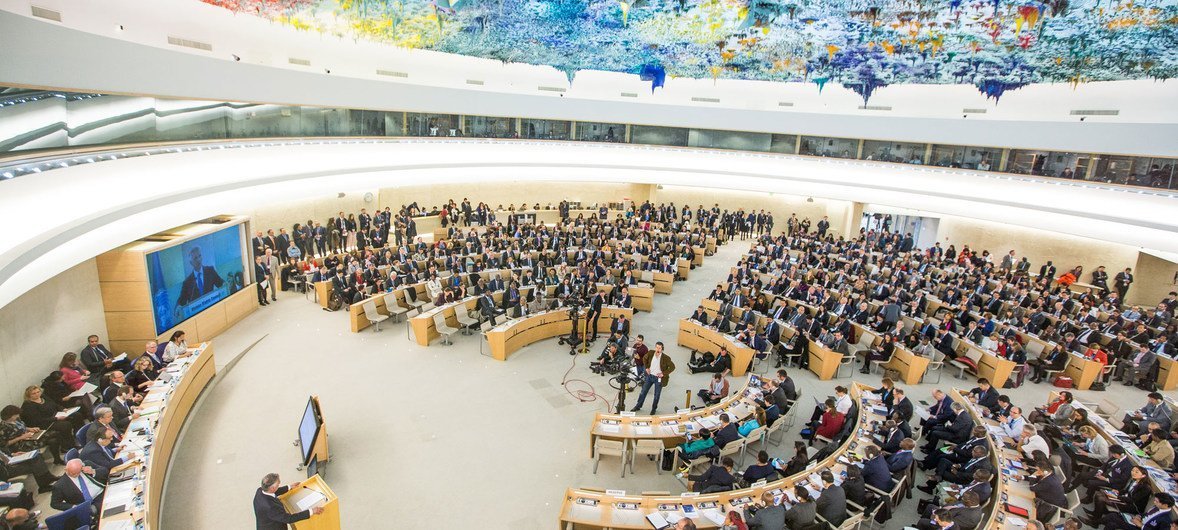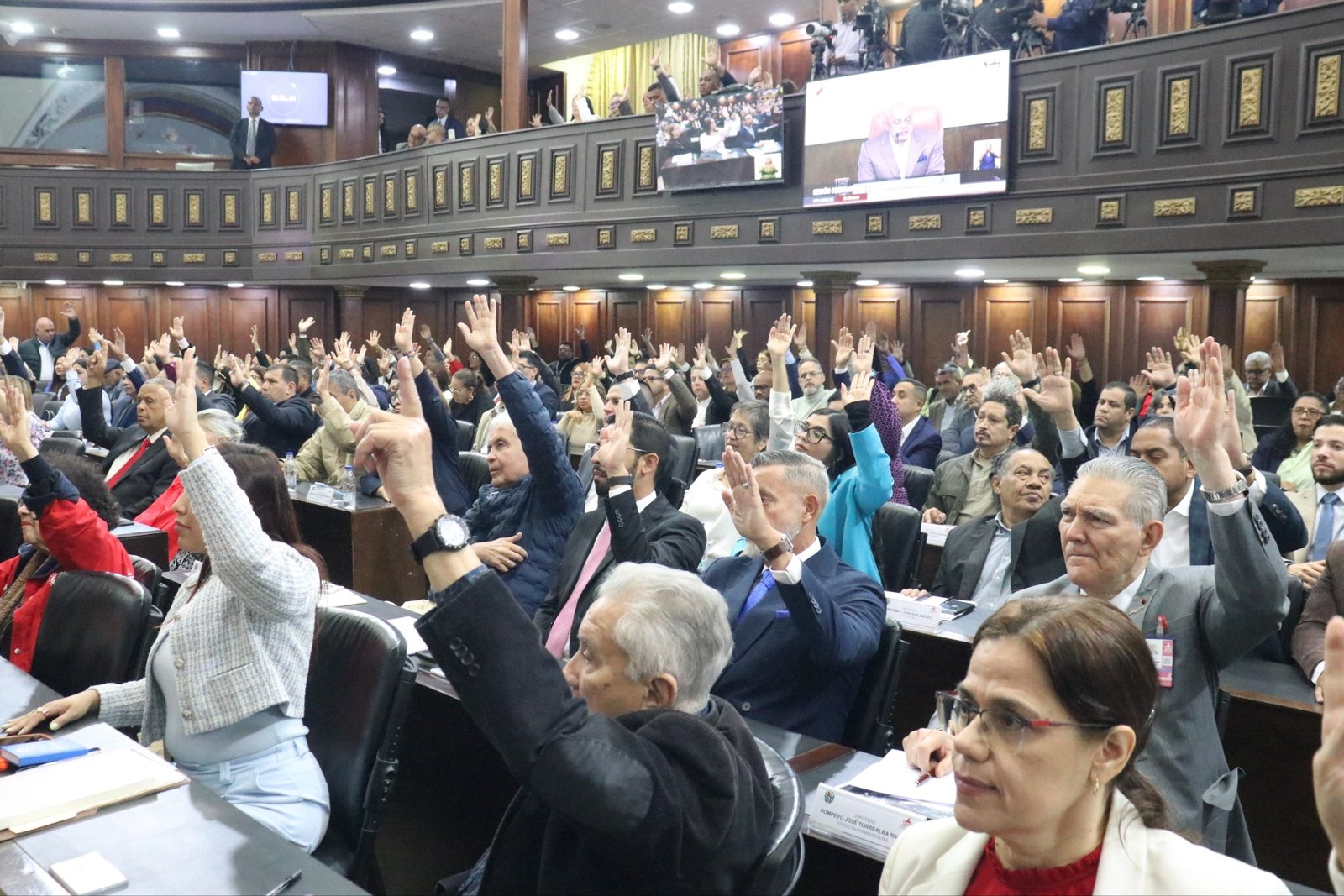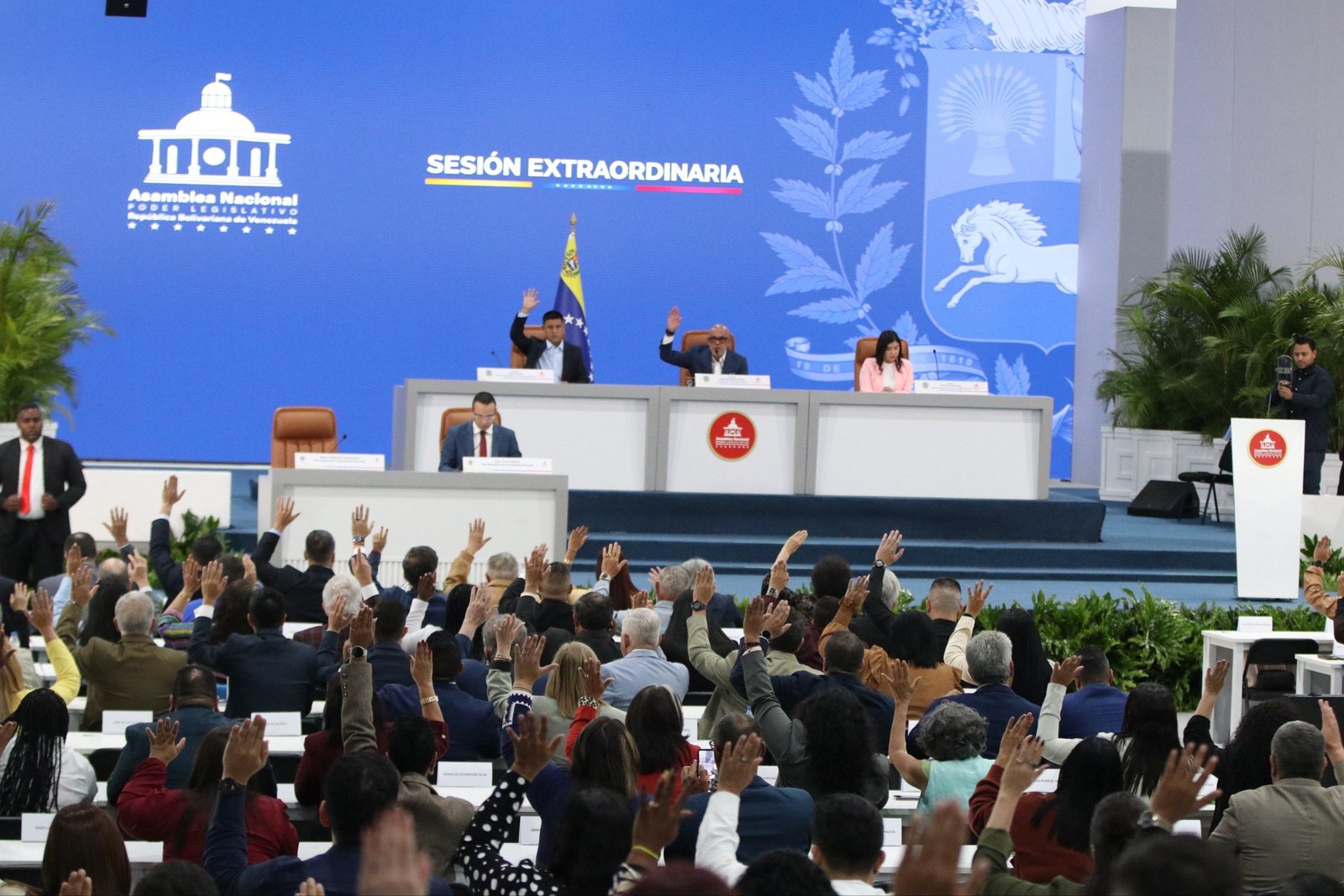
The initiative, unanimously backed by parliamentarians, seeks to restore institutional trust in the judiciary and is characterized by an expansion of the Judicial Nominations Committee from 21 to 23 members, with a majority of citizen representation. | Photo: National Assembly.
Guacamaya, August 27, 2026. Two weeks after the historic agreement between the Government and the 2015 National Assembly, which brought to the table the comprehensive renewal of the Supreme Court of Justice (TSJ), the Draft Reform of the LOTSJ was approved in a first discussion. This pact, reached at the close of the first cycle of talks, represents a significant turn from the partial process that Parliament had been managing unilaterally.
The commitment of the parties implies completely redesigning the rules of the game and restarting the process from scratch. However, the great question looming over public opinion is not merely technical, but deeply political: whether it is possible to build an independent Judiciary in a society fractured by polarization, or whether it will be reformed on the basis of a distribution of quotas.
Clean Slate for 32 Magistrates
The agreement from this negotiation cycle implicitly declares null and void and “at zero” the procedure that the National Assembly had previously initiated between May and June 2026. That initial process, which was forced by the retirement of eight magistrates aligned with the previous administration of Nicolás Maduro and Cilia Flores, had managed to convene 561 applicants.
Among the candidates for the highest court were highly controversial and questioned figures, such as the current rector of the National Electoral Council (CNE), Acmé Nogal; the U.S.-sanctioned lawyer Katherine Harington; and Carolina García Carreño, commissioner of the Great Mission Cuadrantes de Paz and niece of deputy Pedro Carreño.
Now, after the political consensus of August 12, all that legislative “effort” has been dismissed. The new scheme will not be limited to filling the vacancies left by forced retirements, but will cover the full selection of all 32 magistrates, following a reform in May of this year that raised the number of seats from the previous 20.
The Battle for the Nominations Committee
The hinge that will determine the legitimacy of future appointments is the Judicial Nominations Committee, the body constitutionally mandated to preselect applicants. Historically, the organic laws of the TSJ have placed the committee under Parliament’s control, establishing a majority of deputies rather than giving a predominant role to civil society.
The new agreement seeks to overturn this dynamic by expanding the Committee from 21 to 23 members, ensuring for the first time a majority of civil society. According to negotiators, the balance of forces would be set at 12 citizen representatives and 11 deputies from the National Assembly (though some versions from the table speak of a 13-to-10 ratio).
Lawyer Alí Daniels, director of Access to Justice, emphasizes that to comply with Article 270 of the Constitution, the body must be mainly composed of representatives from civil society, academies, and law schools. Likewise, constitutionalists such as Ángel Alberto Bellorín point out that the Magna Carta does not mention participation by deputies, a “legalized distortion” under Article 65 of the current LOTSJ.
In contrast, the previous committee — sworn in on May 19 — had 21 members, of whom 11 were deputies (giving them absolute control of the quorum) and only 10 came from civil society. That committee was chaired by ruling-party deputy Giuseppe Alessandrello (PSUV), with the vice-presidency held by opposition deputy Pablo Pérez (Un Nuevo Tiempo).
On the parliamentary side, the Committee also included deputies Gloria Castillo (PSUV), Desiree Santos Amaral (PSUV), María Gabriela Vega (PSUV), Carlos Mogollón (PSUV), Fernando Bastidas (PSUV), José Villarroel (PSUV), Luis Augusto Romero (Avanzada Progresista), Félix Freites (Fuerza Vecinal), and Antonio Ecarri (Alianza del Lápiz).
On their side, 9 of the 10 civil society representatives selected for that previous process were Ana María Alves (economist), Sonia Boyer (lawyer), Maribel Bustamante (nurse and lawyer), Gabriela Merchán (lawyer), Isabella Pacheco (political scientist), Omar Alzahabi (lawyer), Mauro Herrera (cardiologist and urologist), Reinaldo Rangel (psychologist and professor), and José Virla (lawyer). The tenth name was not disclosed.
To give legal viability to the new 23-member parity mechanism, it will be essential for the National Assembly to approve a new amendment to the Organic Law of the Supreme Court of Justice (LOTSJ). Precisely, this Thursday, August 27, in what represented the fourth session of the AN held after the double earthquake of June, the reform project was approved in a first discussion.
Doctor of Constitutional Law Andrés Mora Martínez has stressed that an indispensable requirement is the full publication of a public evaluation rubric calibrated on a scale of 1 to 100 points. The expert proposes requiring a minimum score of 80 points to reduce “political discretion” and ensure that suitable specialists are chosen in each judicial area.
A “Double-Filter” Lock and the Council of 7 Jurists
A bloc of more than 20 civil society organizations — including Aula Abierta, Civilis, Caleidoscopio Humano, and the UCAB Human Rights Center — has formally demanded that the binding process of the Judicial Nominations Committee include accompaniment by national and international specialists and be subject to objective compliance with the rubrics.
As one of the most notable innovations of the process, negotiators also agreed on a kind of external “safety valve” to protect the technical evaluation of candidates. This consists of forming a council made up of 7 “high-level” jurists, including academics and former magistrates. Foreign accompaniment could also be considered there.
All of the above would directly address the demands of human rights coalitions such as the Center for Justice and International Law (CEJIL), Provea, Access to Justice, and CEPAZ. These organizations have insisted on the urgency of establishing objective and transparent criteria to replace the opaque practices that have historically facilitated partisan co-optation of the TSJ.
Legal Timelines vs. Political Urgency
Despite the significance of the political announcement, there is an alarming gap between the negotiators’ rhetoric and legislative reality. The informal timetable agreed at the dialogue table has as its political goal, according to negotiating voices, that the new 32 magistrates be sworn in by November 2026, but it was not until two weeks later that the issue was placed on the agenda.
Provea’s general coordinator, Óscar Murillo, has estimated to local media that a transparent process requires at least two months. “If that reform goes first… the process could take much longer,” he warns, given that it requires parliamentary debate periods. If the reform of the Law does not advance swiftly, the goal of swearing in the new magistrates in November will become a mere illusion.
To be fully executed, the procedure includes debate and legislative approval of the LOTSJ reform, the call and public formation of the new Nominations Committee, a period for receiving candidate documents of at least 30 days, a period of public interviews, publication of the evaluation rubric, and periods for citizen challenges.
Viability Between an “Independent” TSJ and a “Balanced” TSJ
The restructuring of the TSJ opens a deep conceptual debate among lawyers, academia, and Venezuelan citizens: Is it possible to achieve an “independent” TSJ (based on strict adherence to principles) or, on the other hand, is the country moving toward forming a “balanced” TSJ (a pact of institutional distribution between political poles)?
An “independent” TSJ would require magistrates whose only loyalty is to the Constitution and their own conscience, immune to pressures from power. Lawyer Juan Berríos, a professor at the University of Zulia (LUZ), argues that “it is vital that those elected be seen as independent from politics; otherwise, citizens will not have trust in them.”
However, in practice, the dialogue table operates under a hybrid design, based on a political agreement that guarantees a TSJ oriented toward balance, in which both forces ensure that neither faction uses the judiciary for the political annihilation of the other. Thus, judges based purely on principles would be “uncomfortable” and highly resistant for the ruling party.
While a balanced design reduces veto incentives in the short term, organizations such as Transparencia Venezuela warn about its underlying danger. Institutionalizing the partisan division of the court would weaken citizens’ perception of real justice when the court must rule on electoral disputes or highly sensitive human rights violations.
On the other hand, the opposition’s representation adds an additional layer of complexity to the process. The negotiating opposition must establish real consultation channels to avoid factional cannibalism over candidacy quotas in the exchange of magistracies. Therefore, paradoxically, it must maintain monolithic discipline around the technical rubric and academic honorability.
The 2015-AN delegation, composed only of PJ and VP, must overcome the obstacle of legitimizing itself before the excluded wings. María Corina Machado will evaluate the process strictly by “concrete results,” while the current deputies opposed to the Government face the challenge of legislating the reform, designating the new Committee, and approving the next magistrates.
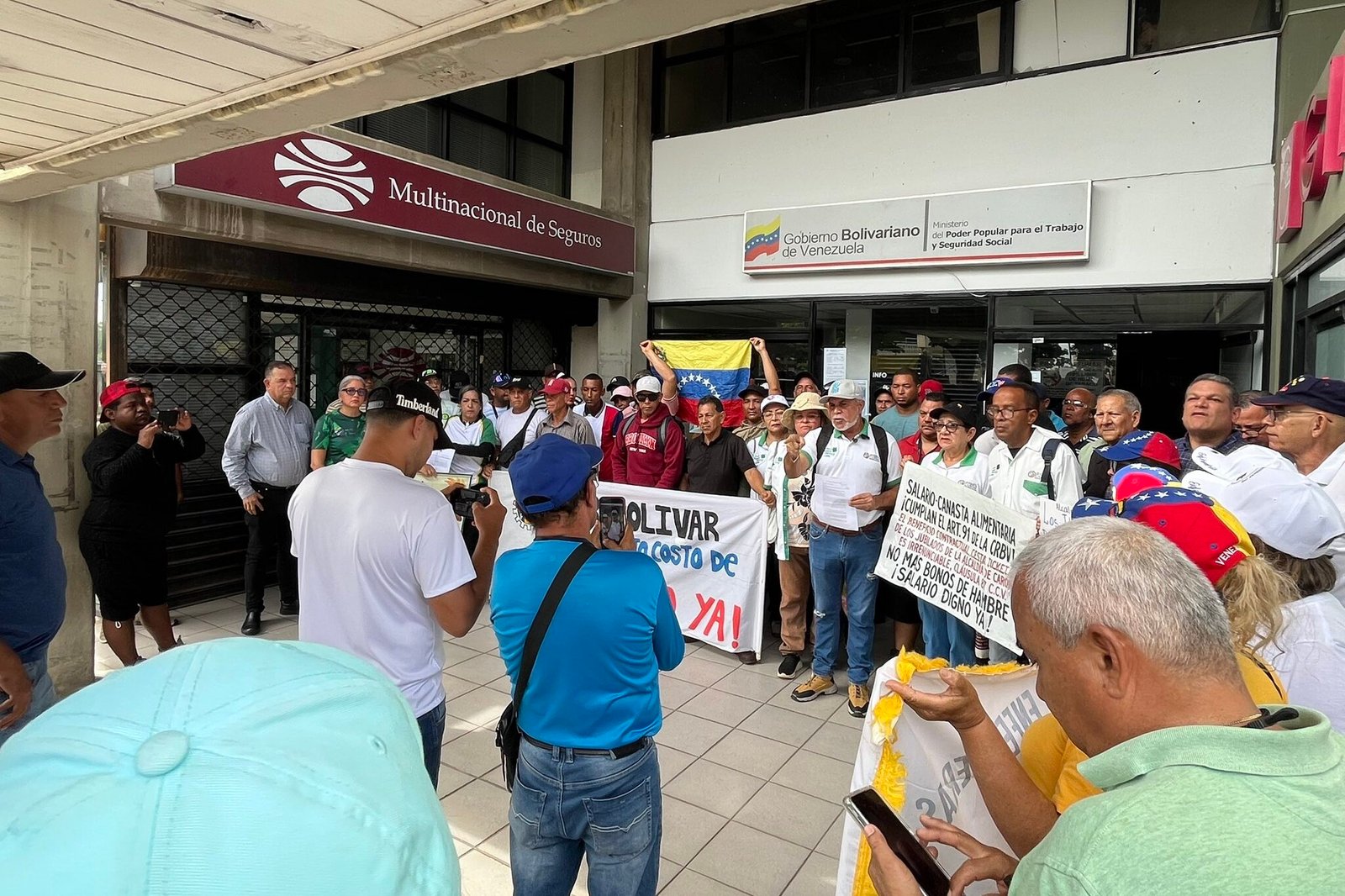
With a formal civil majority in the 23-member Committee, opposition parties must be zealous in ensuring that the selection of those civil society representatives is transparent. With protests from union sectors in Caracas demanding transparency and the inclusion of social demands — such as the release of political prisoners — it is evident that the legitimacy of the TSJ must also be guided by merit.