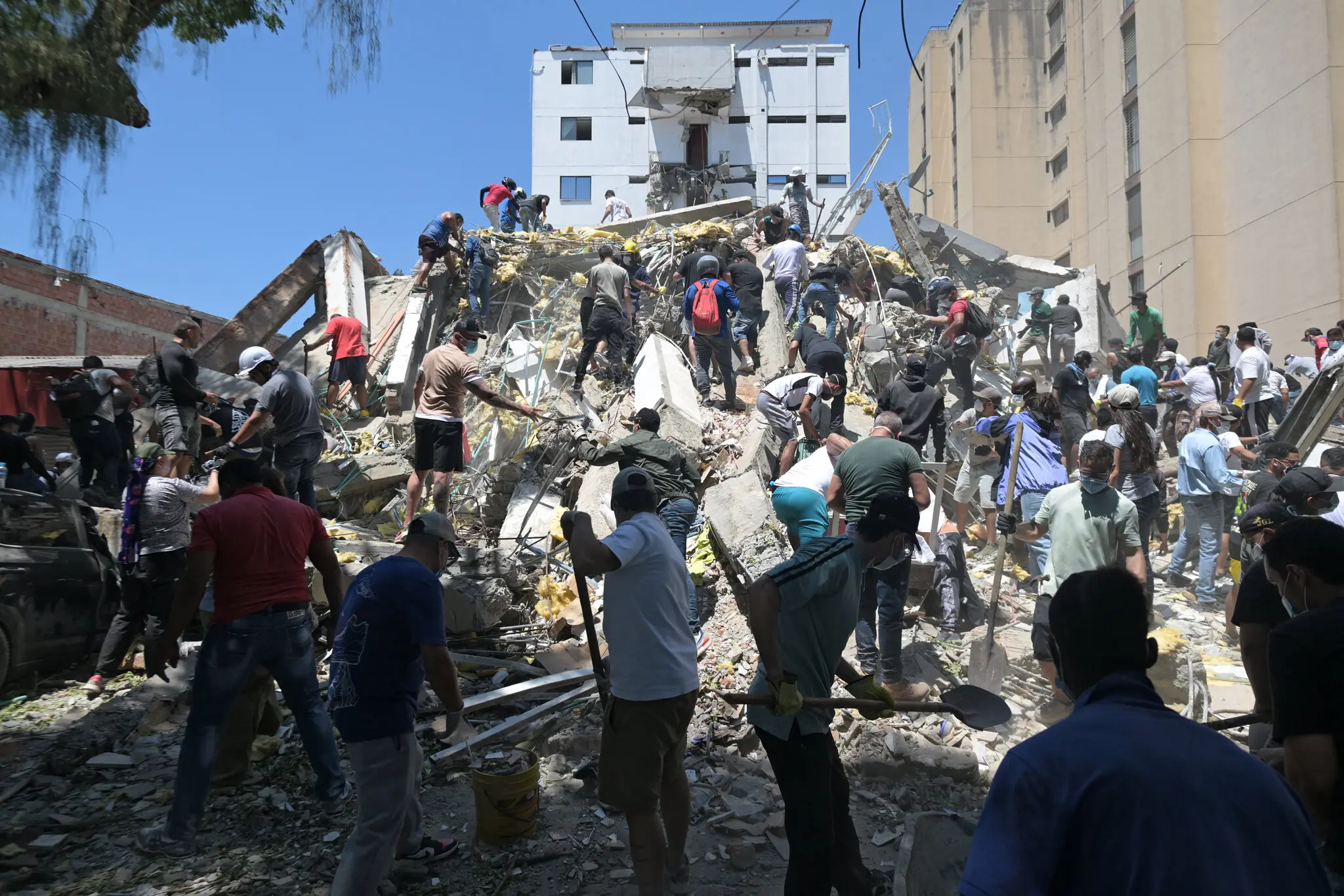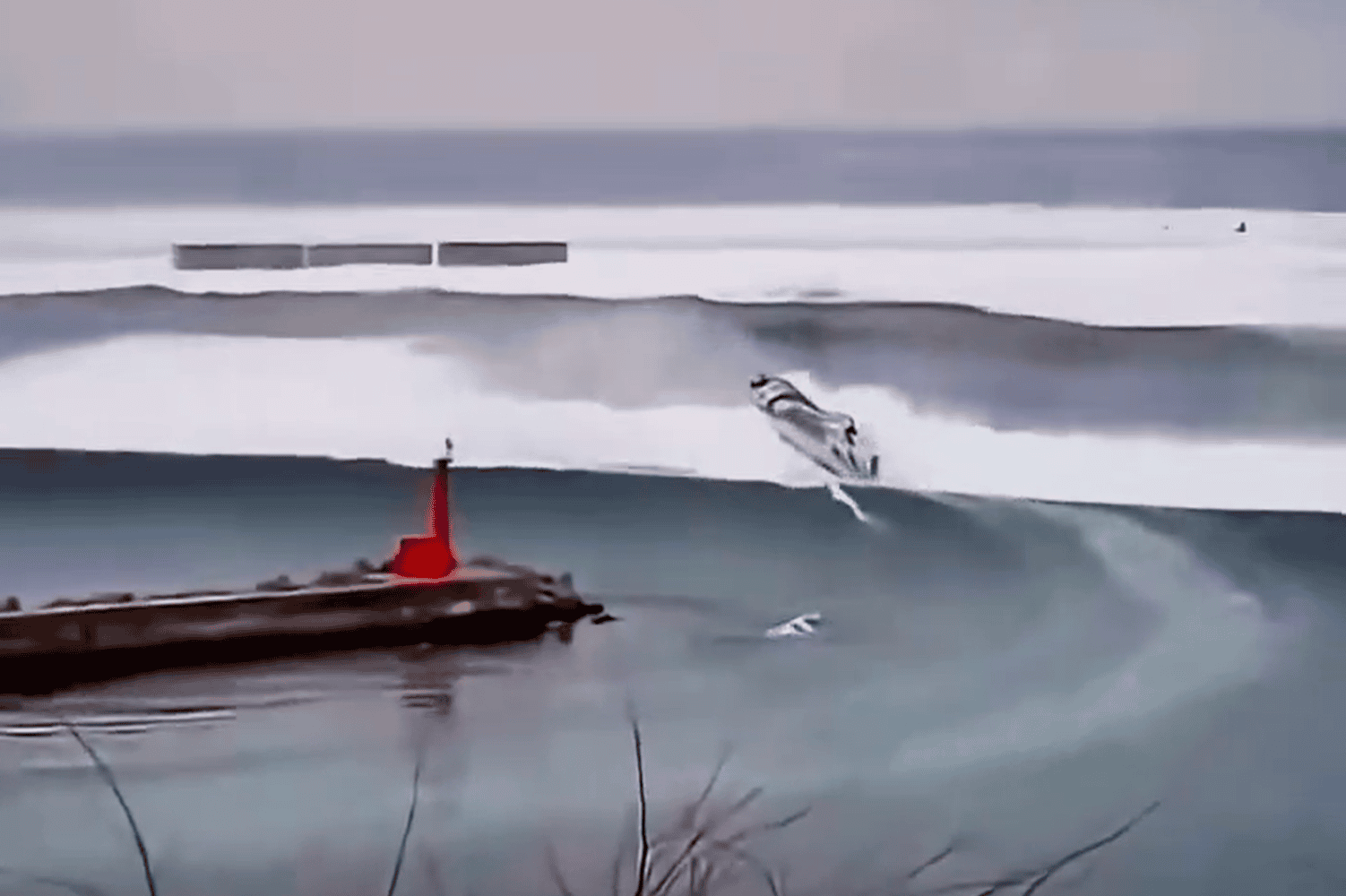
Hoaxes and fake news can be as destructive as the earthquake itself, causing unnecessary displacement, hindering rescue efforts, and increasing human suffering. Image: Screenshots of images from the 2011 Japan tsunami, linked to Venezuela after the tragedy.
Guacamaya, July 10, 2026. On the afternoon of June 24, Venezuela not only faced a devastating seismic doublet of magnitudes 7.2 and 7.5 but also, from the very first moment, became the epicenter of an information emergency.
While rescue teams worked in states such as La Guaira and the Capital District, social media and messaging services were flooded with false content, out-of-context videos, and conspiracy theories that generated additional panic among an already vulnerable population and may even have been instrumentalized for political purposes.
Guacamaya undertook the task of identifying, verifying, and presenting a compilation of the main hoaxes that circulated from the onset of the tragedy, which heightened disorientation in the midst of a disaster that plunged thousands of families into mourning and left thousands more homeless.
Immediate catastrophe alerts: tsunamis and blackouts
Minutes after the earthquakes, fear was capitalized on through two main narratives.
The first was a false tsunami alert, consisting of the circulation of a video showing emergency sirens and a high tide hitting a port area, attributing it to La Guaira. However, the audiovisual material actually corresponded to the 2011 Japan tsunami.
Indeed, the United States National Weather Service issued a tsunami advisory that same day for the Virgin Islands and Puerto Rico—territories governed under U.S. administration—but it was canceled for the entire Caribbean within a few minutes. Ultimately, it was verified that neither national nor U.S. services issued alerts for Venezuela’s coasts.
Likewise, the sectoral vice president of Politics, Citizen Security, and Peace, Diosdado Cabello, dismissed the rumor as a malicious “fake” on June 25, assuring that there was “absolute calm in Venezuelan waters.”
The second narrative was linked to an apparent official announcement of a “24-hour national blackout.” An image with the Corpoelec logo warned of a total suspension of electrical service due to seismic activity.
The truth is that, although there were specific failures due to infrastructure damage, no such supposedly official schedule existed or was implemented. Some local media outlets and the Venezuelan Fake News Observatory confirmed that the image was an impersonation of the state electric company.
The HAARP conspiracy theory
As has become customary with this type of natural phenomenon worldwide, social media spread the claim that the earthquakes were triggered by the United States’ High Frequency Active Auroral Research Program (HAARP) using “laser rays.”
In this regard, geophysics experts clarified to AFP that it is physically impossible for a laser to activate an earthquake, which originates between 10 and 20 kilometers deep due to the natural sliding between tectonic plates.
Styrofoam in the rubble
One of the most persistent hoaxes, although it stemmed from real reports and videos of the collapses, was that government buildings collapsed because their columns were filled with expanded polystyrene (anime).
The technical reality is that anime is a standard material in Venezuelan construction, commonly used to lighten ribbed slabs or in sandwich panels (such as the Emmedue system). Its presence in the rubble does not necessarily indicate malpractice, since the structural support relies on reinforced concrete and steel, not on the styrofoam.
In any case, a technical investigation is necessary for each building.
The “diversion” of humanitarian aid
The mayor of Panama City, Mayer Mizrachi, denounced, through tracking via AirTags devices, the diversion of donated supplies, claiming that part of the cargo destined for La Guaira ended up in Maturín.
Subsequently, through state field work and independent media, it was verified that the humanitarian aid was received by citizen Marjori Blanco, a victim of the earthquakes, who moved to the eastern locality to stay with relatives after losing her home in the tragedy.
The handling of the deceased, the main target of hoaxes
On social media and instant messaging services, a rumor emerged that the bodies of the victims would cause deadly infectious outbreaks. In this regard, the WHO and the Venezuelan Society of Infectious Diseases clarified that bodies after natural disasters do not generate epidemics, since victims die from trauma or asphyxia, not from pre-existing diseases.
Figures from the national public opinion, such as lawyer Joel García or journalist Melanio Escobar, circulated versions of burials in “mass graves” or that fingerprint scanners used in elections and food regulations in the past could help identify the deceased. Both narratives, published respectively on their personal X accounts, contain significant inaccuracies.
On the one hand, in a report by El País, it was specified that the space enabled at the La Esperanza cemetery in La Guaira was arranged for individual, coded, and documented burials. This follows protocols of the World Health Organization and the Pan American Health Organization for emergency cases.
Likewise, Governor José Alejandro Terán denied that the space involved mass graves, although he did acknowledge the magnitude of the tragedy with hundreds of unclaimed bodies.
In the other case mentioned, as a technical clarification, commercial fingerprint scanners or conventional biometric readers (such as those used in ATMs or elections) are generally not useful for identifying deceased persons, as they require living tissue, body heat, and pulse.
It is essential to distinguish between an identity registration instrument (the fingerprint scanner) and a technology for locating the deceased. Confusing both concepts can generate false expectations or anxiety about the technological capabilities employed in the disaster zone.
Authorities, including acting president Delcy Rodríguez, confirmed that fingerprint recognition through forensic procedures is the first step in the protocol, followed by photography and forensic odontology if the first is not possible.
Anxiety and false expectations coexisted
On social media, alarms circulated about orphaned children “given to strangers” in shelters. In this regard, IDENNA and NGOs such as Cecodap denied mass disappearances, although they reinforced strict protection protocols.
Also circulating were “miraculous rescues” outside the survival window days, by recycling videos of previous rescues or from other countries in the past, which played with the hopes of those who were waiting expectantly.
In a catastrophe, verified information is not only a right; it is a survival factor.
Trust is built on transparency and corroborated evidence.
As a recommendation, it is always important not to share content out of emotion and, instead, to verify out of responsibility. The truth also saves lives.