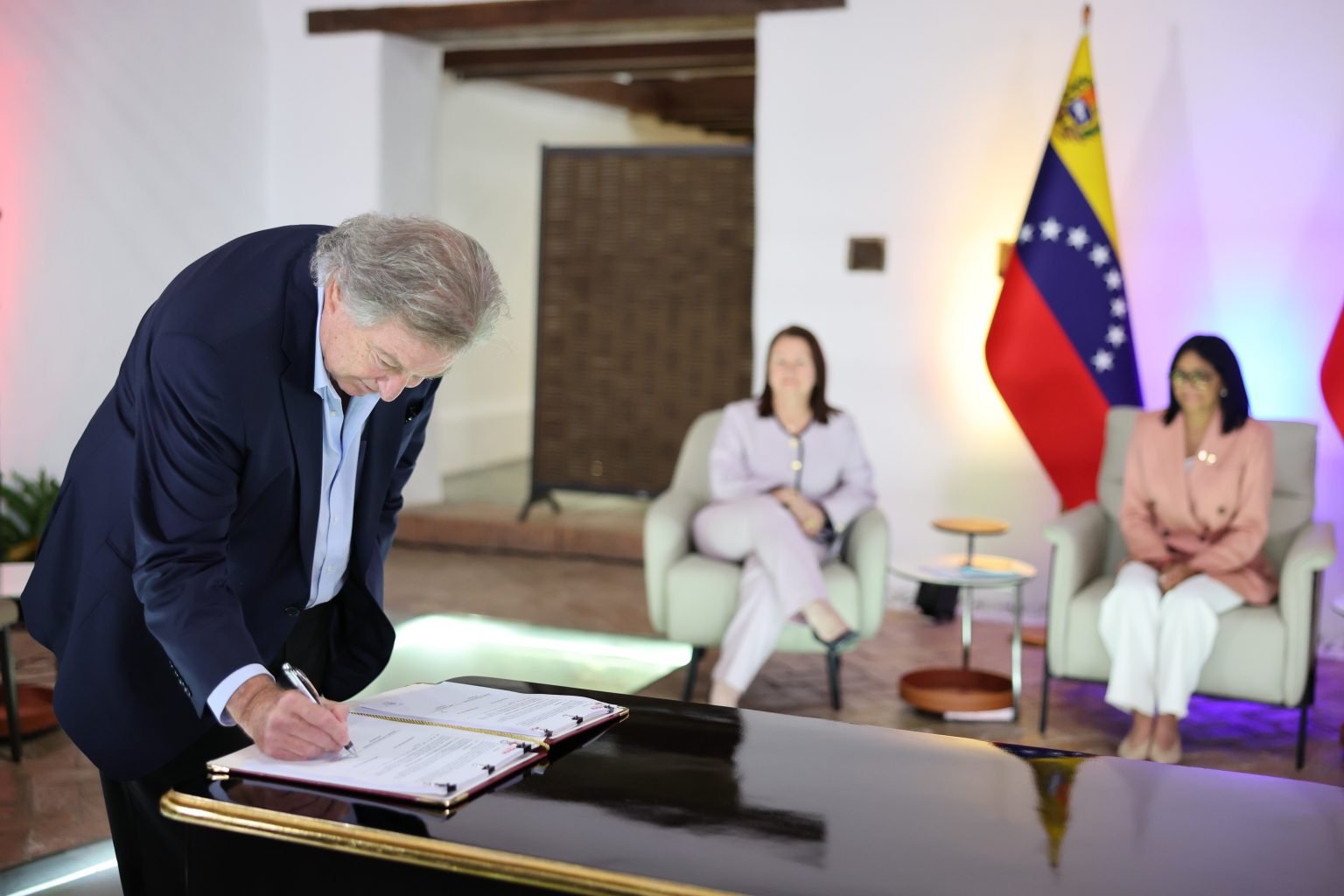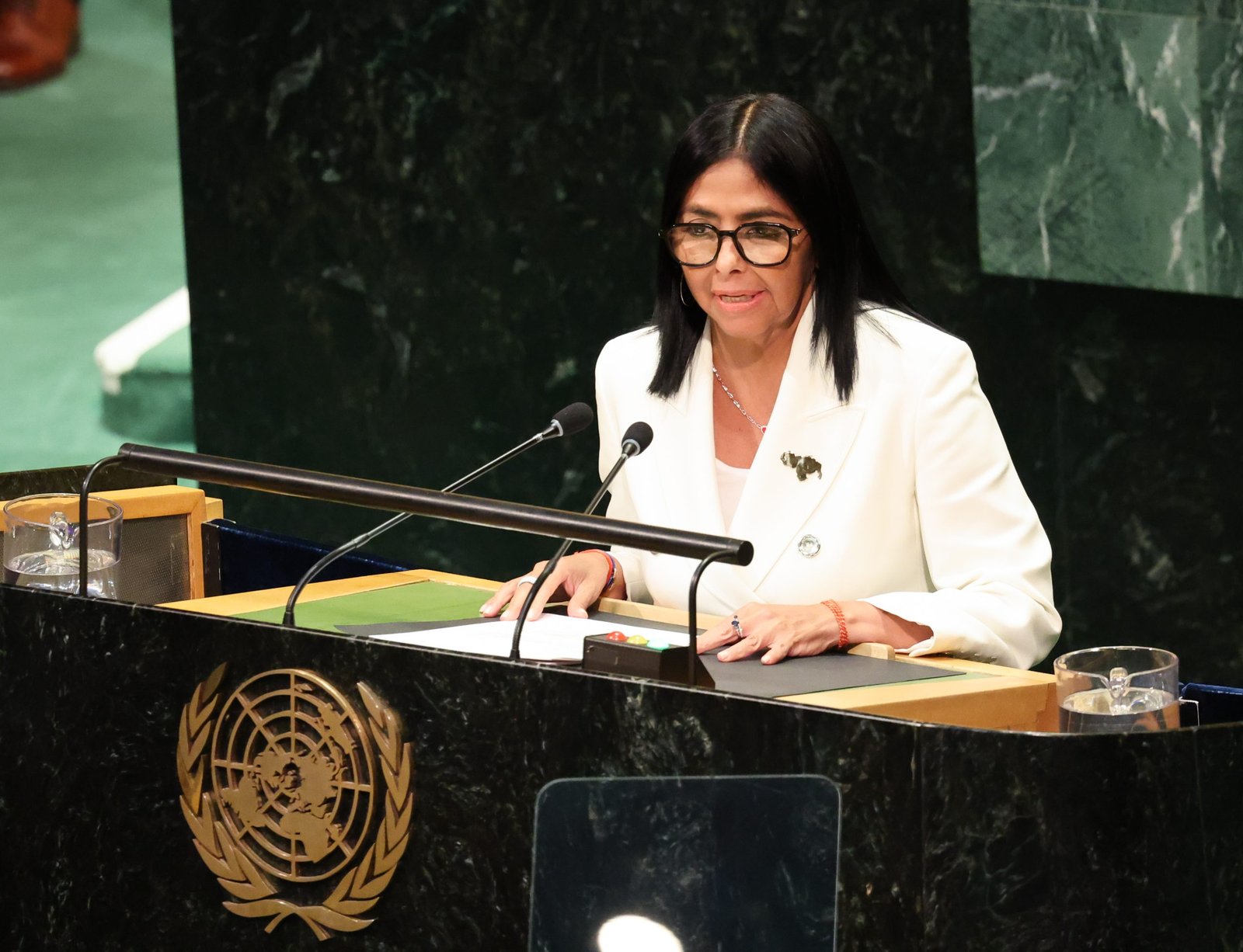
The new scenario configures a country that has shifted its dependence from former allied powers to a new pragmatic link with the government of Donald Trump. | Image: Ministry of Hydrocarbons.
Guacamaya, September 4, 2026. – The announced “oil pact of the century” between the administration of Donald Trump and the caretaker government of Delcy Rodríguez has shaken domestic public opinion. Since the news broke on August 28 from Washington, the matter has transformed into a complex architecture of business dealings, long-term concessions, and narrative contradictions—not only within the ruling party but also among its traditional adversaries.
As contractual details emerge, the inclusion of controversial Venezuelan businessman Alejandro Betancourt as a central operational piece, and the lukewarm response from traditional opposition leadership—which seems to fear confrontation with its main northern ally—paint a picture of public bewilderment and pragmatic realignments in domestic and foreign policy.
What Is Known So Far About an Unprecedented Agreement
Formally confirmed between August 31 and September 1, 2026, the binational agreement grants the private company North American Blue Energy Partners (NABEP)—owned by Alejandro Betancourt and registered in Barbados in 2024—the exclusive right to exploit 17 strategic fields in the Orinoco Oil Belt and the Lake Maracaibo basin.
These deposits hold approximately 65 billion barrels of proven crude reserves, equivalent to just over one-fifth of Venezuela’s oil wealth. The financial and corporate structure revealed by the White House defies any national historical precedent.
The agreement establishes an exploitation term of 100 years (though the acting president, Delcy Rodríguez, has rhetorically limited it to a base period of 25 years, renewable). In exchange for the deal and “at no cost to the U.S. taxpayer,” the Pentagon’s Office of Strategic Capital receives a 35% stake in NABEP’s parent company.
Additionally, the U.S. government will have veto power over the company’s board of directors—the majority of whose members must be U.S. citizens—and the contract will be subject exclusively to U.S. federal laws and courts.
In turn, the U.S. Department of State will have the guaranteed right to purchase 20% of production at cost price to replenish its Strategic Petroleum Reserve (SPR), also holding the right of first refusal on the remaining 80%.
Finally, NABEP has announced a private investment plan of up to $100 billion to recover Venezuela’s damaged infrastructure and projects paying more than $209 billion in royalties and taxes to the national treasury over the first 25 years.
Alejandro Betancourt: The Controversial Businessman at the Center of the Deal
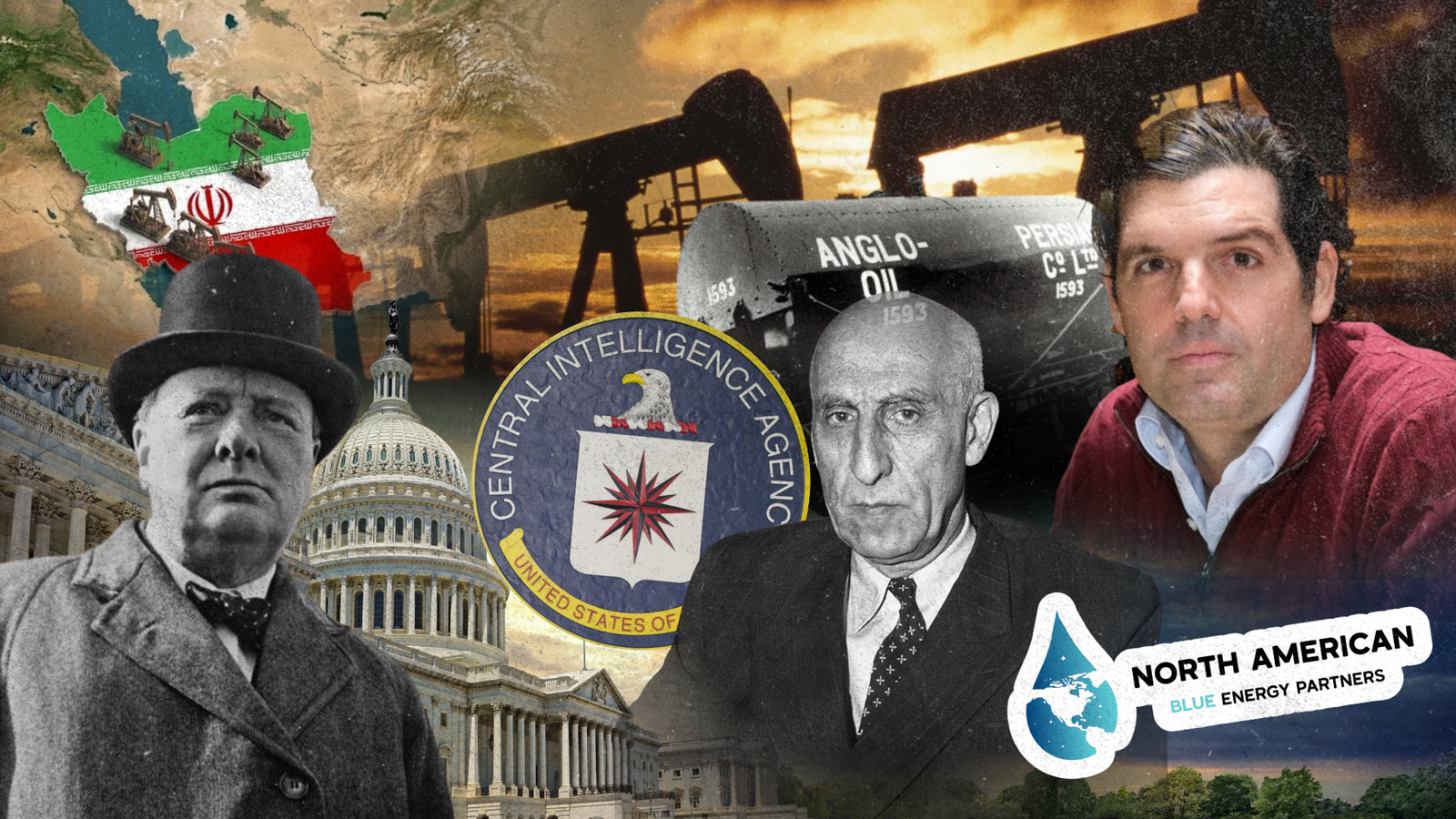
The appointment of Alejandro Betancourt López, 46, as CEO and principal shareholder of NABEP is the most explosive point of controversy. Betancourt was once included by public opinion among the so-called “bolichicos”—a group of young people from wealthy families who amassed dizzying fortunes during Hugo Chávez’s presidency.
Through his company Derwick Associates, founded in 2009, Betancourt allegedly obtained 12 multi-million-dollar contracts from Corpoelec and Pdvsa to import electricity-generating plants during the energy emergency. The effects, however, left the country with a chronic blackout crisis that still paralyzes national productivity today.
Independent investigations by Transparencia Venezuela and the Organized Crime and Corruption Reporting Project (OCCRP) determined that the government paid an estimated 138% overprice (more than $2.9 billion) for over-invoiced equipment that only produced 20% of the promised energy.
Despite this track record, and facing since 2019 open criminal proceedings by the Zurich Public Prosecutor’s Office (Switzerland) and Spain’s National Court for alleged money laundering from Pdvsa funds, Betancourt has never been formally charged in any court.
In May 2026, Zurich justice abruptly withdrew its extradition request against the businessman in the United Kingdom after a discreet but intense intervention by the U.S. Departments of State and Justice before Swiss and British authorities.
Subsequently, in June, Washington issued a multiple-entry visa that allowed him to travel freely to Palm Beach and Caracas to close what is now known as the oil deal.
A Moderate Opposition Timid to Antagonize the North
The reaction of Venezuela’s traditional opposition to an agreement that places operational control of one-fifth of the nation’s reserves in the hands of a foreign power has been notably moderate, timid, and fragmented. Accustomed for decades to fiercely fighting every Executive decision, the main leaderships seem to have fallen into a kind of shock.
Analysts, such as economist and researcher Francisco Rodríguez, point out that Washington’s direct participation in the institutional support of Delcy Rodríguez’s interim government has turned Venezuela into a de facto protectorate. Since it is the Americans who determine the viability of power in Caracas, no local politician aspires to antagonize the administration of Donald Trump.
On one hand, María Corina Machado, opposition leader and 2025 Nobel Peace Prize laureate, maintained a prolonged silence before posting a video on social media on September 3. While she expressed feeling “sadness, anger, and that all-too-familiar discomfort in our history because someone decides about what is ours, in our name, without counting on us,” she avoided outright opposition to the agreement.
Instead, the leader focused her demands on transparency and competitive bidding. “Of course, the United States is the main partner Venezuela needs to fully develop its strategic value, but the enemies of the United States in Venezuela are today in Miraflores. Win-win requires sustained work under the non-negotiable principles of absolute transparency, legality, and efficiency,” she stated.
Meanwhile, Edmundo González Urrutia, former presidential candidate backed by Machado, issued a warning about the distribution of oil revenue. “Will this time oil improve the lives of all Venezuelans? Or only those of a few? Venezuela’s recovery cannot be measured only by the barrels it produces again, but by the lives that wealth allows to rebuild,” he said via X.
On the other hand, parties of the Democratic Unity Platform (PUD) issued separate statements. Acción Democrática, for its part, expressed “deep concern” over the agreement, while Primero Justicia called for “transparency and more information.”
From more moderate sectors, there were also direct criticisms of the pact, though aimed at the Government itself. Deputy Henrique Capriles (Unión y Cambio) lambasted the opacity regarding currency and resources. “Venezuelans have no confidence in those who manage public finances, and the only way for that to change is for new, untainted people to take over that administration,” he posted on social media.
During the extraordinary session of the National Assembly on September 1, convened to endorse the Binational Energy Agreement, the opposition bench chose to abstain from voting in favor of the energy alliance. Deputy Luis Emilio Rondón, representing the Libertad Parliamentary Group, argued technical discontent without breaking lances against the Trump administration.
“We are not against the agreement presented. However, we cannot sign an agreement we do not know… we need to know the ins and outs of the contract,” Rondón stated during the parliamentary session.
The only significant voice clearly favorable from this sector was that of Antonio Ecarri, who openly defended the commercial articulation with Washington. ‘Venezuela needs U.S. investment, and our objective is clear: to fully reintegrate our country into the Western Hemisphere and build a new era of economic cooperation, investment, and prosperity.'”
The timidity of the elites contrasts with the discontent of grassroots social sectors. On September 3, members of the Trade Union Coalition attempted to march peacefully toward the Marriott Hotel in Caracas, where the U.S. diplomatic mission is staying, in outright rejection of the agreement. The mobilization, however, was harshly blocked and prevented by Polichacao officers.
The union group’s lawyer, Fernando Giménez, vehemently summarized what he argued was the public perception of the surrender of natural resources. “We want them to take the Chavistas away and leave us the oil. What they are doing is taking the oil and leaving us the Chavistas,” he said amid the protest.
Experts Lead the Main Critical Voices
Given the silence and caution of party leaderships, the main critical and oversight voices have fallen on the shoulders of economists, analysts, and public opinion leaders.
Francisco Rodríguez, economist and researcher at the Center for Economic and Policy Research, has led the technical and legal dismantling of the agreement, calling it blatantly unconstitutional under Article 150 of the National Constitution. The economist has equated the 100-year concessions to the worst practices of sovereign surrender from the last century.
“The 100-year concessions granted by the Venezuelan government to North American Blue Energy Partners are twice as long as the longest concessions ever granted by the country since the beginning of oil exploration… Venezuela begins sending oil at cost price to replenish the U.S. Strategic Petroleum Reserve before receiving a single cent from the Trump oil deal.”
The economist added: “Over the last 25 years, Venezuela delivered 640 million barrels of oil to Cuba through below-market-price sales. Over the next 25 years, Venezuela will cede 2.1 billion barrels of oil to the United States through cost-price sales.”
Rodríguez also revealed that under these preferential conditions, NABEP will obtain total profits of $305 billion, equivalent to nearly three years of Venezuela’s Gross Domestic Product (GDP).
Meanwhile, economist Alejandro Grisanti, director and founding partner of Ecoanalítica, warned about the dangers of moving from a monopoly of an inefficient State to the formation of a colossal oligarchy of national private interests. “If the remaining 65% remains concentrated in the hands of a single owner, we would be talking, under these assumptions, of a stake that could eventually be worth US$36-53 billion,” he warned on X.
Grisanti added that such a scenario “would potentially place a single person among the largest fortunes in Latin America and at the helm of a company that could produce nearly 50% of Venezuelan oil.” “We should not replace the concentration of State power with an extraordinary concentration of private economic power around our main natural resource,” he said on X.
Economist, professor, and research director at Harvard University, Ricardo Hausmann, directly attacked Secretary Rubio for agreeing to the transfer of assets at the expense of Venezuelan institutional legality, thus addressing the ethical and political transition field. “Secretary Marco Rubio: You have just lost all the trust that Venezuelans had in you, and that will haunt you. You chose to use U.S. power, not to free Venezuelans, but to sleep with our oppressors,” he stated.
In his strong message, Hausmann added against Rubio: “You chose to push an asset grab, an unconstitutional agreement with an illegitimate oppressive government, instead of using U.S. leadership to first restore constitutional government and democracy… It is no surprise that you are using wanted criminals—like Alejandro Betancourt—to close this shameful agreement.”
Finally, constitutional lawyer and dean of the Faculty of Legal and Political Sciences, Juan Carlos Apitz, deconstructed the true meaning of the 35% equity transfer to the Pentagon: “The 35% of the U.S. in NABEP is not an economic position. They accepted eroding the value of their own stake just to secure the barrels. That swap only makes sense if dividends were never the goal. It is a control position. China put in money and receives dividends. The United States put in no money and receives control.”
The Officialdom’s Paradox: Sovereignty Discourse Amid Internal “Betrayal”
For the officialdom, the oil pact has forced the shelving of decades of anti-imperialist rhetoric and slogans like “Yankee Go Home.” Both acting president Delcy Rodríguez and the national leadership of the PSUV have closed ranks to justify the agreement under pragmatic premises of “economic reactivation” and “national welfare.”
Acting President Delcy Rodríguez even defended Betancourt’s role, labeling journalistic investigations as media trials devoid of legal basis. “In Venezuela, he was acquitted years ago, and he has no case in the United States. (…) Many times a person is judged in the media before the courts,” she told local and foreign media.
Her brother, the President of Parliament, Jorge Rodríguez, ratified the legality of the contracts based on the Production Participation Contracts (CPP) provided for in the reformed Hydrocarbons Law. “What is coming is oil production at unprecedented levels, and to those who use one of those dollars to steal it, figuratively, their hands will burn and we will put them in jail,” he emphasized in the legislative session.
Nevertheless, fractures within the Chavista base and its historical sectors are undeniable. Former Minister of Petroleum and former president of Pdvsa, Rafael Ramírez, now exiled, harshly criticized the transaction. “It will certainly go down in history for being surrenderist and for opening the doors to the new colonialism of the U.S.A. An agreement made behind the country’s back, evidently unconstitutional, that cedes control of territory and oil to a foreign power,” he said on X.
Similarly, historic Chavista deputy Iris Varela warned that the pact is signed under direct coercion generated by the “kidnapping” of Nicolás Maduro in New York prisons. On the legislative front, former official deputy William Rodríguez labeled the handover of Orinoco Belt fields as “the greatest oil betrayal in history.”
Washington’s Stance: Business Above Idealization
From the White House, the defense of the pact has been pragmatic and without moral nuances. Donald Trump has celebrated what he considers the greatest energy triumph of his term, stating that the Belt’s reserves were a “dormant” asset and that now the United States “is going to take all of it,” although there is no official endorsement confirming this.
Secretary of State Marco Rubio, the architect of the rapprochement, has downplayed criticisms of Betancourt. In an interview with Venezuelan journalist Sergio Novelli, Rubio defended NABEP’s role due to its real refining and production capacity in western Venezuela.
“There was no investigation within our system (against Betancourt). He is an individual who supported a lot, for example, during the time of Juan Guaidó, and he ended up in a very bad place with Maduro because it became known that he was supporting opposition elements back in 2019,” he said.
Secretary of Energy Chris Wright, who traveled to Caracas on September 2 to oversee Chevron’s expanded operations and GE Vernova’s modernization of the electrical grid, defined Betancourt plainly: “He has proven to be a very competent operator… Alejandro had certain conflicts with the previous regime… which made him appear in the news.”
In response to ethical criticisms from the U.S. press, a senior State Department official closed the discussion under condition of anonymity. “I am not asking for anyone’s canonization. I am only saying that this is a person who in the past has been useful to the U.S. government. Geopolitics, often, is not about choosing between the ideal and the imperfect. It is often about deciding what is the best outcome, and you have to work with what you have.”
Pragmatism for the Convenience of Both Governments
For Rodríguez’s government, the alliance with Washington and the inclusion of an operator with direct bridges to Republican corridors like Alejandro Betancourt represent a lifeline of financial survival and protection against international prosecution.
For the Trump administration, pressed to replenish its depleted energy reserves amid an escalating military confrontation in the Strait of Hormuz, taking control of Venezuelan hydrocarbons at cost price is a victory in favor of the electoral campaign and a strategic coup within the framework of the Monroe Doctrine.
By striking a deal with an unelected government and marginalizing Parliament from strategic decisions, the U.S. administration sends the disturbing signal to the country that the flow of stable and cheap crude barrels appears to be a priority objective that has displaced historic demands for free elections and democratization.
Consequently, the big loser in this reconfiguration of forces seems to be Venezuela’s democratic institutionality—or at least its narrative defenders. The timidity of the main local party forces reveals the high political cost of external dependence: in the tutelary Venezuela of 2026, national sovereignty is a malleable concept that is defined and collected in Washington’s offices.