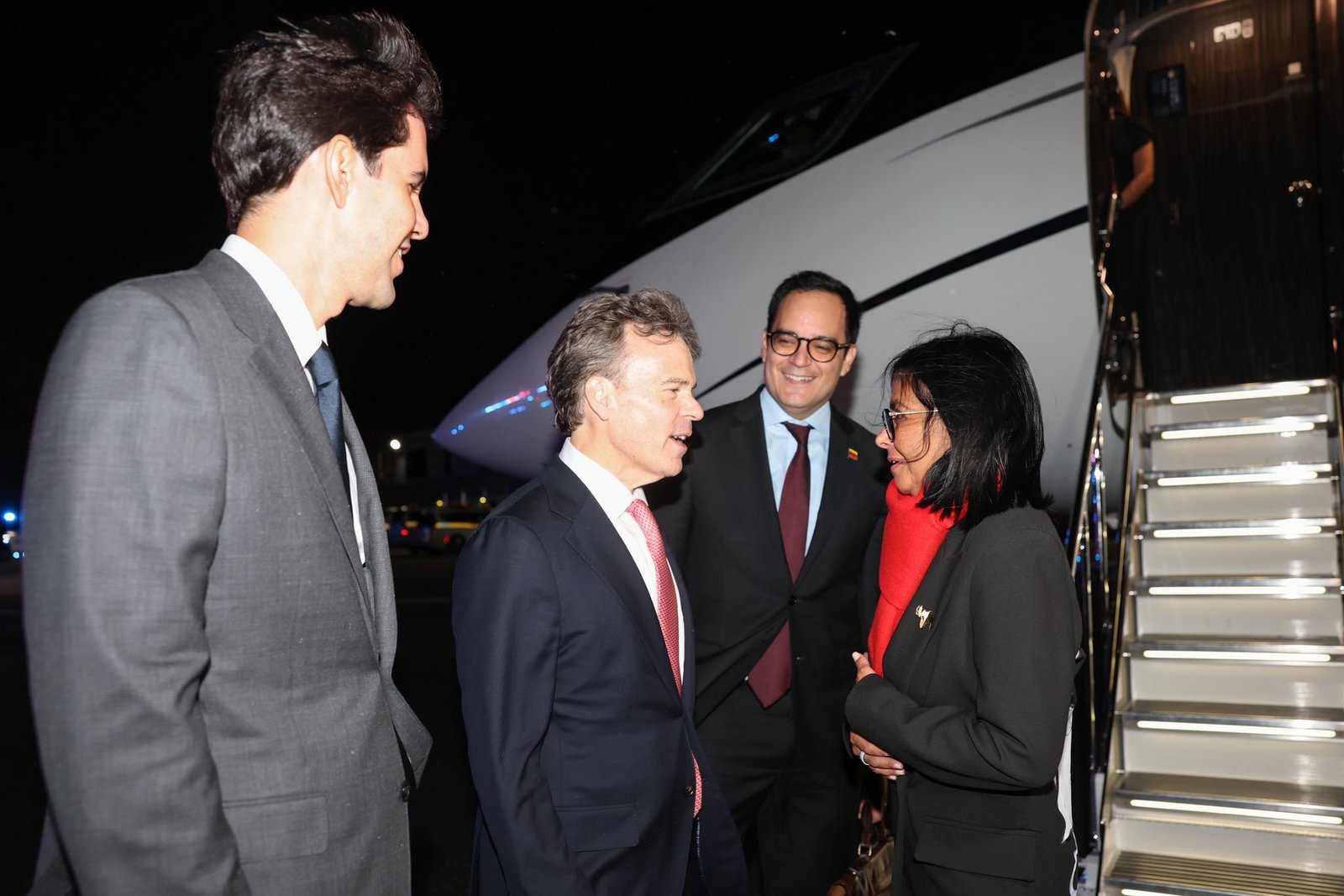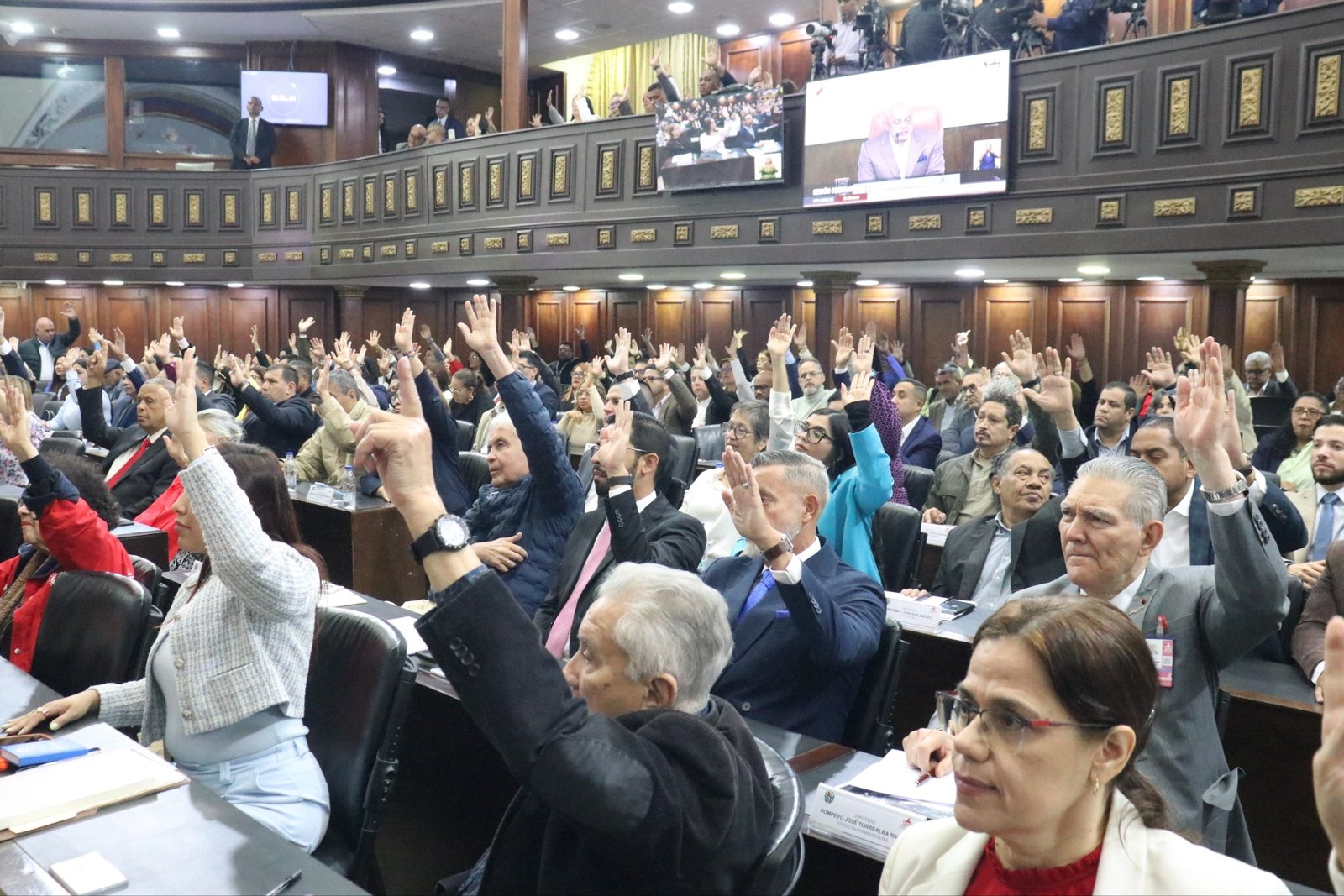
With an additional pro-government deputy in the new preliminary commission of 11 deputies, the civil representation of 12 members is nuanced. In parallel, the Executive requested the decriminalization of the questioned regulation that generated a special commission for its reform in session. | Photograph: National Assembly website.
Guacamaya, September 29, 2026. The National Assembly took another step in the route outlined by political negotiation by formally designating the new Preliminary Commission of the Judicial Nominations Committee. In parallel, Parliament also received the proposal for the “decriminalization” of the questioned Law Against Hate sent by acting President Delcy Rodríguez and designated a Special Committee for the reform of the regulation.
Regarding the renewal of the Supreme Tribunal of Justice, the parliamentary designation, announced by AN President Jorge Rodríguez, marks the restart of the constitutional procedure to select the 32 magistrates of the highest judicial body. According to Rodríguez, the measure responds directly to the agreements reached within the framework of the national Dialogue Table.
“Today it corresponds to the formation of the preliminary committee by the Board of Directors of the National Assembly so that it may proceed to comply with the deadlines and objects established in the Constitution for the designation of the nominations committee,” declared the head of Parliament upon instructing the immediate convening of the working group.
Replacements and a New Correlation of Forces
Compared to the first instance formed months ago, the approved parliamentary group presents significant changes in its structure and internal balance. The new appointment alters the correlation of forces in the first filter of the legislative process. Chavismo goes from having 7 representatives to adding 8 deputies from the United Socialist Party of Venezuela (PSUV), leaving 3 seats for opposition or non-government forces.
Three deputies who were part of the initial group left the commission: Desirée Santos Amaral (PSUV), Luis Augusto Romero (Progressive Advance) and Antonio Ecarri (Pencil Alliance). In their place, parliamentarians Jonathan García (PSUV), Liliana González (PSUV) and Luis Florido (A New Era) enter. The 11 designated deputies and their parliamentary profiles are:
Giuseppe Alessandrello (PSUV / La Guaira). President.
Pablo Pérez (Unión y Cambio / National). Vice President.
Gloria Castillo (PSUV / Guayana Esequiba).
José Óscar Villarroel (PSUV / Carabobo).
María Gabriela Vega (PSUV / La Guaira).
Fernando Bastidas (PSUV / Falcón).
Carlos Mogollón (PSUV / Capital District).
Jonathan García (PSUV / Táchira).
Liliana González (PSUV / Miranda).
Luis Florido (Unión y Cambio / National).
Félix Freites (Fuerza Vecinal / National).
Civil Representation Attenuated by the Political Filter
Within the framework of the reform project of the Organic Law of the Supreme Tribunal of Justice (LOTSJ), the delegations of the Dialogue Table had agreed to expand the definitive Judicial Nominations Committee from 21 to 23 members, by raising the representation of civil society from 10 to 12 members. In theory, this parity scheme seeks to guarantee for the first time a citizen majority in the pre-selection of candidates.
However, in practice, this apparent civil advantage may be strongly nuanced by the new internal correlation of the preliminary committee. By having added an additional pro-government deputy within the group of 11 parliamentarians, Chavismo ensures operational control over the initial review of the call and the selection of those same 12 representatives of civil society.
The Technical Counterweight: The 7 Jurists of the Credentials Review Council
As a prior mechanism of technical shielding gestated in the Dialogue Table between the delegations of the Delcy Rodríguez administration and the 2015 AN, on September 25 the formation of the Credentials and Requirements Review Council was announced. This instance of 7 jurists has the exclusive task of designing the public evaluation scale that will measure aspiring magistrates.
Of the seven members chosen by consensus at the negotiation table, four possess an independent profile and a recognized trajectory in academia or human rights:
- Rogelio Pérez Perdomo: Doctor of Law from the UCV, master’s from Harvard, professor at Stanford and Full Member of the National Academy of History.
- Belén Ramírez Landaeta: Former magistrate of the First Court of Contentious Administrative Matters and president of the Administrative Law Studies Foundation (Funeda)
- María Bernardoni de Govea: Doctor of Law from LUZ, with postgraduate studies at the University of Rome La Sapienza, former Minister of Labor and former dean of Monteávila University.
- Bernardo Pulido Márquez: Lawyer from the UCAB, master’s from Stanford and doctor from Yale, with extensive experience in human rights litigation before the IACHR and the UN.
The other three members have backgrounds linked to the judicial or administrative management of the government: Silio Sánchez Zerpa (former director of the Magistracy and alternate magistrate of the TSJ), Deyanira Nieves Bastidas (former president of the Criminal Cassation Chamber between 2004 and 2015) and Federico Fuenmayor Gallo (doctor in Criminal Law and former alternate magistrate).
The formation of this technical council generated favorable reactions in the legal sphere. Leader and political prisoner Perkins Rocha highlighted the “high academic, civic and moral degree” of the four independent jurists, while constitutional lawyer Juan Miguel Matheus stated that their names “represent a republican guarantee for the country.”
For his part, political scientist Benigno Alarcón considered the agreement a reputational advance, although he recalled that the definitive test will be in the AN’s compliance with the scale. Likewise, the NGO Access to Justice demanded the full publication of the methodology and the scores to ensure the credibility of the process.
The Special Commission for the Reform of the Law Against Hate
Although the proposal sent by acting President Delcy Rodríguez was not originally on the published agenda for this Tuesday’s ordinary session, the initiative was formally announced before the plenary and led to the immediate creation and integration of a Special Commission of 11 deputies to process the reform project of the “Constitutional Law Against Hate, for Peaceful Coexistence and Tolerance.”
The request, sent by letter to Parliament President Jorge Rodríguez, proposes “advancing in the decriminalization of the behaviors provided for” in the regulation promulgated in 2017. This measure arises within the framework of the commitments assumed in the technical tables of political dialogue regarding freedom of expression and citizen rights.
The new Special Commission was composed as follows:
- Pedro Infante (PSUV / Miranda)
- Jorge Arreaza (PSUV / National)
- América Pérez (PSUV / Nueva Esparta)
- Carolina García Carreño (PSUV / Lara)
- Willy Medina (PSUV / Táchira)
- Tania Díaz (PSUV / National)
- Jehyson Guzmán (PSUV / National)
- Nicolás Maduro Guerra (PSUV / Capital District)
- Amelia Belisario (Unión y Cambio / Aragua)
- Luis Romero (Avanzada Progresista / National)
- Rubén Limas (Acción Democrática / Capital District)
A key political element in the formation of this team is that three of its members (Pedro Infante, Jorge Arreaza and América Pérez) are directly part of the Government’s official delegation in the Dialogue Table with the 2015 AN, which closely links the work of this parliamentary commission with the negotiation agreements.
The delegation of the 2015 National Assembly participating in the negotiation table issued a statement recognizing the step as part of the discussions for reinstitutionalization and democratic guarantees. However, it emphasized that the regulation has functioned since 2017 as “an instrument of persecution” and expressed its support for the more than 160 victims affected by its application.
For its part, the National Union of Press Workers (SNTP) warned that eliminating prison sentences would be “an important advance,” although “not sufficient” if provisions restricting the work of the media remain. Along the same lines, the National College of Journalists (CNP) reiterated that the text must be repealed in its entirety for violating freedom of expression from its origin.
Likewise, Óscar Murillo, general coordinator of Provea, together with the NGOs Espacio Público and VE sin Filtro, warned that maintaining administrative powers of digital censorship does not guarantee the exercise of fundamental rights. “We demand genuine and credible changes,” Murillo stated upon demanding the definitive abrogation of the law.
Between the search for institutional guarantees and the debate around political control of the process, the judicial renewal enters a crucial stage. The effectiveness of the changes will not be measured in discourse, but in whether technical weight manages to prevail over political calculations.