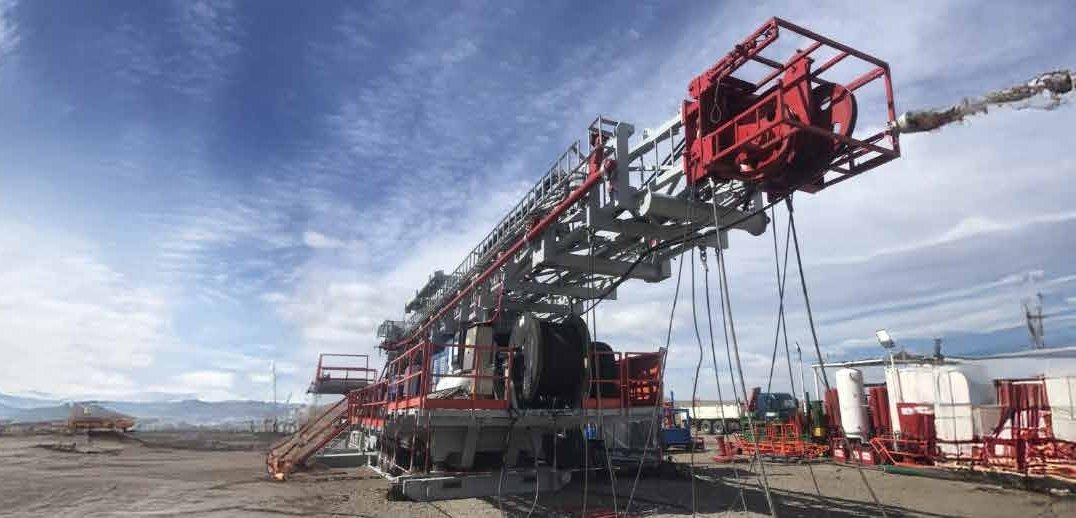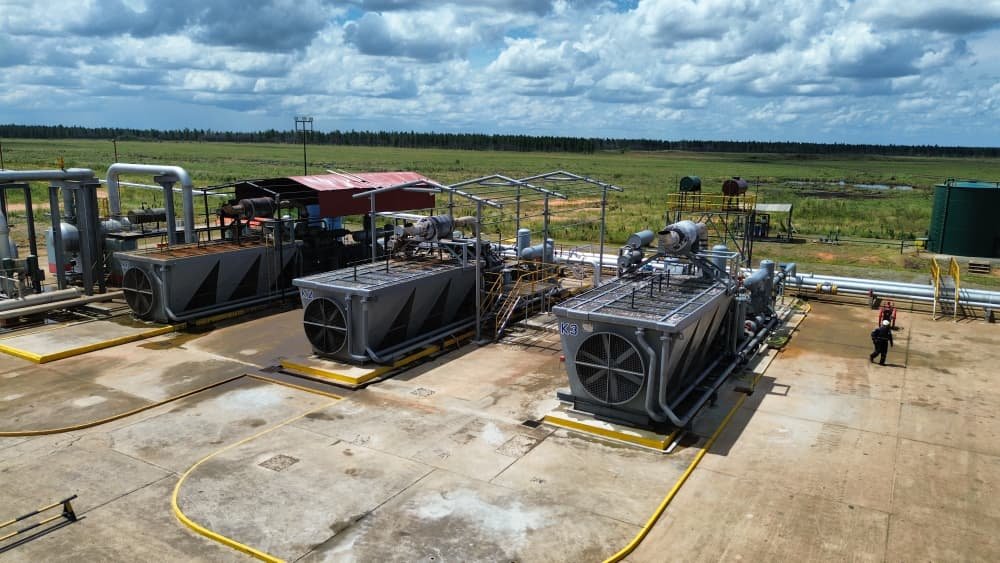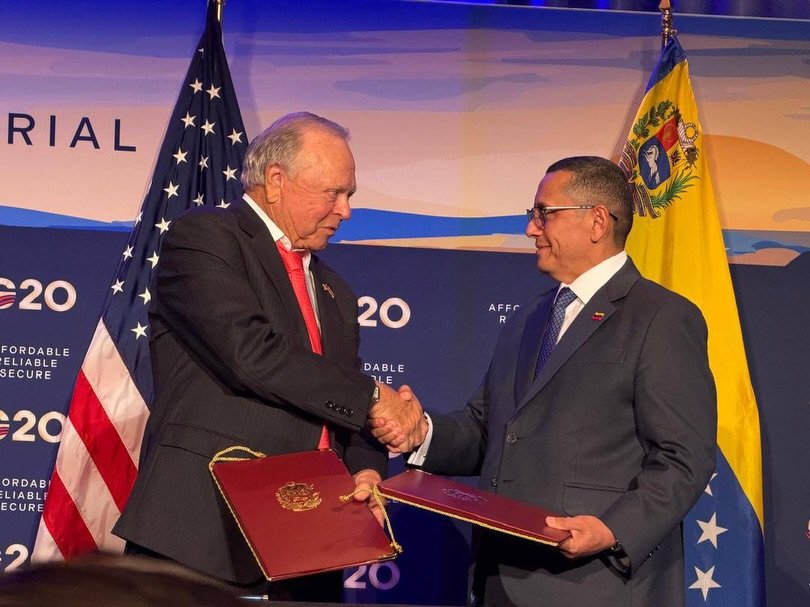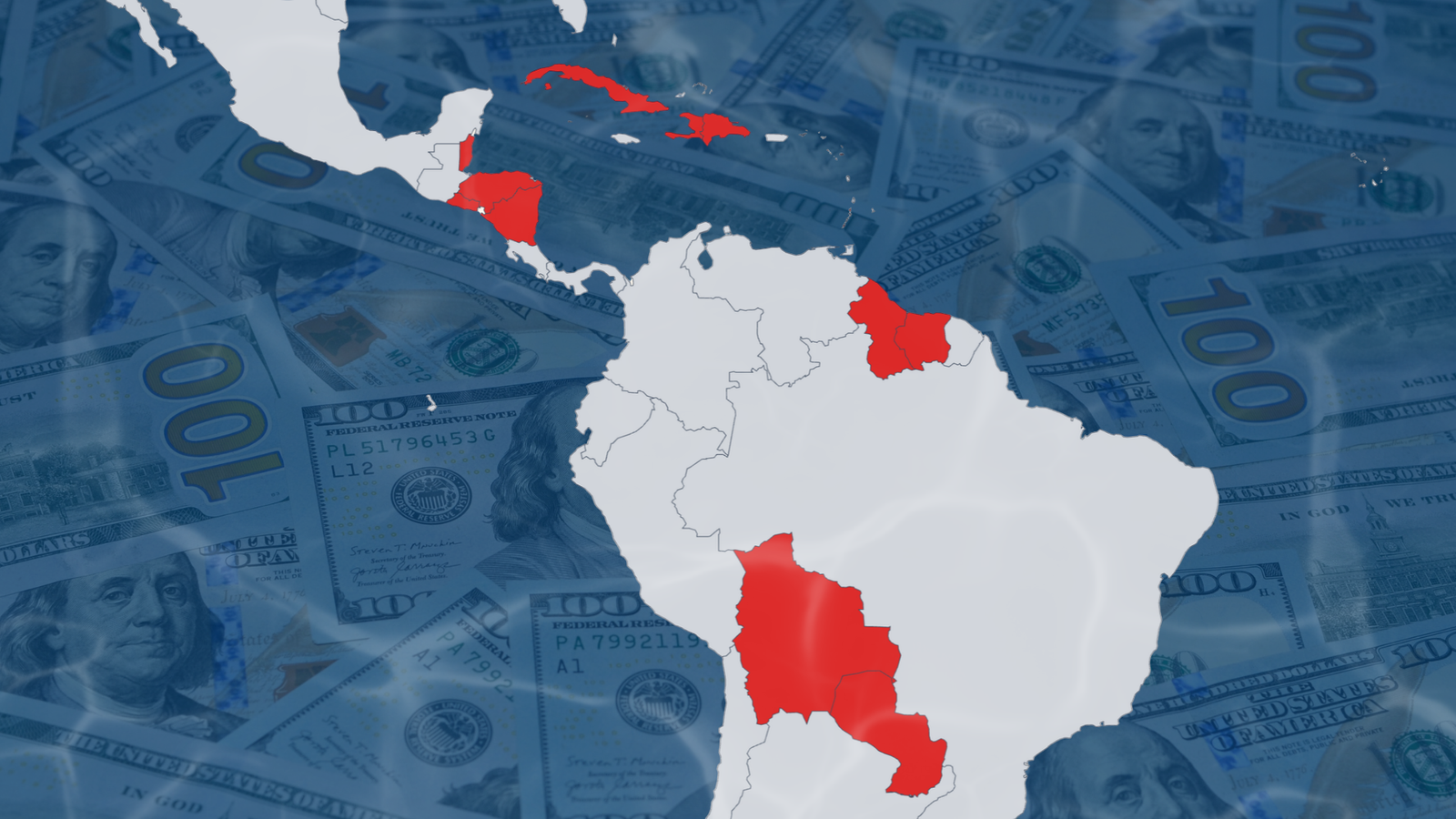
Several countries, mainly in the Caribbean, still owe sums to Venezuela under programs such as Petrocaribe. Image: Guacamaya.
Guacamaya, October 1, 2026. Discussion of Venezuela’s international finances usually focuses on the country as a debtor, especially since the opening that began on January 3, 2026 and the eventual restructuring of its debt. But Venezuela also occupies the opposite position: that of a creditor.
During the governments of Hugo Chávez and the first phase of Nicolás Maduro, Caracas wove a network of energy cooperation, bilateral financing, and concessional loans that gave other countries oil, money, and projects on preferential terms, as part of a foreign policy designed to expand its regional influence and counterbalance the United States.
Several foreign states and public entities thus accumulated obligations to Venezuela, PDVSA, Bandes, or other vehicles of the Venezuelan state. Some were paid, restructured, or forgiven; others remain in force; in other cases the balance cannot be established from public information.
This report reconstructs that other dimension of Venezuelan international finance: the countries that still hold obligations to Caracas, the origin of those debts, the mechanisms through which they were generated, and the current status of each. The goal is to distinguish between sovereign debt, obligations of state-owned companies, and commitments arising from mechanisms such as Petrocaribe, and to separate the currently identifiable balances from those that correspond to historical obligations or whose status remains in dispute.
Chávez’s Petrodiplomacy
Chávez used part of the revenue from the years of high prices to build alliances with governments and communities beyond his borders and to offer an alternative to the region’s traditional relationship with Washington and international financial institutions. The scope varied widely.
Petrocaribe was the main mechanism of this strategy: part of the oil bills was converted into long-term loans, while Caracas obtained political ties and diplomatic backing. However, it was not limited to the small nations of the Caribbean or to dealings with governments. In one case, for example, Chávez sent fuel to communities even inside the United States.
In 2005, through CITGO, PDVSA’s U.S. subsidiary, Venezuela supplied heating oil at discounts of close to 40% to low-income communities. In the Bronx, some 8,000 residents in about 75 buildings benefited. The program had a symbolic component, since Venezuelan oil was assisting the poor within U.S. territory.
The logic was to convert oil wealth into influence and alliances. The difference between what was carried out and what was announced is key to measuring the true scope of the strategy. The flagship program was Petrocaribe.
What Was Petrocaribe?
For Caracas, the return was not only commercial. It obtained political support, at times enough to block critical proposals against Chavismo at the OAS, at a time when the beneficiaries could not find that financing in the West. Economist Francisco Rodríguez of the University of Denver has noted that the cost became evident when prices fell in 2014 and Venezuela could no longer sustain those terms.
Maduro kept sending crude on generous terms until the program stopped in 2019, when the United States sanctioned the Venezuelan oil industry. By then, close to US$6 billion in receivables from Petrocaribe and associated bilateral agreements had accumulated, according to EMFI Securities, not counting Cuba, whose separate agreement never had its terms made public.
Haiti
Haiti joined Petrocaribe in 2006 and began using it in 2007. Part of the bill was paid immediately and the rest was converted into a long-term, low-interest loan. After the January 2010 earthquake, Venezuela forgave about US$395 million accumulated until then.
Haiti continued buying fuel through Petrocaribe during reconstruction, and the debt grew again. Part of those resources financed infrastructure, housing, and debris management; the World Bank notes that Petrocaribe was one of the main sources of public investment in 2010–2011. Investigations and controversies later arose in Haiti over the handling of those funds, which made Petrocaribe one of the major issues in Haitian politics in the 2010s.
At the end of 2018, the IMF estimated Petrocaribe-linked debt at US$1,825.5 million (20.2% of GDP), and in 2019 Venezuela accounted for about 86% of Haiti’s public external debt associated with oil imports.
It is the largest and best-documented case of the program. Bloomberg reported in 2024 a liability of US$2.3 billion before a US$500 million payment, made from a blocked escrow account after an OFAC license. Almost two years later, Forbes México cited a World Bank report according to which the US$2.2 billion in oil obligations “were extinguished”: Haiti paid the 500 million and Caracas forgave the remaining 1.7 billion. For Haiti, the poorest country in the hemisphere, settling the liability was a step toward moving forward with the IMF on a possible loan package. After the agreement, Venezuela went from being the main external creditor to a much smaller share of Haiti’s debt. The same Forbes article cites a remaining balance of US$56 million, without clarifying whether it is a separate component or a later adjustment.
Belize
The debt originated in 2005, when Belize joined as a founding country of Petrocaribe and signed the multilateral agreement in June and a bilateral agreement with Venezuela in September. About half of the bill was paid immediately and the rest was financed long-term, so fuel purchases became public debt owed to Venezuela, which became an important bilateral creditor. For Belize, the agreement meant fuel on concessional terms when prices were high.
According to World Bank data collected by Forbes México, Belize ended 2025 as Venezuela’s largest debtor under these agreements, with US$233 million. The figure contrasts with the US$129–164 million of the 2024 negotiations reported by Bloomberg. In December 2022, then–Prime Minister John Briceño had announced a renegotiation that reduced accumulated liabilities by more than US$250 million and eased the debt-to-GDP ratio by six to seven points.
Dominican Republic
Santo Domingo received Venezuelan oil with preferential financing—a quota of 50,000 barrels per day over 25 years at 1% interest—and between 2005 and 2014 the balance exceeded US$4 billion, making Venezuela one of its main creditors. The financing also freed up resources for other spending and investments.
The turning point came in January 2015, when Danilo Medina’s government agreed with PDVSA to buy back about 98% of the debt, some US$4 billion nominal, for around US$1.93 billion, a 52% discount. The operation was financed with sovereign bonds and reduced public debt by about US$2.094 billion (3.1% of GDP). The IMF considered it a significant saving, although it exchanged highly concessional debt for bonds with higher rates. The bulk of the historical debt was cancelled in 2015.
A disputed remainder is left. The newspaper Acento put the debt to Venezuela at US$214.3 million in 2024, frozen since 2019 because sanctions prevent processing the payment, while Diosdado Cabello and Delcy Rodríguez cited US$350 million. According to the same analysis, only US$54.3 million of the 214.3 corresponds to Petrocaribe; the remaining US$160 million would come from other Venezuelan financing sources, with no documented origin.
Guyana
Guyana and Venezuela signed the Petrocaribe agreement on September 6, 2005; the first shipments arrived in May 2007. According to Guyana’s Ministry of Finance, the terms were rates of 1% to 2%, a two-year grace period, and up to 23 years to repay, depending on the price of crude. Between 2007 and July 2015, Venezuela disbursed about US$720 million.
A particular feature was the trade offset by which Guyana amortized debt with exports of rice and paddy rice to Venezuela. According to its government, agreements were signed for about US$551.3 million of rice, which greatly reduced the balance without cash payments. The mechanism deteriorated with the territorial dispute over the Essequibo, and in 2015 Venezuela de facto suspended new financed supplies; Guyana has not incurred new debt under Petrocaribe since. The IMF confirmed in 2023 that the country continued paying with rice and other offsets.
Guyana shows a debt of US$147 million. It is unclear whether this corresponds to subsidized oil or to a Venezuelan capital injection.
The status is that of a historical debt being amortized, not a new line of financing. The relationship is also weighed down by the Essequibo, which had a last round of hearings at the International Court of Justice in May 2026.
Suriname
Suriname joined in 2005 and structured a “Suriname model”: the state-owned Staatsolie bought the Venezuelan fuel and a portion was financed long-term. Under the initial scheme it paid about 60% of the bill and the remaining 40% was converted into a loan with a two-year grace period, 2% interest, and up to 23 years. The debt accumulated through deferred payments; in 2016, the government used part of an international bond issuance of US$550 million for payments to PDVSA linked to Petrocaribe.
In February 2022 it acknowledged more than US$17 million pending to be offset with Venezuela, and sought to reactivate cooperation, including exchanges of rice for fertilizer.
The dispute is not closed. In September 2026, President Jennifer Simons raised with Delcy Rodríguez a dispute over a court attachment of PDVSA assets in Suriname, linked to the Petrocaribe offset mechanism. The Surinamese government indicated that proceedings continue without a final decision.
Jamaica
Jamaica joined Petrocaribe in August 2005 and received about 23,000 barrels per day, nearly half its consumption, with part of the bill converted into a concessional loan. The debt reached about US$3.25 billion, according to the finance minister at the time. In July 2015 it issued eurobonds for US$2 billion, maturing in 2028 and 2045, and used US$1.5 billion to settle a US$2.92 billion debt to PDVSA: a 48.6% discount (other coverage, such as El Estímulo, speaks of 53%). It was the second operation of this kind, after the Dominican one; between the two, Venezuela stopped receiving more than US$4 billion, according to El Estímulo.
A remainder was left, and in 2018 the director of Jamaica’s Petrocaribe Fund said some US$120 million was still owed. The most recent figure, from the Jamaica Gleaner of September 25, 2026, is that Jamaica holds US$45 million in a segregated account at the Bank of Jamaica that it cannot transfer to Venezuela because of sanctions, according to a document filed with the SEC with a balance as of July 2026. This is a sharp increase from the US$2.7 million reported in September 2023, with no explanation in the document. In 2019 Parliament dissolved the structure of the Petrocaribe Fund and moved its balances to the Consolidated Fund. Jamaica has not received Venezuelan oil for more than three years.
Part of that money has already gone to third-party creditors of Venezuela. After the 2007 nationalization of its stakes in projects such as Petrozuata and Hamaca, ConocoPhillips obtained in 2018 an International Chamber of Commerce award against Venezuela and PDVSA entities and sought assets in third countries. In February 2021, Jamaica’s Supreme Court appointed a judicial administrator over Venezuelan assets, and in July extended it to the Petrocaribe funds, which ConocoPhillips estimated at at least US$115 million. Since then, about US$28.3 million has been transferred to that judicial administration, under a specific OFAC license.
In 2007, PDV Caribe bought 49% of the Petrojam refinery for US$63.7 million, to modernize and expand it from about 36,000 to 50,000 barrels per day. The project never materialized, and in 2019, with PDVSA under sanctions, Jamaica forcibly acquired those shares. PDV Caribe went to arbitration. Documents filed with the SEC identify a claim of about US$84.7 million, while 2026 reports speak of about US$250 million. That figure is not an amount recognized by Jamaica, but a claim in arbitration. Jamaica has also not said when or how it might transfer the funds to Caracas.
The Lesser Antilles
In April 2022, Venezuela announced a reduction of the obligations of several countries in the Organization of Eastern Caribbean States (OECS) as part of the reactivation of energy cooperation. According to international law analyst Mariano De Alba, Venezuela committed to reducing by 50% the debts of Antigua and Barbuda, Dominica, Grenada, and Saint Kitts and Nevis. He wrote on X on April 27, 2022:
“Those countries are Antigua and Barbuda, Dominica, Grenada and Saint Kitts and Nevis. Antigua owes approx. $354 million, Dominica $70 million, Grenada $102 million and Saint Kitts and Nevis $83 million. The total forgiveness would be approximately $370 million.”
The same day, the Prime Minister of Saint Vincent and the Grenadines, Ralph Gonsalves, reported that Venezuela had forgiven the roughly US$70 million his country owed under Petrocaribe: the entirety of that debt, with an effect of about 9% on the national debt.
Antigua and Barbuda signed Petrocaribe in 2005 and created PDV Caribe Antigua and Barbuda Ltd. (PDVCAB), a formally private company owned by the government, to administer the program. PDVCAB bought fuel from PDVSA, paid between 40% and 50% of each shipment up front, and financed the rest over 25 years, with a two-year grace period and 1% interest.
It was not simply oil on credit, since PDVCAB resold the fuel on the local market and used the freed-up resources to buy bonds and other assets, whose returns financed social programs. The IMF noted that, although it was recorded as private commercial credit, it had a 25-year maturity and an implicit guarantee from the central government, so it weighed on public finances; in 2014 it warned that a reduction in financing was a fiscal risk.
The obligation remains as pending historical debt. The last specific IMF balance is EC$395.8 million in July 2014, and the 2026 statistics do not break out the portion corresponding to Venezuela.
Grenada maintains a reported debt of US$146 million. Delcy Rodríguez, then vice president and after the OFAC license, visited it to discuss a payment plan, and its foreign minister, Elvin Nimrod, responded that the country would back the Venezuelan position in the dispute with Washington. It was also the first country Rodríguez visited as interim president, on April 9, 2026, on her first state visit.
The Other Debts: ALBA, BANDES, and FONDEN
Petrocaribe was not the only channel through which Venezuela financed its allies during the oil boom. In parallel operated the ALBA-Caribe Fund, direct bilateral loans from the Economic and Social Development Bank of Venezuela (Bandes) and the National Development Fund (Fonden), and even purchases of other countries’ sovereign bonds. These mechanisms generated liabilities independent of those of Petrocaribe, almost always less documented than the latter.
Paraguay
The debt originated in an oil supply agreement signed in 2009, under the presidency of Fernando Lugo, between Petropar and PDVSA, later ratified by the congresses of both countries. Paraguay bought fuel with deferred payment. According to the newspaper ABC Color, between 2006 and 2012 Petropar signed 15 contracts with PDVSA for US$1.881 billion, with about US$269 million unpaid.
The dispute is not over whether Paraguay incurred the debt, but how much it owes. In 2012 there was talk of about US$250 million; in 2016 PDVSA claimed between US$273 and 287 million; in 2019, when diplomatic relations were broken, Paraguay acknowledged about US$280 million; in 2023 PDVSA spoke of more than US$300 million; and in January 2025 Cabello spoke of more than US$400 million. Asunción today acknowledges around US$300 million. The disagreement centers on default interest and on a later agreement that Paraguay maintains did not modify the original conditions. The case is before the International Chamber of Commerce in Paris, conditioned by the break between the two countries.
In September 2026, Foreign Minister Rubén Ramírez confirmed that the obligation remains pending and that the difference is technical and over interest. Days later President Santiago Peña traveled to Caracas and met with Delcy Rodríguez, in a dialogue to move toward restoring diplomatic and consular relations; the debt to PDVSA thus returns to the bilateral agenda.
Honduras
The obligation comes from the energy cooperation during Manuel Zelaya’s government, after Honduras joined Petrocaribe in 2008, under which part of the bill was paid and the rest was financed long-term. After the 2009 coup d’état, Honduras was suspended from the mechanism and later returned under Porfirio Lobo. With PDVSA’s deterioration, the oil relationship lost weight.
Honduras owes two Venezuelan institutions, and the figures in circulation are added together, not cumulative. The Honduran Finance Ministry’s public debt report at the end of 2025 records about US$42 million with PDVSA and US$24.8 million with Bandes, close to US$66.8 million, against a total public debt of about US$17.674 billion. Zelaya has acknowledged that those credits were not paid and maintains that his government did not spend the funds. Most of Honduras’s external debt is today with multilateral organizations.
Nicaragua
It is one of the most opaque cases. Since Daniel Ortega’s return in January 2007, oil cooperation was channeled not to the state but to Albanisa (Alba de Nicaragua, S.A.), a joint venture with 51% held by PDV Caribe and 49% by the state-owned Petronic. Because it was not a fully public entity, it was never required to publish accounts, and for that reason it was never known precisely how much of what was received was financing and how much was donation, according to Nicaraguan investigations and academic analyses cited by the Council on Hemispheric Affairs.
Albanisa paid PDVSA the entire bill within 90 days, and then the equivalent of 50% of the FOB value was channeled through PDVSA to the financial cooperative Caruna as a loan of up to 25 years, with two years’ grace and 2% interest. Part financed social programs, subsidies, and transfers; another part, productive projects. At the end of 2016, the IMF estimated the private external loans within the scheme at about US$3.2 billion (close to 24% of GDP). The debt was formally private, but its importance led the IMF to assess scenarios in which the state would assume it.
Since 2016 the cooperation has shrunk: the oil under the agreement fell from about 30,000 to 10,000 barrels per day and the financed component from 50% to 25%. Payments began to exceed disbursements, and the IMF indicates that the private external debt continues to fall as it is amortized. Estimates vary between about US$3.5 billion received over nine years, according to Confidencial with leaked documents, and US$4,932.4 million accumulated since 2007, according to La Prensa of Honduras. The debt continues to be amortized, without the volume of the boom. The Central Bank of Nicaragua reports for March 2026 a total external debt of US$16,352.6 million, without showing Venezuela among the main public creditors, reflecting the private nature of much of the obligations.
Cuba
Cuba is the main documented beneficiary, in addition to its own oil agreement. According to Bandes’s 2011 list, the bank financed the Cuba–Venezuela submarine telecommunications cable for US$47 million and the creation of 100 twin companies; the same complaint adds an energy-saving light bulb plan for US$26 million for Cuba and Bolivia and electrical projects via Fonden.
Francisco Rodríguez, in his working paper Venezuela’s Economic Collapse: Implications for Latin America and the Caribbean, notes that oil agreements are usually described as barter, but that this characterization “is incomplete”: they set quantities of oil, part of the sales was financed with long-term loans, and not everything was a donation. They operated under three agreements: Petrocaribe, the Caracas Energy Cooperation Agreement, and the Comprehensive Cooperation Agreement (CIC). Cuba operated under the bilateral CIC of 2000, although its exchanges later became de facto linked to Petrocaribe. The model had a precedent in the San José Agreement between Venezuela and Mexico in the 1980s.
Debt estimates are external and vary widely. HispanoPost published in April 2023 a figure of more than US$21 billion, attributed to anonymous sources in the energy sector: about 60,000 barrels per day for 22 years, at US$50 per barrel, for a bill of US$24 billion from which about US$2.4 billion was deducted for Cuban services such as doctors, sports trainers, port personnel, registries, and sugar mills.
It is a journalistic calculation, not an official figure, and it does not necessarily equal a conventional accounting balance. Francisco Rodríguez, then at Torino Economics, estimated in August 2020 the debt at about US$11.7 billion at the end of the first quarter of that year, and calculated that in the first seven months of 2020 Venezuela sent an average of 32,147 barrels per day (about US$230 million).
There are no verifiable reports of Cuban payments. The only available claim, from 2011, is that none had been paid, and there is no data after January 2026.
Bolivia
The debt arose mainly from the purchase of Venezuelan diesel during Evo Morales’s government, to cover the domestic production deficit, under hydrocarbon agreements since 2006 and YPFB–PDVSA joint ventures such as Petroandina. In 2009 the bilateral debt reached about US$292.5 million (US$229.5 million at the end of 2008) and then fell: US$166.8 million in 2010 and US$91.8 million in 2011. That year Bolivia paid US$473.4 million to PDVSA for diesel (US$426.6 million in principal and US$46.8 million in interest), in short-term operations with a 90-day term.
The obligation is practically extinguished. The Central Bank of Bolivia recorded a balance of just US$0.5 million at December 31, 2025, with no disbursements or amortizations that year, and the same balance at May 31, 2026: less than 0.01% of public external debt.
El Salvador
The Salvadoran state was not the direct debtor. When President Elías Antonio Saca (ARENA) refused to join Petrocaribe, the FMLN, then in opposition, channeled the agreement through its mayors’ offices. Thus was born Alba Petróleos de El Salvador (Albapes), a joint venture with 60% held by PDV Caribe and 40% by the Intermunicipal Association Energy for El Salvador (Enepasa). According to Connectas, it managed more than US$1.1 billion in Venezuelan oil loans under Chávez and Maduro. El Salvador formally signed Petrocaribe in 2014.
Albapes channeled part of those resources to a conglomerate of companies in food, fertilizers, gas, transportation, and financial services, including an airline, Vuelos Económicos de Honduras (VECA), which went bankrupt in 2017, two years after starting up with an investment of close to US$100 million. According to Connectas, between 2010 and 2019 the Salvadoran Attorney General’s Office detected transactions that triggered money-laundering alerts. An investigation by No-Ficción concluded that the consortium could not explain the destination of at least US$600 million, and one by Expediente Público cites the U.S. State Department, according to which more than US$400 million would have been diverted to front companies.
On the Venezuelan side, PDVSA’s 2021 Comptroller’s Report sets the pending debt it seeks to recover at US$1.25 billion. It should be presented as a claim or balance identified by PDVSA, not as sovereign debt of El Salvador nor as an amount that remains intact in 2026.
Outside the Americas: The Belarus Unknown
Between 2010 and 2012, amid tensions between Minsk and Moscow over Russian oil, Belarus turned to Venezuela, and PDVSA delivered more than 9.2 million tons, worth more than US$7 billion. Chávez personally closed the agreement with Alexander Lukashenko under which Minsk would pay 80% of each shipment within 35 days, and the remaining 20% would remain as an obligation whose mechanism the two governments were to define later, something that was never realized. When Venezuela stopped supplying in 2012, that 20% totaled about US$1.4 billion.
Belarusian documents obtained by OCCRP, Armando.info, and the Belarusian Investigative Center show that Minsk decided to treat that obligation as Venezuelan “aid” rather than an enforceable debt. Particular care is needed here: there is no public evidence that Belarus paid those US$1.4 billion; PDVSA recorded it as a non-current asset in its 2011 report, and Belarusian officials deny that any debt is outstanding. Nor is there a recent public claim from Caracas that would allow an officially recognized balance to be set for 2026.
Countries such as Brazil, Chile, and India appear as beneficiaries of Bandes projects, with no evidence of outstanding debt.
The Attempt at Collection After the Doha Agreements
Venezuela resumed collection when Washington granted partial sanctions relief in exchange for Maduro’s promise to steer the country toward the 2024 elections. In 2023, the understanding with the United States, mediated by Qatar, opened a path to pay obligations linked to Petrocaribe. OFAC’s General License 44 authorized certain oil operations and allowed Venezuelan crude and gas to be delivered to creditors of the government or PDVSA as a form of payment. That did not mean debtors could transfer money without restrictions, since operations involving the U.S. financial system remained subject to sanctions and, where applicable, to specific licenses.
The first major case was Haiti: in February 2024 Venezuela reported having received US$500 million for fuel supplies under Petrocaribe, according to Reuters, which added that Caracas was negotiating with other countries. Then–Vice President Delcy Rodríguez traveled to Grenada to discuss a payment plan, and Caracas was negotiating with Belize an agreement that, according to Bloomberg, would be around US$129 to 164 million. The Haitian case showed that sanctions conditioned not only Venezuela’s ability to sell oil, but also the way of recovering receivables, something that remains relevant today. That process was interrupted by the political upheaval of 2024 following the results of Venezuela’s presidential elections.
On January 3, a U.S. military operation in Caracas ended with the capture of Maduro and his wife, Cilia Flores, who were taken to U.S. territory; Maduro faces drug trafficking and terrorism charges before a federal court in New York.
The interim government inherited an external debt much larger than that of Petrocaribe. In May 2026 it announced a restructuring of the external public debt and PDVSA’s debt which, according to Reuters and the Financial Times, could be between US$150 billion and 240 billion, between 180% and 200% of estimated GDP, with Centerview Partners as adviser. Against that figure, Petrocaribe’s receivables are a minimal fraction and have been pushed into the background.
A Chapter Closes
During the years of greatest availability of resources, Caracas turned financing, energy cooperation, and concessional credit into instruments for expanding its political and economic ties. Petrocaribe, ALBA, bilateral agreements, and mechanisms such as Bandes allowed it to build a network that transcended the commercial and that, according to the academic literature, increased its regional influence and in certain areas reduced its partners’ dependence on the United States. Two decades later, some obligations were paid, renegotiated, or forgiven; others remain registered as commitments of governments, state-owned companies, or financial entities; and in several cases the exact amounts are not publicly verifiable.
Today the United States maintains a decisive influence over the interim government and over central aspects of economic recovery and the energy sector, while Caracas negotiates the most important restructuring in its contemporary history. The recovery or write-off of what these countries owe could close one of the financial chapters of the Bolivarian Revolution’s foreign policy. Washington seeks to reconfigure Venezuela’s relationships and reduce the spaces of influence of its former strategic partners, such as China and Russia, and the fate of these debts is part of that broader transition. It remains to be seen whether the United States will use it to shape a new hemispheric energy order with Venezuela as a key partner in global supply.