Andrés Silva Ayala is a lawyer and political consultant, a law graduate of Universidad Monteávila, and holds a Master’s in Political Communication from IMF Business School.
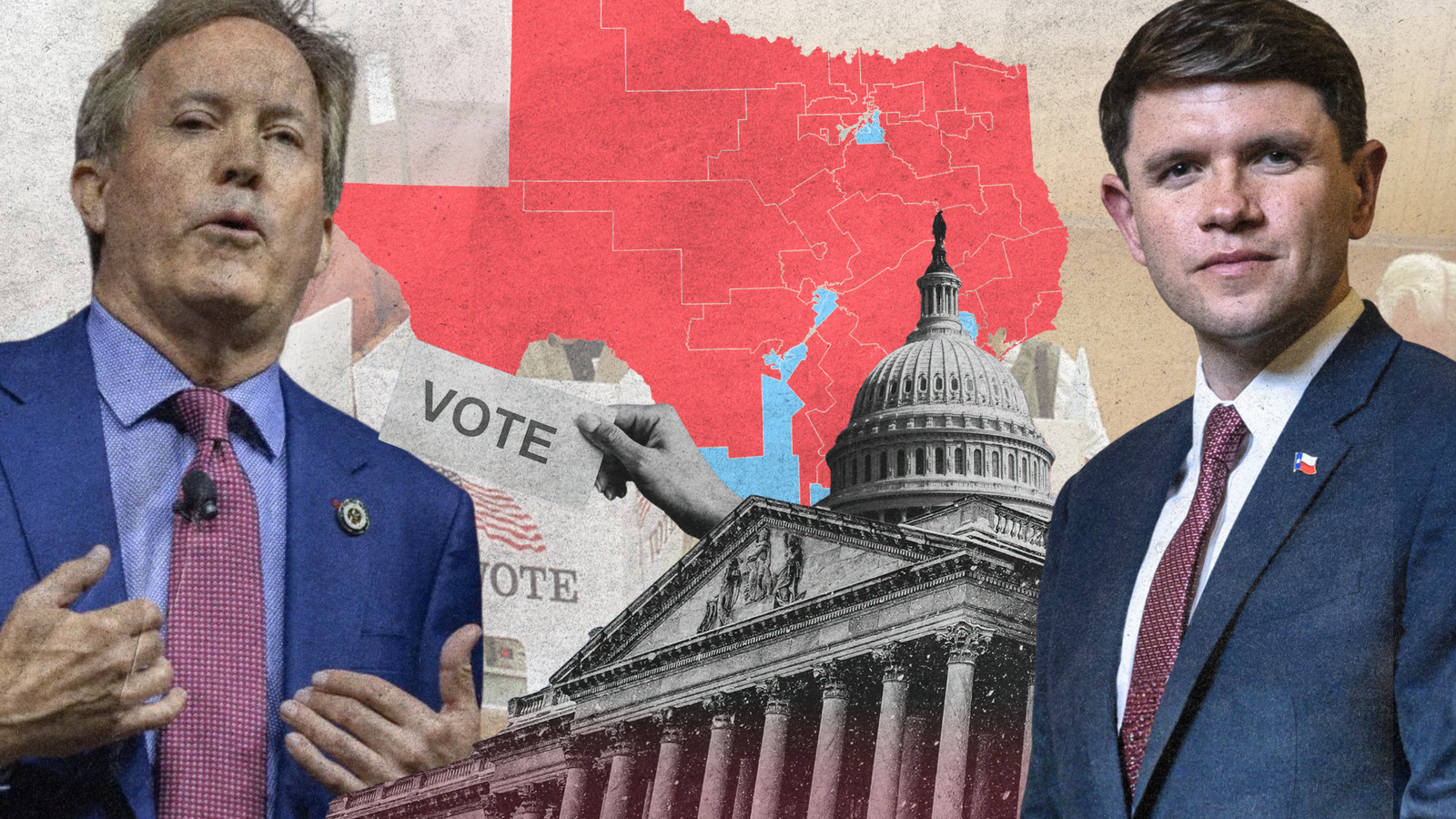
Guacamaya, October 29, 2026. Every day more reports come out about how Republicans are writing off the House of Representatives as lost. Politico and other media outlets have indicated that anonymous sources within the GOP say that practically their only priority has become saving the majority they hold in the Senate. Cook Political estimates Democratic gains of between 9 and 19 seats. With 53 seats, Republicans would only need to lose 4 of them to cease being the majority. Given the unilateral way Donald Trump likes to execute his foreign policy, it is crucial to his governing plan not to be swept in November. The place where we will best be able to gauge the temperature is in the Lone Star State, Texas.
Since the 2016 American presidential election, the lean of each media outlet has become progressively more evident. Outlets such as CNN, MS Now, NBC and others align with the blue team, and Fox News seeks to support the red team. What has raised concern among Republicans is that Fox News, in its late-September polls, had Democrat James Talarico at 51% and Ken Paxton at 49% (the former attorney general, whom the corruption allegations weighing against him do not help). Other pollsters, including Emerson, Trafalgar, 270toWin, Sabato and Cook, have Talarico ahead of Paxton with an average of 49% to 45.4%.
My hypothesis is that these polls do not only measure the contest but alter it, and end up incentivizing the minorities who intended to abstain to participate. In El poder del espectáculo (2024) I argued that the incorporation of entertainment into political communication transforms the way citizens perceive and participate in the political process, and that agenda setting, framing and the spiral of silence operate within that logic. An election covered like a horse race makes those polls read less as a serious quantitative study and more as part of the spectacle. The voter not only decides, but also analyzes their team’s performance to assess whether to step onto the field, or whether they can win without their participation.
The inevitability of Republican victories at the state level is part of why discontent with the current administration, and the poor choice of candidate, have brought Republicans to this point where they fear suffering their first Texas defeat in decades. In Primero el relato (2026), I argue that “actions build reality, but the narrative decides which reality prevails.” In Texas, they grew overconfident about the impossibility of a Democratic victory, and that assumption had given them enough calm to justify staying home. Only now are they realizing that it could cost them dearly.
Noelle-Neumann (1984) explains through the phenomenon of the spiral of silence that some people, when they feel their opinions go against the majority, prefer to monitor the social climate and stay silent for fear of isolation or rejection. From that spiral two groups emerge: the first aligns with the apparent majority, and the second, without a clearly identified majority, defies the negative perception of its position and comes out to defend it, giving itself the possibility of transforming the climate of opinion in its favor.
A poll is a reflection of a specific moment in society. For Texas, this moment would seem to reflect a state willing to change its political traditions in favor of a change that rejects the current status quo. According to this theory, that second group might worry enough, given the possibility of losing such an important bastion for their cause, to mobilize and vote. When the voter of a natural majority sees themselves threatened in this way, they are motivated to act to prevent the social repercussions from costing them spaces of that magnitude. The secret ballot factor allows them to respond to this threat without being socially exposed.
The spiral helped explain the error that opinion studies made in their predictions between Clinton and Trump. The undecideds who reserve their vote until the last day, Americans with low levels of education, and the so-called “shy voter” are factors that justify results being surprising, and could once again be a factor among Paxton’s potential voters. This phenomenon is not due to voters lying to the pollster, but to the moral debate each one ends up having about whether discontent toward the administration (abstaining) or rejection of the alternative (voting) weighs more heavily on them.
Among Republicans identified with MAGA, 64% declare themselves extremely interested in the elections and 76% certain they will vote, while among non-MAGA the figures drop to 50% and 65%, and 22% of the latter say they will vote for Talarico, versus 4% of MAGA. Among Democrats, more than 66% are extremely interested and 75% are certain they will go to the polls. The silent majority that Paxton needs, if it exists, is therefore the more moderate Republican, the one with more doubts about his positions and his scandals, and the one who does not agree with the national executive’s policies. If that voter ends up activating out of fear, or abstains out of rejection, we will have the first great warning for Republicans ahead of 2028.
Early voting in Texas began on October 19. The rural and suburban counties, with a Republican tradition, will provide a preview of how fear manifests itself in this election. If it does not, it will be a verdict that punishes the Trump administration for the moment of unprecedented rejection it is going through. Nor should we forget that the dynamic can work in reverse, and Hillary Clinton is, and always will be, the best example of what happens when a candidate grows overconfident and relaxes.
If I am right, the last hope or “Hail Mary” left to Republicans is the fear they manage to sow with issues such as migration, gender identity and “woke.” They need the disillusioned voter to interpret the threat being posed to them as a reason to vote, and not as confirmation that their party has already lost. If the silent majority decides that defeat is written, the House will be lost and so will the Senate. The fear of losing may be the last resource capable of changing the result that many Republicans have already resigned themselves to accepting.