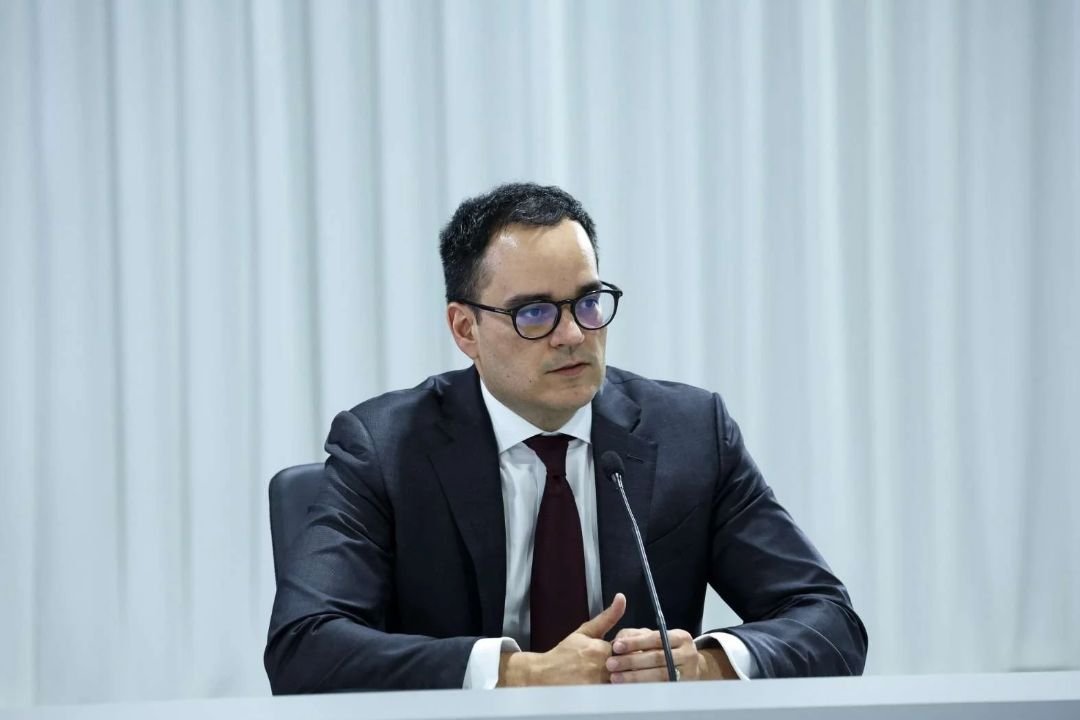
The Vice-Presidency for the Economy presented the “Venezuela Renace Plan,” the national economic program that includes key details about the country’s public debt and payment capacity. Photo: Ministry of People’s Power for Communication and Information.
Guacamaya, November 24, 2026. The Government of Venezuela published a macroeconomic framework report on Tuesday, detailing figures on its public debt—in selective default since 2017—as well as estimates of its payment capacity in the coming years.
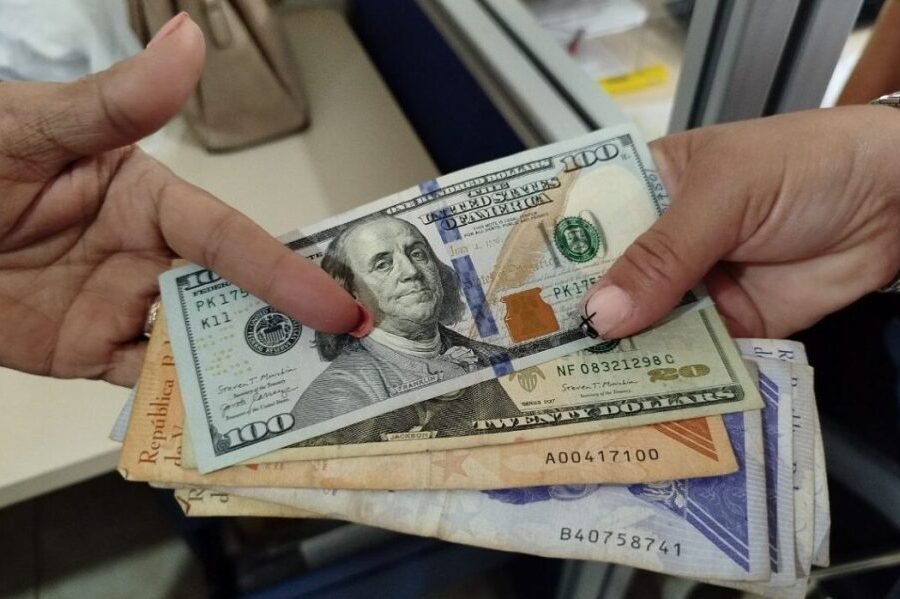
The document explains that public debt amounts to $237.5 billion, comprising bonds, PDVSA commercial obligations, bilateral loans, arbitration awards, and other types.
The report, titled “National Program for Recovery and Prosperity,” was signed by “Plan Venezuela Renace” and presented by the sectoral vice president for the Economy, Calixto Ortega. It represents a first step toward addressing the process of restructuring the public debt.
In May of this year, the Government declared its intention to restructure the external public debt with “celerity,” with the expectation that the same macroeconomic framework would be published in about a month. However, the process was delayed without explanation, with experts attributing the delay to the double earthquake of June 24.
Following a first general license from the United States, which until now has blocked the restructuring process, the hiring of advisors was permitted. Caracas thus contracted the investment bank Centerview Partners on the financial side and the law firm Hogan Lovells on the legal side.
On June 23, the British newspaper Financial Times stated that Centerview Partners was preparing to present a debt of close to $240 billion, contrasting with previous estimates that it would be around 160 billion to 180 billion.
Separating the types of debt
Not all debts are equal, nor can they be renegotiated in the same way. That is why it is key to understand to whom each dollar is owed.
Debts with the “official” sector—in this case 4.2 billion with the Inter-American Development Bank and CAF—must be repaid in full. With the former, a “bridge loan” from a third country is being evaluated to settle the outstanding account with the IDB. Among them could be the United States or Qatar, according to international press reports.
Non-financial debt with PDVSA refers mainly to contracts for goods and services by the state oil company. It has its own contractual conditions and is not always included in a country’s public debt pie. In this case, they represent a black box where it is difficult to know how much is really owed.
Of this latter group, some debts could be considered illegitimate or void. For example, if the deadlines expired and creditors can no longer claim them. On the other hand, an audit could find that acts of corruption and unfair overpricing were committed, which could lead to delegitimizing some contracts in part or in whole.
Bilateral debts—that is, with other States—are also higher than previously estimated, reaching “23.3 billion, compared with about 16.5 billion calculated by several economists. Of these, $16.9 billion are with the China Development Bank (CDB), $5.1 billion with Russia, and $1.1 billion with Brazil.
The arbitration awards, worth $26.3 billion, come mainly from the nationalizations during the presidency of Hugo Chávez. Companies such as ConocoPhillips, Crystallex, and Gold Reserve are claiming based on their losses from having been forced to hand over their operations in Venezuela.
The report speaks of “eurobonds,” issued in U.S. dollars in New York, which represent a nominal value of 110 billion, almost half of all the debt. However, their market price is much lower, since investors expect a haircut.
The nominal value includes a principal of $64.7 billion among the Republic, PDVSA, and Electricidad de Caracas, with an additional 45.5 billion in accumulated interest from having stopped paying as of 2017.
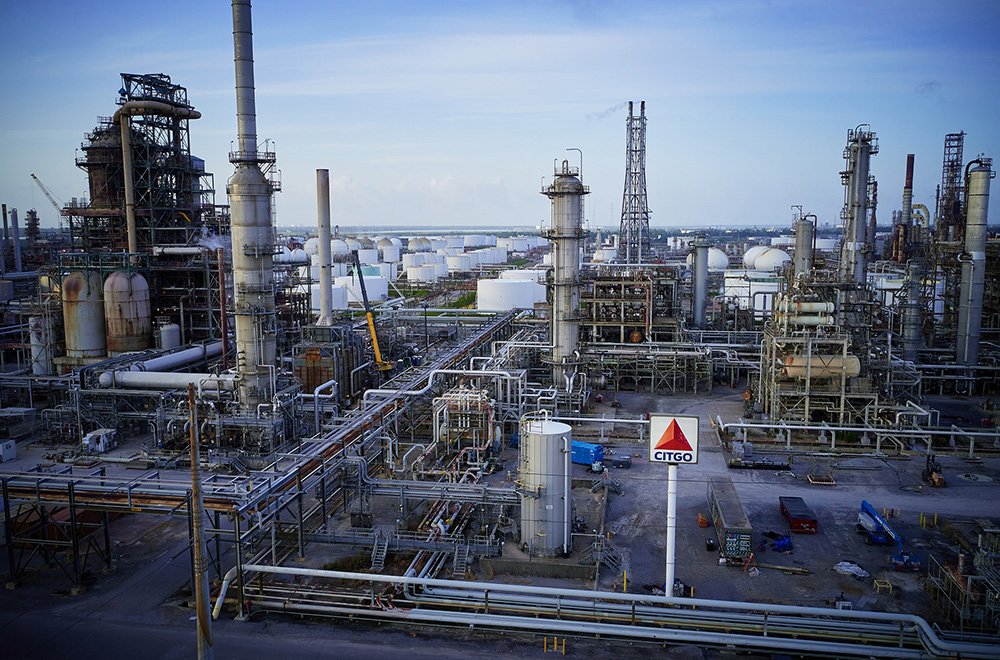
Among these bonds is also the controversial one known as “PDVSA 2020”; it has a majority stake in the refiner Citgo as collateral. After Venezuela’s inability to continue paying this debt, investors went to U.S. courts to take possession of the PDVSA subsidiary. While the court ruled in their favor, the White House has blocked the acquisition of Citgo, as it is a strategic and politically sensitive asset.
How is the economy doing?
The Government estimates that 2026 will close with a GDP of $122.4 billion, and estimates that it could reach 200.9 billion in 2031, with an average growth rate of 10.4% per year, and doubling the economy of 2025.
In perspective, Venezuela would still be far from the peak it achieved in 2012, with $372 billion at the height of the commodities boom, with oil production of 2.5 million barrels per day and the reference price around $100.
The size of the debt is almost double that of the economy (194%). It barely has reserves that would serve as a cushion: only $12.8 billion against $237.5 billion in obligations.
The Government expects to face a fiscal deficit until the end of 2030, which, without external financing, would end up being financed through the devaluation of the national currency. A gradual fall in oil prices and an outflow of capital are also expected, tightening the foreign exchange market: oil investment would be lower than the repatriation of dividends.
The report calculates a rise in non-oil revenues, driven by sectors such as mining, against a relative decline in the weight of hydrocarbons. The Government also plans to reduce its deficit, with measures such as cuts to subsidies, mainly on fuels.
The plan projects raising crude production from around 1.21 million barrels per day in 2026 to 2.27 million in 2031 and to 2.91 million in 2036, upon reaching oil investments of $160 billion by 2036, mainly by private partners through the Productive Participation Contracts for Hydrocarbons (CPPH).
Payment capacity: “zero”
With this more conservative vision, unlike the exaggerations of the previous administration, the Government sends a clear message: there is no payment capacity in 2026.
These statements are aimed at pressing for two points: a considerable haircut of even more than half of the nominal debt, and starting to pay creditors as of 2031.
The Government thus lowers expectations to try to obtain greater margin. It faces a gigantic debt from another economy—that of the “oil boom”—with today’s revenues, after a decade of crisis.
The market reacts
Bonds have risen slightly in value with this announcement, despite the pessimism of the figures and the fact that experts initially estimated a debt of between $160 billion and $180 billion.
The main reason is that, upon being published, the report announces the start of negotiations to restructure, something investors have been waiting for since 2017, when Venezuela entered selective bankruptcy. Therefore, it is expected that in the coming weeks the U.S. Government will issue new licenses tied to the debt, thus allowing creditors to enter into direct conversations with Caracas.
On the other hand, the Financial Times article in June and more recent statements by the State Department modified expectations about the size of the debt.
Negotiations to restructure the debt are neither quick nor clean. Billions of dollars are at stake, and they involve funds specialized in these situations, veterans of restructurings in countries such as Greece, Ecuador, Argentina, Sri Lanka, and Zambia.
Most creditors negotiate in good faith—though, of course, seeking the greatest gain—but over time more aggressive players could appear in their lobbying and pressure techniques, both in the United States and in Venezuela.
Creditors may seek to seize assets if they see no other way to collect, something that is already happening around the world. In 2018, ConocoPhillips managed to capture PDVSA oil inventories at Caribbean terminals in Curaçao, Bonaire, and St. Eustatius.
An emblematic case is that of Elliott Investment Management in 2012, when it managed to capture a training frigate of the Argentine Navy in Ghana, as part of its debt battle against the government of Cristina Fernández de Kirchner.
The main objective of the restructuring is to reopen the door to international financing. Venezuela will be able to issue debt again and open accounts abroad without the threat of creditors.
These aspects are key to making large infrastructure investments, as well as to supporting international trade—starting with PDVSA.
On the other hand, a badly done restructuring can lead Venezuela back to bankruptcy, as has happened in other countries, including Argentina.