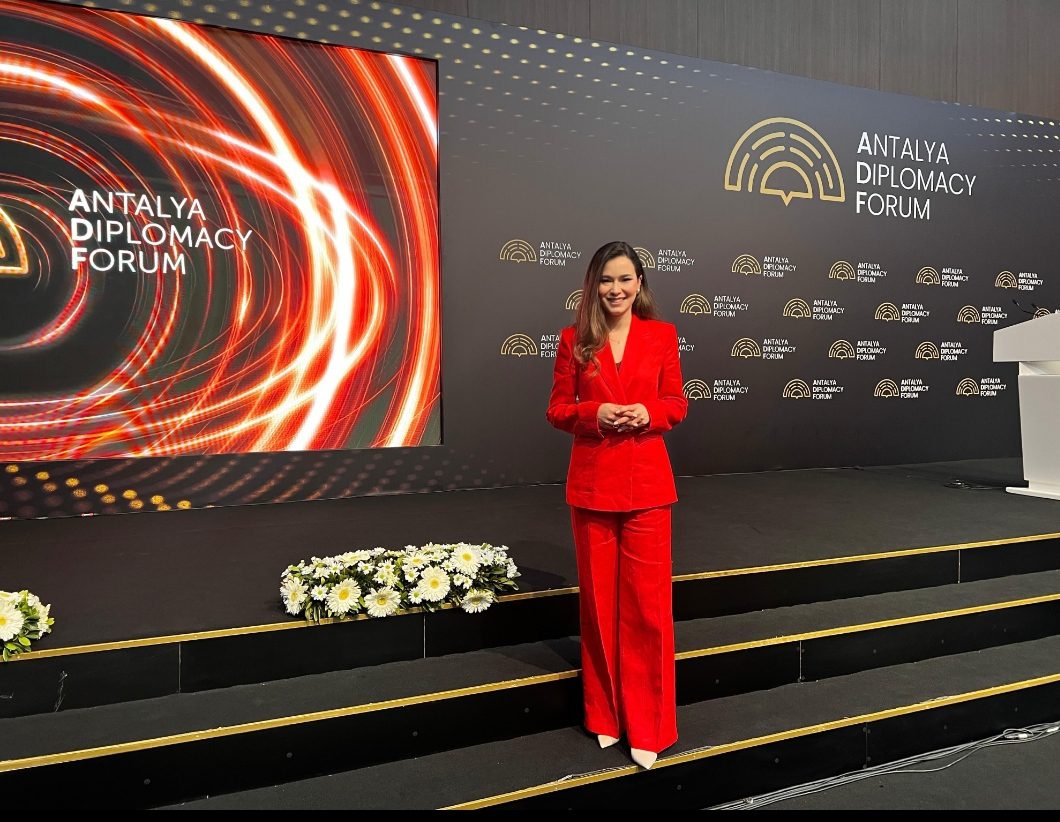
Melike Hocaoğlu is an international relations specialist, she served as Coordinator of the Turkey-Latin America Business Councils at the Turkish Foreign Economic Relations Board (DEİK). Photo: X / @hocaoglumel.
Guacamaya, May 24, 2026. Following the events of January 3, which marked a turning point in Venezuelan politics and the international perception of the country, questions inevitably arise about the future of Venezuela’s relationship with various extra-regional actors. One of these is Türkiye, with whom Caracas has concentrated investments and agreements in recent years.
The relationship between Venezuela and Türkiye has experienced significant expansion since the mid-2010s, framed within a context of geopolitical reconfiguration and Caracas’s search for new strategic partners. From 2016 onwards, both countries intensified their economic and political cooperation, notably with the opening of air routes by Turkish Airlines, which directly connected Caracas to Istanbul and positioned Venezuela as a potential hub for articulation between Latin America, Europe, and Asia. This rapprochement was consolidated with the official visit of President Nicolás Maduro to Turkey in 2017 and the boost of a bilateral agenda covering trade, investment, and regional integration.
In the following years, the relationship has acquired a more complex strategic dimension, especially in sectors such as gold, mining, and energy, where Turkey has become a key partner for Venezuela. Turkish companies have participated in projects within the Orinoco Mining Arc, while gold trade and exchange schemes for essential goods have strengthened economic ties. According to Turkish Statistical Institute data cited by Reuters, between January and May 2018, Venezuela exported at least 20.15 tons of gold to Turkey, worth approximately $779 million.
Concurrently, Ankara has sought to position itself as a relevant diplomatic actor, maintaining channels of dialogue with both the government and opposition sectors, as evidenced by the visit of then-Foreign Minister Mevlüt Çavuşoğlu in 2020, during which he met not only with Maduro but also with opposition figures like Henrique Capriles Radonski and Stalin González, members of the Unitary Platform. Türkiye has recognized the European Union’s efforts to guarantee international observation of electoral processes in Venezuela, consolidating its role as an impartial interlocutor in the local political context. This role has been complemented by its participation in international mediation initiatives, such as the one promoted by Gustavo Petro, projecting Turkey as a middle power with growing influence in Latin America.
The participation of Turkish businessmen in reactivating Venezuelan industrial infrastructure is part of a broader cooperation scheme that includes binational trade agreements and the establishment of institutions such as the Turkish-Venezuelan Chamber of Economic Integration (Cavetur), created to facilitate business and promote an exchange that could reach $3 billion in the coming years, according to the Venezuelan government—figures that should be taken with caution.
In this context, the key question is whether Ankara—which has maintained pragmatic commitments with Caracas even amid international sanctions and geopolitical tensions—will continue to engage with Venezuela at a time when the South American country is reconfiguring its global relations.
To better understand Türkiye’s strategy in Venezuela following the geopolitical reconfiguration since January 3, we spoke with Melike Hocaoğlu Çağliöz, an international relations specialist with a particular focus on Turkish foreign policy and its projection towards Latin America. She holds a master’s degree in Latin American Studies from the University of Amsterdam, where she researched geopolitical dynamics between emerging powers and the region.
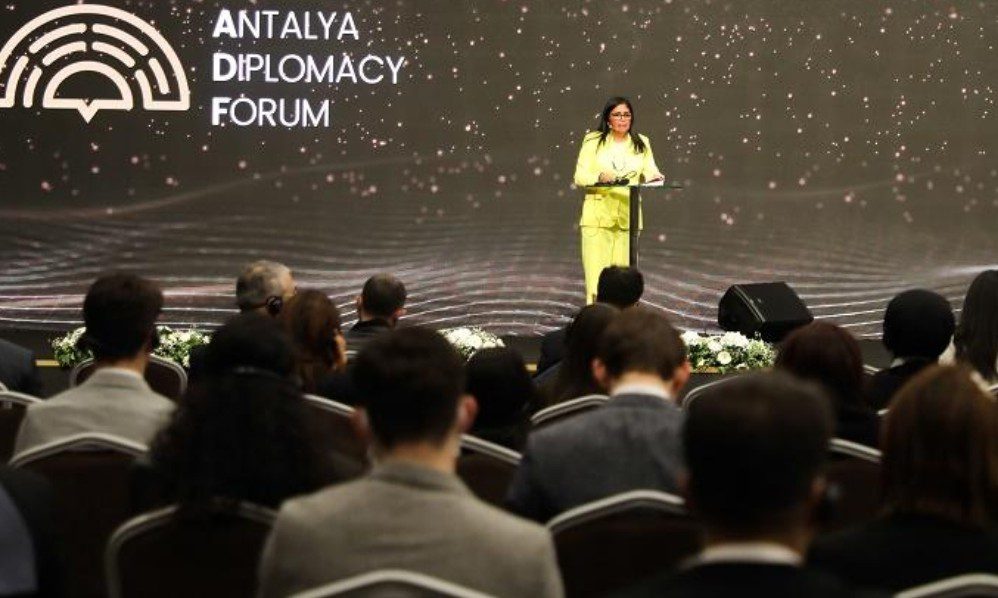
Throughout her career, she has worked in international cooperation, academic project coordination, and institutional diplomacy, collaborating with international networks of multiple actors. Her areas of interest include multipolarity, middle power diplomacy, South-South relations, and Turkey’s emerging role as a diplomatic facilitator. She has also been a frequent participant in the Antalya Diplomacy Forum, a diplomatic event that brings together political figures and international relations experts in Türkiye annually, and has worked as a columnist for the international outlet TRT in its Spanish section.
Additionally, for eight years, she served as Coordinator of the Turkey-Latin America Business Councils at the Turkish Foreign Economic Relations Board (DEİK), where she led the organization of high-level business delegations and actively participated in coordinating official visits of President Recep Tayyip Erdoğan and senior officials. This experience has allowed her to develop deep knowledge of Latin America and build a strong network of contacts in the region.
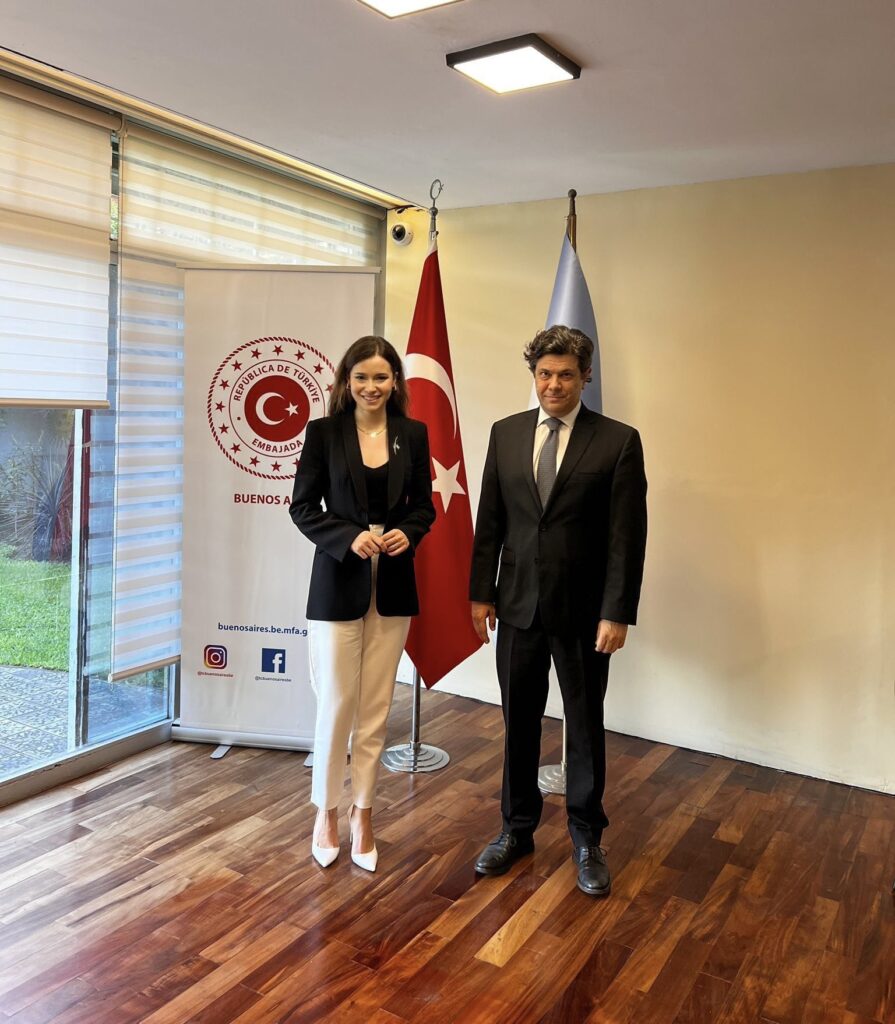
Q: Following the events of January 3, Venezuela is once again in a zone of high political and diplomatic sensitivity. Unlike actors such as Russia or Iran, Türkiye has built its relationship with Caracas from a markedly pragmatic approach, combining economic ties—especially in trade, gold, and services—with flexible diplomacy that has allowed it to maintain open channels with both the Venezuelan government and the United States and the European Union. In that sense, and given the current context of multipolarization, what does Latin America and the Caribbean mean for Türkiye, and how do you assess the relationship between Venezuela and Türkiye today?
A: From Türkiye’s perspective, Latin America and the Caribbean have become an increasingly important strategic partner in the context of a constantly transforming multipolar international system.
Our engagement with the region is not a response to short-term pragmatism but is the result of a strategic commitment and a long-term foreign policy vision dating back to Türkiye’s Projection Policy towards Latin America and the Caribbean, launched in 1998 and significantly deepened over the last two decades.
Firstly, from a geopolitical perspective, Latin America is important for Türkiye’s effort to promote a more multidimensional and autonomous foreign policy. As the international system becomes less Eurocentric, middle powers like Türkiye seek to diversify their alliances beyond their immediate geography. In this context, Latin American and Caribbean countries—many of which also value strategic autonomy—are natural partners for building a more balanced and multipolar international order.
Secondly, economically, the region represents a dynamic market of over 600 million people and significant natural resources. Trade between Türkiye and the region has increased dramatically since the early 2000s, rising from approximately $1 billion to over $14 billion in recent years, demonstrating the growing mutual interest in sectors such as energy, mining, construction, aviation, and services.
Thirdly, in the political and diplomatic sphere, Türkiye considers Latin America and the Caribbean a region where pragmatic, non-ideological cooperation is possible. Türkiye’s diplomatic expansion—from just a handful of embassies two decades ago to nearly twenty today—demonstrates Ankara’s long-term commitment to institutionalizing these relations.
At the normative level, Türkiye conceives its relationship with Latin America as part of a broader vision of strengthening South-South cooperation. This includes cooperation in development assistance, humanitarian diplomacy, mediation efforts, and multilateral platforms.
In summary, for Türkiye, Latin America and the Caribbean are not a peripheral region but an increasingly important partner economically, diplomatically, and strategically in a world where influence is no longer concentrated in a single center but distributed among multiple actors.
I believe that the relationship between Türkiye and Venezuela after January 3 should be understood not only as a bilateral matter but also within the broader debate on international law, sovereignty, and the future of the international order.
From Türkiye’s perspective, the main concern in such situations is always the preservation of stability and the protection of sovereign decision-making processes. Beyond diplomatic language, there is also a matter of principle: any external intervention that directly alters the internal political balance of a sovereign state inevitably raises serious doubts within the framework of international law, particularly regarding the principles of non-intervention and the prohibition of the use of force, as established in the United Nations Charter.
From an academic standpoint, this is not limited to Venezuela. It is a precedent. If such actions are normalized in international politics, it creates a very dangerous gray zone for the sovereignty of many states, especially middle powers and developing countries. Turkey, as a country that deeply values strategic autonomy, is naturally sensitive to this issue.
At the same time, Türkiye’s reaction has been, as is typical, cautious and pragmatic rather than ideological. Ankara has emphasized the need for stability, moderation, and dialogue, while avoiding rhetoric that could escalate tensions. This reflects a broader tradition of Turkish foreign policy: maintaining dialogue rather than isolation, even in periods of political uncertainty.
I would describe the current phase not as a rupture in Turkey-Venezuela relations, but as a period of careful recalibration. The relationship was never purely ideological; it was built on economic cooperation, trade diversification, and Turkey’s growing opening towards Latin America. Due to this institutional foundation, it is unlikely to simply disappear due to political changes.
However, it is also realistic to state that the new geopolitical environment demands a more prudent approach. Türkiye will likely continue to support Venezuela’s stability and economic normalization, but it will also watch closely how the new political landscape evolves and how international actors reposition themselves.
There is also a human dimension that we sometimes forget in geopolitical debates. Sudden political upheavals usually affect ordinary people much more than governments. From that perspective, the most important question should not be which external actor gains influence, but whether Venezuela can move towards stability, economic recovery, and institutional normalization in a way that respects the will and well-being of its own society.
So, if I had to summarize Türkiye’s current stance, I would describe it with three concepts: principle, prudence, and continuity.
Principle, because Türkiye traditionally defends sovereignty and dialogue within international law; prudence, because the situation remains highly delicate; and continuity, because Türkiye tends to preserve long-term inter-state relationships rather than reacting solely to short-term political changes.
The January 3 turning point has certainly created a new geopolitical reality, but I would not describe its impact on Türkiye-Venezuela relations as a rupture. Rather, I would characterize it as continuity with cautious tactical adjustments, rather than a fundamental reassessment of the relationship.
First, it is important to emphasize that Türkiye and Venezuela have built their relations over many years through diplomacy, trade, and institutional agreements. These types of inter-state relations usually survive political disruptions because they are not based on individuals but on diplomatic continuity. Governments change, political systems evolve, but diplomatic relations between states tend to endure.
Second, from a principle-based diplomatic and academic perspective, the events of January 3 inevitably triggered serious debates about international law, particularly regarding sovereignty, non-intervention, and the legitimacy of the use of force. The fact that a sitting president was captured by a foreign military operation within the territory of a sovereign state is not a common occurrence; it is something that many legal scholars and international observers consider sets a very delicate precedent for the international system. Even for those who politically support the outcome, the method itself raises important questions: if such actions are normalized, what implications will this have for the future of state sovereignty and the stability of the international order? These are questions that transcend Venezuela and concern the entire international community.
From Türkiye’s traditional foreign policy perspective, these situations are usually evaluated through three criteria: respect for sovereignty, regional stability, and the importance of dialogue over coercive solutions. This does not imply ignoring Venezuela’s internal political challenges, but rather emphasizing that lasting stability is generally achieved through political processes and dialogue, rather than externally imposed solutions.
Therefore, the debate here is not only political but also normative. It is about whether the international system will continue to be governed mainly by norms or increasingly by power politics. And Türkiye, like many middle powers, generally prefers a rules-based international order, as it is ultimately what protects countries that are not superpowers.
From the traditional Turkish foreign policy perspective, these events are usually interpreted from the standpoint of sovereignty, non-intervention, and regional stability. Historically, Türkiye has been sensitive to precedents that could normalize external interventions as instruments of political change, given that this has broader implications for the international system, particularly for middle powers.
At the same time, Türkiye’s reaction has been measured and pragmatic, rather than ideological. Ankara usually prefers to maintain diplomatic channels and avoid emotional or reactive stances during periods of geopolitical uncertainty. This reflects a broader Turkish diplomatic reflex: engagement rather than isolation, dialogue rather than rupture.
Third, what we are likely witnessing now is not a disengagement, but a reassessment. Every responsible foreign policy adapts to new realities on the ground. The political transition and uncertainty following the January 3 operation, which generated instability and a volatile internal balance in Venezuela, naturally demand careful reassessment by all international partners.
However, reassessment does not imply abandoning the relationship. Türkiye’s overall policy towards Latin America is long-term and structural, not reactive. Therefore, I foresee that Türkiye will continue to support economic cooperation, diplomatic dialogue, and stability, while closely observing how Venezuela’s political normalization process evolves.
If I had to summarize the impact in simple diplomatic terms, I would describe it as continuity in principles, adjustment in tactics, but no strategic rupture.
Türkiye’s approach is governed by a simple diplomatic logic: crises are temporary, but inter-state relations are long-term.
Ultimately, what is at stake here is not only the future of Turkey-Venezuela relations, but also a broader question: whether international crises will be managed through dialogue and law, or through power politics. Türkiye’s diplomatic instinct has generally been to support the former option.
“The relationship between Venezuela and Türkiye was never purely ideological; it was built on economic cooperation, trade diversification, and Turkey’s growing opening towards Latin America.”
Q: What is the Antalya Diplomacy Forum, and why should Latin America and the Caribbean—especially Venezuela—pay attention to such a diplomatic space, and what has been your experience participating in the forum?
A: The Antalya Diplomacy Forum accurately reflects Türkiye’s vision of diplomacy in today’s fragmented international landscape. It is not just another conference; it is a platform designed to bring together actors who do not always share the same space—governments, academics, diplomats, business leaders, and civil society—in order to rebuild dialogue at a time when global communication channels are increasingly polarized.
That is precisely why Latin America, and particularly Venezuela, should pay attention to such spaces. Because forums like Antalya offer something very valuable today: inclusion without conditions. Countries with different political systems, foreign policy orientations, or even tensions with the West can find a respectful diplomatic space to present their views and explore cooperation.
But beyond the Forum itself, I consider it important to highlight a fundamental aspect of Turkey-Venezuela relations.
Our diplomatic relations date back to 1950, which means over seventy years of official relations.
This is important because it shows that our relationship does not depend on a political moment, a government, or a leader. Governments change. Political parties change. International environments change. But diplomatic friendships between states, when institutionalized, tend to last.
And I believe this is the right way to understand relations between Türkiye and Venezuela. Not as a relationship between two administrations, but as a relationship between two states and two peoples that has survived different political periods, different global environments, and different leaderships.
We must always keep in mind a fundamental reality: leaders may change, but relations between states endure.
That is why I believe Türkiye will continue to see Venezuela as a partner in Latin America, regardless of political cycles. What matters is maintaining dialogue, mutual respect, and cooperation mechanisms that benefit both societies.
Regarding my personal experience at the Antalya Diplomacy Forum, what struck me most was precisely that atmosphere of accessibility. It is one of the few forums where you can see foreign ministers, academics, and public policy professionals engaging in genuine conversations, rather than just formal speeches. It feels less like an orchestrated diplomatic event and more like a real diplomacy laboratory.
And that is why I believe Venezuela’s presence in these platforms is important. Because in a fragmented world, countries that maintain dialogue usually have more room for maneuver than those that isolate themselves.
Relations between Türkiye and Venezuela are not temporary political alliances; they are part of a long diplomatic continuity built over more than half a century, and it is very likely that this continuity will persist regardless of changes in political circumstances.
Because in diplomacy, the most valuable asset is not the agreement, but the ability to maintain dialogue.
“Latin America, and particularly Venezuela, should pay attention to such spaces. Because forums like Antalya offer something very valuable today: inclusion without conditions.”
Q: I would now like to discuss cases where Turkey has served as a facilitator or mediator in conflicts. Let’s start with Somalia, where since 2013, Turkey has assumed a facilitating role in talks between the Federal Government of Somalia and the Somaliland Administration. Turkey began increasing its presence in Somalia after the 2011 famine, when then-Prime Minister Recep Tayyip Erdoğan visited Mogadishu during the humanitarian crisis. It was the first visit by a non-African leader in decades, marking a turning point in the relationship. Besides mediation facilitation, aid has focused on massive humanitarian aid, as Türkiye channeled food, medicine, and infrastructure assistance during and after the 2011 famine. The Turkish Cooperation and Coordination Agency (TIKA) has played a central role. Infrastructure construction and educational cooperation have also been important. Can you tell us about Turkey’s facilitation and cooperation experience in this case, the methodology, and how it fits into the country’s goal of positioning itself as a key actor in conflict resolution?
A: Türkiye’s experience in Somalia is one of the clearest examples of what we might call humanitarian diplomacy combined with mediation diplomacy. What is interesting about the Somali case is that Türkiye did not start as a geopolitical actor, but as a humanitarian partner.
The turning point was undoubtedly the 2011 famine, when then-Prime Minister Erdoğan visited Mogadishu. This visit was symbolically very important, as it demonstrated political commitment at the highest level and built trust in Somali society. As a result, Türkiye developed a comprehensive cooperation model combining humanitarian aid, infrastructure, education, and diplomatic facilitation.
What distinguishes the Turkish approach is its multifaceted methodology. Rather than focusing solely on political negotiations, Türkiye combines several layers: humanitarian assistance through TİKA, infrastructure projects like hospitals and airports, educational cooperation, and simultaneously, diplomatic facilitation. Academic studies often describe this as a combination of humanitarian diplomacy and peacebuilding tools designed to generate long-term influence and trust.
In terms of mediation, Türkiye facilitated dialogue between the Federal Government of Somalia and Somaliland, especially between 2013 and 2014, organizing several rounds of talks in Ankara and Istanbul. These meetings led to significant confidence-building measures, such as the Ankara Communiqué, which aimed to continue dialogue and reduce tensions through institutional mechanisms.
The methodology Türkiye applies in these cases typically has three characteristics:
First, building trust before mediation. Türkiye invests considerably in humanitarian and development cooperation before attempting political mediation. This builds credibility, as Türkiye is seen not just as a political broker but as a long-term development partner.
Second, maintaining dialogue with all actors. Türkiye recognizes Somalia’s territorial integrity but simultaneously keeps communication channels open with Somaliland authorities on technical and development matters. This balanced approach helps Türkiye be perceived as a credible facilitator rather than a partisan actor.
Third, pragmatic and gradual diplomacy. Rather than pushing for quick political solutions, Türkiye tends to focus on confidence-building measures, technical agreements, and gradual normalization. We see similar approaches today in Türkiye’s mediation between Somalia and Ethiopia through the so-called Ankara Process.
From a broader strategic perspective, Somalia also fits Turkey’s goal of positioning itself as a constructive middle power in conflict resolution. Türkiye does not aim to replace traditional powers but to complement existing diplomatic efforts, particularly in regions where trust in traditional actors may be limited.
In short, the Somali case clearly illustrates Turkey’s diplomatic philosophy: influence through dialogue, not pressure; mediation through trust, not coercion; and stability through development cooperation. That is why Türkiye increasingly presents itself not only as a regional power but as a facilitating diplomatic actor in a fragmented international system.
“What distinguishes the Turkish approach is its multifaceted methodology. Rather than focusing solely on political negotiations, Türkiye combines several layers: humanitarian assistance through TİKA, infrastructure projects like hospitals and airports, educational cooperation, and simultaneously, diplomatic facilitation.”
Q: In the Balkans, Turkey has facilitated high-level meetings such as the 2010 Istanbul tripartite summit between Bosnia and Serbia, as well as trilateral forums including Croatia, seeking to generate trust and reconciliation in a region marked by the wars of the 1990s. From your diplomatic experience, what negotiation techniques and what method do you think characterize the Turkish approach in these processes, and how does it differ from mediation exercised by actors like the European Union or the United States?
A: Türkiye’s role in the Balkans, particularly in Bosnia-Herzegovina, Serbia, and Croatia, reflects a very specific diplomatic philosophy that combines facilitation, trust-building, and regional ownership, rather than classical power mediation. The 2010 Istanbul tripartite summit was particularly important because it brought together the presidents of Bosnia and Serbia for the first time since the war, helping to open a new phase of dialogue and reconciliation.
From a diplomatic perspective, I would say the Turkish approach in these processes is characterized by three main negotiation methods.
First, trust-building through historical and cultural proximity. Türkiye often draws on its historical ties and social connections in the Balkans not as a political tool, but as a way to build trust between parties that may distrust larger global actors. This gives Türkiye what we might call relational credibility: the ability to speak with all parties without being perceived as an external imposer.
Second, facilitation rather than imposition. Unlike some mediation models that focus on conditionality or pressure, Türkiye generally prefers to create dialogue platforms, such as trilateral consultation mechanisms, where the parties themselves develop solutions. The goal is not to impose outcomes but to generate a conducive political environment for dialogue. Therefore, these trilateral mechanisms have extended to economic and infrastructure cooperation, as Turkey considers economic interdependence a tool for peacebuilding.
Third, multidimensional diplomacy. Türkiye often combines political dialogue with economic cooperation, connectivity projects, and people-to-people contacts. For example, initiatives like the Belgrade-Sarajevo connectivity projects or business forums demonstrate that reconciliation is not only political but also economic and social.
If we compare this to the EU or the US, the difference lies mainly in methodology, rather than normativity. Western actors usually operate through more formal negotiation frameworks, conditionality mechanisms, or institutional integration incentives, such as EU accession. Türkiye, in contrast, tends to use a more flexible and informal diplomatic style, emphasizing dialogue, mutual benefit, and gradual normalization.
I would summarize the difference like this: The EU and US often act as agreement architects, while Türkiye often acts as a dialogue facilitator.
This does not mean these approaches compete; in fact, they are often complementary. Türkiye has generally supported Euro-Atlantic integration and international peace efforts in the Balkans, contributing through its comparative advantage: trust-based diplomacy and regional dialogue platforms.
In short, what characterizes Türkiye’s mediation style is patience, inclusiveness, and the conviction that sustainable peace comes not only from political agreements but also from rebuilding communication, economic cooperation, and mutual trust. This reflects Turkish foreign policy’s identity as a facilitating middle power seeking stability through dialogue rather than pressure.
“Western actors usually operate through more formal negotiation frameworks, conditionality mechanisms, or institutional integration incentives, such as EU accession. Türkiye, in contrast, tends to use a more flexible and informal diplomatic style, emphasizing dialogue, mutual benefit, and gradual normalization.”
Q: Based on this background and considering that, unlike other allies of Caracas, Türkiye has maintained the ability to dialogue with Western actors. Could Ankara play some informal role as a facilitator, intermediary, or diplomatic bridge in a de-escalation or dialogue scenario in the new stage coming for Venezuela, as it has already tried to do in other scenarios like Ukraine or Gaza?
A: I believe Türkiye could play such a role, but we must be realistic: it would likely be an informal facilitation function, rather than formal mediation, and only if all relevant actors consider it valuable.
What makes Turkey somewhat unique in this context is precisely what you mentioned: unlike other Venezuelan partners, Türkiye has managed to maintain working relationships with both Caracas and Western actors, including the United States and European countries. This creates some diplomatic flexibility that could be useful in de-escalation periods.
For example, even during periods of high tension, Ankara has emphasized dialogue. President Erdoğan has publicly encouraged maintaining communication channels between Venezuela and the United States and has stressed that tensions should be resolved through dialogue rather than confrontation.
This reflects a broader trend in Turkish diplomacy. Türkiye often positions itself not as a power that imposes solutions, but as a country capable of keeping communication channels open when others cannot. Some analysts have even suggested that Türkiye could act as a diplomatic bridge between Washington and Caracas precisely because it maintains relations with both sides.
However, for Türkiye to actually play this role will depend on three conditions.
First, acceptance by the parties. Mediation is only possible if both sides trust the facilitator. Türkiye’s previous calls for dialogue and moderation could contribute to this, but ultimately, it is a political decision by the actors involved.
Second, the scope of the process. Türkiye’s comparative advantage generally lies in informal diplomacy—what we sometimes call facilitative diplomacy—such as organizing meetings, promoting confidence-building measures, or supporting technical dialogue, rather than leading formal negotiations.
Third, complementarity with other actors. Türkiye would likely see its role as complementary to efforts by regional actors, the UN, or other international facilitators, rather than as a substitute for them.
In short: Türkiye’s potential value lies not in its influence over Venezuela or the West, but in its access, its ability to dialogue, and its credibility as a country open to talking with everyone. The latter is often crucial in the early stages of de-escalation.
Therefore, yes, Türkiye could contribute as a diplomatic bridge, but only if the process requires trusted intermediaries and if all parties consider constructive dialogue preferable to isolation.
“Türkiye’s potential value lies not in its influence over Venezuela or the West, but in its access, its ability to dialogue, and its credibility as a country open to talking with everyone. The latter is often crucial in the early stages of de-escalation.”
Q: Venezuela has announced the possibility of promoting natural gas exploitation. Do you think it is in Türkiye’s interests to participate in the Venezuelan energy market?
A: From an economic and strategic perspective, Venezuela’s ambitions in the natural gas sector could generate opportunities for Türkiye, but any potential participation would likely depend on three key factors: economic viability, political stability, and the international regulatory framework.
First, from an energy strategy perspective, Türkiye is a country seeking to diversify its energy partners and sources due to its growing economy and high dependence on energy imports. This explains why Ankara has shown interest in strengthening cooperation with Venezuela on oil, natural gas, and mining through memoranda of understanding and ministerial visits in recent years.
Second, Venezuela represents a potentially attractive partner, as it possesses some of the largest hydrocarbon reserves in the world and is actively seeking foreign investment to revitalize its energy sector, especially after years of underinvestment and sanctions.
In that sense, from a purely economic perspective, Turkish companies—especially in engineering, infrastructure, and energy services—could find opportunities, particularly in areas like technical services, infrastructure rehabilitation, or joint ventures, rather than large-scale ownership projects. However, we must also be realistic about the limitations.
Turkey generally adopts a pragmatic and risk-aware investment approach. Factors such as sanctions regimes, financing conditions, and legal guarantees for investors are decisive. Even today, despite some easing, the Venezuelan energy sector continues to operate under a complex regulatory and sanctions framework, making large investments politically and financially sensitive.
Therefore, I would put it this way: Turkey could be interested, not politically, but selectively and economically, if three conditions are met: regulatory clarity and investment protection; political and macroeconomic stability; and commercially viable projects.
Finally, if we analyze Türkiye’s broader foreign economic policy, Ankara usually prefers mutually beneficial and complementary partnerships. Venezuela needs technology, investment, and partner diversification, while Türkiye seeks energy diversification and new markets for its technology companies. If conditions normalize, this could naturally generate a convergence of interests.
Therefore, I would not describe it as an immediate strategic priority, but rather as a potential opportunity space that could develop gradually depending on how Venezuela’s new economic phase evolves.
Q: Which economic sectors would be of greatest interest to Türkiye in the event of a relaxation of sanctions and a boost to foreign investment in Venezuela?
A: If sanctions were eased and Venezuela entered a new phase of economic normalization, I believe Turkish interest would focus on sectors where Türkiye already has comparative experience in emerging markets and where both economies are structurally complementary.
First, energy would naturally be one of the main areas, particularly oil, natural gas, and petrochemicals. Türkiye is a major energy importer, and Turkish companies have already explored opportunities in Venezuela’s oil, gas, and mining sectors, especially in technical services and exploration support, rather than direct ownership.
Second, mining and natural resources would likely remain important. Cooperation on gold and minerals has already been a central component of the bilateral economic relationship, and Türkiye possesses technical capacity in mining services and mineral processing that could be relevant if regulatory conditions improve.
Third, I would highlight construction and infrastructure, traditionally one of Türkiye’s strongest international sectors. Turkish companies are globally competitive in airports, housing, transport infrastructure, and energy facilities, and Venezuela would likely need significant reconstruction and modernization in these areas if foreign investment increases.
Fourth, agriculture and food production could also become important. We already see examples of Turkish investors involved in agro-industrial projects, such as sugar production, and Turkish exporters are competitive in food processing, consumer goods, and basic industrial products.
Fifth, manufacturing, logistics, and trade facilitation could emerge as natural areas of cooperation. Türkiye’s export strategy towards distant markets already includes sectors like chemicals, consumer goods, construction materials, and logistics services, which could support Venezuela’s economic diversification.
It would likely focus on five main sectors: energy (oil, gas, petrochemicals), mining and natural resources, construction and infrastructure, agriculture and food industry, and manufacturing and logistics.
But I would add an important nuance: Türkiye does not usually approach these markets with a purely extractive logic. Its companies generally focus on project-based cooperation, technical services, and commercial partnerships, rather than large-scale, politically sensitive acquisitions, especially in countries emerging from sanctions environments.
If Venezuela moves towards stabilization and investment guarantees improve, I believe Turkey would see it not only as an energy partner but also as a broader economic cooperation partner, especially in sectors linked to reconstruction, diversification, and trade connectivity.
In summary, the real opportunity lies not in a single sector, but in a complementary economic partnership based on energy, infrastructure, and productive industries.
“If Venezuela moves towards stabilization and investment guarantees improve, I believe Turkey would see it not only as an energy partner but also as a broader economic cooperation partner, especially in sectors linked to reconstruction, diversification, and trade connectivity.”
Q: How have trade and diplomatic relations between Venezuela and Türkiye been managed in recent years?
A: Trade and diplomatic relations between Türkiye and Venezuela in recent years have been characterized as stable, pragmatic, and largely driven by economic complementarity, despite the difficult international context surrounding Venezuela.
From a diplomatic perspective, relations have remained stable and institutional. Both countries maintain embassies in their respective capitals, and bilateral relations have been reinforced by cooperation agreements covering trade, investment, and political consultation mechanisms. In recent years, new cooperation agreements have also been signed to strengthen what both parties call a strategic partnership.
In the economic sphere, trade relations expanded significantly, especially after 2018, when bilateral trade increased rapidly as both countries sought to diversify their international alliances. Trade volume surpassed one billion dollars in the early 2020s and, while it has fluctuated since then, it has remained significant, reaching approximately $665 million in 2024, compared to just around $152 million in 2019, demonstrating a strong upward trend despite global and regional challenges.
Sectorally, cooperation has concentrated mainly on gold and mining trade; energy cooperation dialogues (oil and gas); Turkish exports of food and consumer goods; and industrial and technical services.
Both governments have repeatedly expressed their political intention to increase trade to approximately $3 billion in the medium term, demonstrating that both parties perceive the relationship as having untapped potential, rather than limiting it to current volumes.
Diplomatically, Türkiye has managed the relationship through an approach that could be described as balanced and pragmatic: maintaining engagement with Venezuela while preserving dialogue with Western actors. This reflects Turkey’s broader foreign policy style, characterized by diversification rather than alignment with a single geopolitical bloc.
If I had to summarize recent years in three words, I would describe Turkey-Venezuela relations as diplomatically institutionalized, economically growing, and strategically pragmatic.
In other words, the relationship has not been driven by ideology, but by mutual economic interests, diplomatic engagement, and a shared interest in diversifying international alliances.
Q: What does Venezuela mean, and what is its importance for Türkiye’s foreign policy at this moment?
A: Venezuela’s importance for Türkiye’s foreign policy today must be understood within a realistic geopolitical framework. Türkiye is currently in one of the most unstable regions in the world, surrounded by multiple simultaneous crises: from the war in Ukraine to instability in the Middle East, tensions in the Eastern Mediterranean, and security risks from Syria, Iraq, and Iran. In this context, it is natural that the main priority of Türkiye’s foreign policy remains national security and regional stability.
Türkiye is not a country operating in a comfortable geography. It is a country that has had to develop resilience in a very difficult region. Today, Türkiye remains NATO’s second-largest army, one of the main contributors to the alliance’s missions, and a country that continues to invest heavily in its defense capabilities to protect its population and its strategic autonomy.
At the same time, Türkiye has significantly strengthened its national defense industry over the last decade, becoming one of the world’s most important defense exporters and investing billions in R&D and advanced technologies. This decision is not merely ambition but necessity. Living in a region exposed to constant instability, deterrence becomes a matter of survival.
And this is an important nuance: Türkiye’s growing defense capability should not be interpreted as militarization, but as defensive realism. It reflects a country’s effort to maintain stability in an unstable region.
Within this broader context, it is understandable that Türkiye’s immediate foreign policy priorities are naturally focused on security, economic resilience, and regional crisis management. However, this does not mean Turkey neglects its global partnerships. This is where Venezuela fits into this landscape.
Venezuela is important to Türkiye not because of ideology, but because of its broader strategy of being a middle power with global projection. Turkey does not see Latin America as a distant or symbolic region, but as part of a long-term diversification strategy in diplomacy and trade.
Türkiye and Venezuela have maintained diplomatic relations for over 70 years, a continuity that in itself is significant. In diplomacy, relationships are built not only between governments but between states and peoples. Political cycles and leaders change, but diplomatic relations tend to last.
From this perspective, Venezuela represents three things for Türkiye: First, a partner within Turkey’s opening towards Latin America, which seeks to expand diplomatic and economic networks beyond traditional regions.
Second, a potential economic partner, particularly in sectors like energy, mining, infrastructure, and trade diversification, if normalization continues.
Third, a diplomatic example of Turkey’s balanced foreign policy: a country capable of maintaining relations with diverse actors without integrating into rigid geopolitical blocs.
However, to be frank and realistic, Venezuela is not among Turkey’s top strategic priorities compared to Europe, the Middle East, the Caucasus, or Central Asia. Rather, it is an important, though secondary, partner whose relevance could increase depending on Venezuela’s economic stabilization and its reintegration into the global economy.
Today, Türkiye’s main priority is naturally security and stability in a very volatile region. However, at the same time, Turkey continues to invest in long-term global partnerships, and Venezuela is part of this broader vision of diversified diplomacy and economic cooperation.
Because, ultimately, Türkiye’s foreign policy is based on a simple strategic principle: regional security is protected, but global influence is expanded. And Venezuela fits into that second dimension.
And if you allow me to conclude with a more personal reflection, I had the opportunity to visit Venezuela, even during the period of the first direct Turkish Airlines flights and around the historic visit of President Erdoğan. What I clearly perceived was the positive energy between our countries.
Beyond official relations, there is also a very natural human connection. I found Venezuelans incredibly warm, open, and hospitable, in many ways very similar to Turkish people. We share a culture of hospitality, strong family values, and sincerity that makes it easy for our societies to connect.
And I believe this is perhaps the strongest foundation of all: governments may change, international conditions may change, but the friendship between peoples tends to last much longer. That is why I believe the future of Turkey-Venezuela relations will continue to be built not only through diplomacy but also through this genuine human connection between our societies.