The two Persian Gulf monarchies would expand their influence in Caracas through this new financial arrangement with the IDB. Photo: APK.
Guacamaya, October 6, 2026. A Qatari-controlled fund would be the mechanism for Venezuela to settle $2.5 billion in arrears with the Inter-American Development Bank (IDB) and regain access to financing, according to Bitácora Económica.
The digital outlet, citing unofficial sources, reported that Qatar agreed to create a fund with enough resources to immediately pay off Venezuela’s debt to the IDB, reportedly $2.5 billion, with a repayment plan at low interest rates and with the collaboration of two other countries, not identified.
According to Bitácora Económica, the goal would be to unlock an $8 billion line from the institution, earmarked for infrastructure, water distribution and budget management for the interim government.
Meanwhile, economist José Guerra says the sovereign wealth fund of the United Arab Emirates would also be involved. If it goes through, the operation would cap a year in which the two monarchies went from being intermediaries to investing directly in Venezuela.
Guerra said in an interview with Noticiero Venevisión that the UAE and Qatari sovereign funds will serve as a financial bridge so that Venezuela can honor its outstanding commitments to multilateral organizations, to which more than $2 billion is owed. According to the economist, by settling that debt, “Venezuela’s credit opens up and some $5 billion to $6 billion will flow into the country.”
“This is good news, but it has to be managed well, and I have information that this is going to happen, and it is likely that Venezuela will also gain access to the $5 billion it has held up at the International Monetary Fund in special drawing rights,” the economist said. Guerra added that in the coming weeks the country would receive between $4 billion and $5 billion from the Inter-American Development Bank (IDB).
If this materializes, he explained, the international reserves of the Central Bank of Venezuela (BCV) and the fiscal position would be strengthened. That would open two possibilities: that the government stop financing PDVSA with Central Bank resources, which Guerra links to inflationary pressure, and “to do an act of justice for Venezuelan workers, especially in the public sector, by raising their salaries.” He warned, however, that the first raise would not be as large as desired.
How do the Gulf sovereign wealth funds work?
A sovereign wealth fund is a state investment vehicle, almost always fed by hydrocarbon surpluses, that invests for the long term in global assets: stocks, debt, infrastructure, real estate and private equity. Its logic is that of an investor, not an emergency lender, which is why any financing for a country in default requires a special design, with guarantees, an ad hoc vehicle or political backing.
In Qatar’s case, the Qatar Investment Authority (QIA) is fed by liquefied natural gas revenues. Global SWF, cited by Rankiapro, places it at around $580 billion, eighth in the world; other trackers estimate it between $526 billion and $557 billion, because the fund does not publish complete audited figures.
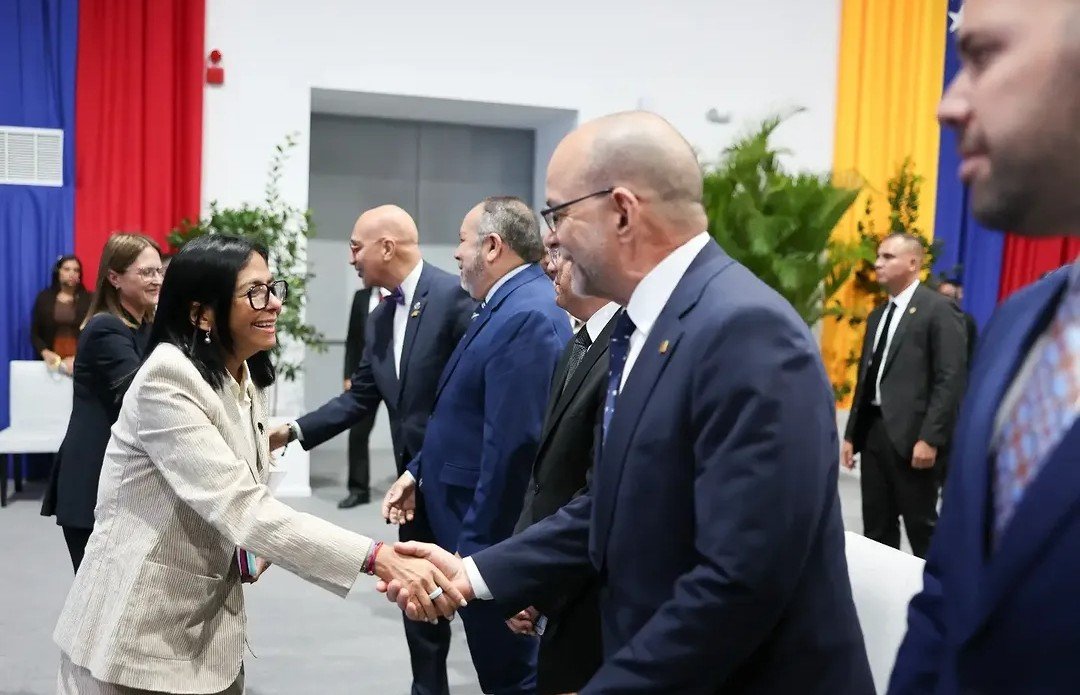
Separately, the Qatar Fund for Development (QFFD), the state’s cooperation and foreign aid agency, is the arm that usually handles bilateral financing. Its director general, Fahad bin Hamad Al Sulaiti, took part in the September 29 meeting in Caracas between Delcy Rodríguez and Qatari Minister of State Mohammed bin Abdulaziz Al Khulaifi.
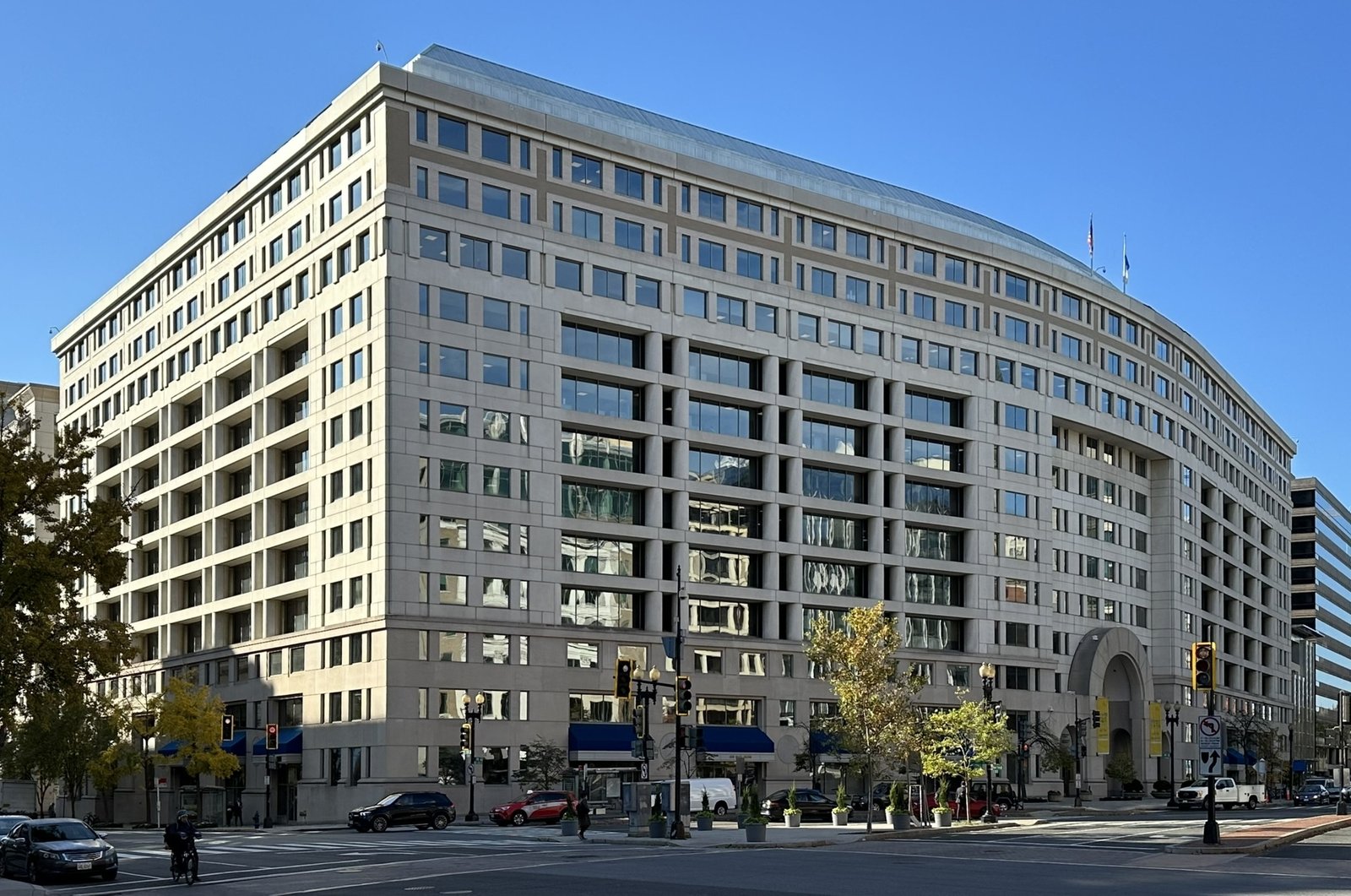
In 2025, the IDB formalized a memorandum with QFFD to expand cooperation in Latin America and the Caribbean. The agreement covers cooperation in social development, education, resilience and concessional sovereign co-financing, as well as blended financing structures with IDB Invest.
In practical terms, the scheme would work as an indirect debt restructuring: Qatar and its partners would provide the capital needed to immediately settle the obligation to the IDB, while Venezuela would later repay that financing under more favorable conditions. The goal would be to replace a debt that limits the country’s access to the multilateral financial system with a new obligation with a longer term and lower financial cost.
For Qatar, an operation of this kind could also represent a form of financial and diplomatic projection. It would not necessarily mean handing $2.5 billion to Venezuela as direct aid, but rather using its financial capacity to structure a mechanism that resolves a debt problem and, at the same time, positions it as one of the actors contributing to Venezuela’s international financial reintegration.
In the case of the United Arab Emirates, there is no single fund but an ecosystem, with Abu Dhabi at its core. The Abu Dhabi Investment Authority (ADIA) manages about $1.19 trillion, according to Global SWF, and is the fourth-largest sovereign fund in the world. Mubadala, the most strategic vehicle, oriented toward co-investments and industrial diversification, manages about $385 billion. Dubai contributes the Investment Corporation of Dubai (ICD), with about $429 billion. Global SWF calculates that Abu Dhabi’s funds totaled $1.8 trillion at the end of 2025.
The UAE also has a track record of cooperation, though again not exactly the same as the Venezuelan mechanism.
The Abu Dhabi Fund for Development (ADFD) has established financial cooperation agreements for Latin America. For example, in 2024 it signed an agreement with CAF to develop co-financing, joint investments and concessional financing for infrastructure and development projects.
In addition, the ADFD was one of the main financial partners of the ETAF platform, promoted by IRENA, while the IDB participates as a potential co-financier of energy transition projects in Latin America.
Why Qatar and the United Arab Emirates?
The choice of both monarchies combines liquidity, closeness to Donald Trump’s White House, and experience in the hydrocarbon industry.
Financial capacity without political cost in Washington. Both monarchies are security partners of the United States. Qatar hosts the Al Udeid air base. When Bloomberg revealed ADNOC’s interest in Venezuela in January, it specified that any approach would require direct coordination with the United States and would be channeled through XRG. In other words, their money arrives with the implicit approval of the White House, something that was not the case with the partners Caracas had before January 3.
Useful neutrality. Qatar has built its foreign policy on mediation and open channels with actors Washington cannot deal with directly. Doha had already served as a venue for negotiations between Venezuela and the United States. The UAE, for its part, combines a global financial presence with a pragmatic diplomacy toward sanctioned governments. That neutrality has made them very useful to Washington in dealing with complex scenarios.
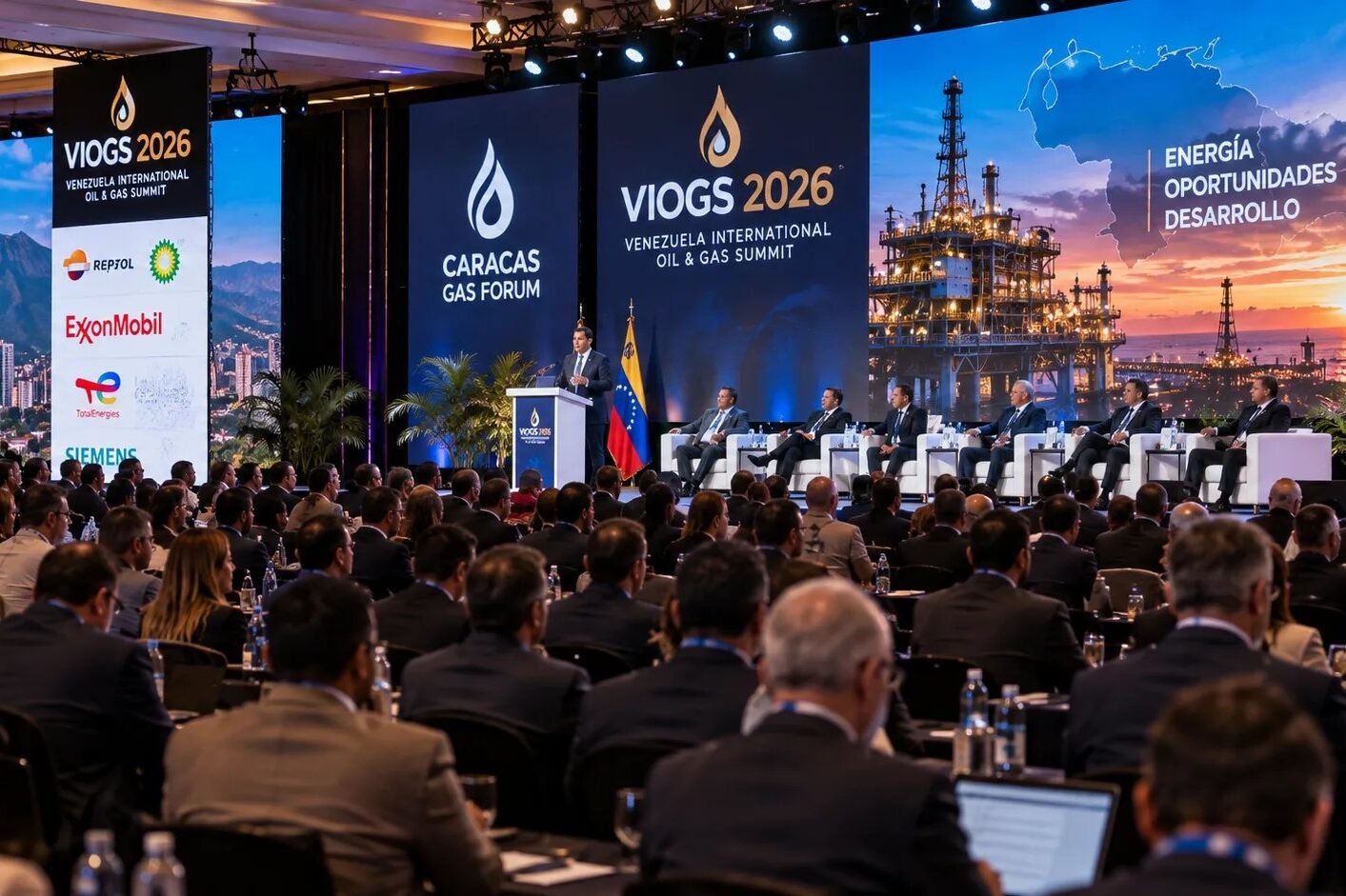
Gas and oil as common ground. Qatar is one of the world’s largest exporters of liquefied natural gas, and Venezuela aspires to monetize its gas reserves, which lack processing infrastructure. XRG, for its part, is in the midst of international expansion.
Diversification. Delcy Rodríguez deliberately chose the adjective “multipolar” when describing the consortium for the Loran field. For Caracas, the Gulf funds offer an alternative to traditional financing without depending exclusively on Washington or on the partners cultivated by Chavismo, such as China, Russia or Iran.
The regional context. The Gulf funds are operating amid the war in Iran, although Global SWF reports that in the first half of 2026 they recorded their most intense first-half activity ever, with $53.9 billion committed across 108 deals.
According to TIME, Qatari officials helped organize a conference between Rodríguez and Secretary of State Marco Rubio on the afternoon of January 3, and Rodríguez named the emir as a key figure in those hours. Since then, the administration has moved to almost daily dealings with Rubio, according to officials cited by the magazine.
The timeline since January 3 reaffirms the closeness between Venezuela and the Gulf monarchies, particularly Qatar and, to a lesser degree, the UAE. On January 6, Doha reiterated its “full willingness” to contribute to any international effort toward a peaceful solution.
On January 13, an Emirati delegation led by Ali Mohammed Al Shamsi, secretary general of the UAE’s Supreme Council for National Security, met with Rodríguez at Miraflores to evaluate investment options.
On January 19, Bloomberg reported that ADNOC was considering entering the Venezuelan energy sector through its subsidiary XRG and under clear legal and financial conditions.
On February 17 and 18, Qatari Prime Minister Mohammed bin Abdulrahman Al Thani visited Caracas and met with Rodríguez to review the cooperation agenda, following Doha’s offer of mediation.
On March 2, Rodríguez reported a phone conversation with the emir of Qatar about the situation in the Middle East. Venezuela’s acting president had already expressed solidarity with the countries of the region that had suffered attacks from Iran.
On August 13, BP, XRG and UCC Oil and Gas (Qatar) obtained the license for Phase II of the Loran gas field, in the Deltana Platform. The field has seven reservoirs, six of them cross-border with Trinidad and Tobago, with gas reserves exceeding 4 trillion cubic feet.
On July 15, Félix Plasencia, newly appointed Minister of Foreign Affairs and International Trade, traveled to the funeral of the Emir of Qatar’s father and, immediately afterward, to Riyadh, the capital of Saudi Arabia. He not only held high-level meetings in both countries but continued them with calls to foreign ministers in the region.
On September 29, Rodríguez received Qatari Minister of State Mohammed bin Abdulaziz Al Khulaifi, together with Jorge Rodríguez and the director of the Qatar Fund for Development. At the same time, UCC confirmed it was negotiating its entry into new oil and gas areas.
The debt restructuring that never arrives
Meanwhile, the announcement made in May of a debt restructuring with “speed” as a priority, and Centerview Partners as advisor, has been forgotten.
Venezuela’s sovereign debt, which could exceed $150 billion, and even reach $240 billion by some calculations, includes bonds, arbitration awards and invoices that PDVSA failed to pay its suppliers.
That said, the agreement with the Gulf monarchies could unlock new funds for infrastructure recovery without addressing the other obligations, which would require a slower and more complex process, pitting various types of creditors against one another.