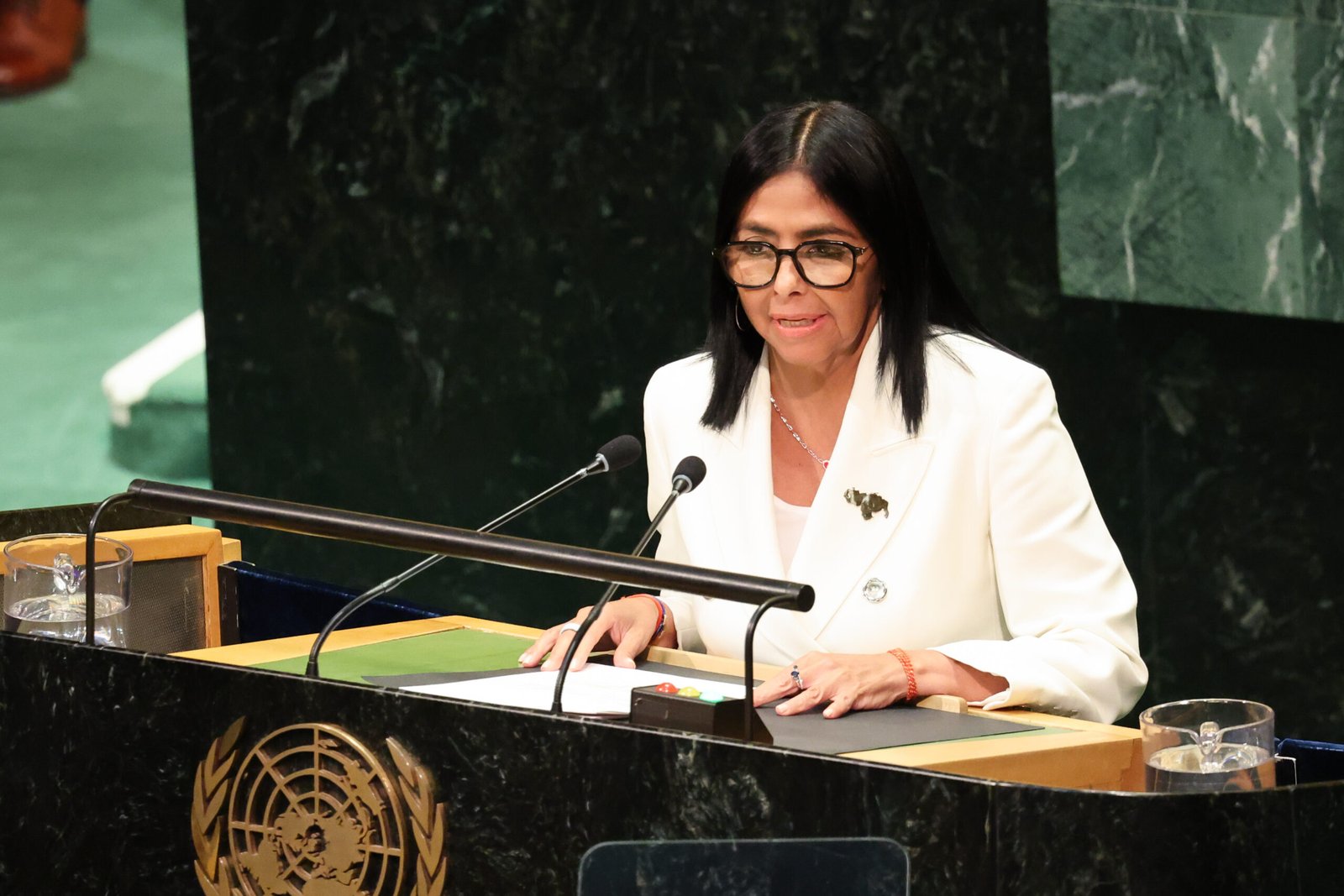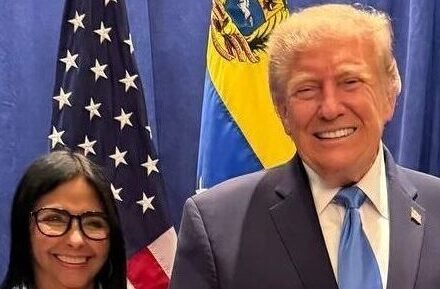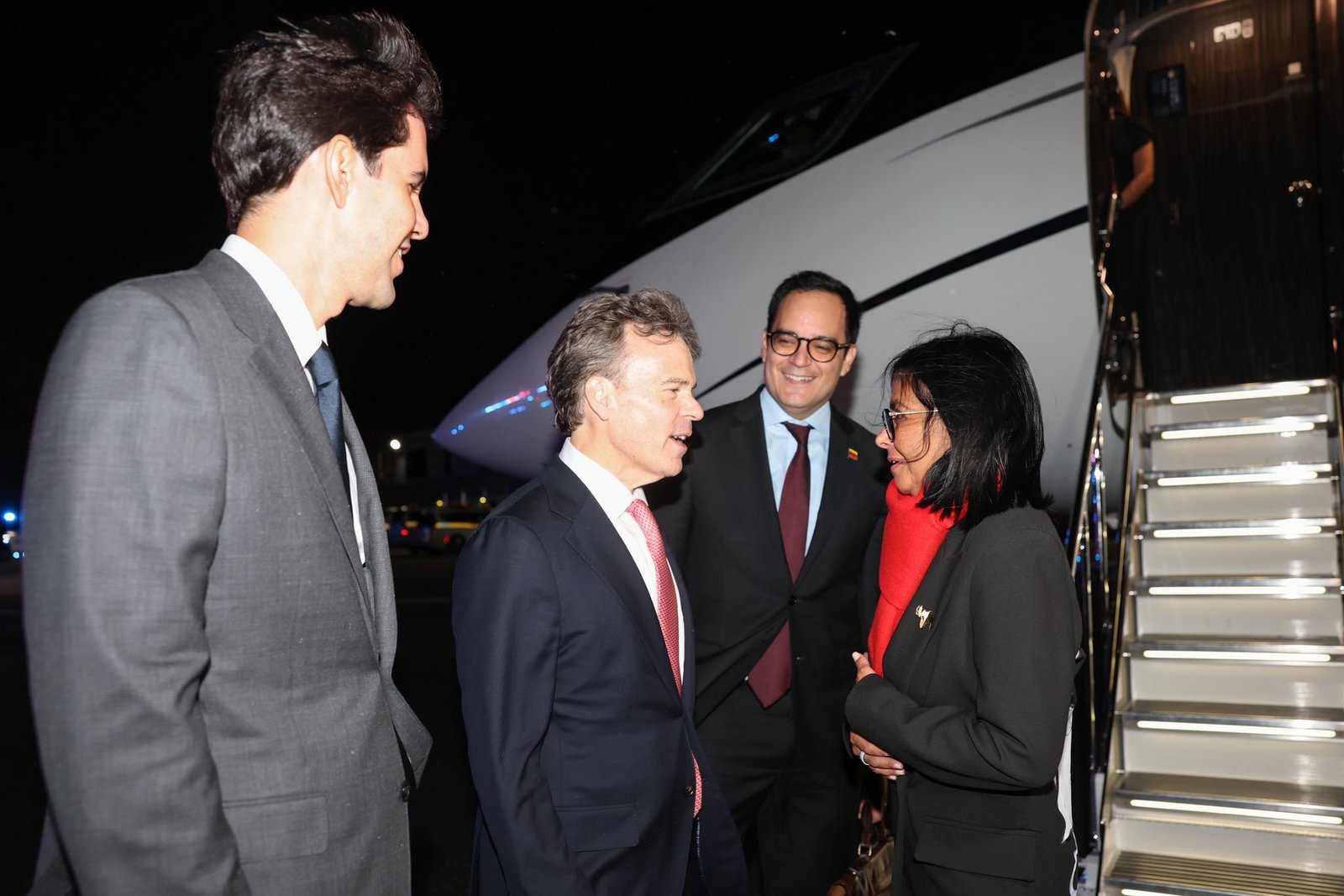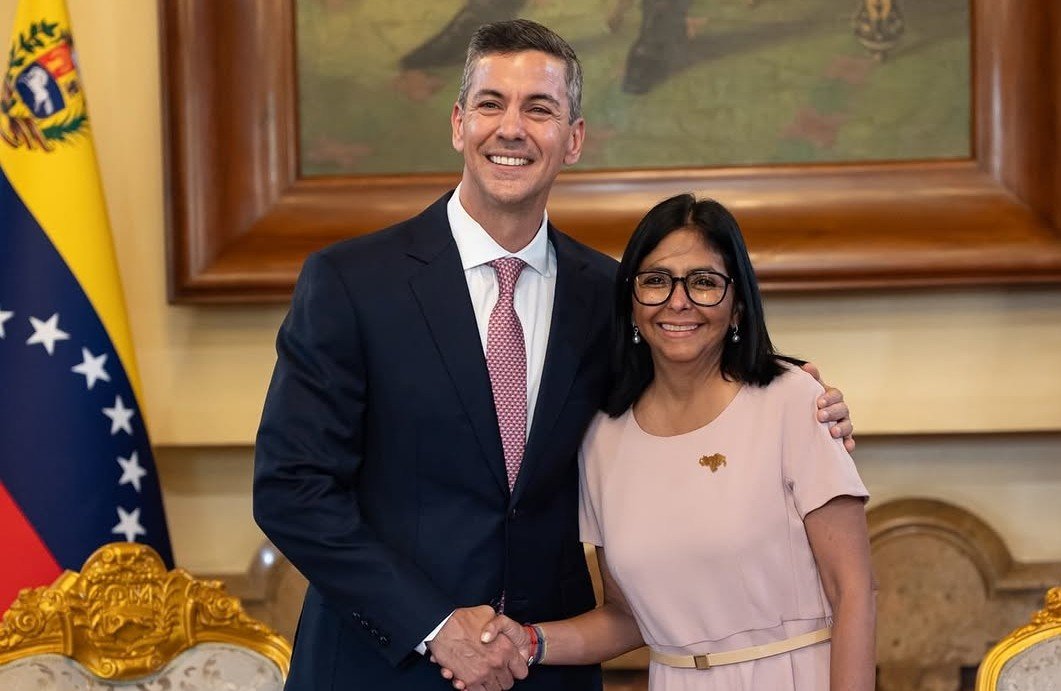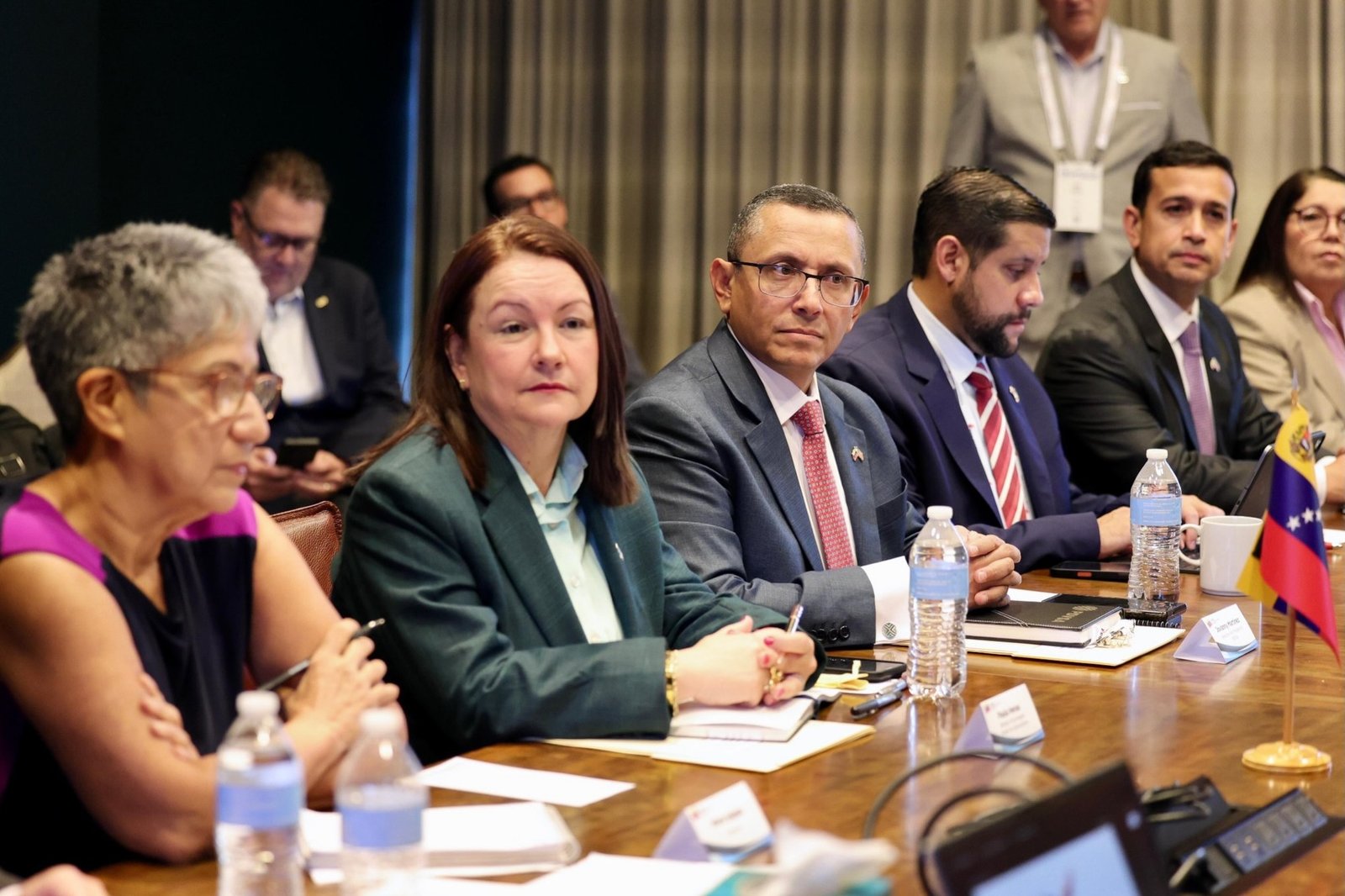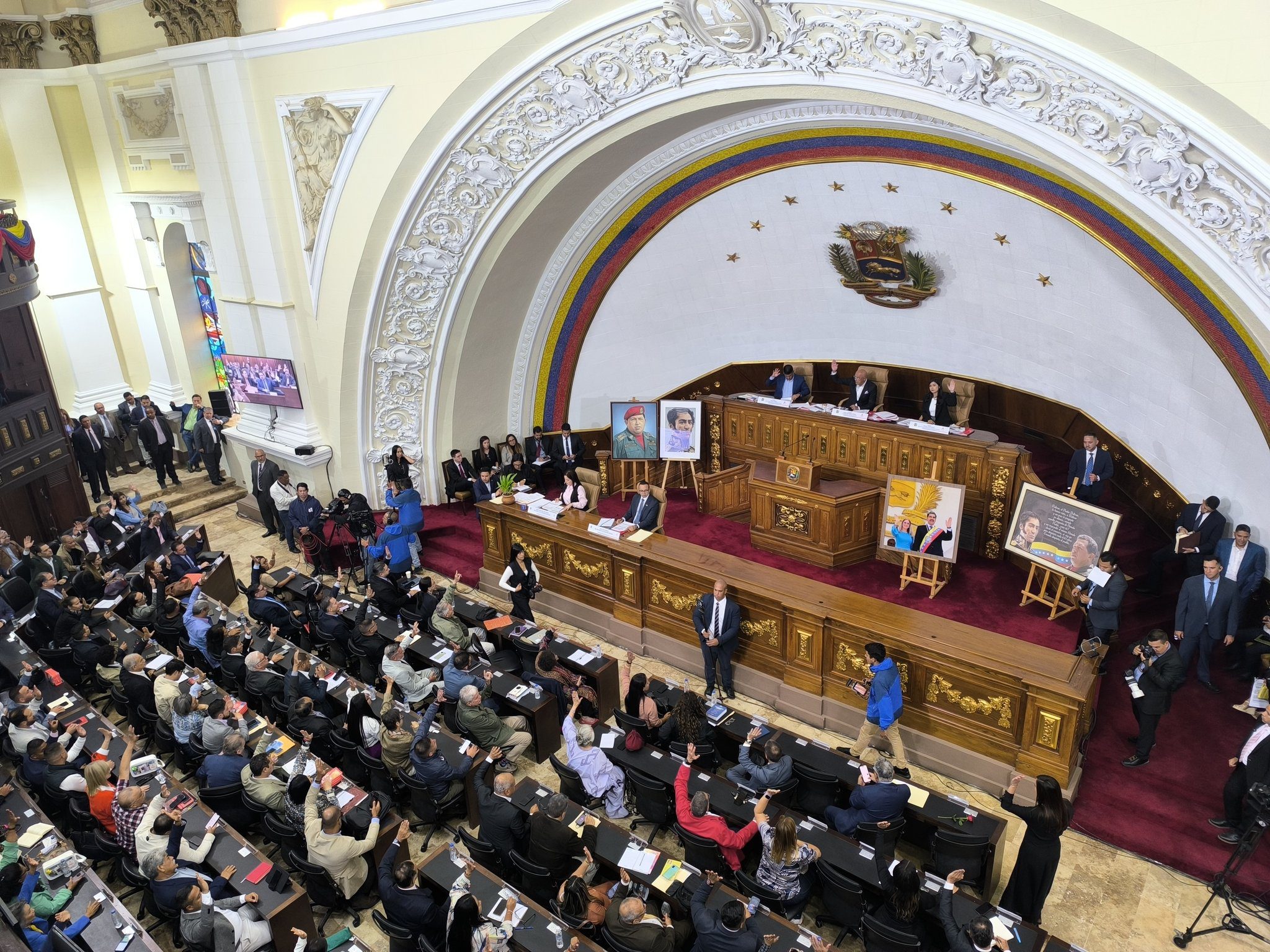
In the Tuesday session of the National Assembly, the formation of the Parliamentary Friendship Group between the United States and Venezuela was approved. Photo: X / @Asamblea_Ven.
Guacamaya, May 12, 2026. Jorge Rodríguez announced during a session of the National Assembly on Tuesday the formation of the Parliamentary Friendship Group between the United States and Venezuela, which will be composed of deputies Antonio Ecarri, Oliver Ponce, Pablo Pérez, Francisco Torrealba, Orlando Camacho, Aurora Paredes, Félix Freites, Rodolfo Sanz, and Ilenia Medina.
On March 24, amid the gradual process of restoring relations between Caracas and Washington, the Venezuelan National Assembly approved the creation of a new “Venezuela–United States Parliamentary Friendship Group,” an initiative promoted by opposition deputy Antonio Ecarri and supported by the President of Parliament, Jorge Rodríguez. The proposal seeks to open an institutional channel of direct dialogue with the U.S. Congress and to revive parliamentary diplomacy mechanisms similar to those that existed during the so-called Boston Group in the early 2000s.
According to the letter sent by Ecarri to the leadership of the National Assembly, the objective of the group is to contribute to “the restoration of mutual trust” and to strengthen bilateral ties under principles of cooperation and mutual respect. Among the proposed topics are the normalization of economic relations, the protection of Venezuelan assets abroad, the recovery of institutional trust, and the promotion of U.S. investment in Venezuela.
The initiative emerged in a particularly sensitive context, as just days earlier, Venezuela’s acting president had received in Caracas representatives of the U.S. Senate Foreign Relations Committee, accompanied by the then U.S. chargé d’affaires in Venezuela, Laura Dogu. The meeting was interpreted as a sign of the reactivation of direct political channels between both countries after years of diplomatic rupture and heightened bilateral tension.
The new parliamentary group is also part of a broader tradition of “parliamentary diplomacy,” historically used to maintain dialogue even when formal relations between governments are strained, and to avoid leaving bilateral engagement exclusively in the hands of the executive branches. In the Venezuelan case, many observers have compared this effort to the former Boston Group, created after the 2002 political crisis as an informal bridge between Venezuelan political leaders and members of the U.S. Congress.
Who is Antonio Ecarri?
Antonio Ecarri once again emerges as a figure of political interlocution in Venezuela as he assumes leadership of the new Venezuela–United States Parliamentary Friendship Group, an initiative aimed at rebuilding political and institutional channels between Caracas and Washington after years of diplomatic confrontation.
His appointment is not accidental. Throughout his career, Ecarri has cultivated an image as a moderate political actor, inclined toward dialogue and capable of building bridges between traditionally opposed political sectors.
A lawyer, political leader, and founder of the Lápiz Alliance, Antonio Ecarri has built a career marked by independent positions within Venezuela’s opposition spectrum. Unlike other leaders aligned with confrontational strategies, Ecarri has long defended the need for institutional agreements, the recovery of negotiation spaces, and pragmatic solutions to Venezuela’s crisis.
His public trajectory began in municipal politics in Caracas and in the field of education, one of the central pillars of his political discourse. Over time, he consolidated himself as a critical voice of both Chavismo and traditional opposition sectors, promoting a narrative centered on institutional reconstruction, decentralization, and Venezuela’s reintegration into the international system.
In recent years, Ecarri has sought to position himself as a representative of a moderate opposition willing to maintain dialogue with different national and international actors. This political stance has allowed him to participate in negotiation spaces and develop contacts with diplomatic and parliamentary sectors abroad, particularly in the United States and Europe.
Ecarri ran as an independent presidential candidate in the 2024 elections. On July 29 of that year, he appeared before the Supreme Court of Justice requesting that the National Electoral Council publish detailed results of the elections, polling station by polling station, arguing that the country needed transparent, auditable, and fully verifiable data. “Venezuela deserves complete and reliable results,” he stated at the time.
His role within the National Assembly
In this new National Assembly, Ecarri has participated in drafting and monitoring the Amnesty Law, while also serving on the commission tasked with reforming the judicial system.
He made several proposals during debates on key reforms to the Hydrocarbons Law and the Mining Law.
More recently, he voted in favor of the appointments of the Attorney General and the Ombudsman.
His push to create the Venezuela–United States Parliamentary Friendship Group is consistent with this vision. The initiative seeks to reestablish parliamentary diplomacy mechanisms between both countries and open direct communication channels with the U.S. Congress on sensitive issues such as sanctions, energy, Venezuelan assets abroad, and economic normalization.
In his recent statements, Ecarri has insisted that Venezuela must “recover international trust” and reposition itself as a reliable energy supplier in a global context marked by geopolitical and energy reconfigurations.
The decision by the National Assembly to entrust him, together with First Vice President Pedro Infante, with the formation of this group suggests that Ecarri is perceived as an actor capable of facilitating complex political dialogue. His conciliatory profile follows the logic of the former Boston Group that emerged after the 2002 crisis, characterized by informal or semi-formal spaces where actors from different sectors maintained open channels with Washington even during moments of maximum bilateral tension.
In a scenario where relations between Venezuela and the United States are undergoing a phase of discreet contacts and political recalibration, Antonio Ecarri appears to be positioning himself as a parliamentary mediator and bridge-builder in a bilateral relationship historically marked by distrust and confrontation.
A key precedent: The Boston Group
Following the events of the April 11, 2002 coup attempt and the deep political crisis that followed the 2002–2003 oil strike, a little-remembered but highly significant initiative emerged in the Venezuela–United States relationship: the Boston Group.
It was a binational parliamentary commission promoted with support from the OAS and U.S. Congress members, designed as an informal communication channel amid the extreme polarization Venezuela was experiencing.
The group brought together both government and opposition Venezuelan figures with members of the U.S. Congress, particularly from the Democratic Party and the state of Massachusetts. Among its members were figures who later became highly influential in Venezuelan politics: Nicolás Maduro, Cilia Flores, Elvis Amoroso, John Kerry, Enrique Márquez, and Ramón José Medina, a founder of the MUD and later close to Edmundo González Urrutia.
Beyond parliamentary meetings, the Boston Group functioned as a discreet mechanism of political interlocution between power centers in Venezuela and the United States. At moments of maximum diplomatic tension, many of its participants maintained direct or indirect contacts that helped open negotiation channels on sensitive issues such as prisoner releases, political dialogue, informal mediation, and rapprochements between Washington and Caracas over the past two decades.
The group was far more than a parliamentary commission.
Its historical importance lies in the fact that it brought together Chavista and opposition leaders at a time when Venezuelan politics was defined by absolute confrontation. Over time, many of those actors went on to occupy key positions within the Venezuelan state, the opposition, and U.S. politics, turning the Boston Group into a kind of permanent network of political interlocution that survived even the deterioration of formal bilateral relations.
Although the group lost strength after the 2005 parliamentary elections and the withdrawal of much of the opposition from the National Assembly, its political legacy continued to quietly influence negotiation and rapprochement processes between Venezuela and the United States.
The Boston Group as part of a broader conflict containment architecture (2002–2004)
It is important to remember that the Boston Group, the mediation led by Jimmy Carter, and the participation of the OAS formed part of a single political containment architecture designed to prevent Venezuela from descending into institutional breakdown or prolonged violent conflict after the 2002 crisis.
After the April coup attempt and Hugo Chávez’s return to power, Venezuela became trapped in total confrontation between government and opposition. The polarization deepened further with the 2002–2003 oil strike, which paralyzed strategic sectors of the economy and generated severe political and social instability.
In that context, international pressure emerged to create negotiation mechanisms that could channel the conflict through electoral and institutional pathways.
This led to the “Negotiation and Agreement Table,” formally installed in November 2002 with joint facilitation by the OAS, the Carter Center, and the United Nations Development Programme (UNDP). OAS Secretary General César Gaviria played a central mediating role between Chávez’s government and the Democratic Coordination, while Jimmy Carter provided international legitimacy and access to U.S. political actors.
The main objective was to prevent an insurrectional or military outcome and instead construct a constitutional solution to the crisis. This process eventually paved the way toward the 2004 presidential recall referendum.
Alongside this formal negotiation, the Boston Group operated as a less visible but politically significant channel. While the official table brought government and opposition together under international mediation, the Boston Group maintained parliamentary and political contacts between Venezuelan actors and influential U.S. sectors, especially Democratic lawmakers.
This created a multi-layered structure of interlocution:
- The OAS and Carter Center as formal mediators
- The UNDP providing technical and institutional support
- The Boston Group functioning as informal parliamentary diplomacy
Washington maintaining discreet contacts with both sides
Many participants later became central figures in Venezuelan and U.S. politics, reinforcing the group’s legacy as one of the earliest structured mechanisms of sustained Venezuela–U.S. political interlocution during the Chavista era.
The parallel with the present
The creation of the Venezuela–United States Parliamentary Friendship Group represents far more than a symbolic gesture. It reflects the institutionalization of a new channel of interlocution between Caracas and Washington after years of diplomatic rupture, sanctions, and deep mutual distrust.
Parliamentary diplomacy often functions as a low-intensity channel that allows exploratory dialogue, trust-building, and indirect negotiation before formal agreements become possible.
This is precisely what occurred with the Boston Group in the early 2000s, when Venezuela’s political polarization made internal and external communication extremely difficult. Today, although the context is different, similar parallel mechanisms of dialogue are re-emerging through discreet contacts, internal negotiations, reconciliation initiatives, and now a renewed parliamentary channel.
These spaces often become long-term infrastructures of political communication, even when formal relations collapse. Rather than producing immediate results, they create relationships, codes, and mechanisms that can be activated later in critical moments.
In that sense, the new parliamentary group may not generate immediate outcomes, but it could become a strategic communication infrastructure between both countries in the years ahead.
Ultimately, its significance lies in reflecting a classical logic of conflict containment and stabilization. Both in 2002 and today, different national and international actors appear to be seeking to avoid total rupture scenarios and instead promote gradual negotiation mechanisms.
The Boston Group demonstrated that even in moments of extreme polarization, discreet channels of dialogue can be maintained to reduce tensions and open negotiation spaces. The new Parliamentary Friendship Group appears to draw from that same experience: building political bridges in a bilateral relationship historically defined by distrust.