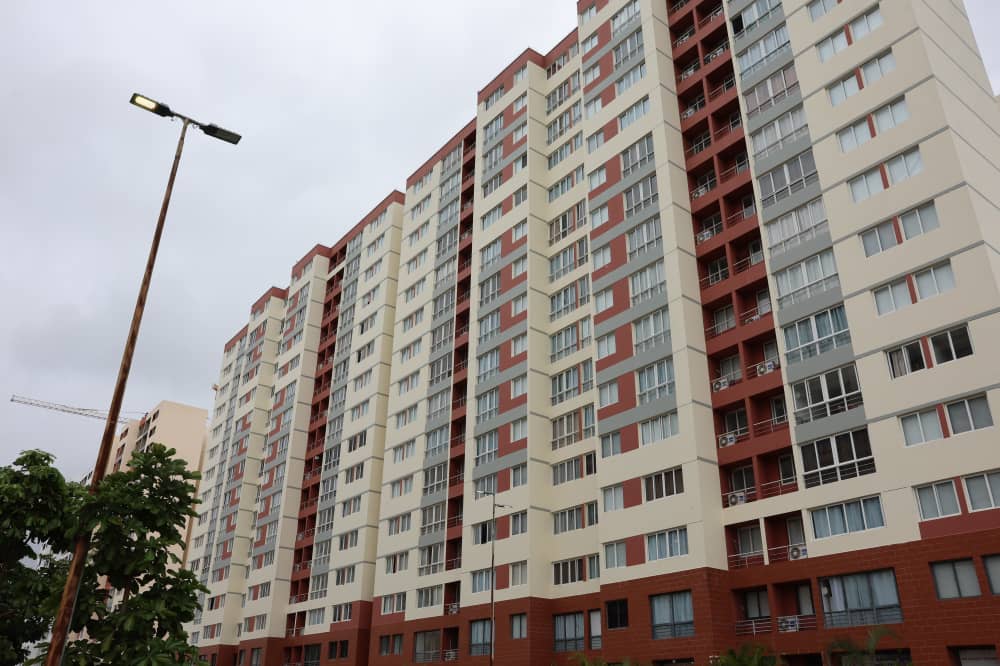
Venezuela faces the challenge of building on ruins, under the urgent need to provide housing solutions that become safe roofs and to avoid prolonging the wound in the country’s social structure. | Photo: “Ciudad Tiuna” Residential Complex (Credits: Presidential Press)
Guacamaya, July 26, 2026. One month after the catastrophe caused by the double earthquake of June 24, Venezuela is facing a humanitarian and infrastructure crisis unparalleled in the last century. Government policy, with numerous limitations, is trying to cope with the emergency, leveraging comprehensive reconstruction plans alongside legal reforms and foreign support.
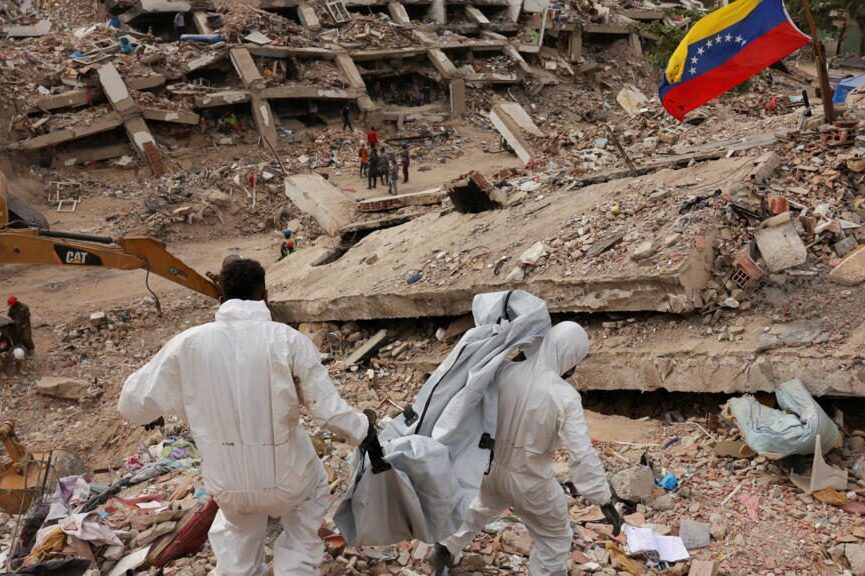
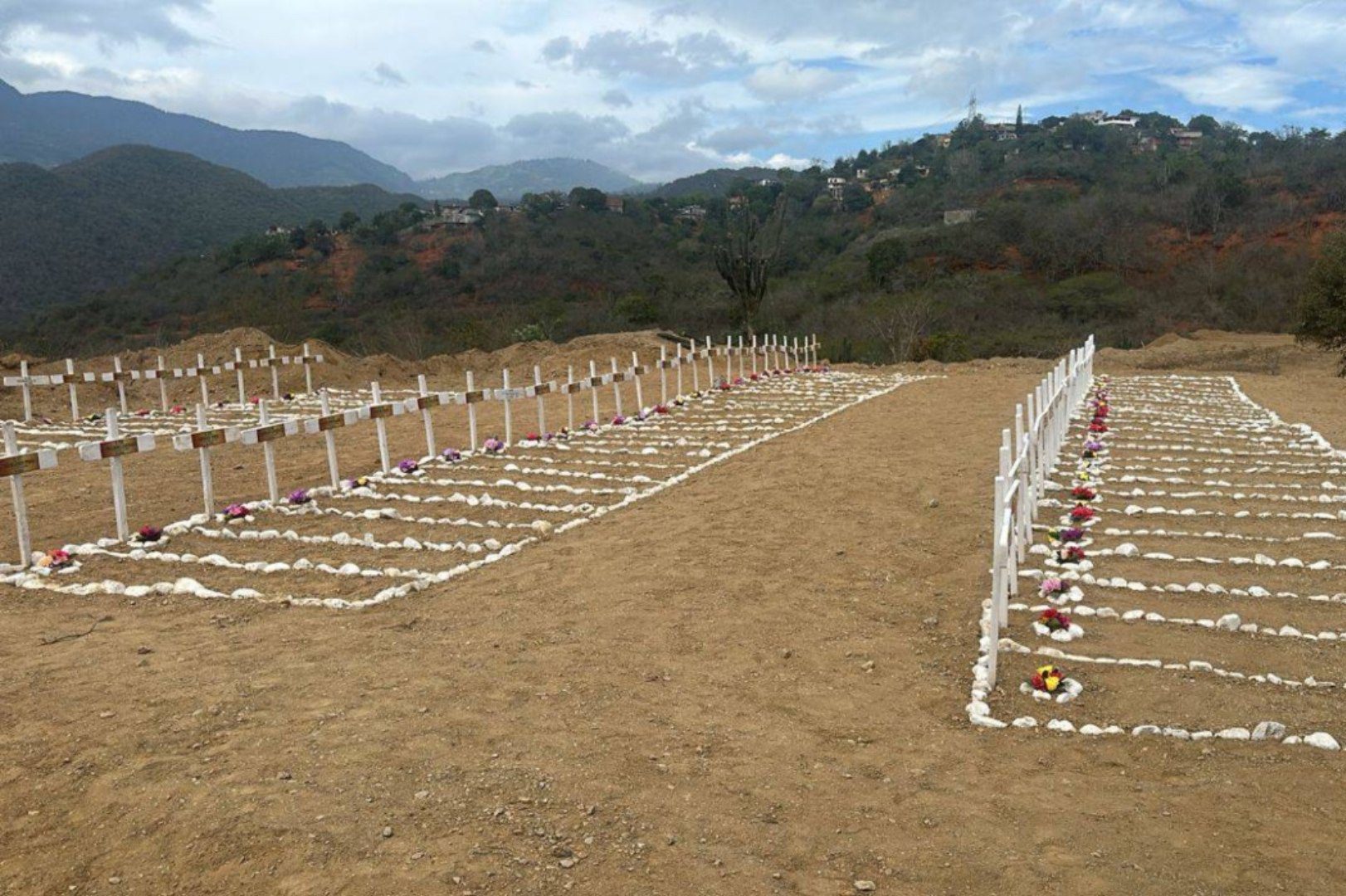
The seismic events of magnitudes 7.2 and 7.5 have already left a deep wound in the country, with an official death toll that has risen to 5,398 and 16,740 injured. The devastation also translates into alarming figures, with 17,907 people currently displaced following the collapse of 190 buildings and structural damage to another 856.
This has caused critical pressure on the shelter system. To date, there are at least 107 transitional camps operating nationwide, housing some 24,477 people. The state of La Guaira, considered ground zero of the disaster, bears the heaviest burden with more than 12,700 people under shelter in 28 refuges, followed by Caracas and the states of Miranda and Aragua.
Housing deliveries and promises under scrutiny
In the midst of this emergency, acting President Delcy Rodríguez has led the delivery of housing solutions. Recently, she allocated furnished apartments to some 200 families in the towers of the “Ciudad Tiuna” complex in Caracas. Although other official information indicated that 240 families were beneficiaries, it is unknown whether that figure also equates to housing units.
In context, the Executive has announced a schedule of monthly deliveries with the goal of granting 4,000 homes by December 2026. In the medium term, government projections aim to exceed 10,000 homes recovered or completed by 2027, although it estimates that 25,000 housing solutions are initially needed to cover the deficit generated by the seismic doublet.
These figures, however, have been met with skepticism by various sectors. Analysts such as Asdrúbal Oliveros and Zulma Bolívar have publicly warned that the lack of fiscal room and the magnitude of the deficit make the goals seem more like a “wish” than a “feasible reality.” José De Viana, for his part, considers that, given international experience, a real reconstruction could take years, not months.
The “Venezuela Renace” Plan and legal reforms
The official response is articulated through the Venezuela Renace Plan, which includes massive technical inspections. In La Guaira, more than 40 plots are being geologically evaluated, covering some 584,000 square meters. Simultaneously, works in their final stages are being supervised in areas such as Charallave (Miranda) and sectors of Brisas de Maiquetía and El Junquito to accelerate relocations.
To organize demand, the Ministry of Habitat and Housing is promoting the Single Housing Registry, which, by July 24 and after 11 days of deployment, had managed to census 13,674 families that lost their homes. That figure translates into more than 46,000 people, counted by a team of 250 registrars distributed across the main affected regions.
In parallel, the Executive also activated the National Habitat and Housing Census through habitable.gob.ve, although as of this date the link remains inaccessible. At the time of its announcement, the digital process consisted of reporting damage via a “risk traffic light” and subsequently obtaining a certificate with an immutable QR code to prevent irregularities.
This is accompanied by the push, from the National Assembly, for urgent reforms to reactivate the primary and secondary real estate market. The proposals include the Law against Real Estate Fraud, which seeks to facilitate construction, and the new Rental Law, which proposes a framework more favorable to landlords to reactivate the rental market.
International cooperation and the reconstruction bill
Technical and financial support has diversified. World expert in structural engineering, Kit Miyamoto, on the one hand, is collaborating in the training of workers and in the evaluation of structures suitable for repair. In turn, the Venezuelan Chamber of Construction has proposed drastic measures such as 0% VAT on materials for 18 months and the release of legal reserve requirements to finance the sector.
At the multilateral level, the Inter-American Development Bank (IDB) and the World Bank (WB) have offered non-reimbursable aid. Although the amounts of these benefits were not disclosed, the World Bank itself estimates direct physical damage at $19.6 billion, a figure supported by experts who place the financing need between $12 billion and $15 billion, nearly 11% of national GDP.
Meanwhile, the United Nations Development Programme (UNDP) has opened a call for the massive acquisition of prefabricated modular housing for rapid assembly, adapted to the country’s climatic conditions. The UN, through the Office for the Coordination of Humanitarian Affairs (OCHA), has requested an additional $300 million, on top of the initial $15 million, to address the immediate needs of 1.3 million affected people.
What to expect?
Venezuela finds itself at a crossroads where humanitarian urgency collides with institutional and financial weakness. While the deployment of the Venezuela Renace Plan and the use of census technologies show a willingness to organize, the magnitude of the required investment (exceeding $12 billion) surpasses the State’s capacity independently.
The success of the reconstruction will depend on three critical factors: transparency in the management of multilateral funds, the ability to integrate the private sector through ongoing legal reforms, and the effectiveness of housing allocation in real time to empty the camps before they become permanent settlements of poverty.