Pedro Elías Hernández is a journalist and political and economic analyst.
Guacamaya, August 27, 2026. The new currents of thought that study the processes of spatial occupation and the new urban geography, together with important economic schools focused on growth theory that are active in the world’s leading universities and academic circles, attribute to the development of cities and regions—rather than to the performance of states and nations—the positive impact on the immense material prosperity brought about by the phenomenon of globalization.
For example, the city of Jakarta grows twice as fast economically as Indonesia does. The famous City of London grows three times faster than the United Kingdom. The New York metropolitan area generates twice the wealth of Sweden. Likewise, São Paulo has greater individual economic weight in its relations with the world than Brazil does. The city of Istanbul alone moves two-thirds of the total business volume that all of Turkey trades with Germany toward Berlin and other German cities each year. And Texas and Florida are the two new economic locomotives of the U.S.
The phenomenon of globalization has marked a trend: concentrating in certain urban centers with particular geographic attributes their fundamental territorial footholds. In fact, the axes of power in the world have been taking shape not so much according to the relationships established between states and nations, but between cities and regions, which has given rise to a new form of international governance.
In this way, the category known as global cities emerges. What do they consist of? They are spatial hubs for cross-border business, configuring a different kind of urban geography. The expert on this fascinating subject, Dutch sociologist Saskia Sassen, has delved deeply into the matter and, from the University of Chicago, has compiled a list of the 50 most important global cities that constitute the locomotives of material progress in contemporary societies.
The concept of global cities is defined based on the evaluation of these urban spaces according to parameters such as economic performance, human resources (education), information flow exchange (technological connectivity with the rest of the world), institutional strength, political engagement, and cultural diversity.
Among the top 10 global cities, in the Alpha category, are New York, London, Paris, Tokyo, Hong Kong, Houston, Singapore, Chicago, Seoul, and Toronto. Here we already see how the axes of power in today’s world align, where North America and Asia have openly surpassed Europe.
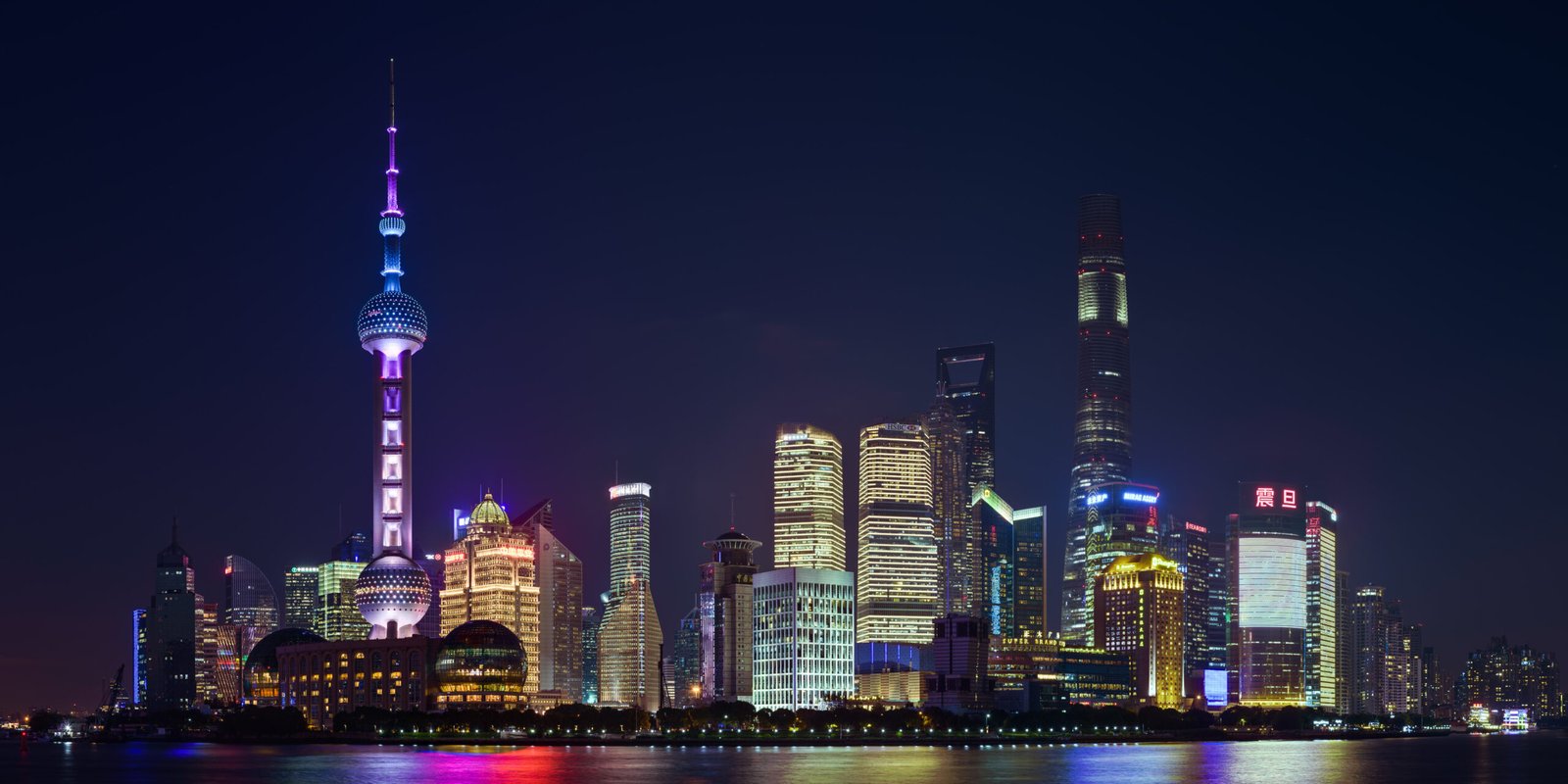
The regions of the world where the so-called Global South is located—those that have managed to turn the tide on poverty and lift hundreds of millions of people out of their dire living conditions—have seen the emergence of global cities as important as Shanghai, Dubai, Shenzhen, Beijing, Dublin, Sydney, Manila, Mumbai, Jakarta, Ho Chi Minh City, New Delhi, Johannesburg, among others. In Latin America, those appearing in the ranking of the 50 most important cities in the world are Mexico City, São Paulo, Buenos Aires, Rio de Janeiro, and Bogotá.
Unfortunately, there is no Venezuelan city on that list. A fact that is both highly significant and tragic.
As a result of the coronavirus pandemic and other phenomena, a realignment in the order of globalization has occurred. The severe crisis in global merchandise supply networks has been one of those consequences, along with the rising cost of labor in China.
This has given rise to a new trend, so-called nearshoring, a transfer of business processes or technology from highly developed countries to regions now geographically closer, with few time-zone differences. This phenomenon has been dubbed “relocation.” Likewise, this new practice has revealed better managerial performance when conducted in-person and personalized rather than remotely via digital means.
Venezuela should take advantage of this novel circumstance, just as Mexico, Guatemala, Costa Rica, El Salvador, and other Latin American countries are doing.
Maracay and Palo Negro can become a major industrial, airport, and logistics corridor. Their location in the center of the country, their industrial tradition, their proximity to Puerto Cabello, and their connection to Venezuela’s main markets offer exceptional conditions for attracting investments linked to manufacturing, logistics, exports, and services. But this vision should not stop in Aragua.
Caracas can recover its role as a financial, business, technological, and professional services hub for the Caribbean. There is concentrated a large part of the country’s university, business, and institutional talent, as well as an infrastructure that, if modernized and accompanied by reliable economic rules, can once again attract regional and international capital.
Barquisimeto can consolidate itself as the great logistics and agro-industrial node of western-central Venezuela, taking advantage of its strategic position between the Andes, the Llanos, the center of the country, and the Caribbean ports. Its commercial, industrial, and agricultural vocation can turn it into a natural platform for production, distribution, and export.
And San Cristóbal can become one of Venezuela’s main gateways to Colombia and the Andean region. The full recovery of the border would allow the development of a binational corridor for manufacturing, trade, services, logistics, and tourism connected to Cúcuta, Bucaramanga, Bogotá, and from there, to the productive chains of the Pacific.
It is not, therefore, about choosing one city over another. It is about building a Venezuelan network of competitive, complementary, and internationally connected cities. In this context, turning the state of Aragua, and especially Greater Maracay, into a national and international investment hub constitutes a concrete opportunity.
The unprecedented cooperation initiative between Deputy Antonio Ecarri and the Mayor’s Office of the Libertador municipality, headed by Mayor Gonzalo Díaz, to promote the construction of the Libertadores de América International Airport with private investment represents a strategic bet for Maracay and for Venezuela. The project seeks to take advantage of the privileged location and conditions of the Palo Negro Air Base, with 1,300 hectares of extension and a 1,300-meter runway, to turn the Maracay metropolitan area into a logistics and business hub connected to major international trade and financial flows.
The completion of the La Encrucijada–Puerto Cabello railway axis, under transparent concession and private participation schemes, would allow the integration of air, maritime, rail, and land transport.
This could be complemented by a dry port in Cagua, capable of receiving and distributing goods coming from Puerto Cabello and connecting the region’s industrial and agricultural production with national and international markets.
At this moment of national reconstruction—physical, institutional, and spiritual alike—nothing is more important than thinking big. To stop managing the economic ruins left by decades of tragic errors and to dream of the Venezuela that is possible, as Arturo Uslar Pietri used to say.