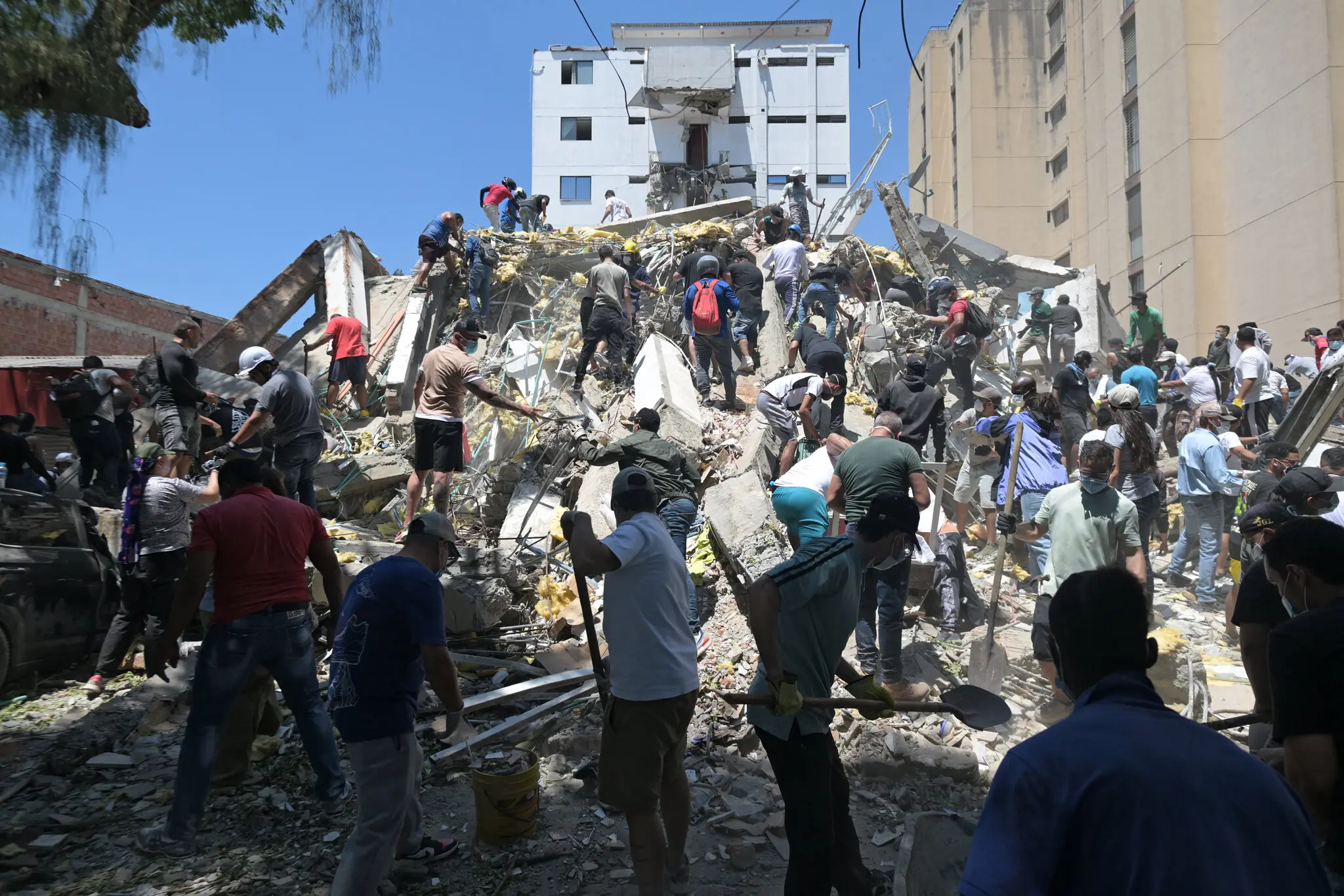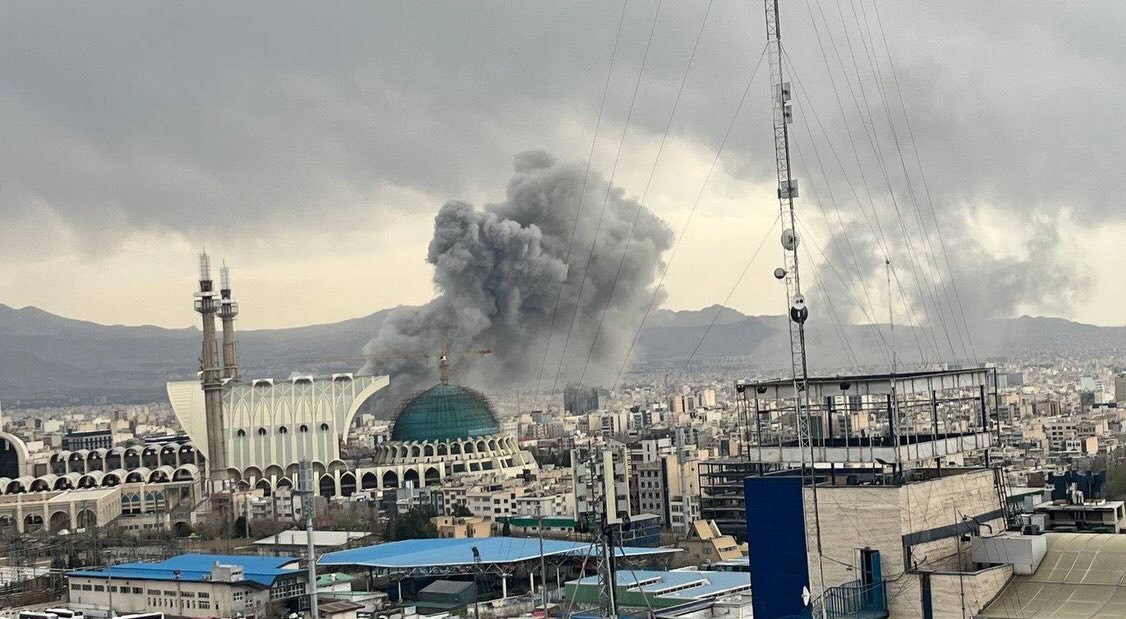
The intense bombings over Tehran and other cities in the Middle East create a scenario of maximum tension and a potential reconfiguration of the Iranian regime, while experts warn of possible outcomes following the death of Ayatollah Ali Khamenei. At the same time, the escalating tensions between the United States, Israel, and Iran are driving sharp increases in oil prices and restrictions on maritime war-risk insurance in the Persian Gulf. Photo: shared by a Tehran resident on the social media platform X.
Guacamaya, March 4, 2026. The recent escalation of tensions between the United States, Israel, and Iran threatens not only the geopolitical stability of the Middle East but also global energy markets. While oil prices have surged and maritime insurers have restricted war-risk coverage in the Persian Gulf, experts warn about the fragility of the Iranian regime and the possible scenarios following the departure of Supreme Leader Ali Khamenei. In this context, Venezuela emerges as a strategic actor capable of influencing global crude supply, in the event of prolonged disruptions in the Strait of Hormuz.
1. Crisis in the strait of Hormuz
According to analysts at JPMorgan, the main oil producers in the Persian Gulf could only maintain current production levels for a limited period —approximately 25 days— in the event of a complete closure of the Strait of Hormuz due to the military escalation in the region. Beyond that threshold, storage limitations would force a gradual halt in production, as crude could not be shipped to international markets.
This analysis comes amid heightened tensions following U.S. and Israeli attacks on Iranian targets over the weekend, followed by an Iranian missile response targeting several Gulf countries, including Qatar, the United Arab Emirates, Kuwait, and Bahrain. President Donald Trump stated that military operations would continue until Washington’s strategic objectives are met.
Although the Strait of Hormuz —through which roughly one-fifth of global oil and liquefied natural gas trade passes— has not been formally closed, tanker traffic has been significantly reduced due to preventive suspensions by shipping companies. According to JPMorgan, export flows contracted to around 4 million barrels per day, far below the usual average of 16 million barrels per day through this strategic route.
Structurally, about 19 million barrels per day of liquid fuels —including 16 million barrels per day of crude— rely on this route. While countries like Saudi Arabia and the UAE have pipeline infrastructure that can divert part of their exports to alternative routes, available capacity is limited and cannot fully compensate for a prolonged closure.
Together, the seven main Gulf producers —Saudi Arabia, UAE, Iraq, Kuwait, Qatar, Oman, and Iran— have an estimated onshore storage capacity of approximately 343 million barrels, equivalent to about 22 days of production without exports. Additional floating storage options —including around 60 empty tankers in the region capable of holding roughly 50 million barrels— could extend this margin by three to four additional days.
This scenario highlights the extreme sensitivity of the global energy market to any prolonged disruption in the Strait of Hormuz and reinforces the systemic dimension of the ongoing conflict.
The escalation in the Middle East is not only impacting crude prices immediately but could profoundly alter the architecture of the global oil market, from physical trade to financial derivatives. Market participants —producers, refiners, traders, and financial institutions— are being forced to reconsider supply routes and hedging strategies amid extreme uncertainty.
Unlike stock markets, where futures prices often reflect expectations, in the oil market the forward curve primarily serves as a risk management tool. When geopolitical risks rise, the most significant adjustments are not always reflected in the spot price but in the structure of the curve and the options market. In crisis scenarios, traders recalibrate positions to protect against supply disruptions or abrupt demand changes, leading to higher implied volatility and more complex derivative structures.
A key indicator is the so-called “skew,” reflecting the difference in implied volatility between out-of-the-money call and put options. This allows market participants to infer which type of risk is perceived as dominant. When fears of supply disruptions prevail —for example, a potential closure of the Strait of Hormuz— traders tend to buy call options to protect against sharp price increases, raising implied volatility and creating a bullish bias. However, this pattern can quickly reverse if the conflict threatens global economic growth or triggers financial instability.
2. Impact on prices and markets
Brent crude rose as much as 10% in a single session, and several analysts expect it could approach or exceed $100 per barrel if the supply disruption continues. More conservative scenarios place the range between $85 and $90.
In this context, the OPEC+ alliance —including countries like Saudi Arabia, Russia, Iraq, UAE, Kuwait, Kazakhstan, Algeria, and Oman— has stated that it continues to closely monitor market conditions, emphasizing the need for prudence. While official statements have not directly addressed the conflict, Russian authorities have warned that a transportation disruption through the Strait could significantly destabilize global oil and gas markets.
Paradoxically, some non-regional producers could benefit from this scenario. Russia, for instance, has seen its oil revenues decline due to sanctions and G7 price caps. A reduction in Gulf supply could raise international prices and stimulate demand for Russian crude, especially from China, which would need to compensate for lost Iranian barrels or other regional suppliers. Thus, the crisis not only poses energy security risks but also the potential reconfiguration of trade flows and geoeconomic relationships in the global hydrocarbon market.
3. Opportunity for Venezuela
For Venezuela, a prolonged disruption in the Middle East presents mixed effects. On one hand, sustained higher international oil prices could improve export revenues and partially ease fiscal and external constraints, particularly amid partial sanctions relief and the reactivation of the oil industry. Lower availability of Middle Eastern crude in certain markets could open opportunities to redirect Venezuelan exports to Asia or even Europe, depending on political and logistical conditions.
On the other hand, extreme market volatility, higher maritime transport costs, ongoing sanctions-related financial restrictions, reputational risks, and domestic challenges may limit Venezuela’s ability to fully capitalize on elevated prices. Additionally, if the conflict leads to global economic slowdown, reduced energy demand could offset initial supply-shock benefits. The impact will therefore depend on both the crisis’s duration and Caracas’ operational, diplomatic, and managerial capacity to adapt in a highly unstable energy environment.
A notable development is Venezuela’s recovery and expansion of oil exports after years of isolation and sanctions. Data from maritime intelligence firm Kpler indicates that daily crude exports surged in February to roughly 788,000 barrels per day, nearly double the 383,000 barrels per day in January —the month when the U.S. administration assumed control of Venezuelan crude sales following President Nicolás Maduro’s capture— marking a five-month export high. This rebound comes as part of an agreement with Washington that allowed the resumption of sales and re-entry into markets previously blocked by sanctions.
Bloomberg reports that the production recovery partly stems from the delivery of essential diluents (heavy naphtha), needed to reduce the viscosity of Venezuela’s extra-heavy crude for transport and processing. Five shipments arrived in February, up from two in January, improving operational capacity.
Companies like Chevron Corporation have played a key role in reactivating the sector, expanding Venezuelan crude exports and refining to U.S. refineries for the first time in over seven years. Global traders such as Vitol Group and Trafigura Group have facilitated tens of millions of barrels to international markets as authorized intermediaries under the new export framework. In total, these operations represent the largest volume of Venezuelan oil entering refining systems since before sanctions, with sales under the U.S. agreement reaching around $2 billion by the end of February.
Despite this rebound, Venezuela faces deep structural limitations. Its oil infrastructure has suffered decades of underinvestment, mismanagement, corruption, and sanctions. Much of the exported crude is initially stored in Caribbean terminals, the U.S., or floating tankers due to logistical delays. Therefore, while potential exists, Venezuela is not immediately positioned to fully fill gaps left by Middle Eastern disruptions.
It is also notable that Delcy Rodríguez’s first communication following the Middle East conflict was with Qatar, not Iran, signaling priorities and underscoring Gulf countries as a key strategic axis in Venezuela’s foreign policy. Historically, Venezuela has benefited from rising oil revenues during prolonged Middle Eastern conflicts.
4. Iran amid a historic transition
Following Ali Khamenei’s death, power in Iran has entered a reconfiguration phase. Years of sanctions, economic mismanagement, and climatic pressures have left the population strained, placing Iran under global scrutiny. The internal situation is critical not only for Iran but for regional and global stability.
According to Suzanne Maloney, vice president of the Brookings Institution, Iran is on the verge of a leadership change with potential regional and global repercussions. Khamenei, who governed for nearly four decades, consolidated clerical power and expanded Iran’s regional influence. Maloney warns that lessons from 1979 highlight the costs of failing to anticipate transitions. She argues that Washington must prepare for multiple scenarios, deter escalation by radical sectors, and encourage responsible behavior by any successor.
Maloney outlines three possible, non-exclusive outcomes: regime continuity through controlled succession, military takeover, or system collapse. The Constitution stipulates that the Assembly of Experts, composed of 88 clerics, appoints the supreme leader, but the process is heavily shaped by existing power structures.
In Foreign Affairs, Karim Sadjadpour of the Carnegie Endowment for International Peace notes that Iran could face not just a leadership change but potential regime transformation. Recent warfare exposed gaps between Tehran’s ideological rhetoric and actual capabilities, with Israeli attacks and U.S. bombings revealing military vulnerabilities and limitations in internal control. Sadjadpour emphasizes the question of whether the theocratic system will endure, mutate, or implode.
A key scenario involves decisive ascendancy of the Islamic Revolutionary Guard Corps (IRGC), which could gradually displace the clergy and redefine state legitimacy, replacing the revolutionary Shi’a narrative with an Iran-focused nationalism emphasizing security and territorial unity.
With 92 million inhabitants and a heavily sanctioned economy, Iran is the world’s largest society partially isolated from the international financial system. Currency depreciation, limited economic integration, and digital censorship fuel persistent domestic tensions. The outcome of Tehran’s transition will redefine internal politics and reshape the regional strategic balance, affecting the nuclear program, relations with Israel and the U.S., Gulf projections, and Iran’s network of non-state allies.
Mohammad Reza Farzanegan, professor of Middle Eastern economics at Philipps University of Marburg, cautions that Khamenei’s departure does not guarantee a rapid collapse or smooth transition. In Al Jazeera, Farzanegan writes that “the assumption that removing a central figure will lead to a brief, decisive rupture followed by a smooth transition is far from certain.”
He recalls that Afghanistan, Iraq, and Libya show that external interventions rarely produce immediate stability. Afghanistan endured decades of conflict after the 2001 U.S. invasion; Iraq faced multiple insurgencies post-2003; Libya fell into prolonged fragmentation after the 2011 NATO intervention, remaining divided between rival governments. These cases suggest that institutional disintegration and lack of administrative continuity can trigger extended instability cycles.
Farzanegan emphasizes that, unlike these countries, Iran has a robust symbolic and religious framework where the leader’s death could be interpreted as a martyrdom, fostering national cohesion rather than immediate collapse: “Death at the hands of supposed enemies of Islam may be seen as a redemptive transition rather than defeat.”
He stresses that maintaining administrative cohesion and territorial integrity depends on the “deep state”, including the civil bureaucracy, technocracy, and security apparatus. The continuity of ministries, banks, and regional governorships is crucial to prevent total fragmentation, as seen in Libya.
If institutional cohesion fails or rivalry emerges between the regular army (Artesh) and the IRGC, Iran could face persistent conflict, territorial and social fragmentation, with ethnic minorities (Baluchis, Kurds, Arabs) escalating separatist demands and local militias competing for resources —what Farzanegan calls an “elite war” within state institutions.
He also highlights the impact of decades of sanctions: the hollowing out of the middle class removes a traditional stabilizer during political transitions, increasing the likelihood that radicalized military factions or decentralized insurgents fill the power vacuum. This underscores the warning that violent change could trigger a prolonged period of structural and social instability rather than a quick, orderly resolution.
Thus, one could foresee a scenario of prolonged conflict, both externally and internally, where no unified opposition can seize power, and the current government seeks to consolidate all possible options for resistance.
The analyses by Maloney, Sadjadpour, and Farzanegan converge on a central point: Iran is at a critical juncture, with an aging leadership and a deeply entrenched system facing unprecedented internal and external pressures. Experts do not assert that conflict is inevitable or that immediate collapse will occur; rather, they emphasize high uncertainty and the risks of extended structural and social instability.
Iran’s transition is likely to be gradual and complex, depending on both the preservation of internal institutions and the capacity of regional and international actors to manage political and military pressure.
In short, the conflict is not inevitable, but the potential for internal and regional crises is high, contingent on how leadership transition and institutional continuity are handled.
5. Geopolitical Dimension
The risk in the Strait of Hormuz and rising maritime insurance costs are reshaping energy flows.
Russia emerges as a direct beneficiary, with higher prices critical to sustaining its war machinery in Ukraine; Venezuela faces a window of opportunity, conditioned on its ability to maintain, manage, and direct increased exports.
Currently, the conflict between Iran, the United States, and Israel is generating repercussions across the Middle East and the Horn of Africa, creating a complex geopolitical network. From Pakistan, with its involvement and intervention in Afghanistan, to India, which has strengthened its strategic ties with Israel, tensions project toward the Red Sea, involving Somalia and Somaliland — the latter recognized by Israel as a sovereign state to consolidate its influence vis-à-vis the Houthis in Yemen. Simultaneously, instability is evident in Sudan and in the internal conflict in Libya, where local power dynamics intersect with the interests of external powers.
These moves are not incidental; they reflect a deliberate strategy by Israel and the United States to secure corridors of influence, monitor strategic routes, and contain Iran’s projection in the region. The combination of regional alliances, selective diplomatic recognitions, and military cooperation suggests that the dispute with Tehran is not limited to direct confrontations but is being waged through a rebalancing of power on multiple fronts, from diplomacy to maritime and land security.