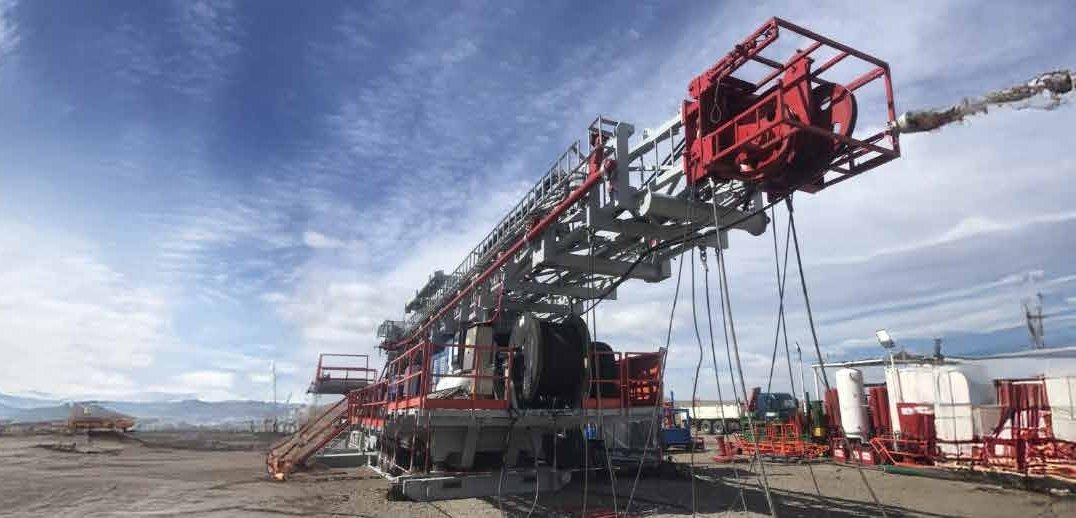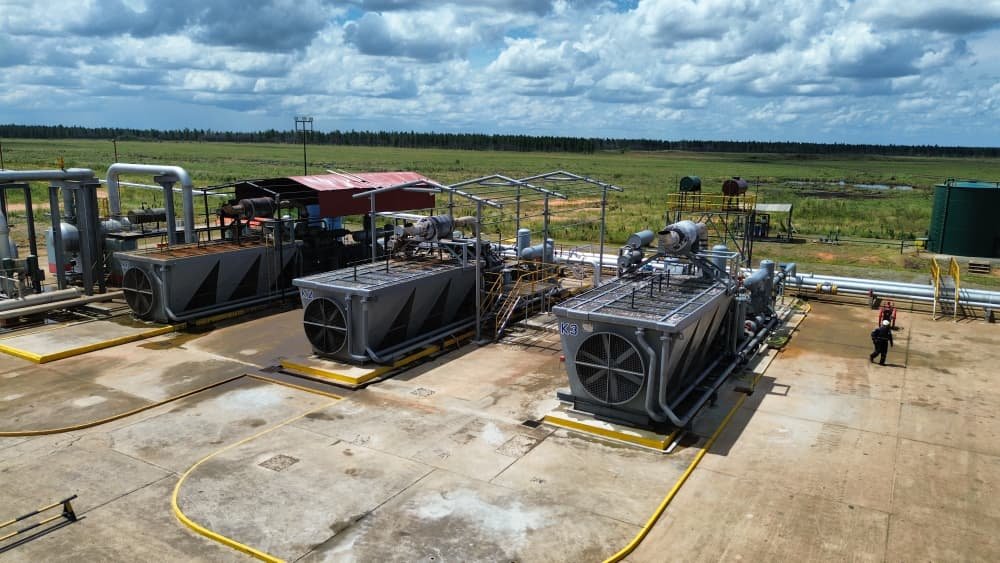
Venezuela’s oil opening continues to attract the attention of major energy corporations, as well as smaller operators. Photo: Instagram / @petroleosdevenezuela.
Guacamaya, May 20, 2026. The signing of agreements between the Venezuelan government and major international energy companies, the sustained increase in oil exports, and the reconfiguration of global trade flows are redefining Venezuela’s role in the world energy market.
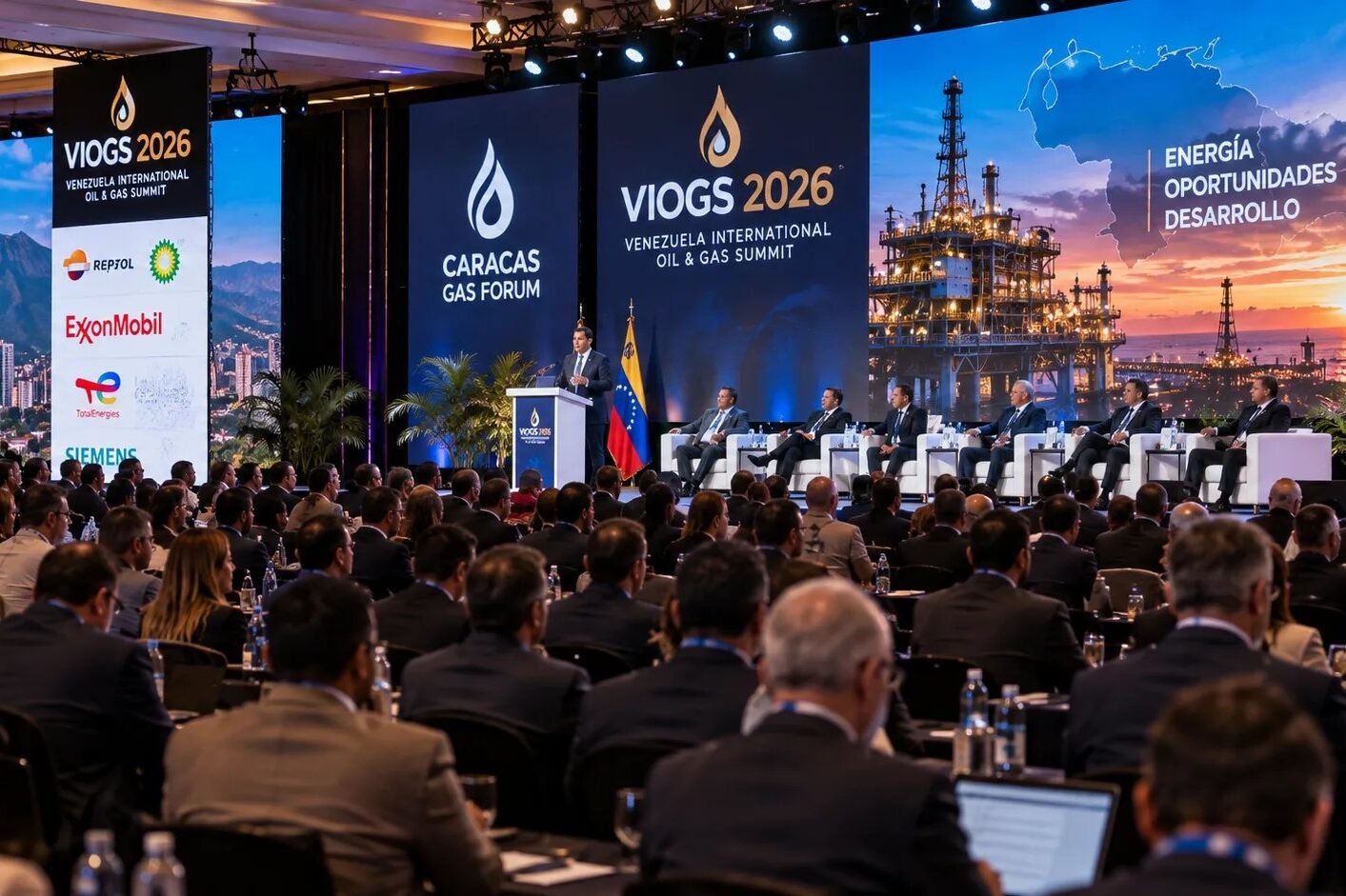
In a context marked by the easing of US sanctions, geopolitical conflicts in the Middle East, and internal regulatory changes, the country is once again attracting players such as BP, ExxonMobil, Chevron, TotalEnergies, Repsol, and new US firms, in what could be the beginning of a new stage for its hydrocarbon industry.
Exports have reached a record high since 2018, reaching 1.23 million barrels per day, accompanied by rising global market prices.
In April, according to secondary OPEC sources, production also reached a milestone of 1.03 million barrels per day, the highest point since 2019.
BP and the strategic return to Venezuelan gas
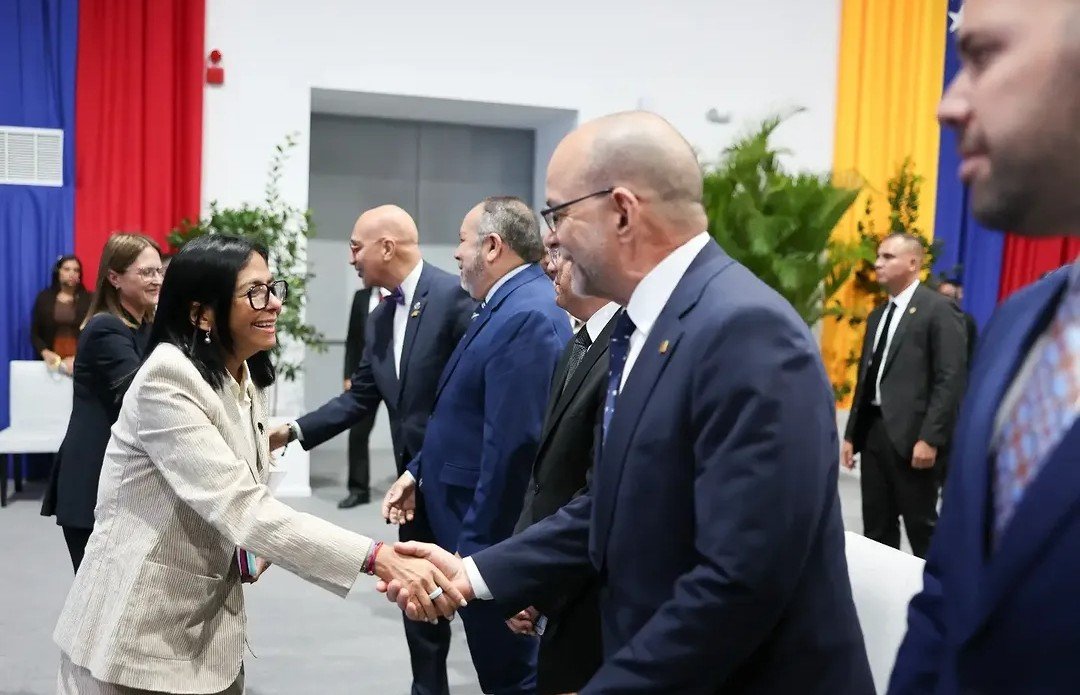
Venezuela’s Minister of Hydrocarbons, Paula Henao, and BP’s executive in Trinidad and Tobago, David Campbell, signed a memorandum of understanding in Caracas for the exploration and exploitation of natural gas in the Loran-Manatee field.
Within the Deltana Platform, Loran-Manatee is located on the maritime border between Venezuela and Trinidad and Tobago. It could be connected to the island’s gas export infrastructure, facilitating the monetization of the project.
During the event, Vice President Delcy Rodríguez emphasized the political nature of the agreement, stating that BP’s return represents “a clear sign of the future we want to mark for Venezuela,” based on relationships of respect and cooperation under “win-win” schemes.
For his part, William Lin, BP’s executive vice president of gas and low-carbon energy, highlighted the country’s untapped potential, noting that “there is still a lot of gas in the Deltana platform,” while celebrating the possibility of contributing to the development of the Loran field.
A particularly significant element is the announcement of the opening of a permanent BP office in Venezuela, suggesting a medium- and long-term commitment to the country, beyond specific agreements.
However, no details were provided on investment amounts or estimated production capacity of the projects, reflecting a context still marked by caution.
ExxonMobil: change of narrative from rejection to proactive interest in Venezuela
One of the most striking developments is ExxonMobil’s change of stance. Its CEO, Darren Woods, months ago had described the Venezuelan oil sector as “unfit for investment” during a meeting at the White House with President Donald Trump, who responded by calling the company “too clever.”
However, the context has changed: Woods now recognizes that Venezuela is “an immense resource reservoir” that has opened up more freely to the world, and says he is optimistic about emerging opportunities.
This shift responds to several factors that the company itself has pointed out: changes in Venezuelan energy regulations, more flexible new contractual terms, and the easing of sanctions by the United States, in addition to competitive advantages in heavy crude production.
ExxonMobil has already sent technical teams to the country to evaluate on-the-ground conditions, marking a possible gradual return, although conditioned on the evolution of the political and regulatory environment.
It is worth remembering that Exxon’s operations in Venezuela were nationalized twice: in the 1970s and during the government of Hugo Chávez in the 2000s, which adds a historical component of caution to its possible re-entry.
Another key point for ExxonMobil is the possible negotiated resolution of the Esequibo territory and its maritime front between Venezuela and Guyana, where it maintains significant operations.
TotalEnergies: seeking contracts in Venezuela
French company TotalEnergies is “on the verge of signing” commercial contracts with PDVSA, according to its CEO Patrick Pouyanné.
If finalized, these agreements would allow the company to directly access Venezuelan oil, reducing dependence on intermediaries such as Vitol and Trafigura, which currently dominate the country’s crude marketing.
The company left the country in 2021, selling its positions in the Yucal Placer gas field and the Petrocedeño mixed company, where it participated with Norwegian Equinor.
TotalEnergies plans to direct these flows to its refinery in Port Arthur, Texas, with a capacity to process 238,000 barrels per day, demonstrating direct integration between Venezuelan production and refining in the United States.
Trump administration accompanies small and medium-sized oil companies to Caracas
Recently, Jarrod Agen, Executive Director of the White House’s National Council for Energy Dominance, arrived in Caracas.
He accompanied several executives from mid-sized oil companies who signed memoranda of understanding with the Venezuelan government, including Doug Lawler, CEO of Continental Resources; Bryan Sheffield, managing partner of Frontera Partners; Russell Freeman, CEO of HKN Energy; and Kevin McCarthy, a board member of Aspect Holdings, who was also former Speaker of the US House of Representatives.
Shell accelerates talks to monetize Venezuelan offshore gas
Oil company Shell confirmed that it is holding talks with the Venezuelan government to advance the monetization of offshore natural gas through the Atlantic LNG plant, located in Trinidad and Tobago. The company’s CEO, Wael Sawan, assured during a quarterly conference that Venezuela represents a strategic growth opportunity for the company in the upstream segment, focused on hydrocarbon exploration and production.
Sawan highlighted that Shell has “particular advantages” in the development of Venezuelan offshore gas and explained that the goal is to unlock reserves that have remained unexploited for years, transporting part of the gas to Trinidad and Tobago to process it and export it as LNG through Atlantic LNG.
The energy agreements signed between Caracas and Shell in March contemplate the development of the Dragón field, as well as possible projects in Carito, Pirital, and the cross-border Loran area. The Atlantic LNG plant, participated in by Shell, BP, and Trinidad’s National Gas Company, currently operates below capacity due to gas supply shortages.
George E. Warren enters the Venezuelan crude business
US firm George E. Warren LLC, a small oil marketer based in Florida, began operations in the Venezuelan crude market, breaking the predominance that major international traders like Trafigura and Vitol Group had held in the marketing of Venezuelan oil.
According to documents cited by Bloomberg, the company will export around one million barrels of Venezuelan crude this month, marking its first purchase since the easing of US sanctions on Venezuela’s energy sector after several years of restrictions.
The entry of George E. Warren LLC positions it among the small group of companies that have managed to finalize direct purchases from Petróleos de Venezuela S.A. (PDVSA). The company had previously been present in the Venezuelan fuel market and is now seeking to gain ground in a business that had until now been dominated by major international traders.
Petrobras analyzes opportunities in Venezuela
According to Reuters, Brazilian state-owned oil company Petrobras confirmed that it is analyzing potential investment opportunities in Venezuela, although it clarified that it is still in a preliminary evaluation phase. Its executive president, Magda Chambriard, acknowledged that the country is part of the company’s strategic international expansion aspirations.
Repsol: productive adjustment with focus on Venezuela in a context of global crisis
Spanish energy company Repsol has announced plans to increase its kerosene production by between 15% and 20%.
This adjustment responds to the disruption in the global supply of jet fuel, derived from conflicts in the Middle East, particularly the war between the United States, Israel, and Iran.
Repsol projects producing between 560,000 and 570,000 barrels per day in 2026, although this figure could increase if access to Venezuelan crude improves.
The company has already received oil cargoes as compensation for previous operations, and is expected to continue receiving supplies in the future.
Repsol confirmed that its operation in Venezuela is entering a phase of moderate expansion, with a planned 10% increase in gas production, as explained by its CEO, Josu Jon Imaz, during the shareholders’ meeting held this week. The plan involves raising pumping from about 580 million cubic feet per day to around 640 million, in line with the joint strategy the company is developing in the country.
The executive also emphasized that the group’s priority is not the immediate recovery of Venezuela’s accumulated debt, but rather operational continuity and the stability of energy projects. In that regard, he recalled the company’s long history in the country and its role in supplying gas to the Venezuelan electrical system.
In parallel, Repsol highlighted progress in the current cooperation scheme with the Venezuelan state, under which payments for gas production at the Cardón IV project are made through crude deliveries. In this framework, the arrival of a first oil cargo as a form of compensation has already been recorded, following agreements established with PDVSA and Italian Eni and with authorization under the US licensing regime.
The agreement seeks to ensure the continuity of gas development at Cardón IV and define progressive payment mechanisms, including the allocation of oil cargoes as part of the exchange. This model is part of a broader energy cooperation strategy that combines investment, production, and in-kind compensation schemes in the Venezuelan sector.
Export boom: record figures since 2018
Venezuela’s export performance shows a significant change.
In April 2026, exports reached an average of 1.23 million barrels per day, the highest level since 2018, with an increase of 14% compared to March.
During that month, 66 crude cargoes were recorded, compared to only 61 in March. It is important to remember that daily production in March was 1.08 million barrels.
This growth reflects a progressive recovery of the industry, driven by greater operational activity and commercial opening.
United States, India, and Europe: expanding markets
Venezuelan crude shipments have shown sustained acceleration towards the United States, India, and Europe.
The US market is once again positioning itself as a key destination, due to the capacity of Gulf refineries to process Venezuelan heavy crude.
In the first 16 weeks of 2026, exports to the United States averaged 254,000 barrels per day, a 12% increase compared to the same period in 2025.
Venezuela displaces Saudi Arabia as an energy supplier to the United States
In a significant development, Venezuela surpassed Saudi Arabia as the second-largest oil supplier to the United States in the third week of April.
According to EIA data, Venezuela exported 310,000 barrels per day, while Saudi Arabia exported 174,000 barrels per day.
Although the Venezuelan figure represented a 38% drop from the previous week, it was enough to surpass the Saudis, who recorded their lowest level in 21 weeks.
It is relevant to note that last week, for the first time, Venezuela ranked second in the ranking that can be assembled using the four-week moving average, which the EIA has compiled since 2010.
The geopolitical factor: war and supply disruption
The closure of the Strait of Hormuz, resulting from the conflict between the United States, Israel, and Iran, has interrupted the flow of oil and other goods from the Gulf.
This has generated price increases, reduced global supply, and the reconfiguration of trade routes.
In this scenario, Venezuela emerges as a relevant alternative supplier.
The United States replaces Russia in the import of diluents in Venezuela.
In February, Venezuela imported 120,000 barrels per day of diluents from the United States, a 114% increase from the previous month.
These inputs are essential for processing heavy crude, producing gasoline, diesel, and jet fuel.
The volume is the highest since December 2018, marking a reversal of the recent pattern in which Venezuela depended on supplies from Russia.
Political and energy reconfiguration
The resumption of relations between the governments of Delcy Rodríguez and Donald Trump has had concrete effects such as increased crude flow to the United States, the easing of sanctions, and the reactivation of foreign investments.
This political rapprochement has been key to the repositioning of the Venezuelan energy sector.
Additionally, it became known that two oil tankers associated with the so-called “dark fleet” have returned to Venezuela to unload crude after months of uncertain voyage, evidencing the country’s persistent problems in consolidating stable oil export routes under an environment of sanctions and opaque operations.
These are the tankers Olina and Galaxy 3, which reportedly remained outside the usual commercial circuit for about five months before returning to a Venezuelan port with their cargoes, according to maritime tracking records and port documentation cited by Bloomberg. This type of maneuver—returning already transported oil—is unusual in international crude trade and reflects the disruption in logistics chains linked to Venezuelan oil.
In parallel, other vessels from the same network, such as the Romana and the MS Melenia, remain detained in Venezuelan territory since the end of last year, unable to complete their operations. In the case of the Olina, its journey was reportedly interrupted in the Caribbean following an intervention by US authorities in the context of recent maritime control operations, which led to its return to Venezuela, where it is now unloading around 713,000 barrels.
For its part, the Galaxy 3 also reversed its commercial operation and returned nearly one million barrels to the country, after remaining immobilized for months in Venezuelan waters. These episodes occur in a context where some crude flows continue to move towards destinations such as China or Cuba, although under increasingly complex and less transparent schemes.
Despite these tensions, flows to the United States have shown signs of reactivation: imports of up to 588,000 barrels per day of Venezuelan oil were recently recorded, the highest level since the imposition of restrictions in 2019.
In this scenario, the so-called “ghost ships” frequently operate with disabled or altered tracking systems, a practice that allows them to evade controls and navigate within parallel commercial networks linked to sanctioned crude.
A real but still fragile opening
The set of agreements, potential investments, and export growth indicates that Venezuela is entering a new phase of energy opening.
However, this process remains conditioned by multiple factors such as regulatory stability, the evolution of sanctions, legal security, and global geopolitical dynamics.
It is important to mention that state-owned PDVSA is reportedly moving forward with the development and distribution of a standard contractual model aimed at energy companies interested in participating in oil projects in Venezuela, according to reports cited by Bloomberg.
The document, approximately 90 pages long, reportedly began circulating among industry executives, legal advisors, and hydrocarbon specialists, with the aim of establishing a common framework for new partnerships. This scheme contemplates conditions for the reactivation of oil fields, drilling of new wells, and marketing of production under shared schemes.
Several companies that already have preliminary agreements with PDVSA are reportedly waiting for this model contract to be able to formalize more advanced negotiations, although the legal review process could extend the expected timelines due to the complexity of the text and its evaluation by international legal teams.
One of the most relevant elements of the draft is the dispute resolution mechanism: in case of contractual disagreements, the intervention of the International Mediation Organization (IMO) based in Hong Kong is initially proposed. If a solution is not reached at that stage, the case could escalate to international arbitration administered in Paris under the Permanent Court of Arbitration.
Along these same lines, the scheme aims to standardize the entry rules for new partners in the Venezuelan energy sector, in a context of gradual reopening to investments and renegotiation of operational agreements.
Venezuela’s Minister of Hydrocarbons, Paula Henao, and PDVSA’s Vice President of Exploration and Production, Jovanny Martínez, participated this Tuesday in an oil exploration conference organized by the American Association of Petroleum Geologists in The Woodlands, near Houston, Texas.
The presence of both officials represents the first visit of high-ranking representatives of the Venezuelan energy sector to the United States since the US military operation in Caracas that occurred last January. Following those events, President Donald Trump promoted a plan aimed at recovering the Venezuelan oil industry through investments estimated at 100 billion dollars, accompanied by regulatory changes promoted by Venezuelan authorities to attract foreign capital.
Henao, appointed minister in March by interim president Delcy Rodríguez—who previously held that portfolio—arrived in Houston on Sunday night and, according to sources linked to the event, will hold private meetings with oil companies interested in operating in Venezuela.
In recent conversations with investors and service companies, the minister has indicated that the country requires key equipment and supplies to increase production, including pumps, valves, wellheads, frequency converters, pipelines, gas compressors, and chemical products intended for drilling, processing, and transportation of crude oil and gas.
During the conference, US Deputy Secretary of Energy Kyle Haustveit stated that Venezuela can play a strategic role in the energy security of the Western Hemisphere, recalling a recent visit to the Orinoco Oil Belt.
Haustveit argued that for years the countries of the region were viewed in a fragmented way according to the type of energy they produce—such as US shale, Canadian heavy oil, or Brazil’s offshore production—but insisted that, looking at the regional panorama as a whole, the Americas have sufficient resources, infrastructure, and refining capacity to consolidate themselves as an energy power.
On the sidelines of the event, Haustveit was seen talking with Venezuela’s diplomatic representative in the United States, Félix Plasencia. The day will also feature interventions from representatives of Repsol and Maurel & Prom.
Paula Henao stated during her participation in Houston, Texas, that Venezuela is capable of responding to the so-called “energy trilemma,” by combining supply security, affordable access to energy, and environmental sustainability.
According to her explanation, the country can guarantee a reliable and stable energy supply that contributes to economic growth and the well-being of the population. Likewise, she indicated that Venezuela has the conditions to offer energy at accessible prices, promoting inclusion and reducing energy poverty.
Henao also highlighted that the development of the sector can advance while minimizing the environmental impacts associated with energy production and consumption, including challenges such as climate change and pollution.
The minister argued that these capabilities rest on the country’s vast energy reserves, its production potential, the recovery of investor confidence, and the strengthening of energy sovereignty.
The country is once again occupying a relevant place in the international energy market, but its consolidation as a reliable supplier will depend on its ability to sustain these conditions over time.