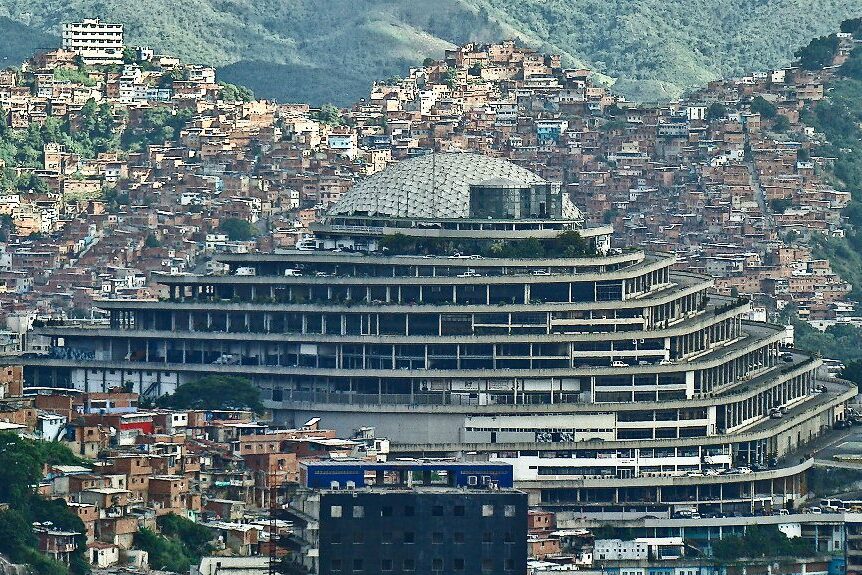
U.S. Secretary of State Marco Rubio stated that the facility had been closed, but human rights defenders denied the total release of prisoners, a situation that ended with the transfer of detainees to other prisons. | Photo: Damián D. Fossi Salas / Wikimedia
Guacamaya, June 5, 2026. The recent eviction of El Helicoide has exposed, on one hand, the fragility of official promises, and on the other, the opacity of the Venezuelan judicial system. What could initially have been reported as even a discreet move is now interpreted as a political response to a situation that the international community, and specifically Washington, could no longer easily ignore.
After 125 days of an official narrative that promoted the closure of El Helicoide as a detention center, that reality was finally forced following a large-scale operation generated by foreign mediation and subsequent internal reactions. The situation appears to have compelled the government to carry out a mass transfer of prisoners to “align” reality with the official discourse.
The “Rubio Effect” and the Families’ Reaction
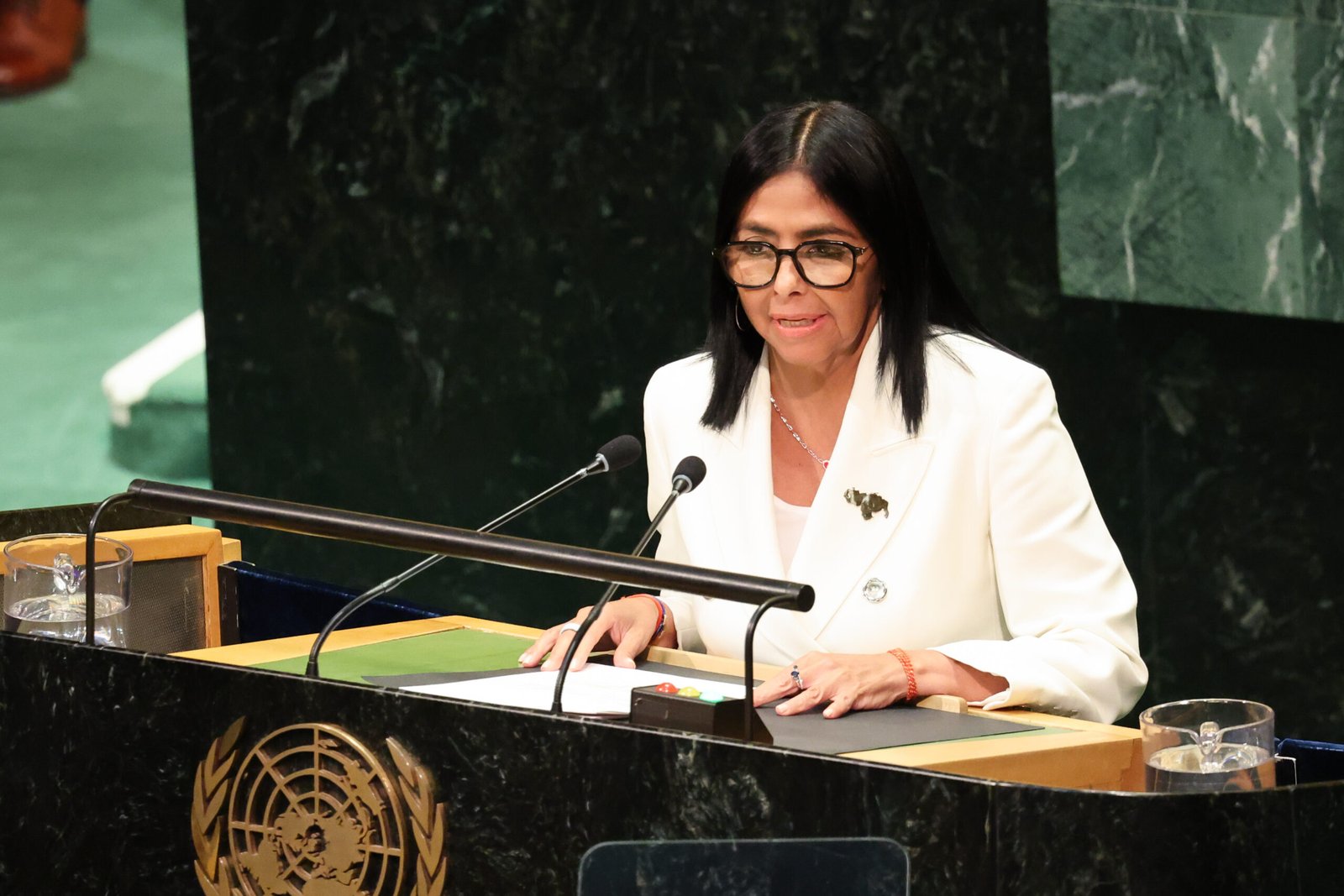
The scenario took shape due to inaccurate information from U.S. Secretary of State Marco Rubio, who on Tuesday, June 2, stated during a hearing before the Senate Foreign Relations Committee that “the infamous prison, El Helicoide, has been closed.” He presented this as progress in the “systemic reforms” of Delcy Rodríguez’s administration.
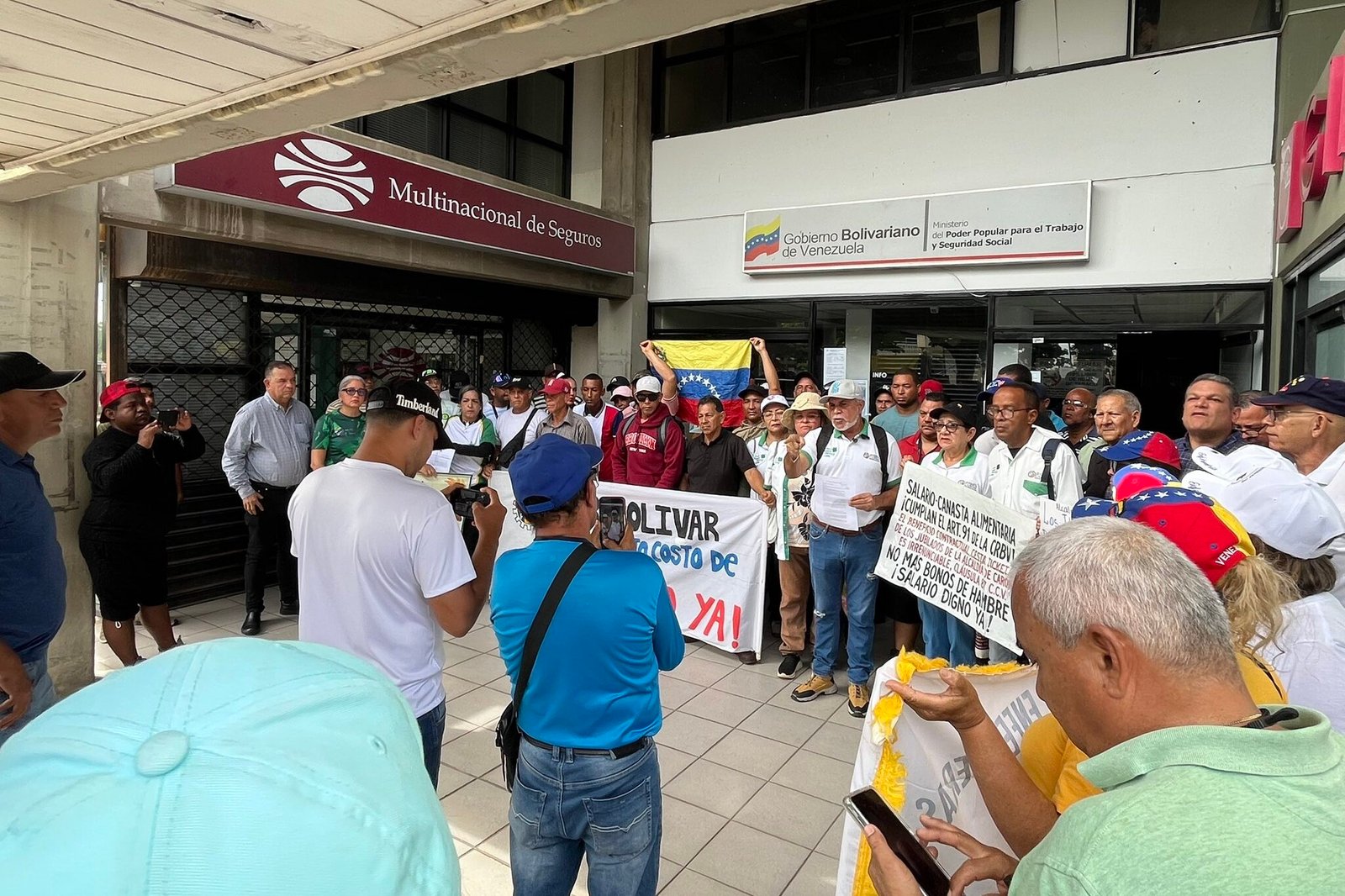
But the reaction was immediate. Family members who had maintained a 145-day vigil in front of the headquarters of the Bolivarian National Intelligence Service (Sebin) categorically denied the U.S. official’s statement. Furthermore, organizations such as Justice, Encounter, and Forgiveness (JEP) confirmed that at least 25 political prisoners remained in the facility.
“My brother is still unjustly imprisoned… El Helicoide is not closed,” asserted Fabiana Vera, sister of Táchira leader Jackson Vera. Just hours later, on June 4, the activist and another group of detainees were transferred to other facilities without prior notification to lawyers or family members. Subsequently, the Penal Forum revealed that the mass transfer involved at least 90 people.
Relatives such as Jean Carlos Cariel, brother of Ricardo Cariel (detained since 2022), denounced the police cordon around family members and the “arbitrary transfer” as an “atrocity” that does not resolve the underlying injustice. “We are not asking for transfers; we are asking for freedom,” Fabiana Vera also cried out before the cameras of international and independent media that had gathered outside El Helicoide.
The contingent was distributed among centers such as La Planta (where leader Jackson Vera was sent), Yare, El Rodeo, and Tocuyito. The women, for their part, were placed in INOF and the Las Crisálidas annex. The discrepancy in figures between NGOs (ranging from 25 to 90) suggests official opacity regarding the occupancy of the facility, especially in the number acknowledged to international interlocutors.
The Gap Between a Promise and Reality
Parallel to these transfers, the release of 29 workers from the mining company Mibiturven (Turkey-Venezuela Binational Mining) was reported. They had been detained for 14 months in El Rodeo I on charges of “trafficking strategic material.” However, the conditions of their release remain unknown—that is, whether it is full release or under precautionary measures.
Moreover, these figures remain insufficient. When comparing the balances from the Penal Forum, the gap between the ruling party’s promises and actual releases is alarming. During May, the President of the National Assembly, Jorge Rodríguez, promised the release of 300 people within a week, but that number did not materialize in any significant portion of what was announced.
Before the announcement, as of May 4, the Penal Forum reported 457 political prisoners, but by June 1, there was only a net reduction of 53 prisoners. Even if the recent release of the 29 Mibiturven workers is added, the number of people who have regained their freedom under this new scheme of “selective pardons” remains far from the 300 promised.
All of this is happening under the cloak of distrust left by the death of Víctor Hugo Quero Navas. His brother, Gabriel Navas, denounced as a “farce” the Public Ministry’s report attributing the death to a “thromboembolism.” Navas recounted that while he was in the prosecutor’s office reviewing the file, the official statement was already circulating on social media without his consent.
Pressure Against Genuine Reform
The decision to transfer the prisoners from El Helicoide appears to be a reactive maneuver, much like the announcement of 300 releases following Donald Trump’s statement that “all political prisoners would be freed.” The pressure from family members, by contradicting Marco Rubio, undermined the credibility of the agreements with Washington, which forced the government to transfer the detainees.
Despite a framework supported by a provisional Amnesty Law and an ongoing subsequent process of criminal justice reform, the continued presence of hundreds of political prisoners demonstrates that the system continues to operate under a logic of “assets for diplomacy.” The government prefers to manage progressive release to maintain its bargaining power.