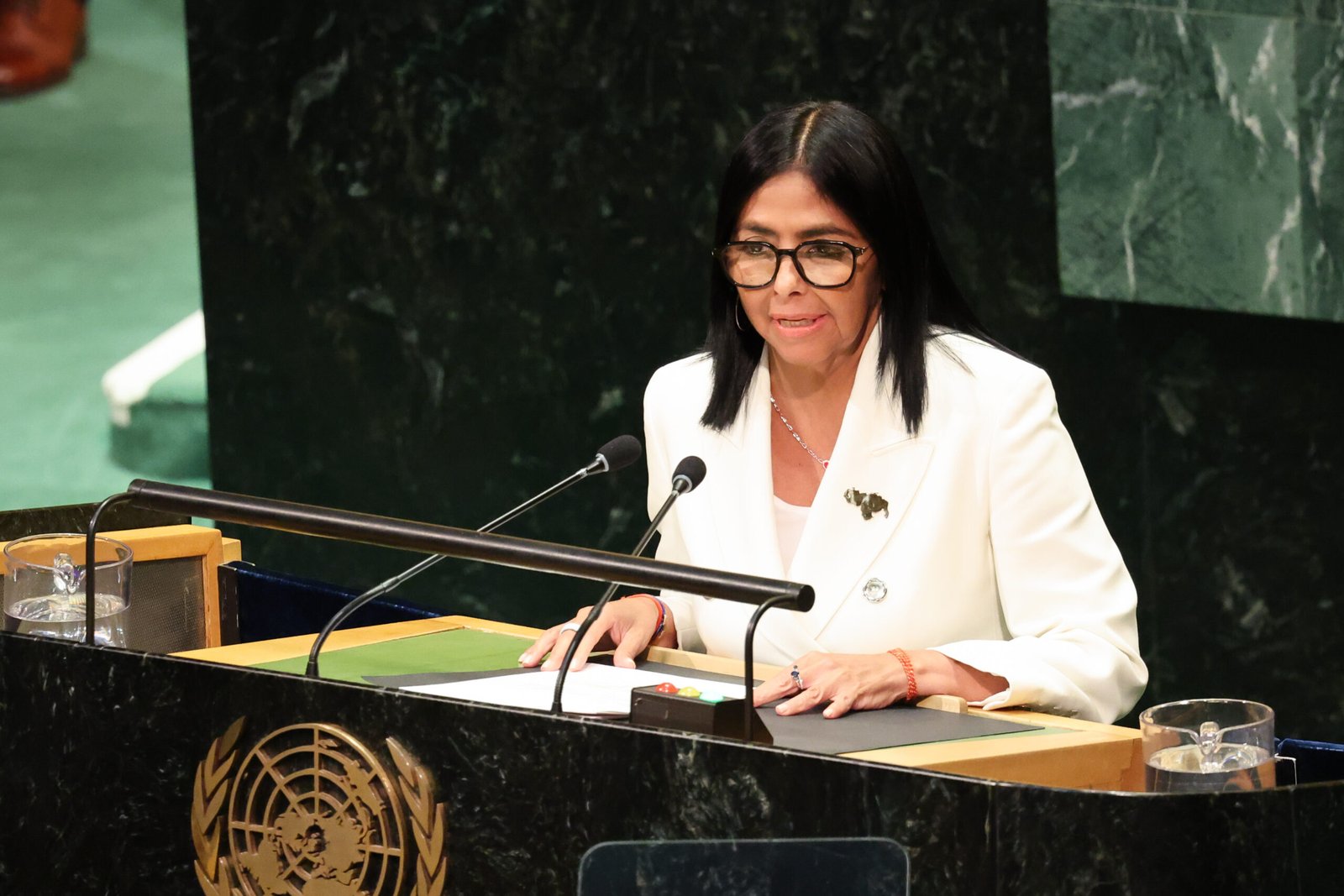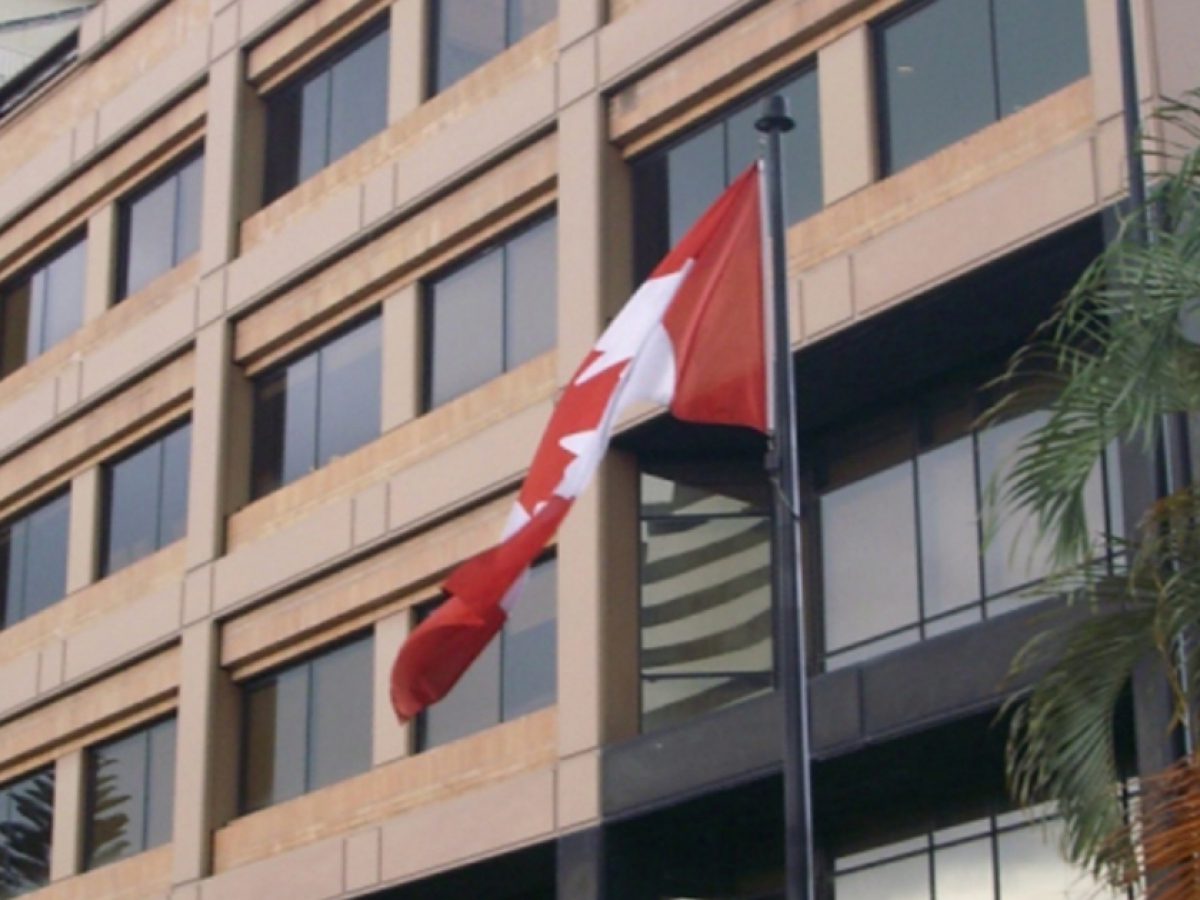
The Canadian Embassy in Venezuela, located in the municipality of Chacao near Altamira in eastern Caracas, has remained closed since diplomatic relations were severed in 2019. Photo: Global Affairs Canada Press Office.
Guacamaya, June 5, 2026. The announcement regarding the possible reopening of Canada’s embassy in Caracas is part of a broader trend of gradual diplomatic re-engagement with Venezuela, driven by a combination of political, economic, and strategic considerations.
According to information from Canada’s Department of Foreign Affairs, Ottawa is evaluating the restoration of its diplomatic mission in the Venezuelan capital amid recent technical visits by Canadian officials and renewed discussions about the conditions required for a stable institutional presence.
Canada has not had accredited diplomats in Venezuela since 2019, although the embassy was never formally closed and has continued operating with a minimal local staff. In this context, Wendy Drukier, Director General for South America and Hemispheric Affairs at Global Affairs Canada, told a parliamentary committee that any reopening would depend on the existence of legal guarantees, adequate security conditions, and an operational environment capable of supporting a fully functioning diplomatic mission.
At the same time, she emphasized that Venezuela could offer significant opportunities for Canadian companies in sectors such as energy, infrastructure, mining, agribusiness, energy transition, and environmental services if the country achieves greater institutional stability.
These developments should not be viewed solely as an isolated bilateral decision, but rather as part of a broader historical pattern of gradual diplomacy and phased diplomatic engagement, particularly visible in Latin America. Throughout the twentieth century, international engagement in the region often followed a sequence beginning with exploratory contacts and business missions, followed by commercial offices, technical delegations, and ultimately full diplomatic missions. As an emerging oil power during much of the twentieth century, Venezuela occupied a central position within these dynamics.
The case of Québec’s international representation
In this context, Québec provides a particularly illustrative example of how modern forms of international representation operate beyond traditional state diplomacy. As a Canadian province with constitutional authority in areas such as the economy, culture, education, and immigration, Québec has developed an extensive network of foreign representations that do not hold embassy status but function as permanent platforms for economic and cultural diplomacy. Organized through general delegations, delegations, bureaus, and representative offices, these entities enable Québec’s government to engage directly with foreign actors in areas falling within its jurisdiction.
General delegations, the highest level within this network, function as genuine public policy hubs abroad. They are led by representatives appointed by the Québec government and staffed by officials dedicated to promoting economic, cultural, and educational interests. Cities such as Paris, New York, Mexico City, and Tokyo host these offices, demonstrating that Québec’s international presence constitutes a sophisticated institutional framework rather than a symbolic initiative.
The origins of this model can be traced back to the 1960s, when Québec began asserting its capacity to conduct international action within areas of provincial competence. Over time, this evolved into a structured form of paradiplomacy that complements—rather than replaces—Canada’s foreign policy. In practice, Québec has built an international network that combines economic promotion, cultural diplomacy, and educational cooperation while operating as a functional actor within the global diplomatic system despite lacking sovereign statehood.
The relevance of this model to contemporary Venezuela lies in the fact that modern diplomacy increasingly extends beyond formal state-to-state representation. Embassies, trade offices, technical missions, and subnational actors now play complementary roles in facilitating international engagement. In this sense, the potential reopening of Canada’s embassy in Caracas would not only restore a political channel but also help reactivate economic, business, and technical networks that have remained dormant since 2019.
More broadly, Canada’s case reflects a wider trend toward the pragmatic reconfiguration of international engagement with Venezuela amid global competition for energy resources, shifting supply chains, and evolving geopolitical balances. In this context, diplomacy increasingly serves as a mechanism for gaining access to markets and strategic sectors rather than simply expressing political recognition.
Ultimately, any reopening of Canada’s embassy should be understood as part of a larger historical cycle in which Venezuela has moved between periods of relative isolation and gradual reintegration into the international system. Throughout this process, diplomacy—whether state, regional, or economic—has often functioned as a phased mechanism through which institutional presence precedes deeper commercial and strategic engagement. Québec’s experience illustrates how internationalization can also occur through intermediary institutional networks that serve as bridges between economies, societies, and political systems.
Chile interested in restoring diplomatic presence in Venezuela
Chile’s case adds another important dimension to this regional diplomatic reconfiguration by highlighting the practical role of consular relations in managing contemporary migration.
Chilean authorities have expressed interest in restoring at least a consular-level relationship with Venezuela as a necessary step for addressing the growing number of deportation orders involving undocumented migrants. According to government officials, the absence of Venezuelan consular representation has created institutional obstacles affecting identity verification, documentation procedures, and the organization of return flights to Caracas.
This case underscores the fact that consular diplomacy serves not only as a formal instrument of state representation but also as a critical administrative infrastructure for managing international mobility. Without functioning consular channels, deportation and regularization processes become significantly more complex, often forcing states to rely on third countries or indirect routes.
Chile’s debate takes place amid growing migration pressures and a large backlog of pending deportation orders, many involving Venezuelan nationals. At the same time, tighter border controls and proposals encouraging voluntary departures have become part of a broader regional trend toward more restrictive migration policies.
From a diplomatic perspective, the key issue is not migration policy itself but the fact that its implementation depends on functional consular channels between states. The deterioration of diplomatic relations between Chile and Venezuela has therefore produced concrete consequences for migration management beyond the political disagreements that originally led to the rupture.
This case reinforces a broader lesson about contemporary diplomacy: consular representation remains a critical, though often overlooked, component of international governance. Unlike high-level political diplomacy, consular services facilitate the everyday functioning of migration systems, labor mobility, and judicial cooperation.
Colombia expands Its consular network in Venezuela
Colombia has moved to strengthen its institutional presence in Venezuela through the reopening of consular offices in cities such as Barquisimeto and Puerto La Cruz. The initiative aims to provide broader coverage for Colombian citizens living across the country and improve access to documentation, legal assistance, and administrative services. More broadly, the expansion reflects the gradual normalization of bilateral relations and growing practical cooperation between the two neighboring countries.
Austria’s renewed engagement
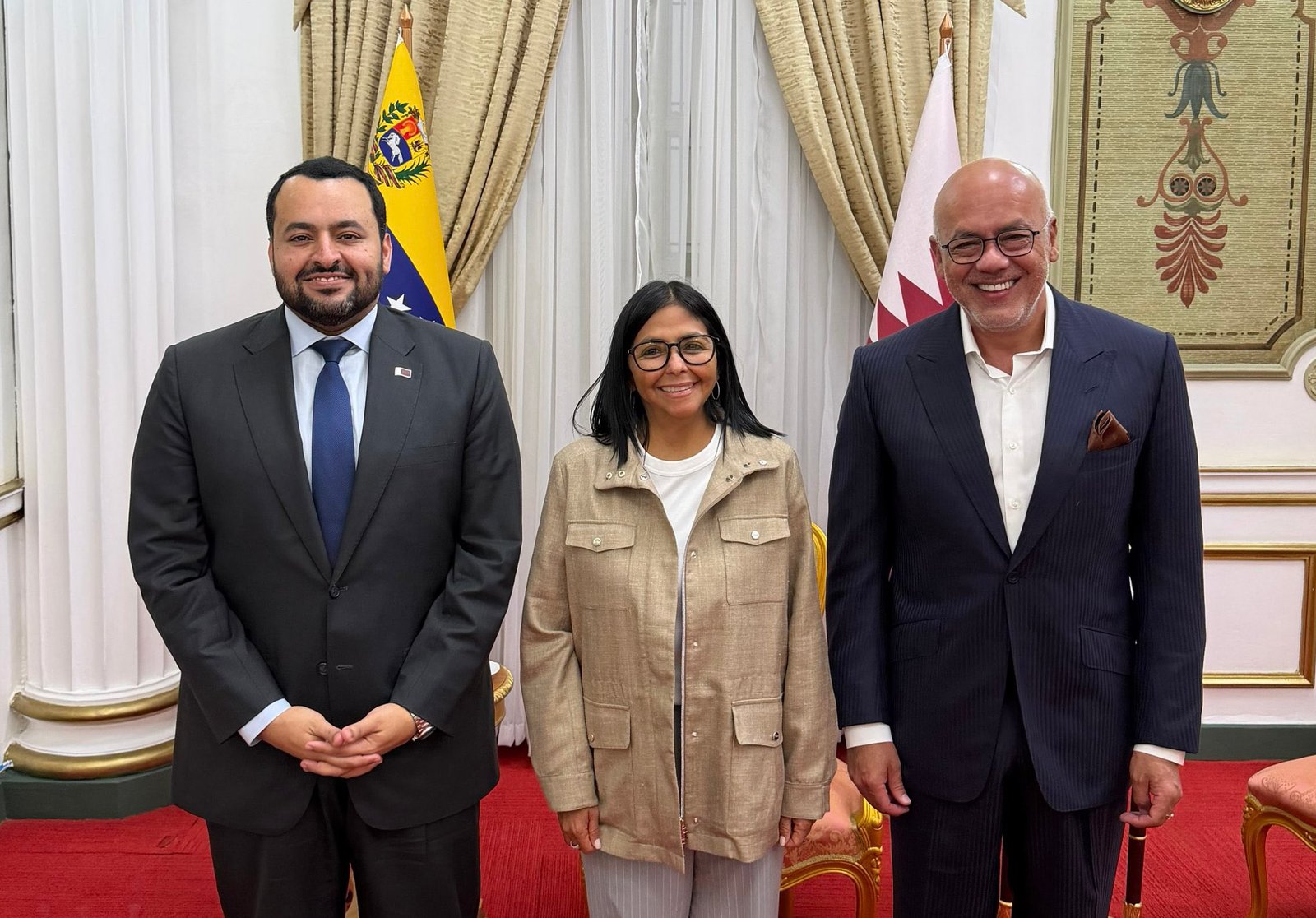
Austria has also resumed diplomatic engagement with Venezuela through an official visit focused on reviewing bilateral relations and exploring opportunities for economic and productive cooperation. The delegation was led by Austria’s ambassador to Colombia, who is concurrently accredited to Venezuela, reflecting a common European model in which relations with Caracas are managed through regional diplomatic hubs rather than resident embassies.
Although no specific projects were announced, the visit forms part of a broader trend of low-profile diplomatic reengagement centered on restoring communication channels and exploring practical areas of cooperation.
Nordic countries also seek closer ties
Representatives from Sweden, Denmark, and Finland have likewise held meetings with Venezuelan authorities to explore opportunities for economic, technical, and institutional cooperation. These countries currently maintain concurrent accreditation to Venezuela from Bogotá but have expressed interest in developing a roadmap for deeper engagement based on mutual respect and pragmatic collaboration.
Such contacts, while exploratory in nature, reinforce a broader trend of gradual diplomatic reengagement in which states prioritize sector-specific cooperation even in the absence of fully normalized political relations.
Taken together, the cases of Colombia, Austria, and the Nordic countries suggest that diplomacy toward Venezuela is moving from a period of political distancing toward one of gradual functional reactivation. In this process, consular services, concurrent accreditation, and technical cooperation have become increasingly important mechanisms for sustaining migration management, economic ties, and institutional dialogue.
More broadly, these developments illustrate a wider transformation in contemporary diplomacy. Rather than operating through a simple binary of recognition or rupture, international relations increasingly function through layered networks of embassies, consulates, technical missions, and concurrent representations, all of which contribute to a highly interconnected global system.