Guacamaya, August 25, 2026. OFAC General Licenses 61 and 62 open the door to Western providers for CANTV, Movilnet, and Conatel, but explicitly block the path to China, Russia, Iran, Cuba, and North Korea. The measure is not an isolated gesture toward Caracas; it is, in fact, the extension to the digital sector of a doctrine that Washington already applied to oil and that is now also being deployed in Buenos Aires, Santo Domingo, and the rest of the hemisphere.
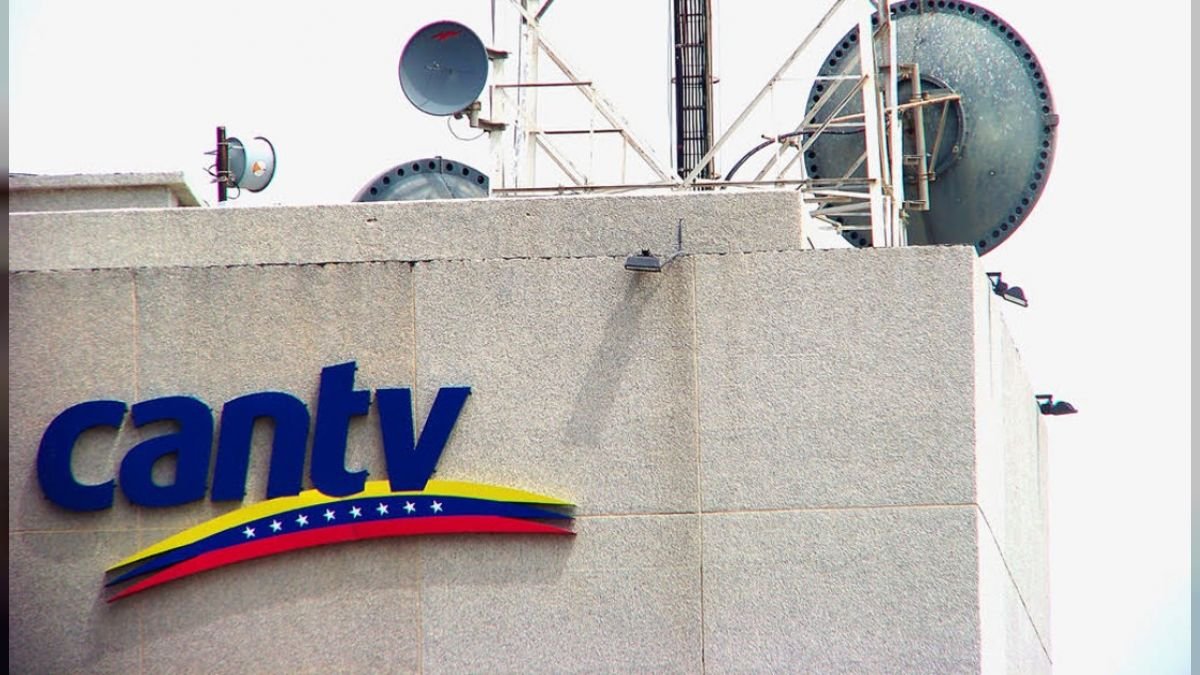
On August 21, the U.S. Department of the Treasury’s Office of Foreign Assets Control (OFAC) published General Licenses 61 and 62, authorizing U.S. individuals and companies to supply goods, technology, software, and services for the installation, maintenance, repair, modernization, and operation of telecommunications infrastructure in Venezuela. The authorization directly reaches the National Telephone Company of Venezuela (CANTV), its mobile subsidiary Movilnet, and the regulator Conatel, covering everything from internet connectivity and telephony to satellite transmission and submarine cables.
On the surface, this appears to be an opening. In practice, it is a frontier. The license’s text expressly excludes any transaction involving persons or entities from China, Russia, Iran, North Korea, and Cuba, as well as companies controlled by them or linked through joint ventures. Added to this are restrictions on payments in gold or crypto-assets — a direct reference to the failed Petro — and a prohibition on establishing new joint ventures, in addition to reporting obligations every 90 days to the State Department. The relaxation, in other words, comes with heavy conditions: Washington is not liberalizing the sector; it is trying to rewire it.
A Doctrine Already Tested in Oil
The architecture is not new. The prior authorizations that partially reopened Venezuela’s oil sector — allowing operators like Chevron or, more recently, Hunt Oil, SLB, and Crossover Energy, within the framework of IMAGE 2026, to resume activity — followed exactly the same mold: selective, conditional relief with explicit exclusion of Chinese counterparts. The Trump administration has found in the limited-scope general license a surgical instrument: it allows oxygenating strategic Venezuelan sectors without delivering that oxygen to a top-tier geopolitical rival. Extending that same design to telecommunications suggests that Washington is not improvising case by case, but rather applying a replicable template to any sector it deems of national interest.
The difference is that, in telecommunications, Chinese presence today is much deeper than in energy. For two decades, CANTV has built its network backbone around Huawei and ZTE, pursuing fiber optic modernization, broadband expansion, and likely central components of the 5G deployment that Venezuela has attempted to advance in recent years. Displacing those providers is not a simple catalog change; it implies renegotiating network architecture, maintenance contracts, and, in some cases, hardware that is already physically installed.
The Other Front: Segura’s Rhetorical Offensive
The license did not arrive alone. Days earlier, Juan Pablo Segura, the new head of Western Hemisphere Affairs at the State Department, disseminated a message directly targeting Huawei, ZTE, Hikvision, Hytera, Dahua, and DJI, and warning that Chinese legislation obliges these companies to cooperate with Beijing’s intelligence services, which — according to Washington — creates risks of espionage, cyberattacks, and network disruption. Segura urged U.S. partners in the Americas to migrate “rapidly” toward trusted providers, in a message that U.S. embassies across the region, from Buenos Aires to Santo Domingo, replicated almost immediately.
That dual move — administrative license on one side, public diplomatic pressure on the other — is the hallmark of this stage of Washington’s hemispheric policy. Analysts have framed Segura’s offensive and that of the ambassador in Argentina, Peter Lamelas, as part of an explicit relaunch of the Monroe Doctrine under Trump’s second term, which maintains the idea that the Western Hemisphere is a sphere where Washington claims veto prerogative over the presence of extra-regional powers, no longer only in military or security terms, but in critical digital infrastructure.
Beijing’s Response
China did not let the episode pass. Foreign Ministry spokesman Lin Jian called the U.S. warnings “flagrant technological harassment” and accused Washington of “fabricating facts and distorting reality,” demanding that the United States stop interfering in the right of sovereign countries to freely choose their cooperation partners. Lin defended that Chinese tech companies comply with the laws of the countries where they operate and have contributed to employment and regional economic development, and struck back by accusing Washington of historic surveillance and cyberattacks in the region, without presenting concrete evidence during the press conference.
The Chinese embassy in Washington, for its part, promised to defend the affected companies, and the Chinese legation in Santo Domingo had already responded this weekend to the dissemination of Segura’s warnings by the U.S. embassy in the Dominican Republic. The pattern reveals that this is no longer a bilateral Washington-Caracas matter: it is another chapter in a systemic dispute being waged simultaneously in Venezuela, Argentina, the Dominican Republic, and, predictably, in any country in the region where Huawei or ZTE have active contracts.
What Is at Stake for Venezuela
For Caracas, the dilemma is structural. CANTV depends on Chinese providers not exclusively for ideological affinity, but because during the years of near-total financial isolation, Huawei and ZTE were among the few actors willing to operate under the risk of sanctions. Replacing or expanding that infrastructure with Western providers requires investment, time, and, above all, the political will in Miraflores to accept a technological reorganization imposed from outside as a condition for access to U.S. financing and technology.
Initially, it does not appear that Washington’s full intention is to dismantle the Chinese technological infrastructure already operating in Venezuela, but it can initially close the door to a new phase of Beijing’s expansion in telecommunications and other strategic segments of Venezuelan digital infrastructure.
The Venezuelan government has not publicly commented on the scope of the new licenses or their impact on existing agreements with Chinese firms — a silence that is itself revealing, suggesting that Caracas is evaluating the cost of maintaining both relationships simultaneously, something the license’s own architecture seems designed to make increasingly difficult. The underlying question is no longer whether Venezuela can modernize its telecommunications network, but with which power it decides to remain technologically tied for the next decade, and what real margin of maneuver remains for the biased “active neutrality” that Caracas has attempted to maintain between Washington and Beijing on other fronts, such as energy and critical minerals.
Telecommunications are a particularly sensitive case within this discussion. The Venezuelan state maintains considerable weight in a sector that, for much of the last two decades, was marked by direct government presence. The most evident example is the National Telephone Company of Venezuela (CANTV), nationalized in 2007 under Hugo Chávez’s government, along with its mobile subsidiary Movilnet. Since then, both companies have constituted a central piece of the country’s telecommunications infrastructure and of the state’s capacity to intervene directly in a sector considered strategic.
That dominance, however, has begun to experience changes. In recent years, mechanisms for partial opening to private capital have occurred and, more recently, the Government of Delcy Rodríguez has promoted a broader process of evaluation, reorganization, and eventual privatization of public assets. In April, a commission was created to study the liquidation, privatization, and other formulas for private participation in state enterprises, while various reports have indicated that hundreds of public companies could enter processes of reorganization, strategic partnerships, or sale.
In that context, telecommunications acquire an importance that goes far beyond their commercial value. CANTV, Movilnet, and the associated infrastructure represent strategic assets due to their capacity to connect the country, transport data, and sustain a large part of Venezuela’s digital architecture. Therefore, any process of opening, privatization, or transfer of participation in these companies would also have implications for who controls and who finances the country’s technological infrastructure.
The Relationship with Debt Restructuring
This is especially relevant in light of the discussion on Venezuelan debt restructuring. Various sources and reports had raised the possibility of using public assets as part of a potential debt-swap scheme. If that mechanism were to materialize, state telecommunications companies could find themselves among the assets considered, particularly at a time when Caracas appears to be reconsidering the state’s role as direct owner of strategic enterprises.
The timing is significant. Venezuela faces the need to restructure an enormous external debt and, at the same time, is beginning to open assets that for years were under state control. This raises a central question: Will the opening of these assets respond exclusively to a strategy to attract investment and modernize the economy, or could it also become a tool to satisfy creditors and reorganize the state’s financial obligations and align with the geopolitical interests of Washington or the current administration?
The geopolitical dimension becomes even more evident when China is brought into the picture. Beijing is Venezuela’s main bilateral creditor and, furthermore, has had a significant presence in Venezuelan technological and telecommunications infrastructure. For that reason, the battle over Venezuelan debt is not limited to determining how much money Caracas owes, who will collect it, and under what conditions. It can also become a dispute over who will have influence over the strategic assets that sustain Venezuela’s future economy.
In other words, debt restructuring and the eventual privatization of public assets could end up being two sides of the same process. If Venezuela begins to transform the ownership of its state enterprises, the question will no longer be solely who will recover their money, but who will end up controlling the strategic assets that become available. And in the case of telecommunications, that means discussing not only companies and debt, but also the country’s future digital architecture and the space that China will retain — or lose — within it.