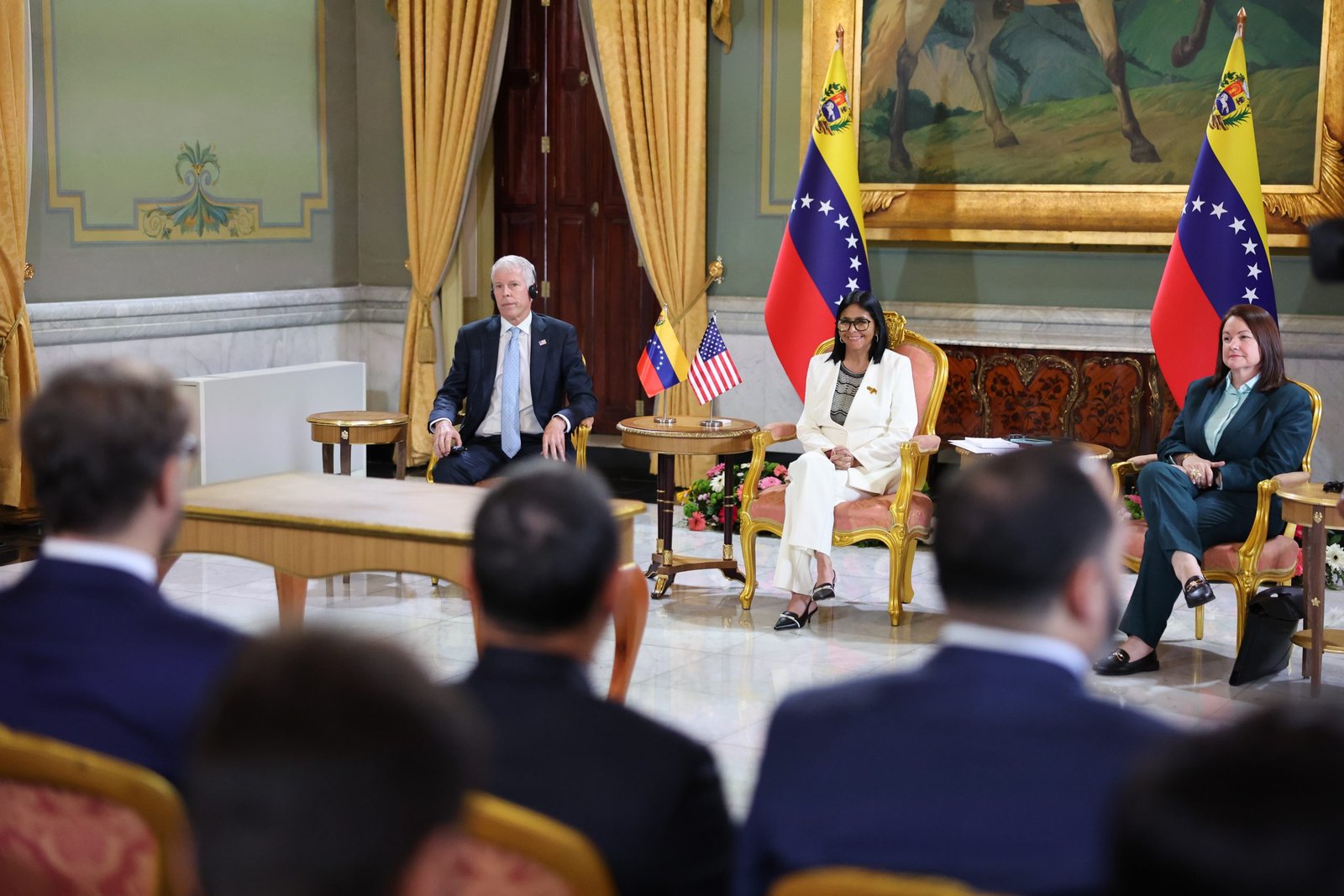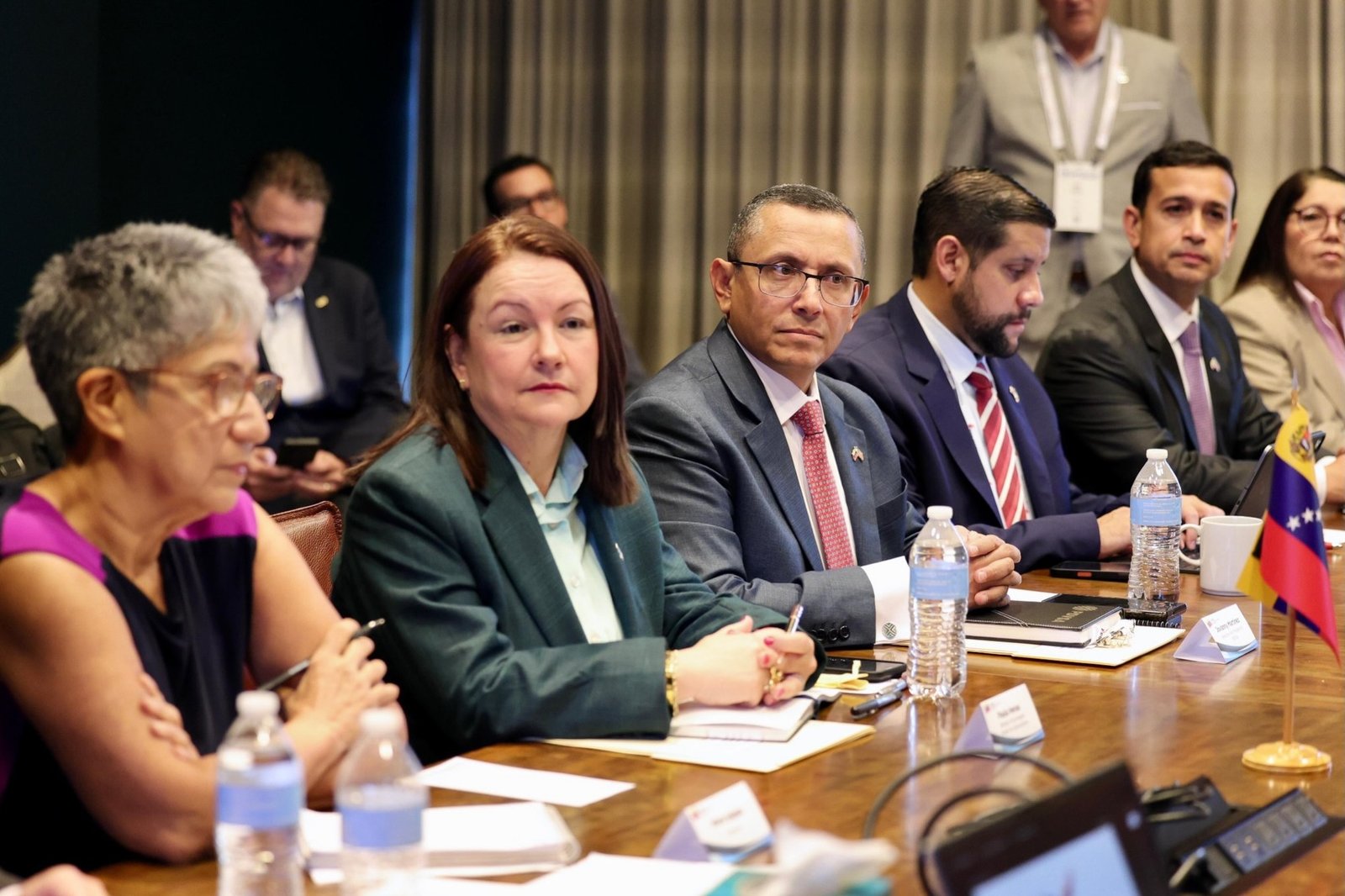
Venezuela’s Minister of Hydrocarbons, Paula Henao (center-left) and PDVSA’s Executive Vice President, Jovanny Martínez (center-right) at a forum in Houston in August 2026. Participation in the G20 summit marks the third time both have traveled to the Texan city this year. Photo: Ministry of Hydrocarbons.
Guacamaya, September 14, 2026. The latest appointments at the Foreign Ministry and the Ministry of Hydrocarbons coincide with Venezuela’s first participation in a ministerial forum of the Group of 20, in Houston, amid the consolidation of the relationship between Caracas and Donald Trump’s White House.
Delcy Rodríguez once again made changes in Venezuelan diplomacy, affecting two vice ministries of the Foreign Ministry, the Vice Ministry of Hydrocarbon Geopolitics, and the Export Promotion Agency (VENEXPORTA). The appointments reflect an increasingly intertwined foreign and commercial policy, as the Minister of Hydrocarbons arrived in Houston for the G20 energy summit.
A diplomacy reconfigured after January 2026
The Foreign Ministry has been the portfolio in which we have seen the most changes since Delcy Rodríguez assumed the presidency on January 5. Noteworthy is the merger with the Ministry of Foreign Trade with the appointment of Félix Plasencia as Foreign Minister, as well as the leading role of Oliver Blanco, a profile outside the governing party who has led relations with the United States.
The ministry has also shifted from focusing on weaving alliances with political movements in other countries to promoting investment and commercial exchange in Venezuela. At the same time, it is leaving behind alliances with Tehran, Beijing, Moscow, and Havana to look mainly toward the United States, and to a lesser degree toward its Western allies.
The five positions reorganized this Monday — four at the Ministry of Foreign Affairs and International Trade (directed by Félix Plasencia) and one at the Ministry of Hydrocarbons (headed by Paula Henao) — should be read in that key and not as a simple bureaucratic rotation, but as the fine-tuning of a foreign apparatus that in a few weeks has gone from open confrontation to the pursuit of oil agreements with the United States.
Andrea Gabriela Corao — President of VENEXPORTA
Corao arrived at this appointment after barely seven months as Vice Minister for Asia, the Middle East, and Oceania, a position she assumed on February 23, 2026, replacing Tatiana Pugh. Her time in that position was brief but coincided with a period of intense Asian diplomacy by Chavismo, with Foreign Ministry meetings with representatives of China, India, and Belarus.
Her transfer to VENEXPORTA, the agency responsible for promoting Venezuelan non-oil exports, suggests an attempt by the Government to give greater weight to commercial diversification at a time when the economy is seeking to reinsert itself into Western markets after years of sanctions. The position removes her from the geopolitical front line to place her in a more commercial role, although she retains the rank of a senior official in the foreign policy apparatus.
Carlos Amador Pérez — Vice Minister for the Caribbean
Amador Pérez replaces Raúl LiCausi at the head of an office with a historical weight disproportionate to its size. The Vice Ministry for the Caribbean has been, since the years of Hugo Chávez, the institutional channel for mechanisms such as Petrocaribe and the ALBA Bank, instruments with which Caracas built political influence in the insular Caribbean in exchange for subsidized oil. That architecture has eroded with the collapse of Venezuelan oil production, but the region still holds valuable votes for Venezuela in forums such as the OAS and CARICOM.
The publicly available information on Amador Pérez’s prior trajectory is limited; official statements do not detail his professional background prior to the appointment, something worth verifying with additional sources before asserting continuity or rupture with respect to LiCausi’s management.
Eduardo Antonio Ramírez — Vice Minister for Asia and Oceania
Ramírez inherits the office left by Corao. Geopolitically, the position is sensitive because China is Venezuela’s main bilateral creditor and was one of the few partners willing to sustain trade despite U.S. sanctions, while India has become an increasingly important buyer of Venezuelan crude. Any management in that position must balance those ties with the current thaw with Washington.
Now split from “Middle East” in its name (the formula used this time is “Asia and Oceania”), it could anticipate an internal reorganization of that geographic area within the Foreign Ministry. This region has given rise to some of the most significant, and also most controversial, changes.
On the one hand, Delcy Rodríguez has further strengthened ties with the Persian Gulf monarchies, especially with Qatar, which served as a mediator in the early hours of January 3. On the other hand, Venezuela is reestablishing relations with Israel after years of enmity.
For the moment, rather than an abandonment of the alliances built during the era of Hugo Chávez and Nicolás Maduro, the move could be interpreted as an attempt to diversify them and adapt them to the new scenario. The difference would be that Caracas seems to give greater weight to economic and diplomatic pragmatism over ideological affinity. If this trend continues, the relationship with the Gulf monarchies and an eventual normalization with Israel could become some of the most important instruments of the new Venezuelan foreign policy to expand its international margin for maneuver and rebuild its relationship with the United States.
Radamés Gómez Azuaje — Vice Minister of Hydrocarbon Geopolitics
Together with the reconfiguration of the diplomatic leadership, this is the most revealing appointment. The position itself — “Hydrocarbon Geopolitics” — is a relatively new figure within the structure of the Ministry of Hydrocarbons and points to a very concrete function based on articulating Venezuelan oil policy with the dynamics of global markets, OPEC, and international energy forums, precisely when Caracas is negotiating its reinsertion into those circuits.
Pro-government media describe Gómez Azuaje as an engineer with a career in the Venezuelan oil sector, although no verifiable details about his previous career within PDVSA or the Ministry have been made public. His appointment comes in the same month in which a Venezuelan delegation travels to Houston to participate, for the first time, in a G20 ministerial event — a fact that directly connects both pieces of this article.
Raúl LiCausi — Ambassador to the European Union and the Kingdom of Belgium
Of the five appointed, LiCausi is the one with the best-documented public trajectory. He is a graduate of the School of International Studies of the Central University of Venezuela, with a postgraduate degree in Human Rights from the same institution, and he completed the XVII Course on Foreign Policy for Diplomats of Latin America and the Caribbean at the Matías Romero Institute in Mexico. Within the Foreign Ministry he was head of the Asia, Middle East, and Oceania Unit, then Vice Minister for the Caribbean — a position he now hands over to Amador Pérez — and president of the ALBA Bank (Banalba), as well as Venezuelan representative to the Caribbean Development Bank, the Organization of Eastern Caribbean States, the Association of Caribbean States, and the Caribbean Community. He was also president of PDV Caribe and an international analyst for the National Assembly.
His new destination in Brussels — replacing Jorge Valero, ambassador to the community bloc since 2022 — places him at the head of a complex bilateral relationship, given that the EU has been a relevant actor in attempts at political mediation over Venezuela and maintains its own regime of individual sanctions against Chavista officials. Simultaneous accreditation to Belgium and concurrence to Luxembourg is the standard diplomatic formula for an ambassador whose seat resides in Brussels, the de facto seat of the community institutions.
Venezuela in Houston: an unprecedented participation in the G20
The G20 is an informal forum — not a body with a founding treaty or permanent secretariat — created in 1999 and elevated to the level of heads of state in 2008, which brings together nineteen countries plus the European Union and, since 2023, the African Union. It does not have open membership, but the incorporation of new members (as happened with the African Union) requires consensus of the existing members. What the G20 does have is an annual rotating presidency, which falls to a different country each year and which enjoys considerable room for maneuver to set the thematic agenda, convene sectoral ministerial meetings in areas such as finance, energy, trade, health, among other things throughout the year, and decide which non-member countries to invite as “guests” to those meetings or to the leaders’ summit.
The United States assumed the G20 presidency for 2026 on December 1, 2025 — the first time it has held that role since 2009 — and has announced that the Leaders’ Summit will be held in December in Miami, coinciding with the 250th anniversary of American independence. The Trump Administration has reorganized the year’s agenda around three declared axes: reduction of regulatory burdens, “affordable and secure” energy supply chains, and new technologies. That energy priority largely explains why Washington decided to convene an Energy ministerial meeting in Houston — the oil capital of the United States — and invite non-member actors, including Venezuela.
Venezuela’s relationship with the forum has, until now, been one of almost total absence. At the 2024 Leaders’ Summit in Rio de Janeiro, Brazil invited Bolivia, Chile, Colombia, Paraguay, and Uruguay as guest countries, but left Maduro out amid the dispute over recognition of the electoral records of July of that year and tensions with Lula da Silva over Brazil’s refusal to incorporate Venezuela into BRICS.
The Energy ministerial meeting this week in Houston constitutes, therefore, the first documented time that an official Venezuelan delegation participates — even if only in parallel activities — in an event formally linked to the G20. It is a complete turnaround from the implicit veto that surrounded Chavismo in that multilateral circuit just two years ago.
This week’s participation: what is known and what remains to be confirmed?
The Venezuelan delegation — presumably headed by Minister of Hydrocarbons Paula Henao, together with PDVSA Executive Vice President Jovanny Martínez — is attending the G20 Energy ministerial meeting in Houston, which extends until Wednesday, by direct invitation of the Trump Administration.
A White House official, who spoke on condition of anonymity to Bloomberg because the details of the delegation have not been officially made public, described Venezuelan participation as “imperative” for Washington in the talks on energy security and abundance.
It is worth underscoring the limits of that participation: the Venezuelan delegation will not have access to the formal closed-door ministerial sessions — reserved for full members of the bloc — but it will have access to bilateral meetings, parallel events, and working tables with representatives of the global oil industry. This would be at least Henao’s third visit to Houston so far in 2026, within a declared government campaign to attract foreign investment to the sector.
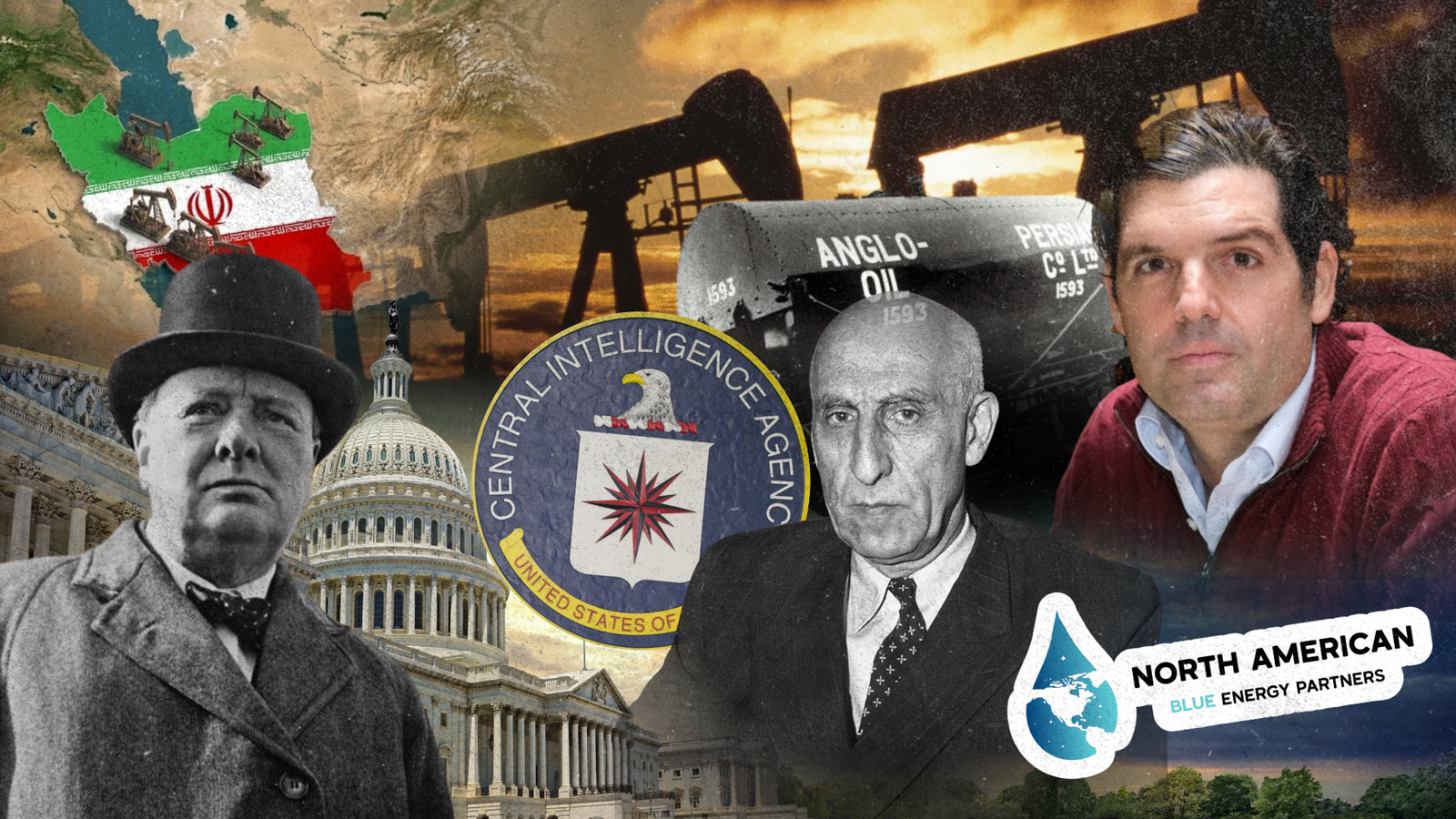
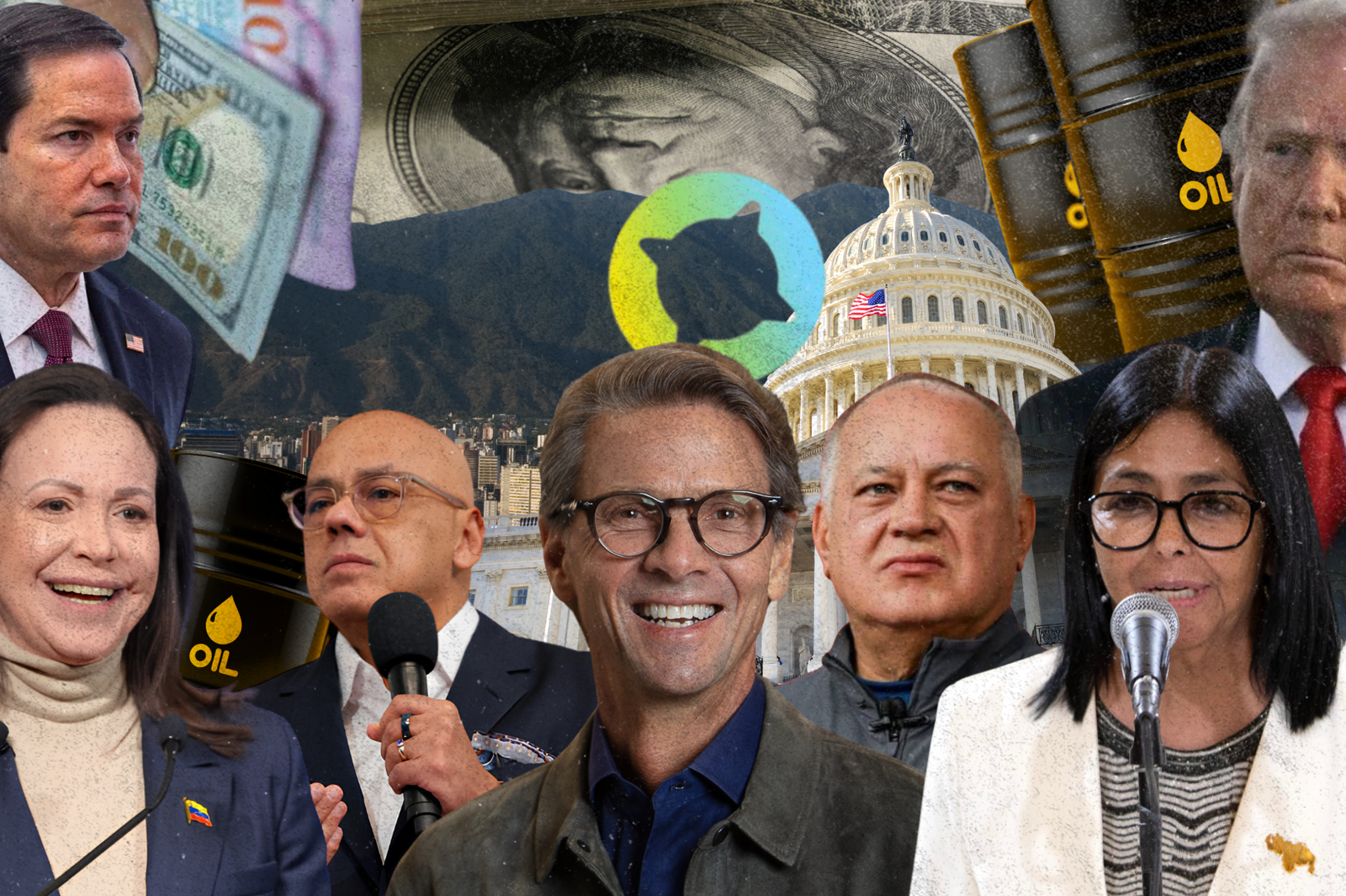
The immediate backdrop to this invitation is a recent oil agreement between Caracas and Washington. While North American Blue Energy Partners — the oil company of Alejandro Betancourt — obtains seventeen oil concessions in Venezuela, the Pentagon’s Office of Strategic Capital obtains an indirect 35% stake in its shares with veto rights over the board of directors.
The agreement, which has raised questions and controversy, represents one of the most important developments in the Venezuelan hydrocarbon industry in recent decades, affecting 65 billion barrels of crude in reserves.
For Trump, the agreement is no less significant: it is about guaranteeing access to cheap energy from a reliable supplier, while he fails to end the wars in Ukraine, Iran, and Yemen, which continue to be disruptive to the global energy market.
The geopolitical reading
Houston — self-proclaimed world energy capital and home to a good part of the oil and mining companies negotiating possible investments in Venezuela — offers Washington a doubly useful scenario, since it validates before the industry the diplomatic rapprochement with Caracas and indirectly pressures global crude markets at a time when conflicts in the Middle East affect world oil flows. For Chavismo, the invitation — however modest it may be in protocolary terms — has a political value that exceeds the energy dimension: it is the first visible sign that the United States is willing to treat the Delcy Rodríguez administration as a valid interlocutor in a first-level multilateral forum, just eight months after the military operation that removed Maduro from the country.
That double reading — energy normalization and political validation — is, ultimately, the thread that connects the five appointments of this Monday with Paula Henao’s trip to Texas. We then have the same Government simultaneously reorganizing its foreign apparatus and its presence in the forums where the future of its main asset, oil, is negotiated.